REVIEW · SICILY
Palermo Walking Tour and Guided Visit to Palazzo dei Normanni
Book on Viator →Operated by Towns of Italy · Bookable on Viator
Palermo gets more interesting fast when you have a guide. This 5.5-hour, English-language walking tour strings together major landmarks, then finishes with an included guided visit to Palazzo dei Normanni and the Palatine Chapel. You’ll also pause for the street-level energy of La Vucciria and the showpiece geometry of Palermo’s baroque squares.
Two things I really liked: the way the route mixes big monuments with real city life, and the focused explanation inside the Norman Palace complex—especially how the Palatine Chapel’s mixed styles make the island’s history feel tangible. One thing to plan for: Teatro Massimo entry costs extra (the tour includes time there, but the ticket is not included, and it’s €12 per person).
In This Review
- A Route Built for Flow (Not Museum-Marathon)
- Key Points You’ll Actually Care About
- Why This Palermo Route Works: Big Monuments Plus Everyday City Life
- Teatro Massimo on Piazza Verdi: Worth It Even When You Skip Entry
- San Domenico Church and the Pantheon of Sicilians
- La Vucciria: Market Culture Without Needing a Food Tour Detour
- Piazza Pretoria and Quattro Canti: Baroque Palermo in Two Quick Hits
- Piazza Pretoria and the Praetorian Fountain
- Quattro Canti
- Palermo Cathedral: The Assumption of the Virgin Mary
- Palazzo dei Normanni and the Palatine Chapel: Where the Day Becomes a Real History Lesson
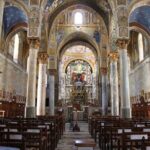
- Palatine Chapel’s Mixed Styles: Byzantine, Norman, Fatimid
- Tickets, Time, and Real-World Value: Is €97.55 Worth It?
- Who Should Book This Palermo Walk
- Should You Book This Palermo Walking Tour and Palazzo Visit?
- FAQ
- How long is the Palermo Walking Tour and Palazzo dei Normanni visit?
- How much does the tour cost?
- Is the tour offered in English?
- What is included in the price?
- Are tickets for Teatro Massimo included?
- Where does the tour start and where does it end?
- What time does the tour start?
- How many people are in the group?
- Is free cancellation available?
A Route Built for Flow (Not Museum-Marathon)
The pacing works well for a single morning: it’s around 5 hours 30 minutes, with short stops (about 25–30 minutes each) so you can look, ask questions, and still move. The group size is capped at 20 travelers, which keeps the experience from feeling like a stampede.
The tour starts at Towns of Italy, the Tourist Hub & Cooking School on Via Volturno 44 (near public transportation), and it ends back at the same meeting point. If you want the full picture, arrive a few minutes early so you’re not hurrying when the guide starts setting context.
Key Points You’ll Actually Care About
- Palatine Chapel included: You get guided access to the royal chapel inside the Norman Palace complex
- Two baroque square stops: Piazza Pretoria and Quattro Canti are quick, visually strong photo moments
- Teatro Massimo is pay-on-the-spot: You’ll need an extra €12 ticket to enter
- La Vucciria stop is purposeful: You don’t just pass through—you pause in the historic market area
- Small group feel: Max 20 travelers makes questions easy and timing more relaxed
You can also read our reviews of more walking tours in Sicily
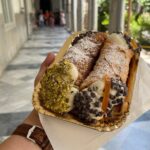
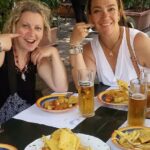
Why This Palermo Route Works: Big Monuments Plus Everyday City Life
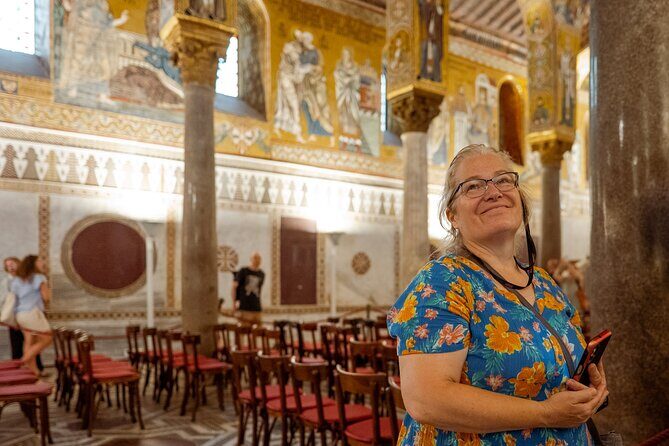
This tour is built around a practical idea: in Palermo, the story of the city isn’t locked behind one door. You learn it by moving—past the grand opera house façade, into a baroque church with famous tombs, and through the lanes near La Vucciria where the market culture still shapes daily rhythms.
That mix is the main value for you. If you only visit palaces and cathedrals, you’ll miss how Palermo feels in real life. If you only wander the street markets, you’ll miss the official power symbols that explain why the city looks the way it does. This tour tries to do both, without turning into an exhausting all-day slog.
The other smart part is the “stop-and-explain” rhythm. Each landmark gets enough time to actually read the details and understand why it matters, instead of feeling like a photo sprint. It’s the kind of pacing that helps you get your bearings fast.
Teatro Massimo on Piazza Verdi: Worth It Even When You Skip Entry
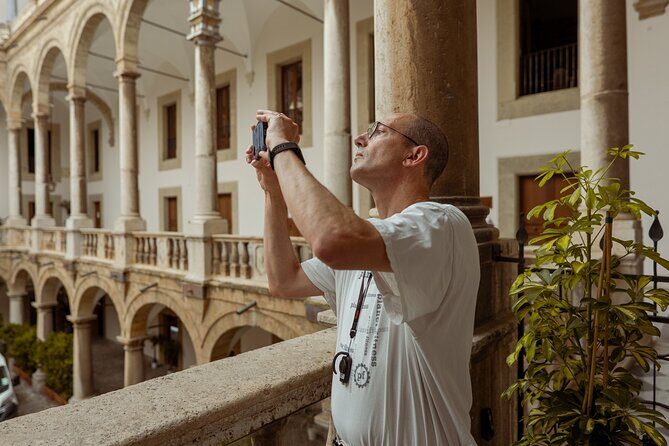
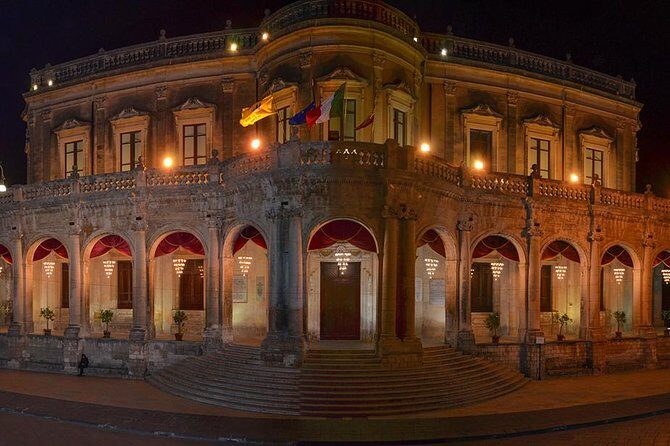
Your first stop is Teatro Massimo Vittorio Emanuele on Piazza Verdi. It’s an opera house and opera company in Palermo, dedicated to King Victor Emanuel II. The scale is a big deal here: it’s the biggest in Italy and one of the largest in Europe.
How to think about this stop:
- If you love architecture and performance venues, you’ll enjoy seeing how much presence Teatro Massimo has in the city’s center.
- If your priorities are history and palace art, you can treat this as a strong opening scene and decide on entry later.
Important cost note: the tour includes time at Teatro Massimo, but admission tickets are not included. Entry costs €12.00 per person. If you’re on a tight budget, you can still enjoy the exterior and the surrounding piazza vibe; if you’re curious, buying the ticket adds another layer to the day.
San Domenico Church and the Pantheon of Sicilians
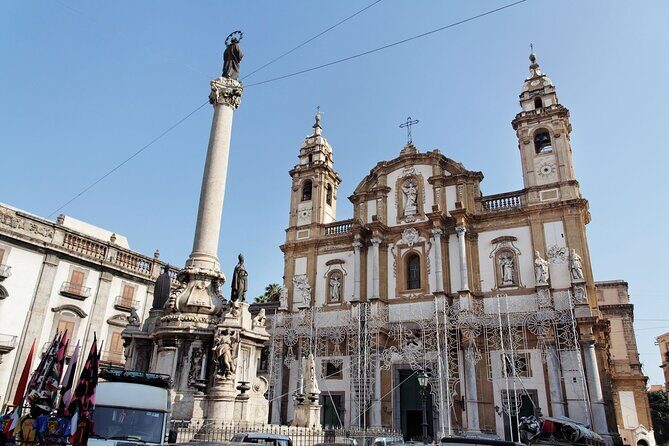
Next up is Chiesa di San Domenico, a Baroque-style Roman Catholic church located on Piazza San Domenico in central Palermo, in the ancient quarter of La Loggia. This church has a reputation beyond its architecture because it houses burial monuments of many notable Sicilians—so it’s known as the Pantheon of illustrious Sicilians.
Why this stop matters:
Palermo’s history isn’t only about kings and conquerors. It’s also about people—local leaders, artists, and influential figures—whose legacy is literally memorialized in stone. In a walking tour that could otherwise feel like a checklist of famous buildings, this church gives you a human angle.
Practical tip: since this is a church stop, dress and behavior matter. Keep shoulders and knees covered if required, and plan to move quietly inside.
La Vucciria: Market Culture Without Needing a Food Tour Detour
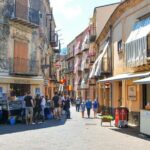
Then you head to La Vucciria, Palermo’s most famous market, often referred to simply as La Vucciria. You’ll spend about 25 minutes here, which is long enough to notice patterns without turning it into a shopping marathon.
What you’ll see and learn:
- The stalls predominantly sell fish, meat, and produce
- You can also find a little of everything
- The market sits in the historic center around Piazza San Domenico
How to get value from this stop:
If you go in expecting only one kind of experience, you may miss what makes it memorable. Instead, treat it like a window into daily life. Look at how the market clusters around the streets and piazzas you’ve been walking through—Palermo’s “main sights” and “everyday life” aren’t separated here.
If you’re sensitive to crowds or smell, keep an easy pace. You’re there briefly, but it is still a market area, so it will feel like a working neighborhood.
You can also read our reviews of more guided tours in Sicily
Piazza Pretoria and Quattro Canti: Baroque Palermo in Two Quick Hits
After the market, you move into two major baroque landmarks that are all about geometry, placement, and visual impact.
Piazza Pretoria and the Praetorian Fountain
At Piazza Pretoria, you’ll see the Praetorian Fountain dominating the piazza on the west flank of the church of Santa Caterina. Here’s a detail you’ll probably remember: the fountain was originally built in Florence in 1544 by Francesco Camilliani, then it was sold, transferred, and reassembled in Palermo in 1574.
That time gap is the key. This isn’t just a pretty fountain; it’s a story about movement of art and power across cities and centuries. You’re standing in Palermo but looking at an object that had a life elsewhere.
Quattro Canti
Then comes Quattro Canti (officially Piazza Vigliena). It’s a baroque square considered the center of Palermo’s historic quarters.
Even if you’re not a “square person,” this stop helps you understand the city’s layout. It’s one of those places where the street map in your head finally locks in—because the square is positioned like a hub.
Palermo Cathedral: The Assumption of the Virgin Mary
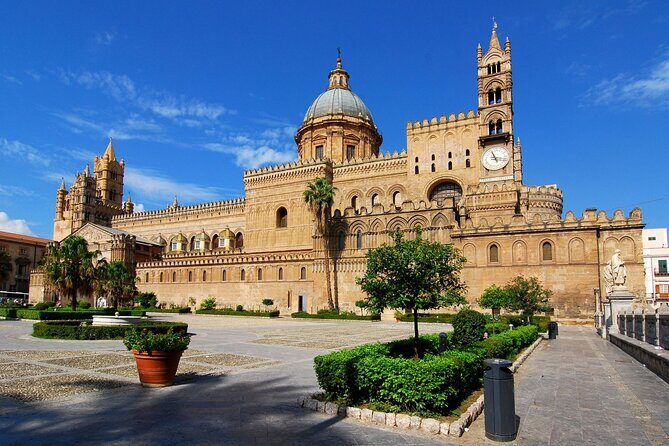
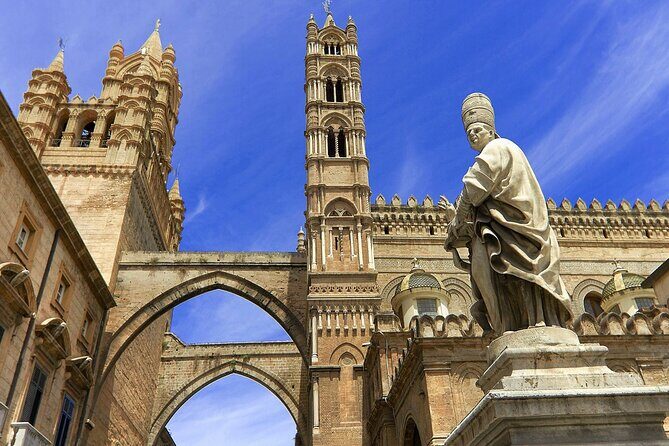
Your next stop is Cattedrale di Palermo, dedicated to the Assumption of the Virgin Mary. The cathedral is the main cathedral church of the Roman Catholic Archdiocese of Palermo.
What you should take from it:
A cathedral stop can sometimes feel like a pause for photos and move-on time. Here, the value is in what it signals in the overall route. It ties the earlier church stop (San Domenico) to the bigger religious and institutional role of Palermo’s central power and identity.
If you want to make this stop more meaningful, slow down and let your eyes adjust. Cathedral façades and interiors reward a quiet minute—especially when you’ve already been seeing how different Palermo eras and styles overlap.
Palazzo dei Normanni and the Palatine Chapel: Where the Day Becomes a Real History Lesson
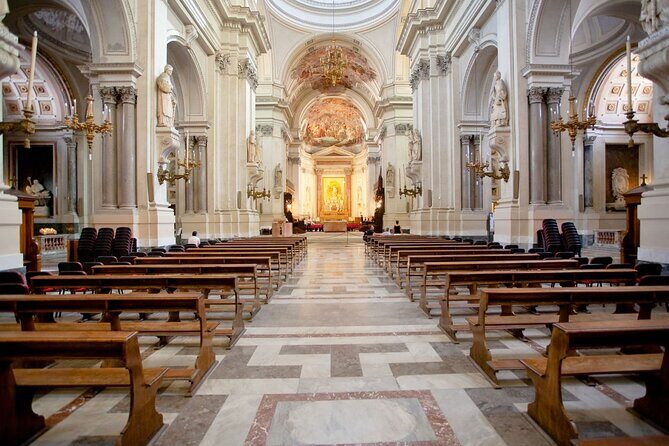
The final stretch is where the tour’s payoff concentrates. The Palazzo dei Normanni (also called the Royal Palace of Palermo) is included in the price for the guided visit and tickets to the complex.
This palace has serious political weight:
- It served as the seat of the Kings of Sicily with the Hauteville dynasty
- It became the main seat of power for subsequent rulers of Sicily
- Since 1946, it has been the seat of the Sicilian Regional Assembly
Then you reach the Palatine Chapel, the royal chapel inside the Norman Palace. This is the moment that often makes the entire tour click.
Palatine Chapel’s Mixed Styles: Byzantine, Norman, Fatimid
The Palatine Chapel is a blend of Byzantine, Norman, and Fatimid architectural styles. The point of that mix is also spelled out: it reflects the tricultural state of Sicily during the 12th century after Roger I and Robert Guiscard conquered the island.
Why that matters for you:
When a place mixes styles like this, it can look like an artist’s mashup unless you understand the why. A good guide helps you read the chapel like a map. Once you see the styles as evidence of political and cultural overlap, you’ll stop thinking of it as a single-era building and start seeing it as a turning point.
Inside the chapel is also where I appreciated the guide’s storytelling most. On the day I attended, the guide Renata explained the Palatine Chapel in a way that made the art and design feel connected to real people and real power, not just decorative features. That’s the difference between seeing an attraction and understanding why it belongs to Palermo.
Tickets, Time, and Real-World Value: Is €97.55 Worth It?
At $97.55 per person for a tour around 5 hours 30 minutes, the value depends on what you care about and what you’d pay if you planned it alone.
Here’s the honest breakdown:
- Included: the guided visit to the Palazzo dei Normanni complex, including tickets
- Included: the walking tour with an English-speaking licensed guide
- Not included: Teatro Massimo entrance tickets, €12 per person
So you’re mainly paying for organization plus guidance through a focused city route, with the biggest ticketed piece (the Norman Palace complex) already handled. If you’re the type of traveler who likes context—why each building exists and what it signals—then the price tends to make sense quickly.
If you’re the type who only wants a quick look and hates guided tours, you might feel the cost more. But for most people, the payoff is that you’re not guessing where to go or how to connect the dots.
Who Should Book This Palermo Walk
I’d say this tour is especially good for you if:
- You want to see Palermo’s “main monuments” in one managed morning
- You like history explanations that connect art, religion, and political power
- You’re curious about how Norman rule and Mediterranean influences show up in architecture
- You prefer a small group (max 20) over large-bus chaos
It’s also a decent pick if you’re short on time. The route is compact, and the biggest included ticket experience is scheduled at the end so you build momentum.
Should You Book This Palermo Walking Tour and Palazzo Visit?
Book it if you want a smart, time-efficient morning that mixes street-level Palermo with a high-impact included visit to Palazzo dei Normanni and the Palatine Chapel. The standout reason to choose this one is the way the day leads you from everyday city spaces into a complex that explains Palermo’s mixed cultural identity in real architectural terms.
Skip it or consider a lighter version if you’re only interested in Teatro Massimo and don’t plan to add the €12 ticket, or if you hate walking tours and want fully independent time. Otherwise, this is a solid choice for getting oriented in Palermo without losing the deeper payoff at the palace.
FAQ
How long is the Palermo Walking Tour and Palazzo dei Normanni visit?
It’s about 5 hours 30 minutes.
How much does the tour cost?
The price is $97.55 per person.
Is the tour offered in English?
Yes, the tour is offered in English.
What is included in the price?
You get the guided walking tour plus tickets and a guided visit to the Palazzo dei Normanni complex.
Are tickets for Teatro Massimo included?
No. Teatro Massimo entrance tickets are not included, and they cost €12.00 per person.
Where does the tour start and where does it end?
It starts at Towns of Italy, Tourist Hub & Cooking School, Palermo (Via Volturno, 44, 90138 Palermo PA, Italy). It ends back at the meeting point.
What time does the tour start?
The start time is 9:00 am.
How many people are in the group?
The maximum group size is 20 travelers.
Is free cancellation available?
Yes. You can cancel for a full refund up to 24 hours before the experience’s start time. If you cancel less than 24 hours before, the amount paid is not refunded.