REVIEW · SICILY
Ancient Syracuse: private guided tour of the Neapolis archaeological park
Book on Viator →Operated by Hermes Sicily Tourist guides group · Bookable on Viator
Syracuse’s ruins make sense fast. This private guided tour puts you in the Parco Archeologico della Neapolis and ties it all together with key stops like Teatro Greco and the Ear of Dionysius. You can pick a morning or afternoon start, which helps if you’re building a day around other sights.
I love two things about this style of visit: you get an actual guide to explain what you’re seeing, and you move at a human pace through the park instead of trying to puzzle it out on your own. I also like that the tour hits several headline sites in one go, including the theatre and the legendary cave stop.
One thing to plan for: the Neapolis park admission ticket is not included, so build a little time and budget into your day (or consider the option that bundles the ticket).
In This Review
- Key highlights you’ll care about before you go
- Entering Neapolis: the fastest way to understand ancient Syracuse
- The private guide effect inside Parco Archeologico della Neapolis
- Ticket note that affects your day
- Teatro Greco: the theatre stop everyone wants, with a summer catch
- How to handle the seasonal change
- Ear of Dionysius: short stop, legendary payoff
- Ancient Greek stone quarries: where the “how” becomes visible
- Anfiteatro Romano di Siracusa: gladiators, arena stories, and Roman contrast
- Time, pace, and what to wear for an outdoors-heavy walk
- Summer tip that actually helps
- English guide quality: you’ll notice it fast at Q&A moments
- Price and value: what you pay for at $108.24 per person
- Booking timing: why 41 days out is a smart move
- Should you pick the Tour + Ticket option?
- Who this private Neapolis tour is best for
- Should you book this private Neapolis tour?
- FAQ
- Is the Neapolis park entrance fee included?
- How long is the private guided tour of Neapolis?
- Where do I meet, and where does the tour end?
- Is this tour private and offered in English?
- Which stops are included during the walk?
- Will I be able to see Teatro Greco clearly in spring and summer?
- What should I bring, and what happens if weather is bad?
Key highlights you’ll care about before you go
- A true private walking tour: only your group, led by a professional guide in English
- Neapolis park as the main event: this is where the story of ancient Syracuse becomes visible
- Teatro Greco is seasonal: during performance season, coverage and partial visibility change what you can see
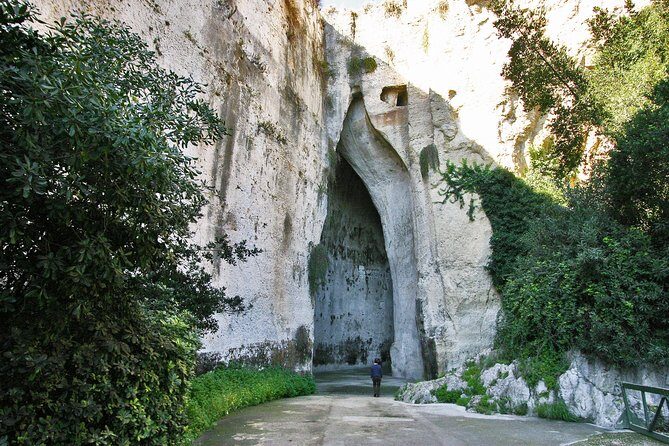
- Ear of Dionysius adds drama: a short stop with a big legend behind it
- Roman amphitheater context: the guide explains gladiators and the arena’s role in Roman Syracuse
- Mobile ticket support: handy for check-in, especially when you’re juggling multiple stops
Entering Neapolis: the fastest way to understand ancient Syracuse
Neapolis is where Syracuse concentrates a lot of its ancient power—temples, cave-like spaces, theatres, and the stone-cutting world that made the monuments possible. The big advantage of a guided walk here is simple: you stop looking at ruins as random piles of rock and start seeing how the pieces connect.
Even if you’re not a hardcore archaeology person, the guide’s job is to translate the site into plain human terms: who used what, how sound and space worked, and why Greeks and Romans both left such a strong imprint in this area.
You can also read our reviews of more guided tours in Sicily

The private guide effect inside Parco Archeologico della Neapolis
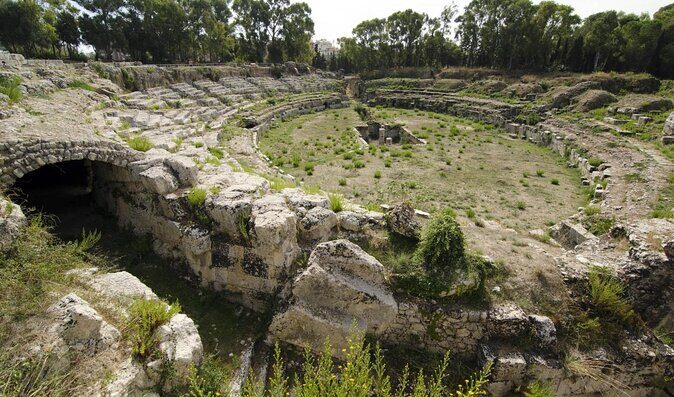
The Parco Archeologico della Neapolis portion is the heart of the tour. It’s a walking visit where you’ll see the park’s main ancient monuments while your guide builds the bigger picture of the city’s history along the way.
This is also where you feel the “private” part most. With only your group, it’s easier to ask questions and get answers that match your pace—whether you’re traveling as a couple or bringing a history-curious 10-year-old.
Guides can also point out small details that many people miss. For example, one guide experience highlighted how local plant life and carved stone details can make the architecture feel less like an abstract textbook and more like something real people lived around.
Ticket note that affects your day
The park admission ticket is not included in the tour price (unless you choose the Tour + Ticket option). That matters because the Neapolis ticket office can add time to your start. If you hate waiting in hot sun, plan for it—or choose the package that bundles the entrance.
Teatro Greco: the theatre stop everyone wants, with a summer catch
Teatro Greco is often the star of the day. It’s described as the most important ancient Greek theatre in Sicily, and you’ll get time there during the walk. The good news: the admission for this stop is free.
The not-so-good news is seasonal. During performance season (usually spring and summer), the Greek theatre is covered and only partially visible. One guide experience also noted that temporary wooden bleachers can be in place because Greek plays are staged there at night—so what you see may look different from the open-air theatre images you might expect.
How to handle the seasonal change
If you’re visiting in warmer months, I’d treat Teatro Greco as a “see what’s possible now” stop, not a “see the full brochure view” stop. Bring an umbrella or rain cover even in dry seasons if the weather feels unpredictable, and assume the theatre area may be shaded differently than you expect.
Your guide can still make this stop worthwhile by explaining how the theatre works and what you can infer from the partial views.
You can also read our reviews of more private tours in Sicily





Ear of Dionysius: short stop, legendary payoff
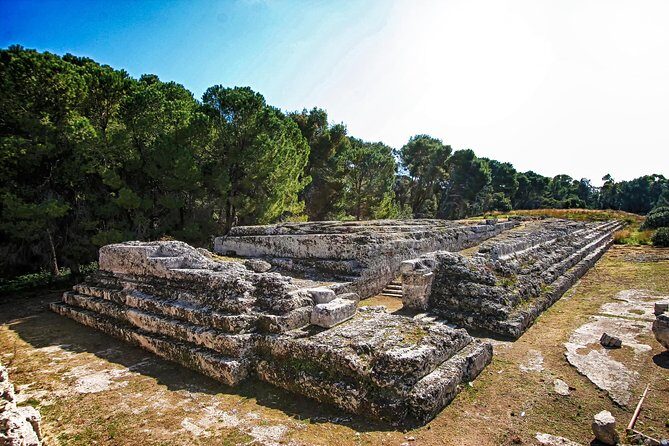
The Ear of Dionysius is a quick, focused visit, but it’s exactly the kind of stop that benefits from a guide. This is Syracuse’s legendary place, and the time you spend there is built for listening and context, not just photos.
Even when the stop is brief, the guide approach helps you understand why this area became famous. Instead of just seeing a cave-like feature, you learn what the legend is tied to and why people keep coming back for it.
If you enjoy atmospheric places—spots where sound, stone, and storytelling overlap—this is one of the most satisfying minutes of the entire walk.
Ancient Greek stone quarries: where the “how” becomes visible
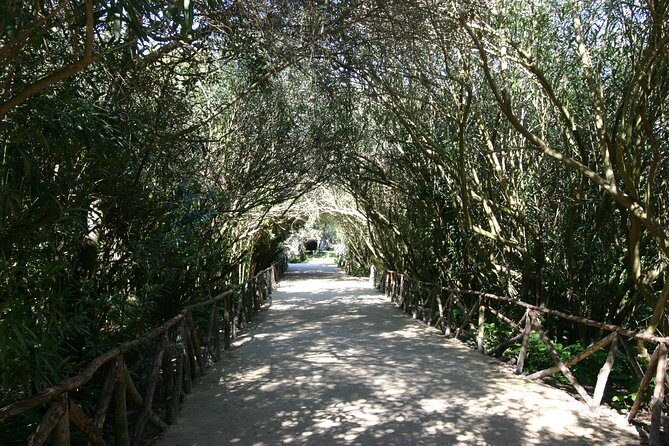
You’ll also encounter the ancient Greek stone quarries during the visit. This is the part that helps you connect the dots between the monuments you see and the stone-work that made them.
It’s a great reminder that Syracuse didn’t just inherit ancient architecture; it produced it. When you stand near quarry areas, the idea of large-scale building gets less abstract. You can start imagining the labor behind the columns, blocks, and structures you’re otherwise viewing from a distance.
And if your guide points out how people used the stone-cutting spaces, you’ll likely feel more grounded in the site’s physical reality.
Anfiteatro Romano di Siracusa: gladiators, arena stories, and Roman contrast
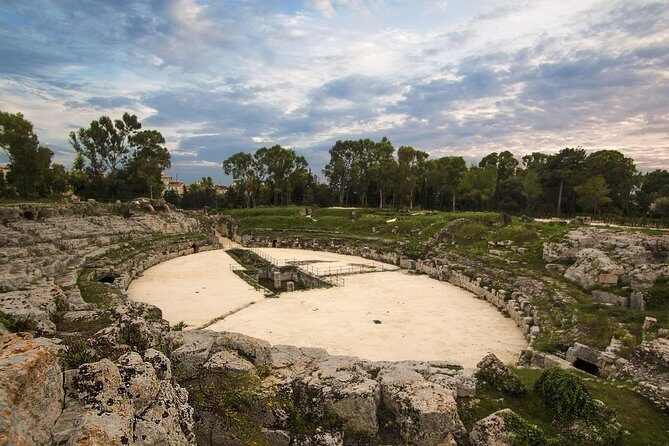
The Roman amphitheater stop adds a shift in perspective. You’ll hear about Roman gladiators and about the amphitheater of Syracuse, with free admission for this section.
This stop works well because it isn’t just “another ruin.” It’s a contrast point. After spending time with Greek theatre and legendary cave lore, the Roman amphitheater brings you back to public spectacle and civic entertainment.
Even in a short time frame, the guide explanation can make the shapes of the arena feel purposeful. You start to understand why these spaces were built to gather crowds and keep attention fixed on performers and events.
Time, pace, and what to wear for an outdoors-heavy walk
This tour runs about 1 hour 30 minutes (approx.). In practice, the walk feels longer or shorter depending on your pace and the reality of ticket lines for the park admission.
Comfortable walking shoes are strongly recommended, and I agree. The terrain is outdoors and you’ll be on your feet through multiple stops. If you’re prone to sore ankles or you tend to walk slowly, consider wearing shoes with good grip and cushioning.
Summer tip that actually helps
One practical comment from a guide experience: during summer heat, having an umbrella can be a lifesaver. Even when the sky looks clear, shade and quick cover can make the difference between a fun tour and a grim endurance test.
English guide quality: you’ll notice it fast at Q&A moments
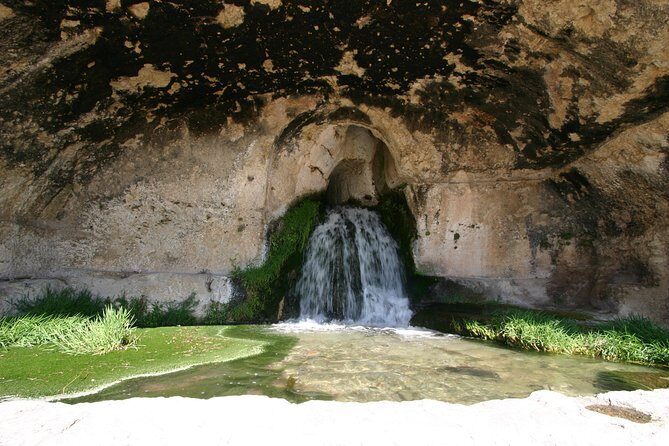
The tour is offered in English and it’s a professional guided experience. That matters because archaeological sites are full of “wait, what is that?” moments, and a good guide answers in a way you can use while you’re still standing in front of the stone.
Names you might see include Eva (one experience described Eva Maier) and Martina (another experience praised Martina). The common thread in these accounts is engagement—clear explanations, patience with questions, and a guide who can keep younger visitors interested without turning the visit into a lecture.
If you want a tour where you can ask, react, and get real answers, a private setup helps a lot.
Price and value: what you pay for at $108.24 per person
At $108.24 per person, you’re paying for the guide and the private walking format. The big value question is how much extra you need to budget for entrances.
Here’s the practical breakdown:
- The Neapolis park admission ticket is not included (unless you choose the Tour + Ticket option).
- Some other stops listed are free at the time of the visit (Teatro Greco, Ear of Dionysius, and the Roman amphitheater stop).
So the “effective cost” depends on whether you select a ticket-inclusive option. If you don’t, the guide portion still gives you value because it’s hard to recreate a guided interpretation on your own—especially at a site with multiple layers of Greek and Roman features.
Also note that group discounts are available, which can make this a smarter choice if you’re traveling with friends or family rather than as a solo traveler.
Booking timing: why 41 days out is a smart move
On average, this tour is booked about 41 days in advance. I take that as a sign of demand for a private, guided Neapolis experience.
If you’re traveling in peak season or you want a specific time window (morning versus afternoon), booking early reduces your chances of getting stuck with a less ideal slot. You’ll also have time to decide whether to bundle the park ticket.
Should you pick the Tour + Ticket option?
If the idea of waiting at the Neapolis ticket office sounds like your personal nightmare, the Tour + Ticket option is worth considering. Since the park admission is not included by default, bundling can protect you from time loss and keep your start smoother.
Choose the bundle especially if you’re traveling with kids, you’re on a tight schedule, or you simply want the day to feel effortless from the first stop.
Who this private Neapolis tour is best for
This is a strong fit if you’re:
- Visiting Syracuse for the first time and want the major ancient sites in one focused walk
- Traveling with a child or teen who learns better with direct explanations and questions
- Interested in how Greek and Roman worlds overlap in the same area
- The type of visitor who likes details—like why a theatre works a certain way or what makes a legendary cave so famous
If you’re the kind of person who enjoys reading guidebooks and wandering at your own speed without stopping for explanations, you might feel the cost more than the value. But if you want context while you’re in front of the ruins, this private format is built for that.
Should you book this private Neapolis tour?
I’d book it if you want a guided, time-efficient way to make sense of Syracuse’s most important ancient features. The private setup, English guidance, and the mix of Greek theatre, the Ear of Dionysius, quarries, and the Roman amphitheater create a day that feels connected rather than fragmented.
Just don’t ignore the park admission ticket detail. If you arrive without a plan for that entrance fee, it can add friction—especially during busy hours or warm weather. If you match your expectations to the seasonal theatre coverage and bring good walking shoes, you’ll be in a great position to enjoy the ruins with real understanding.
FAQ
Is the Neapolis park entrance fee included?
The Neapolis park admission ticket is not included in the tour price (except if you choose the Tour + Ticket option). Some other stops on the route are listed as free.
How long is the private guided tour of Neapolis?
The duration is about 1 hour 30 minutes (approx.).
Where do I meet, and where does the tour end?
You meet at Largo Anfiteatro, 2, 96100 Siracusa SR, Italy. The tour ends back at the meeting point.
Is this tour private and offered in English?
Yes. It’s a private walking tour with only your group, and it’s offered in English.
Which stops are included during the walk?
You’ll visit Parco Archeologico della Neapolis, Teatro Greco, the Ear of Dionysius, the ancient Greek stone quarries, and Anfiteatro Romano di Siracusa.
Will I be able to see Teatro Greco clearly in spring and summer?
Not fully. During performance season (usually spring and summer), the Greek theatre is covered and only partially visible.
What should I bring, and what happens if weather is bad?
Wear comfortable walking shoes. The tour requires good weather, and if it’s canceled due to poor weather you’ll be offered a different date or a full refund.