REVIEW · SICILY
SALT TOUR-all inclusive: salt tour: Trapani, Paceco, Nubia
Book on Viator →Operated by Trapani Emotions · Bookable on Viator
Salt pans teach you more than you think. This one pairs three working salt sites with a museum stop and real tastings, and it keeps the group intimate with a cap that’s meant for quality. I particularly like the focus on how salt is made at Trapani’s scale, and I love that you’ll sample both crystals and fleur de sel styles rather than just watching. One thing to weigh: the experience is weather-dependent, and like any outdoor walk, timing can shift if conditions aren’t great.
In practice, it’s an easy 2.5-hour plan that starts right at the port area—no long transfers into the countryside. If your schedule is tight, it’s also worth noting that tips aren’t included, so you’ll want to budget a little extra for the guide.
In This Review
- Key points before you go
- Why Trapani’s salt pans work best with a guide
- The port fire station start: quick, practical, and a little unusual
- Maria Stella mill: the 15th-century heart of the process
- Salina Chiusicella: four orders of tanks and major birdlife
- Culcasi salt pan, museum mill, and the path of the salt worker
- What you’ll actually taste: salt crystals and the salt-flower moment
- Timing, pace, and what to wear for salt tanks
- Value for $60.46: why the package makes sense
- Who this tour fits best (and who might want a different plan)
- My practical verdict: should you book SALT TOUR-all inclusive?
- FAQ
- FAQ
- How long is the SALT TOUR in Trapani, Paceco, and Nubia?
- Where does the tour start and end?
- What language is the tour offered in?
- What’s included in the all-inclusive price?
- What should I know about group size?
- What’s not included?
- What happens if the weather is bad?
Key points before you go
- Small groups for the salt pans and tastings: limited seating is designed for a better feel than a big bus tour.
- Three distinct salt-pan experiences: you’ll move from one site to the next to understand the full process.
- Culcasi includes a salt museum and a long enough walk: you get context plus time on site.
- Tastings are the star of the show: crystals and aromatized salt flower (including citrus and herb flavors).
- English is available: your guide will interpret the technique and the region’s salt culture clearly.
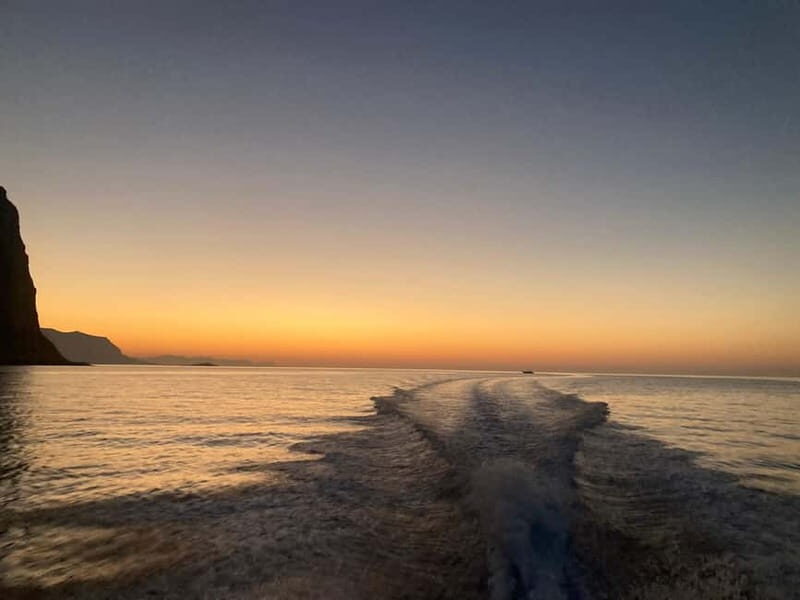
- You may catch sunset light: several guides/tours are timed for evening views, though clouds can happen.
Why Trapani’s salt pans work best with a guide
Trapani salt isn’t just scenic. It’s a working system with layers—water, evaporation, and careful timing—built over generations. A good guide helps you see what you’d normally miss, like the purpose behind the tank layout and why specific salt areas matter.
I also like that this tour doesn’t treat salt as a generic product. You’ll be guided through how the industry shaped the local place, and you’ll finish with tastings that make the difference feel real on your palate, not just in your photos.
The main consideration is that you’re outside for portions of the visit. So if you’re sensitive to heat, wind, or uneven ground around salt tanks, wear decent shoes and plan to stay flexible if the timing shifts.
You can also read our reviews of more tours and experiences in Sicily.



The port fire station start: quick, practical, and a little unusual
You meet at the Vigili Del Fuoco Distaccamento Portuale Trapani at Via Ammiraglio Staiti n°101, right at the port. It’s only a few minutes at the start point, then you’re moving toward the first salt pan, so you’re not burning time waiting around.
This is also a tour that comes with air-conditioned vehicle service. That matters in Sicily, where even a short ride can be a relief when the sun is strong. You’ll get a mobile ticket, and everything is set up so you can just show up and go.
If you’re using public transport, the meeting point is described as being near it. And if you’re traveling with a service animal, that’s allowed.
Maria Stella mill: the 15th-century heart of the process

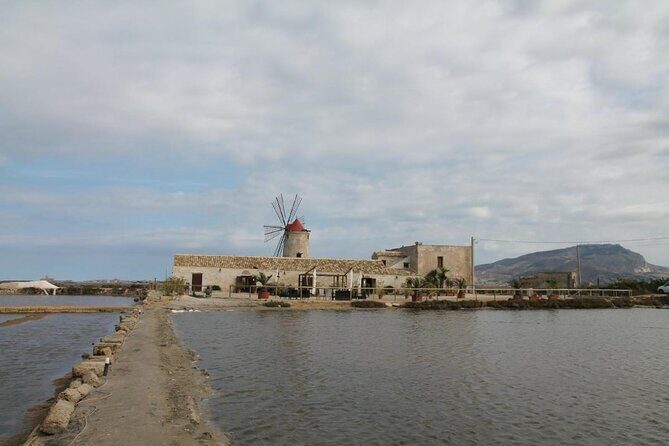
The first stop brings you to the Maria Stella salt pan, where you’ll see a mill structure dating to the end of the fifteenth century. Even before you get to the details of today’s salt-making, it gives you a timeline anchor: this place has been producing salt for a very long time.
Here’s what makes this stop feel more than just a photo op. You’re not only looking at salt pans; you’re learning why mills and infrastructure existed in the first place—how the system supported the work of salt harvesters over centuries. In the explanations you receive, you may even hear small but memorable details, like how local craftsmen used different practical measurements for materials such as roof tiles.
If you like “how things work” travel, this is the part that hooks you early.
Salina Chiusicella: four orders of tanks and major birdlife
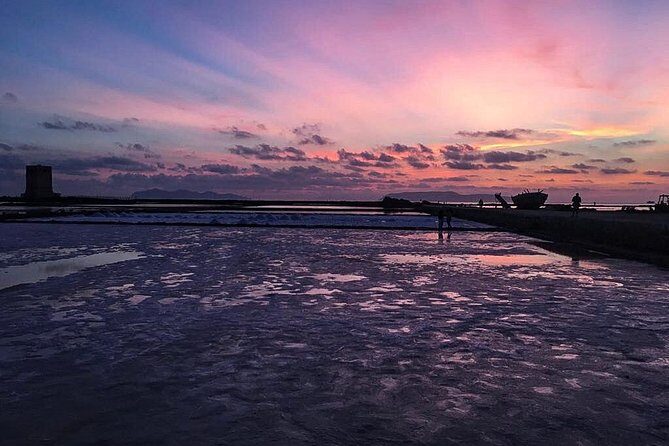
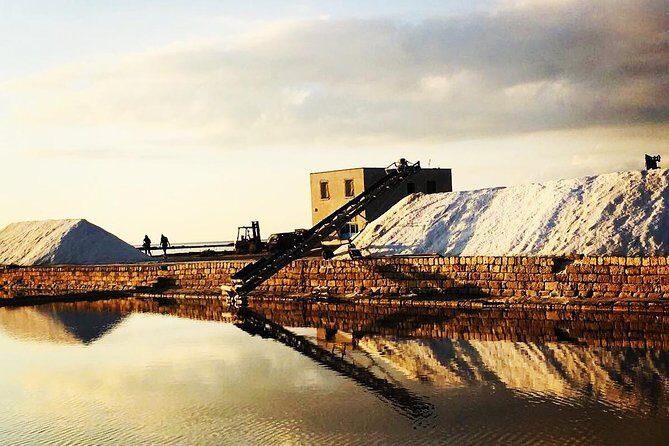
Next you head to Salina Calcara, described through Salina Chiusicella. This is where you start seeing the salt system as a sequence, with four orders of salt tanks used to transform sea water into salt through evaporation steps.
This is also the stop where the area can surprise you with wildlife. Expect sightings like flamingos, herons, and egrets when conditions are right. Salt flats can look oddly empty from a distance, but up close they can feel like a living habitat alongside the production.
The useful part of having a guide here is that you learn how to read the site: which areas matter for what stage, and why the layout affects the final product. For photographers, it’s also the moment when you’ll likely understand where the best angles come from.
The tour gives you about 30 minutes at this section, so you get time to look, listen, and regroup without feeling rushed.
Culcasi salt pan, museum mill, and the path of the salt worker

The biggest block of time is at Saline Culcasi, the last salt pan on the route. You’ll be able to enter an ancient mill that’s described as over 600 years old, now functioning as a museum. That museum angle turns what could be a walking tour into something more explanatory.
Inside, you’ll learn how salt was collected and how the mill worked, plus details like tools, hierarchies, and the role salt played locally. Even if you’re not a “history first” traveler, these context pieces make the physical site feel purposeful. You’ll start seeing the industry as a human system, not only an environmental one.
Then you add the tasting and a walk. The tour includes the path of the salt worker, described as a suggestive walk inside the salt tanks. This is the part that often changes how people remember the day. You’re no longer just watching salt production from outside the system—you’re walking where the process happens.
Time-wise, you’ll spend about 1 hour 15 minutes here, which is long enough to take it in.



What you’ll actually taste: salt crystals and the salt-flower moment

Food lovers usually come for the views, then stay for the taste. This tour includes tasting of salt crystal types and the fine, delicate salt flower, including natural and flavored versions.
The flavors listed include orange, lemon, rosemary, and oregano. That combination is exactly why this tasting feels different from buying a jar at home. You get to notice texture, how crystals dissolve, and how aromatized fleur de sel changes the finish of simple flavors.
You’ll also hear guidance on what makes Trapani’s salt special, including discussion around integrale salt and how the local industry values it. I’d treat the health angle as part of the cultural story the guide tells, not a medical claim—still, it can be a strong “wait, I’ve never compared these properly” moment.
If you’ve only tried mainstream salts or Himalayan-style rock salt, this is likely to recalibrate your expectations. If you cook, it’s also one of the easiest ways to learn what kind of salt belongs in finishing versus cooking.
Timing, pace, and what to wear for salt tanks
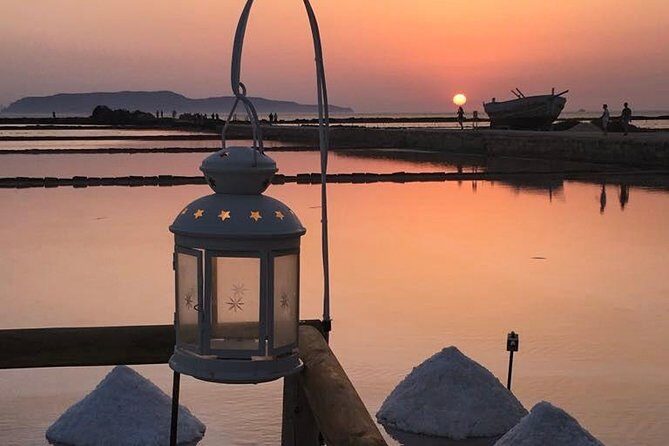
Overall duration is about 2 hours 30 minutes. That sounds short, but it’s enough to cover three different salt sites, include museum time, and do tastings without turning into a marathon.
The pace is practical rather than slow. You’ll have brief transitions between stops, then longer attention at the museum-and-walk segment. Plan for outdoor conditions: salt pans can be windy, and the ground can be uneven near the tanks.
Bring comfortable shoes you trust on irregular surfaces. Dress in layers for wind. And if you’re going in warmer months, consider a hat and water—even if much of your group time is guided and structured.
Value for $60.46: why the package makes sense
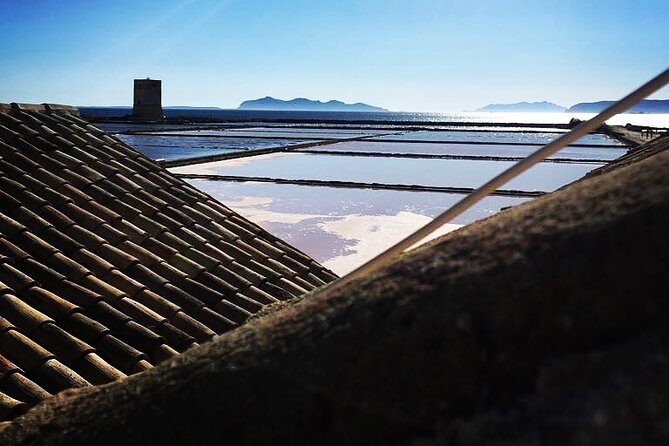
At $60.46 per person, this tour is competing with simpler options like a museum-only visit or a self-guided salt-pan stop. The difference is what you’re buying beyond access: a guide who connects the sites, plus included tastings, plus transport.
Here’s what’s included:
- air-conditioned vehicle
- all fees and taxes
- tastings of salt crystals and aromatized salt flower
- salt museum ticket
- three salt pans
- path of the salt worker
- guide
Not included: tips.
So the value depends on how you travel. If you love the moment when a place turns into understanding—how it works, why it looks that way, and how products differ—you’ll likely feel the price is fair. If you only care about quick photos and don’t want structured explanations, you might feel you could do it cheaper on your own.
The small-group approach helps the value too. Fewer people means more time for questions and more chance the guide can point out details at each stop without shouting across a crowd.
Who this tour fits best (and who might want a different plan)
This is ideal for:
- food-minded travelers who want a real salt comparison, not just scenery
- couples looking for a gentle, memorable outdoor walk
- history and craft lovers who enjoy how industry shaped daily life
It’s also a good “family excursion or romantic activity” style plan, based on how people describe the experience length and how the tasting and walking format works for different ages.
Where it may not fit as well:
- If you hate outdoor walking, even a short or moderate one, the path inside the tanks may feel like too much.
- If you’re strict about timing and reservations, keep in mind the tour runs as a fixed flow and can be affected by weather.
My practical verdict: should you book SALT TOUR-all inclusive?
If you want a short Sicily experience that mixes salt-making technique, a museum stop, and tastings, I think you should book it. The tour’s best feature is the way it ties three separate salt-pan areas into one story—then proves it with a taste of salt flower in citrus and herb flavors.
I’d book this if you’re curious about why Trapani salt has a reputation and you’d rather learn from a local guide than guess from guidebooks. I’d pause if you’re hoping for a completely self-paced visit, or if your schedule is so tight that a weather shift would stress you out.
FAQ
FAQ
How long is the SALT TOUR in Trapani, Paceco, and Nubia?
It’s about 2 hours 30 minutes, approximately.
Where does the tour start and end?
The meeting point is Vigili Del Fuoco Distaccamento Portuale Trapani, Via Ammiraglio Staiti n°101, 91100 Trapani TP, Italy. The tour ends back at the same meeting point.
What language is the tour offered in?
The experience is offered in English.
What’s included in the all-inclusive price?
Included: air-conditioned vehicle, all fees and taxes, tastings of salt crystals and aromatized fine flower, salt museum ticket, three different salt pans, the path of the salt worker, and the guide.
What should I know about group size?
It’s described as having limited places (8 people) to keep the experience intimate, and a maximum of 16 travelers overall.
What’s not included?
Tips are not included.
What happens if the weather is bad?
The experience requires good weather. If it’s canceled due to poor weather, you’ll be offered a different date or a full refund.