REVIEW · SICILY
WalkingTour CATANIA – discovering the city of lava with a licensed guide
Book on Viator →Operated by GuidingSicily · Bookable on Viator
Lava City comes with stories on every corner. This small-group walk in Catania pairs official, licensed guidance with major sights you can actually reach on foot, plus a stop at the daily fish market. I especially like how the tour keeps linking the city’s buildings to volcanic lava that shaped it all.
The biggest potential drawback is simple: it’s a street walk, and some sidewalks can be uneven, so good shoes matter more than you’d think. If the weather turns, the walk depends on good conditions, so you may need to be flexible with timing.
In This Review
- Key Highlights You’ll Feel Fast
- Why This Catania Walk Fits 2–3 Hours Perfectly
- Meeting Your Licensed Guide at Piazza del Duomo
- Piazza del Duomo: Norman Bones, Baroque Face, Lava Symbol
- What to watch for here
- Palazzo degli Elefanti: The Town Hall with Elephant Gables
- A’ Piscaria Fish Market: Local Food Culture in Full View
- Ursino Castle and the Lava That Changed the Coast
- Important detail
- Via dei Crociferi: Baroque Facades After the 1693 Earthquake
- Piazza Università: University Courtyards on Lava Pebbles
- Price and Value: Why $24.19 Can Make Sense
- Who This Tour Is Best For
- Practical Tips So You Don’t Waste Time
- Should You Book This Catania Lava City Tour?
- FAQ
- Where does the tour start?
- How long is the walking tour?
- Is the tour offered in English?
- Is there a group size limit?
- Is Ursino Castle included, or do I pay separately?
- What happens if the weather is bad?
Key Highlights You’ll Feel Fast
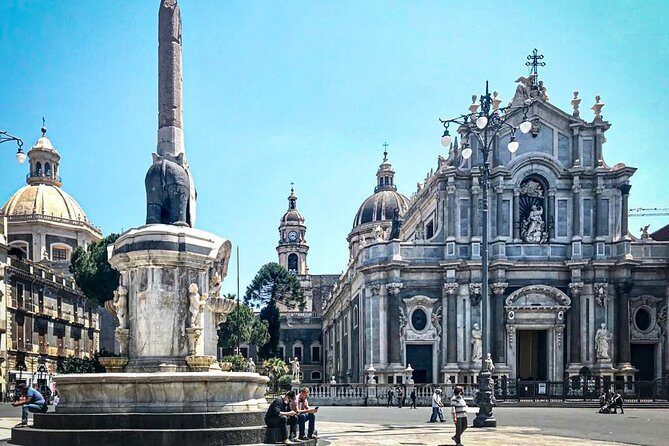
- Licensed meeting point in Piazza del Duomo with the GS (GuidingSicily) info hub
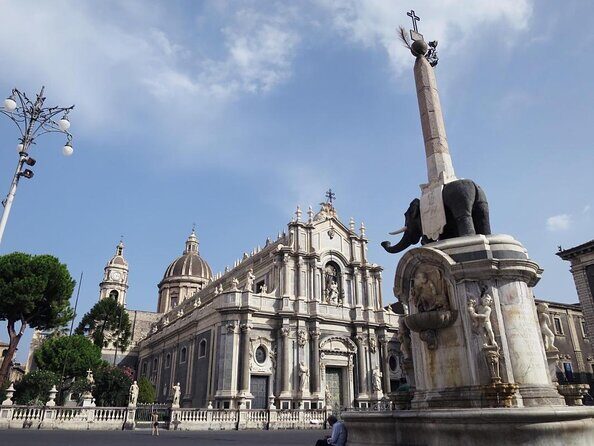
- Piazza del Duomo icons: the Norman-era cathedral look and the liotru lava-elephant symbol
- Palazzo degli Elefanti (Town Hall) with its recognizable elephant carvings
- A’ Piscaria, the daily fish market with local food beyond seafood
- Ursino Castle’s lava-filled moat and the black basalt you can still spot
- Via dei Crociferi baroque facades shaped by the 1693 earthquake
Why This Catania Walk Fits 2–3 Hours Perfectly
This is the kind of tour that helps you start a trip with the right context, fast. You’re in central Catania, moving on foot between top landmarks, and the guide’s job is to connect the dots: how the city’s look, materials, and traditions all relate back to Etna and repeated rebuilding.
The format is also easy to manage. With a maximum group size of 15 people, you get enough attention to ask questions without being swallowed by a crowd. And because it runs about 2 to 3 hours, you can still keep the rest of your day open for a market wander, an espresso break, or a longer sit-down lunch.
You can also read our reviews of more guided tours in Sicily


Meeting Your Licensed Guide at Piazza del Duomo
Your tour starts in Piazza del Duomo at the GS (GuidingSicily) info point. That matters because you’re not hunting around for a guide with a megaphone. You meet authorized guides with official licenses right at the heart of the old city, then you move together.
You also get a clear rhythm from the start: stand still first, then walk. That helps a lot in Catania, where the streets can feel loud and fast. On a first visit, I like tours that let you get your bearings before you go deeper into the grid.
Most groups begin at 10:30 am. It’s also offered in English, and you’ll use a mobile ticket. If you like structure, that combination is reassuring.
Piazza del Duomo: Norman Bones, Baroque Face, Lava Symbol
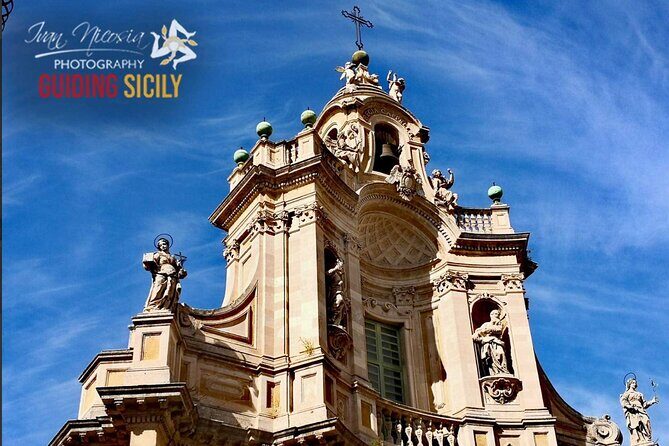
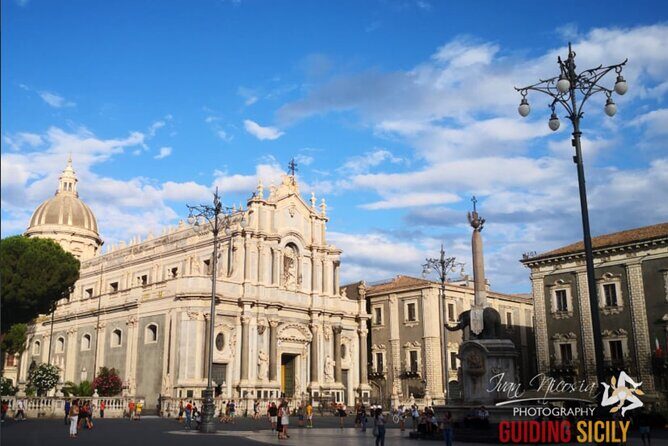
This stop is where the tour sets its main theme: Catania as a city built from volcanic ground. The cathedral you’ll see is Norman in origin but known for its baroque appearance, which is a helpful lesson in how the city’s style changed over time instead of freezing in one era.
Directly in the same square you’ll also find:
- Palazzo degli Elefanti, Catania’s Town Hall
- A fountain with the liotru, a lava-stone elephant surmounted by an obelisk
This elephant symbol is more than decoration. It’s the kind of detail that helps you read Catania later, when you see lava stone everywhere and realize it’s part of daily identity, not just geology.
What to watch for here
Stay close to the square and don’t rush. The guide’s storytelling works best when you can see the façade, the carvings, and the overall layout of the square from a comfortable spot.
Palazzo degli Elefanti: The Town Hall with Elephant Gables
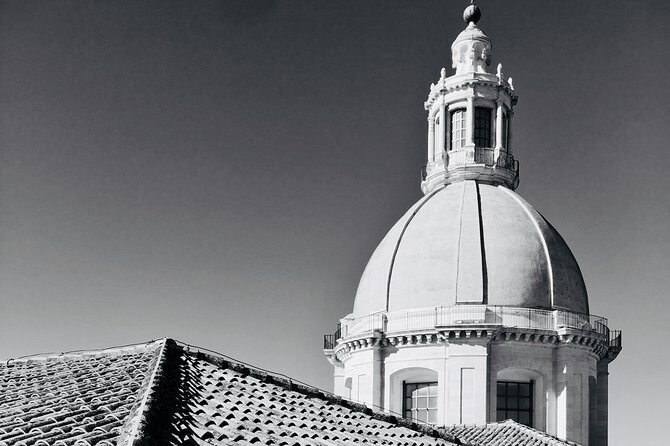
Next you move to Palazzo degli Elefanti, the city’s Town Hall. It’s called that because you’ll spot representations of the elephant on the gables of balconies on the noble floor.
I like this stop because it’s a quick way to connect power and symbolism. Town halls often look like pure architecture until someone points out why certain animals, shapes, and local references show up in civic space. Here, the elephant theme ties back to the liotru you saw earlier, so you start building a mental map of what matters to Catania.
This is also one of the easier moments in the walk: it’s short, mostly visual, and it gives you a break before the next street move.
You can also read our reviews of more city tours in Sicily


A’ Piscaria Fish Market: Local Food Culture in Full View
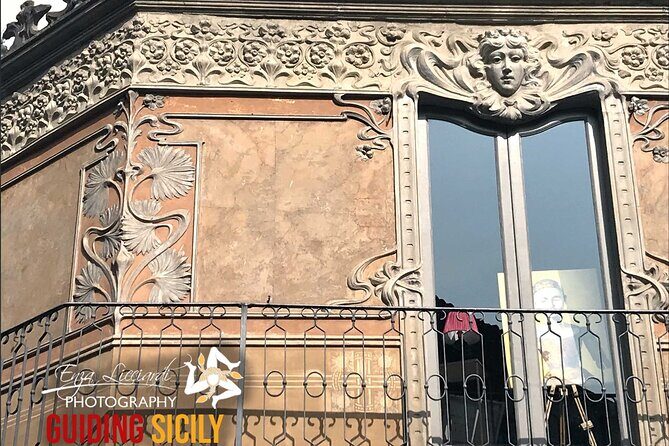
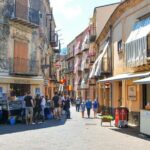
From Piazza del Duomo, you’ll head to A’ Piscaria Mercato del Pesce, a fish market held every day. It’s adjacent to the main square, which makes it a smart add-on rather than a detour.
Even if seafood isn’t your main thing, this stop is about local food patterns: you’ll find more than fish, including items like cured meats, cheeses, fruit, and vegetables. That broad mix is great for understanding how Sicilians build meals. It also makes the market feel like part of real life, not just a tourist photo stop.
One practical note: markets can be busy. If you’re sensitive to crowds, keep your expectations for this part realistic. The best way to enjoy it is to slow down and let the guide point out what to look for, rather than trying to read everything at once.
Ursino Castle and the Lava That Changed the Coast
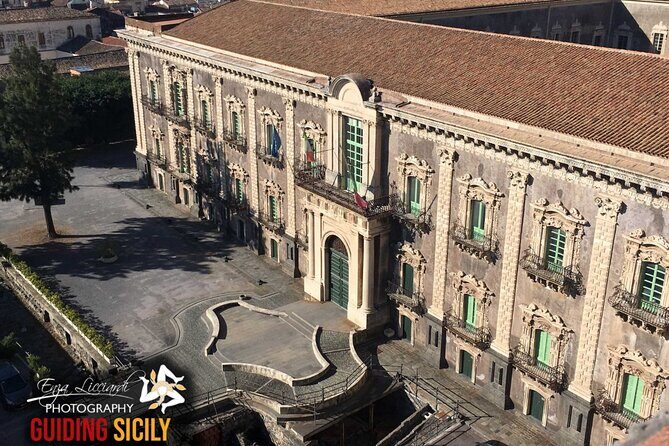
Then you head to Ursino Castle, the Swabian stronghold once overlooking the sea. The story here is that in the 17th century, a lava flow filled the moat, essentially wrapping the castle with lava’s red-hot impact.
What I find striking is that you can still see black basalt today. That’s the tour’s “aha” moment in physical form: this isn’t just history told in words. It’s material you can still recognize.
Important detail
Admission for Ursino Castle is not included. That doesn’t ruin the stop; the castle setting and its lava connection still work as a landmark visit. But if you want to go inside, you’ll need to plan for that extra ticket at your own pace.
Via dei Crociferi: Baroque Facades After the 1693 Earthquake
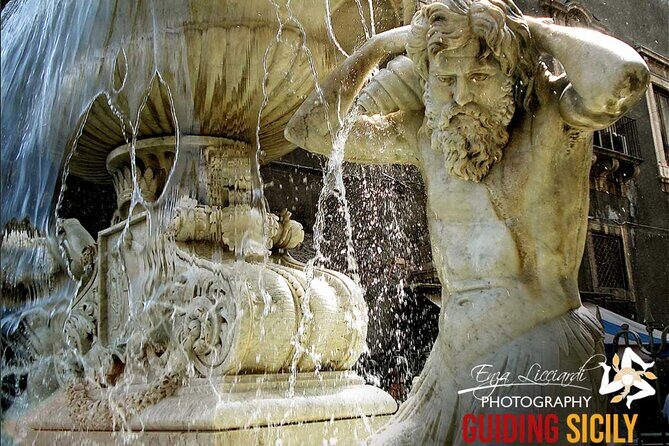
Next comes Via dei Crociferi, famous for the way one church and monastery after another line the street. This is where Catania’s baroque personality becomes very real.
The key context is the 1693 earthquake, which devastated the area. After that, many structures were rebuilt in baroque style, and the street’s visual impact is the result. If you’ve ever wondered why some cities seem to have baroque everywhere while others don’t, this street is a case study in rebuilding, faith, and local taste after a disaster.
This section can also feel long because you’re walking along a run of façades. It helps to keep listening to the guide’s connections between buildings, not just collecting names.
Piazza Università: University Courtyards on Lava Pebbles
The final major stop is Piazza Università, centered on the Palazzo del Rettorato, seat of the oldest university in Sicily (1434). What makes it memorable is the courtyard paved with lava pebbles, where “tens and tens of generations” of students would have passed.
That detail is oddly powerful. You stop thinking of lava as something far away, and start thinking of it as the literal ground under studies, work, and daily routine. Then, in front of it, you’ll see the Palazzo di San Giuliano, another university seat, linked to the past power of one of Sicily’s most influential and wealthy families.
This is a good closing moment because it changes the mood from sightseeing to identity. You’re not only looking at old stone. You’re seeing how institutions and social life shaped the city too.
Price and Value: Why $24.19 Can Make Sense
The price is $24.19 per person, and the walk runs about 2 to 3 hours. For that money, you’re buying something that’s hard to replicate on your own: a guided sequence that explains what you’re seeing without you needing to research every façade.
Most stops on the route have free admission (Duomo square sights, Palazzo degli Elefanti area, and the market itself), so your value comes from interpretation rather than paying lots of entry fees. The one notable exception is Ursino Castle, where admission isn’t included. If you’re the type who likes to go inside and not just look from outside, budget for that add-on.
Also, with a small maximum group size (15), you’re less likely to get the rushed treatment. That’s a big factor for a walking tour, where timing and listening are everything.
Who This Tour Is Best For
This is a strong fit if:
- You want a first-visit orientation to central Catania
- You like learning how everyday materials connect to big events, like Etna and the 1693 earthquake
- You enjoy a market stop where local food life is visible, not hidden
- You prefer small groups with a guide who can keep things moving
It’s also a good way to plan your day because the route returns to the meeting point. That makes it easy to continue exploring on your own afterward.
Practical Tips So You Don’t Waste Time
Wear comfortable shoes. Some sidewalks can be old and rough, and you’ll be walking longer than it looks from a map. Bring water, especially if you’re doing this in warmer months. One guide-led experience shared that their approach included mindful breaks and shade-seeking when the day ran hot.
For listening, position yourself where you can hear clearly. Street noise can be a factor in busy areas like the market and main squares.
If you’re planning on going inside Ursino Castle, remember that its admission is not included, so decide in advance whether you want that extra stop or prefer to stay with the exterior landmark views.
Finally, keep expectations flexible with the weather. The tour requires good weather, and you may be offered a different date or a refund if conditions aren’t right.
Should You Book This Catania Lava City Tour?
I’d book this tour if you want a quick, guided way to understand why Catania looks the way it does—especially the lava connection you’ll keep noticing after the walk. The pacing is short enough to fit busy itineraries, and the route covers big-name landmarks without turning into a marathon.
Choose it even more confidently if you care about guide quality. The strongest pattern from past group experiences is how personable the guides can be, with clear storytelling and practical cultural context. You may meet guides such as Titianna, Maria Luisa, Giuseppe, Alicia, Enza, Ivan, or Totò—names that have shown up with strong feedback for teaching, clarity, and keeping things enjoyable.
If you’re trying to maximize every minute, this is a smart first step. If you hate walking or want lots of museum time, you might prefer a slower option. But for a 2–3 hour “get it all in context” walk, this one is hard to beat.
FAQ
Where does the tour start?
The tour starts in Piazza del Duomo, 95100 Catania CT, Italy, at the GS (GuidingSicily) info point. It ends back at the meeting point.
How long is the walking tour?
It runs about 2 to 3 hours (approx.).
Is the tour offered in English?
Yes, the tour is offered in English.
Is there a group size limit?
Yes. The tour has a maximum of 15 travelers.
Is Ursino Castle included, or do I pay separately?
Ursino Castle admission is not included, so you would need to pay if you want to enter.
What happens if the weather is bad?
This experience requires good weather. If it’s canceled due to poor weather, you’ll be offered a different date or a full refund.