REVIEW · SICILY
Ortigia: Syracuse’s Ancient Town Center Private Walking Tour
Book on Viator →Operated by Hermes Sicily Tourist guides group · Bookable on Viator
Two hours, and Ortigia makes sense fast. I like how this private, small-group walk gets you from one key layer of Syracuse to the next without wasting time figuring out routes. I also love the mix: Greek foundations, baroque churches, and a real look at everyday life as you wind through Ortigia’s streets and markets.
The one catch is access and dress rules. The cathedral interior costs extra and can be shut out during mass or weddings, and the visit needs a strict dress code (no shorts or sleeveless tops; shoulders covered) or you may be refused entry.
In This Review
- Key things that make this tour worth your time
- Ortigia is the shortcut to understanding Syracuse
- Price and value for a private 2-hour walk
- Temple of Apollo and Piazza Archimede: the Greek and civic snap to attention
- A scenic stroll via Cavour and Collegio dei Gesuiti
- Piazza Duomo: the square where Syracuse’s big institutions cluster
- Entering Syracuse Cathedral: what you can see, when, and what can block you
- Chiesa di Santa Lucia alla Badia: St. Lucy’s interior visit and the Monday caveat
- Fonte Aretusa: the spring, the papyrus, and the Alpheus-Arethusa story
- Ortigia’s narrow streets and the Giudecca district: walking through real layers
- How to get the most out of the tour (without turning it into homework)
- Who this tour is for
- Should you book Ortigia: Syracuse’s Ancient Town Center Private Walking Tour?
- FAQ
- How long is the Ortigia private walking tour?
- Where does the tour start?
- Is the tour offered in English?
- What’s the main extra cost during the tour?
- Do I need to pay to enter the cathedral?
- Are cathedral interiors always available?
- Is there a dress code for the cathedral?
- Is Chiesa di Santa Lucia alla Badia open every day?
- What happens if the weather is bad?
- Can I get a refund if plans change?
Key things that make this tour worth your time
- Starts at the Temple of Apollo so you get the Greek frame of reference right away
- Neoclassical Piazza Archimede and the Diana fountain give you quick visual variety
- Piazza Duomo landmarks connect the cathedral square to the civic buildings around it
- Cathedral interiors are optional but timed and follow dress requirements
- Fonte Aretusa stops the walk for stories about Alpheus and Arethusa, plus the famous papyrus plants
- Giudecca district walking puts you in the old Jewish quarter rhythm, and sometimes even a historic Mikveh ritual bath gets pointed out
Ortigia is the shortcut to understanding Syracuse
If you want Syracuse to click, Ortigia is where you start. It’s the old town right across from the main city, and you feel it in your feet: narrow streets, sudden squares, and buildings stacked on earlier buildings. This kind of guided walk helps you read the place instead of just passing it.
I also like that this tour is built for a short stay. You get to the big-name sites without turning your day into a map-obsessed scavenger hunt. With a guide doing the order and explanations, the two-hour format stays focused and efficient.
And yes, you’ll see church fronts and fountain views. But what makes it memorable is how the guide connects them: Greeks, Romans, Arabs, then Christians, all leaving traces that still show up on top.
You can also read our reviews of more walking tours in Sicily


Price and value for a private 2-hour walk
At $107.53 per person for about 2 hours, this isn’t a bargain bus tour. But you are paying for a private walking format with a professional guide, and for time you don’t have to waste. That matters in Ortigia, where the streets are compact and the best angles can be easy to miss if you’re wandering.
Most stops listed here are free to visit on the outside. The main extra cost to plan for is the cathedral interior ticket (about €2 per person). And because the tour is guided, you get context at every step, not just photos in front of stone.
If you’re traveling as a couple or a small group, the pricing tends to make more sense. The tour also notes group discounts, which can soften the cost if your group size works in your favor.
Temple of Apollo and Piazza Archimede: the Greek and civic snap to attention
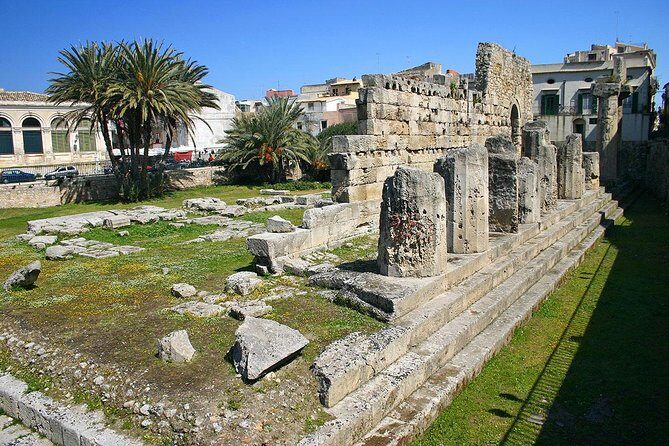
You start near the Tempio di Apollo, where the setting does part of the work. This is the oldest stone temple built by Greeks in Sicily, and the guide’s framing helps you understand why that detail matters. It’s not just ancient—it’s a marker. You’re standing at the beginning of the story that later rulers and religions built on.
From there, you move to Piazza Archimede. This is where Syracuse shifts from temple scale to square scale. The Diana fountain, in its neoclassical style, gives you a fresh visual cue. I like this stop because it breaks up the “one massive site after another” rhythm and reminds you that Ortigia is still a living town, not a museum hallway.
Even the short durations help. The pace keeps you from overheating and from getting “monument fatigue.” It’s also a good sign if you’re not trying to spend half a day indoors.
A scenic stroll via Cavour and Collegio dei Gesuiti
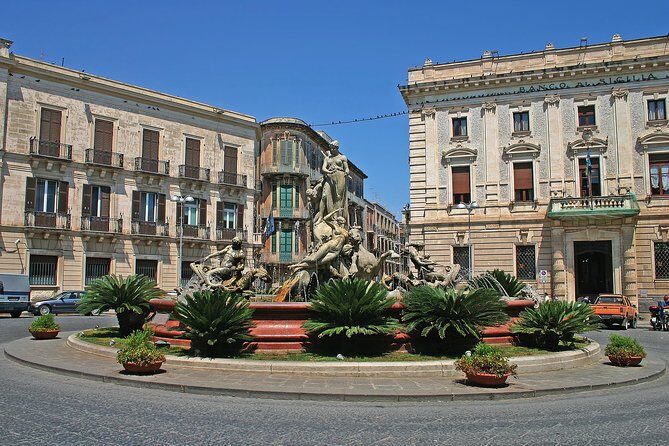
Between the major squares, you get a walk that feels like the town itself. The route includes a pass along via Cavour, and you’ll go by the Collegio dei Gesuiti. You don’t need to memorize the street name to appreciate what you’re seeing: this is how the architecture threads together. Religious orders, civic structures, and older foundations all coexist.
This section is also where walking tours earn their keep. You’re not just moving between points—you’re picking up pattern recognition. You start noticing how façades face the street, how courtyards and side streets connect, and how the town holds different eras in the same sightline.
Piazza Duomo: the square where Syracuse’s big institutions cluster
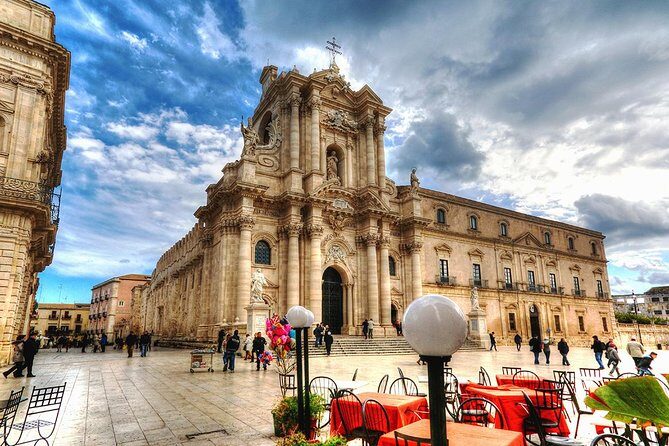
Then you hit Piazza Duomo, and it’s the obvious “center” moment—except the guide makes it more than a photo stop. You’ll spend time orienting to the square’s main buildings, including:
- the cathedral
- Palazzo Vermexio
- the arcivescovado (archbishop’s palace)
- Palazzo Beneventano del Bosco
This is the part of the tour where your understanding gets practical. Instead of just knowing there’s a cathedral, you learn what else defines the space and why it’s the heart of the city’s public life.
If you’re the type who likes symbolism—who built it, who ruled it, who used the space—this stop will land well. Even if you don’t, it helps you see the cathedral square as a system, not a single building.
You can also read our reviews of more private tours in Sicily


Entering Syracuse Cathedral: what you can see, when, and what can block you
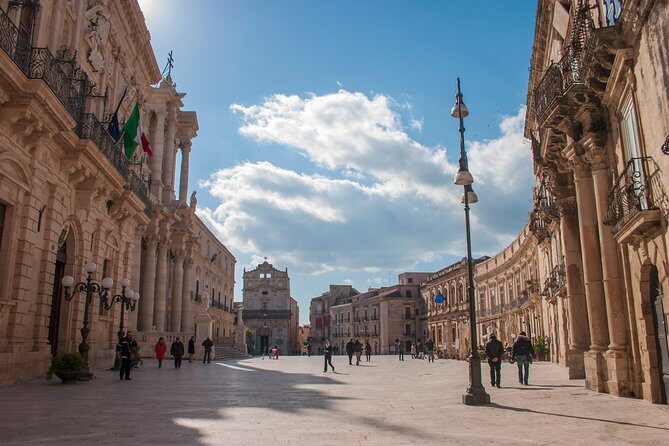
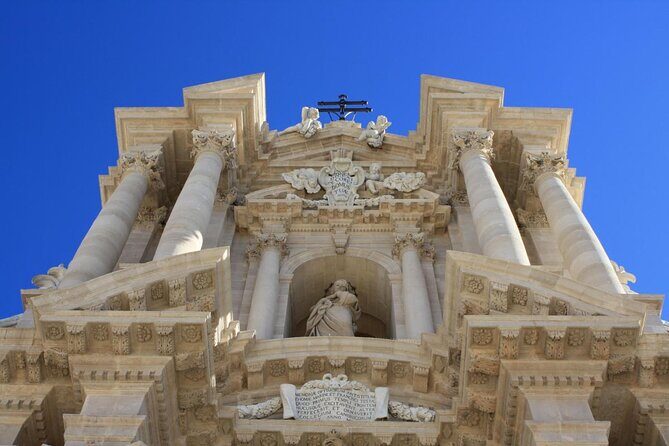
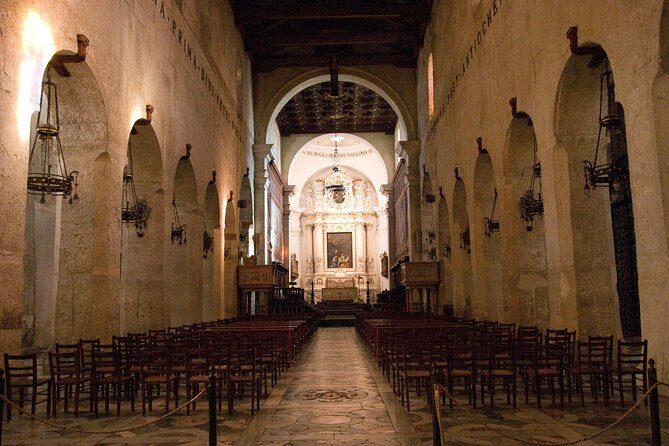
The tour includes a visit to the interiors of Syracuse Cathedral, which sits on older Greek temple foundations and blends eras into one impressive structure. That built-on-top story is the point. You’re looking at a baroque church that literally rests on ancient Greek stone.
There are three practical things to know:
1) It costs extra to go inside. The cathedral interior ticket is not included, listed as about €2 per person.
2) Timing matters. Interior access is not possible during holy mass or marriages. If that happens, the guide explains from outside instead.
3) Dress code is strict. No shorts or sleeveless tops. Shoulders must be covered for both men and women. If you ignore this, you can be refused entry.
That dress code can feel annoying, but it’s also easy to plan for: pack a light layer just in case, and you’ll avoid losing the interior portion.
When the cathedral is open, this is one of the highest-value parts of the tour. The reviews and guide chatter also point out details connected with Saint Lucy—small chapels and relic-related spots that are easy to overlook without someone steering you toward them.
Chiesa di Santa Lucia alla Badia: St. Lucy’s interior visit and the Monday caveat
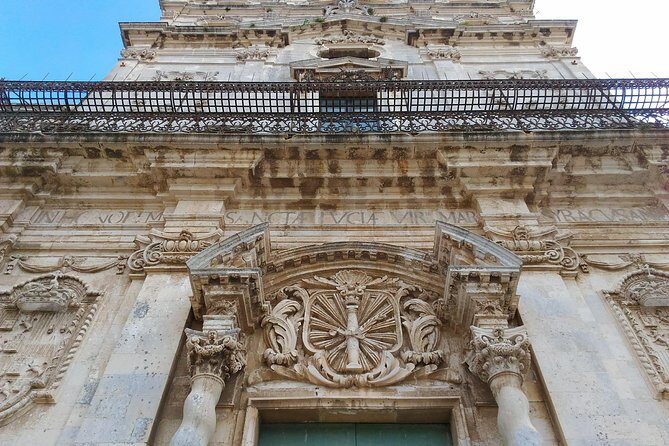
Next comes Chiesa di Santa Lucia alla Badia, where you can visit St. Lucy’s church interiors. The interior stop is listed as free, which is a nice perk.
There’s one big limitation: the church is closed on Mondays. If you’re visiting on a Monday, you’ll miss the interior access for this specific stop. The guide may explain alternatives from the outside, but the interior part won’t happen that day.
If the church is open, look out for the way the guide ties the site to art and devotion. Some guides point out notable works connected to St. Lucy, including Caravaggio’s Burial of Saint Lucy, when it’s viewable as part of the church experience.
This stop works well if you like churches that have a job beyond decoration. You’re seeing a religious site with layers of meaning, not just a pretty room.
Fonte Aretusa: the spring, the papyrus, and the Alpheus-Arethusa story
Then the tour slows down slightly for Fonte Aretusa, Syracuse’s legendary spring. Even before stories, the setting catches your eye because it’s tied to plants. The guide will explain why it’s famous, including the papyrus plants associated with the spring.
The best part here is the myth. You’ll hear the story involving Alpheus and Arethusa, and you’ll likely get the local version of how the myth connects to the geography. This is one of those stops where a little extra explanation turns a simple fountain and water feature into something memorable.
I like this segment because it breaks the “stone and square” theme. It gives you a pause point. It’s also a natural reset if you’re walking under strong Sicilian sun.
Ortigia’s narrow streets and the Giudecca district: walking through real layers
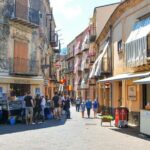
Now the tour turns into the classic Ortigia experience: a walk through the old town center of Ortigia and the Giudecca district, the ancient Jewish quarter. This part is about streets as much as landmarks. You move through narrow lanes, pass small corners, and get a sense of how the neighborhood functioned historically.
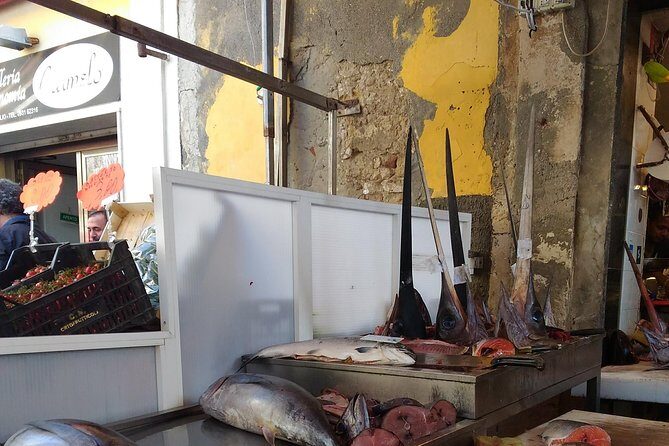
This is also where guides often add life-sized context—what it’s like now, what changed over time, and how religious communities shaped the built environment. The tour description also hints at local markets, and you can expect that kind of scene during the Ortigia wandering. Even a short market stretch helps you feel the town’s daily rhythm rather than only its monuments.
One extra detail you might get from your guide is a look at a historic Mikveh ritual bath in the Giudecca area. Not every walk will highlight the same micro-site, but it’s the sort of thing a well-prepared guide can point out once you’re moving through the right neighborhood context.
If you’ve ever wished a history tour included more “how people actually lived,” this is the section that helps most.
How to get the most out of the tour (without turning it into homework)
This is a walking tour, so your comfort affects everything. Bring comfortable shoes for uneven pavement and short cobblestone sections. You’re also in sun-prone Sicily, so plan for heat. The tour requires good weather, and if conditions are poor, you may be offered a different date or a refund.
Since the cathedral has a dress code, I’d treat that like your first packing rule. Cover shoulders, and you’ll avoid last-minute stress.
Also, make it interactive. Guides here are experienced at answering questions, and it’s worth asking for the extra layer you care about most. If you’re into Greek mythology, press on Fonte Aretusa. If you’re into architecture, ask how Greek temple foundations ended up under later church structures.
One more practical point: the tour ends back at the meeting point. That’s helpful because you can continue exploring without needing a second transit plan immediately afterward.
Who this tour is for
This fits best if you want:
- a guided orientation to Ortigia and central Syracuse in about two hours
- the main landmarks without hunting for them yourself
- a history-focused walk with practical explanations at each stop
It’s also a good pick for first-time visitors because it gives you a map in your head by the end. If you already know your way around and just want photos, you might find the pacing a bit structured. But if you like context, this tour is built for that.
Service animals are allowed, and it’s near public transportation, which can help when you’re coordinating the rest of your day.
Should you book Ortigia: Syracuse’s Ancient Town Center Private Walking Tour?
I think it’s a strong choice if you’re short on time and you care about understanding what you’re seeing. The value comes from the guide-led connections: Greek temple beginnings, civic squares, baroque church layers, the St. Lucy sites, and the myth-and-water stop at Fonte Aretusa, then the Giudecca district walk that brings history into neighborhood form.
I’d book it if you can follow the cathedral dress code and you’re visiting on a day when Chiesa di Santa Lucia alla Badia is open (it’s closed Mondays). If you’re flexible on timing and you like asking questions, you’ll get more out of the walk.
If you only want the easiest sightseeing with no conditions, then plan your expectations around those two variables: interior access depends on church hours and events, and the cathedral interior has a small extra fee. That doesn’t make it a bad tour. It just means you’ll get the best results with a little prep.
FAQ
How long is the Ortigia private walking tour?
It runs about 2 hours.
Where does the tour start?
The meeting point is Via dell’Apollonion, 96100 Siracusa SR, Italy. The tour ends back at the meeting point.
Is the tour offered in English?
Yes, it’s offered in English.
What’s the main extra cost during the tour?
The cathedral interior ticket is not included and is listed at about €2 per person. Everything else on the main stops is listed as free.
Do I need to pay to enter the cathedral?
The cathedral interior visit has an additional entrance fee that isn’t included in the tour price (listed around €2 per person).
Are cathedral interiors always available?
No. Interior access isn’t possible during holy mass or marriages. If that happens, the guide explains from outside.
Is there a dress code for the cathedral?
Yes. No shorts or sleeveless tops. Shoulders must be covered for both men and women, or entry can be refused.
Is Chiesa di Santa Lucia alla Badia open every day?
No. The church is closed on Mondays, so the interior visit isn’t possible that day.
What happens if the weather is bad?
The experience requires good weather. If it’s canceled due to poor weather, you’ll be offered a different date or a full refund.
Can I get a refund if plans change?
Free cancellation is available up to 24 hours in advance for a full refund. After that window, the amount paid isn’t refunded.