REVIEW · CATANIA
Cooking Class Arancini in Catania
Book on GetYourGuide →Operated by Futuro e Lavoro · Bookable on GetYourGuide
Catania has a way of making street food feel like something sacred. This arancini and almond paste cooking class is set in a real kitchen lab, where you learn the how and why behind two Sicilian symbols. You also get a close, hands-on lesson with an instructor who teaches in English (and Italian).
What I like most is the step-by-step focus on getting the rice right and building the arancino so it holds together. The chef also walks you through the fillings, with vegetarian options in the mix, and then the crunchy breading that gives arancini their signature bite.
One thing to consider: the recipe booklet can be hit-or-miss. One past participant found it incomplete, so if you care about replicating the rice instructions at home, plan to ask the chef direct questions and jot down your own notes while you cook.
In This Review
- Key highlights to know before you go
- Cooking Arancini in Catania: a 3-hour hands-on food lesson
- Entering the kitchen lab at the meeting point
- Rice, fillings, and the arancino build: what you actually learn
- The crunchy breading step that makes arancini work
- The almond paste lesson: the sweet counterpart to arancini
- Tasting time: wine, coffee, and what you made
- Taking the recipes home: booklet included, but plan for questions
- Language and pacing: English-friendly teaching in a small group
- Value for money: why this class feels worth it
- Who should book this arancini + almond paste class
- Should you book this arancini and almond paste class in Catania?
- FAQ
- How long is the cooking class?
- Where does the class meet in Catania?
- What will I learn to cook?
- Are vegetarian fillings available?
- What language is the instruction available in?
- Is it a small group?
- Will there be food and drinks during the class?
- Is the class suitable for young children?
Key highlights to know before you go
- Real laboratory kitchen where you cook like it’s a working prep space, not a demo
- Two Sicilian classics: arancini plus almond paste
- Rice technique explained so the shape and texture make sense
- Fillings that go beyond one option, including vegetarian possibilities
- Tastings with Sicilian wine, coffee, and water at the end
- Small group (up to 6), so you’re not stuck watching from the sidelines
Cooking Arancini in Catania: a 3-hour hands-on food lesson
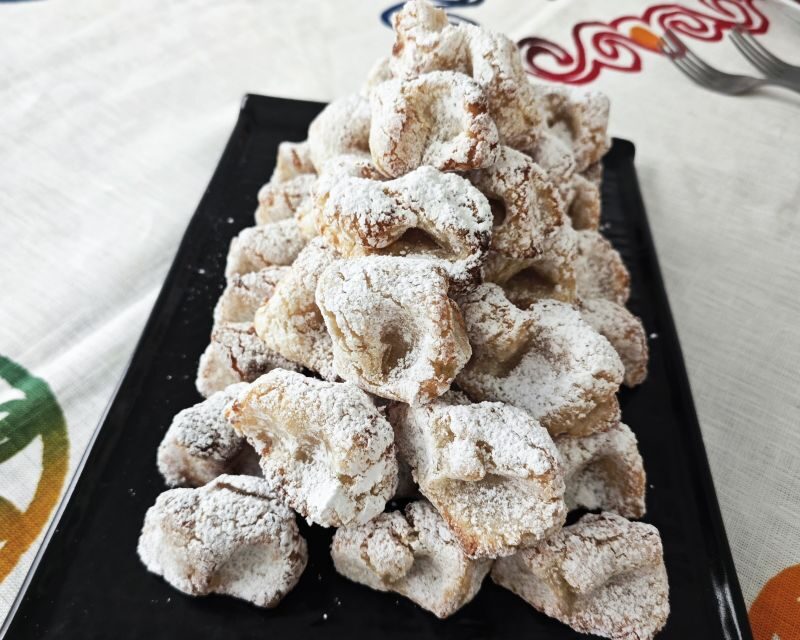
If you love Sicilian food, you already know arancini are more than a snack. They’re comfort food you can pick up with one hand, but they’re also a little science project: rice texture, filling temperature, and crunchy coating all have to work together. This 3-hour class is built around that exact idea. You’re not just learning a recipe. You’re learning the workflow that turns rice and filling into something that survives the frying pan and still tastes great.
The setting matters. This happens at a laboratorio di cucina in Catania, with a professional kitchen setup. That means you get the tools and process style you’d expect from real food work—clearly laid out, with the chef guiding your hands as you go.
And because it’s a small group limited to 6, you’re more likely to get your questions answered quickly. One reason this class stands out is how personal it can feel when the group is tiny; when it’s just a couple of people, you get a tighter, more conversational rhythm with the instructor.
You can also read our reviews of more cooking classes in Catania

Entering the kitchen lab at the meeting point
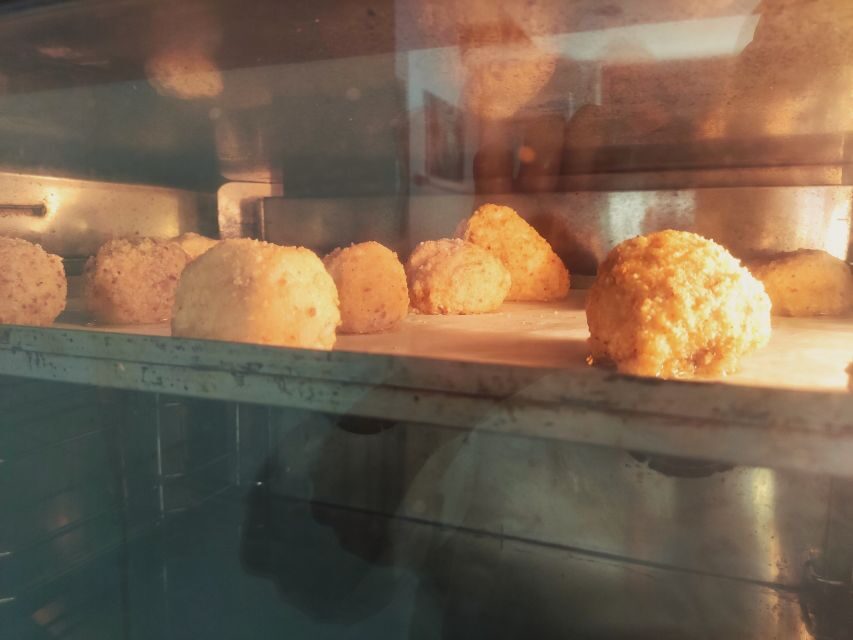
You meet at Laboratorio di cucina (near the coordinates 37.51484298706055, 15.102240562438965). I like meeting point clarity like this because it helps you show up ready, not hunting around Catania while you’re already hungry.
Plan to arrive a few minutes early. Even though the class is only 3 hours, you’ll want time to settle in, find your station, and get your bearings. Cooking classes move fast when everyone is actively prepping. The better you start, the less frantic the middle feels.
Rice, fillings, and the arancino build: what you actually learn
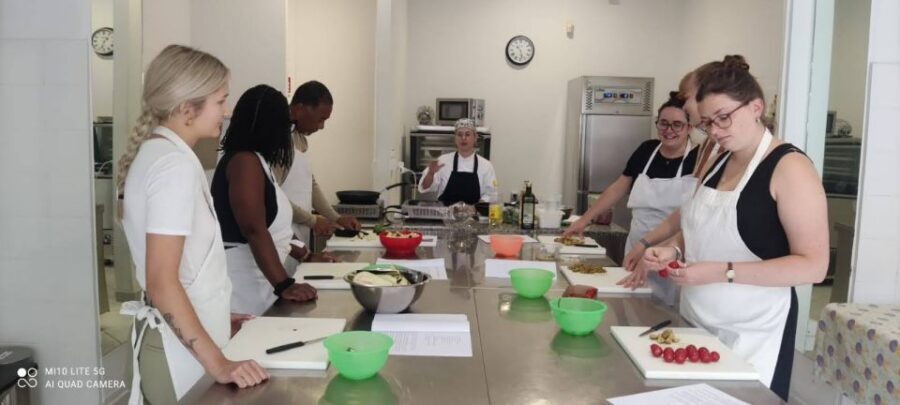
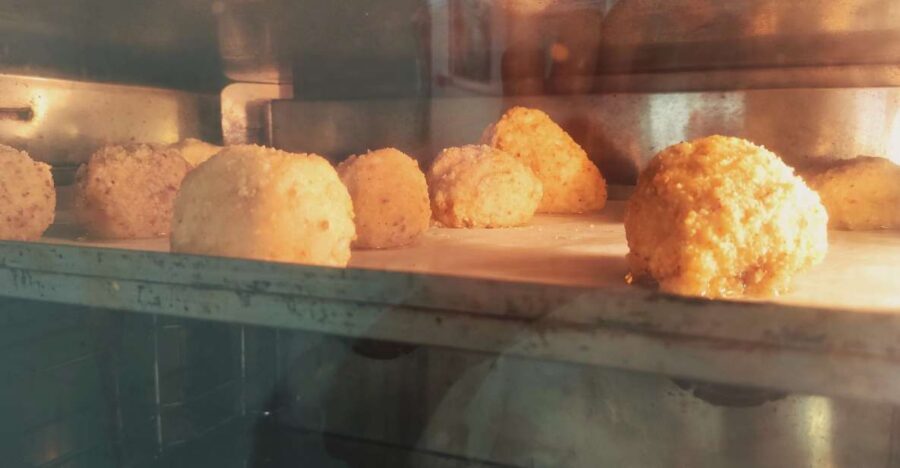
This class focuses on the core of Sicilian arancini: the rice base, the filling choices, and the crunchy coating. The chef explains how the rice should be cooked before you shape it into arancini. That part is more important than it sounds, because rice texture affects everything—how well it forms, how it handles heat, and whether the arancino stays satisfying rather than turning mushy.
You’ll then move into fillings. Different types are prepared, and you have the opportunity for vegetarian fillings. That detail is a real win if your idea of Sicilian cooking includes vegetable flavors (instead of only meat-heavy versions). The class keeps the focus on technique, not on one single flavor path.
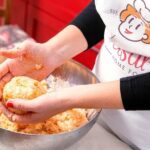
Then comes the build: stuffing the rice and shaping it into arancini. This is where you’ll start to understand why arancini don’t behave like regular fried rice balls. The rice and filling have to be portioned and combined so the final result fries cleanly and bites right.
The crunchy breading step that makes arancini work
Arancini get their personality from the crunch. Here, you’re taught how to make the typical crunchy breading. That likely means you’ll handle the coating process directly—learning what to do, how to do it, and how to avoid the common slip-ups that leave coating uneven or falling off.
This is also one of the easiest places to learn something you can repeat later. If you want to make arancini at home, the breading technique is often the most forgiving place to start. Even if your first attempt isn’t restaurant-perfect, better breading gets you closer to that classic contrast: hot, creamy rice inside and crisp exterior.
The almond paste lesson: the sweet counterpart to arancini
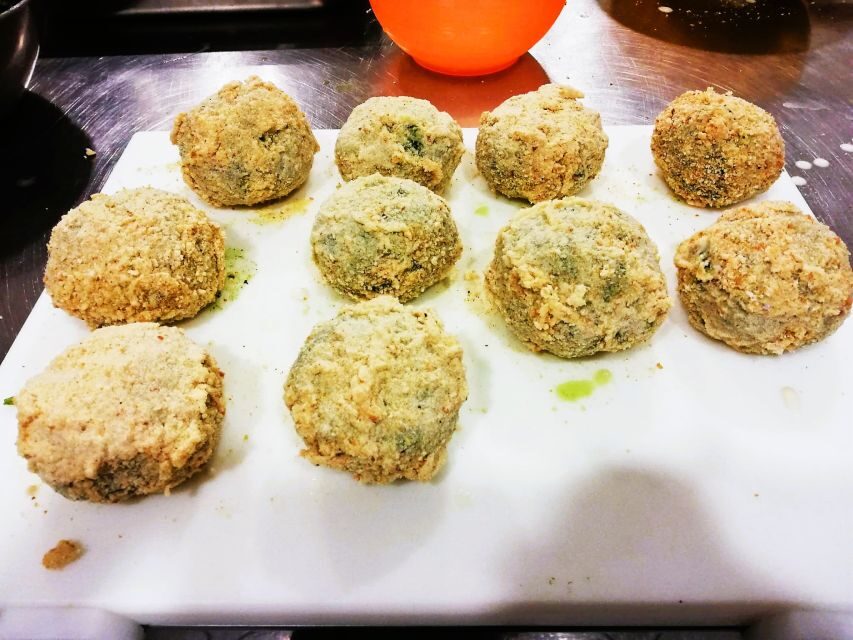
Most arancini classes stop at the savory. This one adds Sicilian almond paste, which changes the whole tone of the experience. You’re still in a cooking lesson mode, but you’re working with a different ingredient structure and different expectations: sweetness, almond flavor, and texture.
You learn how to make the almond paste as part of the same 3-hour session, which gives you a well-rounded souvenir you can taste and then replicate. It also means you’re not leaving with only one skill set. If you’re the kind of person who brings friends to a Sicilian table with snacks plus dessert, this is the combo you want.
You can also read our reviews of more tours and experiences in Catania
Tasting time: wine, coffee, and what you made
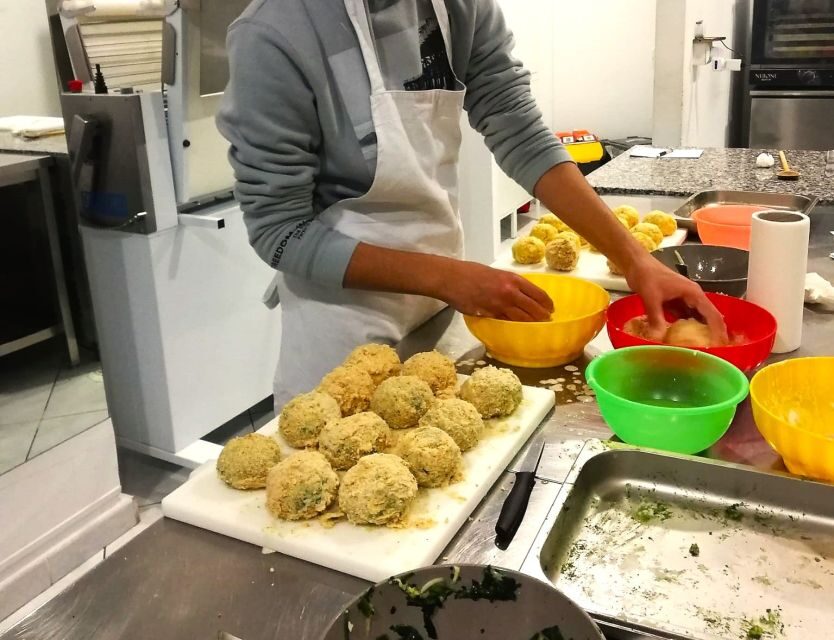
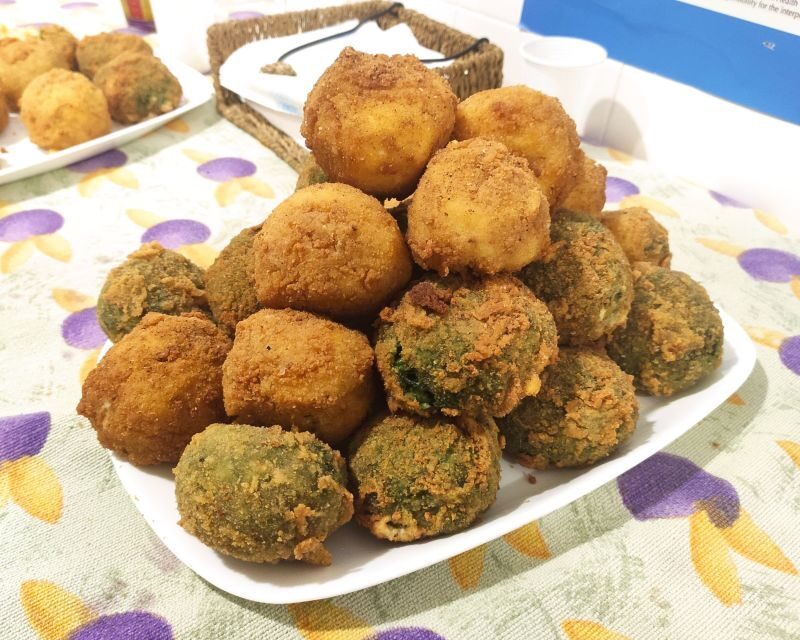
At the end of the class, there’s a tasting of the various types of arancini and almond paste you prepared. This is where the technique clicks, because you can compare bite-to-bite results rather than just hearing about them.
You’re also offered Sicilian-type wine, plus water and coffee. That makes the final hour feel like part celebration, part check-your-work. And if you’re cooking on a hot day in Sicily, the drinks and the slow-down after frying can be a relief.
A couple of notes from past participants that are worth taking seriously:
- Some people reported getting leftovers to take home, which is great if you want to extend the fun beyond the class.
- People also liked having the chance to make and taste more than one variation, not just one version of arancino.
Taking the recipes home: booklet included, but plan for questions
You’ll receive a booklet with the recipes so you can make them for friends and family at home. That’s a strong practical benefit because it turns the class from a one-time experience into a lasting skill.
Still, there’s one clear consideration. One participant said the booklet they received looked like it was copied from a printer and was incomplete, with missing detail for the rice (including quantities). In that same complaint, they were told the rice concept involved cheese, butter, and saffron, but without measurements.
What does that mean for you? It means you should treat the booklet as a starting point, not a perfect copy of the chef’s exact process. During the class, pay attention to:
- rice cooking consistency (how the chef describes the finish)
- what the chef uses and when
- shaping and coating timing
If you care about repeating it accurately, ask the chef for any missing specifics while you’re still in the lab, not after you’ve left Sicily.
Language and pacing: English-friendly teaching in a small group
The instructor can teach in English and Italian, and multiple participants specifically noted good English. That matters because cooking technique relies on clear explanations. When instructions land in a language you’re comfortable with, you’ll learn faster and avoid the guesswork that causes kitchen mistakes.
Pacing is also important. In a group of up to 6, everyone can actually cook—not just stand around. Even when the class is small, you’ll still be moving between steps: rice preparation, filling work, shaping, and breading. It’s active time, not a passive demo.
Value for money: why this class feels worth it
This experience is 3 hours and includes hands-on cooking, tastings, and drinks. You’re also getting a recipe booklet and the knowledge to make both savory arancini and sweet almond paste.
So how do you judge value? I’d measure it in three buckets:
- Skill transfer: You learn multiple techniques, not one.
- Quality of process: A professional kitchen lab beats a casual kitchen setup when you’re learning frying-related steps and breading.
- What you get at the end: tasting time plus wine/coffee makes it feel like you actually ate your lesson, not just watched it.
If you’re staying in Catania for a few days and want one ticket that gives you both a story and usable cooking know-how, this is the kind of activity that pays off later at home.
Who should book this arancini + almond paste class
This class is a good fit if you:
- want a hands-on experience where you actively shape and coat your food
- like Sicilian flavors and want more than the usual tourist sampler
- enjoy learning technique, especially around rice and frying-related structure
- want a small group class where questions get answered quickly
- want savory plus a Sicilian sweet to balance your day
It’s less ideal if you:
- only want a written recipe you can follow without asking questions
- dislike kitchen time in warmer weather (since cooking involves active heat and frying preparation)
- are traveling with very young kids, since it’s not suitable for babies and children under 4 based on the stated limits
Should you book this arancini and almond paste class in Catania?
I’d book it if you want authentic Sicilian food skills with a clear end payoff: you make the arancini, learn almond paste, and then taste it with wine, coffee, and water. The small-group setup and the focus on rice texture and crunchy breading make it feel like real learning instead of a performance.
Before you go, do one practical thing: come ready to ask questions during the rice step and the coating step. If the booklet detail is incomplete for someone else, you can still get what you need by capturing notes while the chef is explaining in real time.
If you want a fun, technique-driven class that leaves you with both flavor memory and something you can cook again, this one earns a spot on your Catania list.
FAQ
How long is the cooking class?
The class lasts 3 hours.
Where does the class meet in Catania?
You meet at Laboratorio di cucina, at coordinates 37.51484298706055, 15.102240562438965.
What will I learn to cook?
You’ll learn how to make typical Sicilian arancini (including the rice, fillings, and crunchy breading) and how to make Sicilian almond paste.
Are vegetarian fillings available?
Vegetarian fillings are possible during the class.
What language is the instruction available in?
The instructor teaches in English and Italian.
Is it a small group?
Yes. It’s limited to 6 participants.
Will there be food and drinks during the class?
At the end of the lesson, there’s a tasting of the arancini and almond paste, and you’ll be offered Sicilian-type wine, water, and coffee.
Is the class suitable for young children?
It is not suitable for children under 2, under 3, under 4, and babies under 1.