REVIEW · CATANIA
Piano Provenzana: Guided Mt. Etna Snowshoeing Trek
Book on GetYourGuide →Operated by Guide Vulcanologiche Etna Nord · Bookable on GetYourGuide
Etna turns winter into something strange. This 3-hour snowshoe trek from Piano Provenzana puts you face-to-face with snow on black volcanic rock, then climbs toward crater viewpoints with a volcanology guide explaining what you’re standing on. You’ll walk through snowy forest, cross eruption scars, and pause for sea-and-volcano views when visibility is good.
The main drawback is simple: gear rentals and cold-weather layers can add up, and the terrain is not for everyone. If you have mobility limits, breathing or heart conditions, or you get spooked by heights, this hike may be a mismatch for you.
In This Review
- Key highlights at a glance
- Snowshoeing up Etna from Piano Provenzana: what makes it special
- Meeting at Etna Nord: where the hike starts and why timing matters
- Getting geared up: what you bring vs what you rent on site
- The hike plan in real time: stops, photos, and guided walking
- Walking from snowy forest into eruption scars
- Reaching the large side craters: why the altitude feels different
- Sea views and the Taormina connection: what you can spot on clear days
- Price and value: what €44 really covers, and what may cost extra
- Who should book this Etna snowshoe trek (and who shouldn’t)
- What I’d do to prep like a pro
- Should you book this Piano Provenzana snowshoe hike?
- FAQ
- Where is the meeting point for the Etna snowshoeing trek?
- How long is the snowshoeing experience?
- What’s the hike distance and total elevation gain?
- Is the volcanological guide service included?
- Are snowshoes and trekking poles included in the price?
- Can I rent a windbreaker or trekking shoes on site?
- What should I bring for the hike?
- What shoes are not allowed?
- What languages are the guides available in?
- Is this tour suitable if I’m afraid of heights or have respiratory/heart issues?
Key highlights at a glance
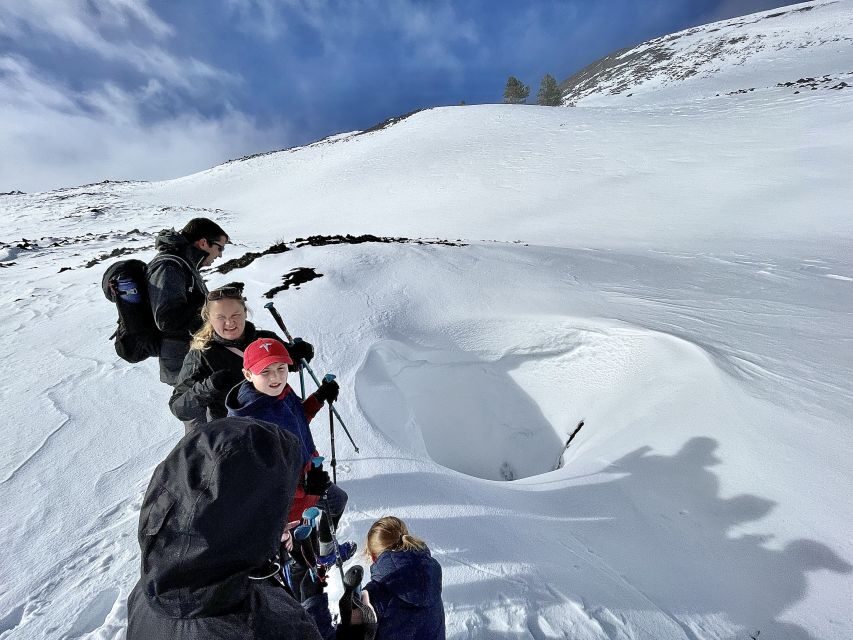
- Snow-to-lava contrast you go from winter woods to dark volcanic ground
- Eruption damage you can see lava flows and structures destroyed by eruptions
- Crater terrain you reach large side craters and fractured volcanic areas
- Big views when clear Giardini Naxos, Taormina, and possibly Calabria
- Short-but-real effort about 5 km round trip with 300 m of climbing in 3 hours
- Guided volcanology you’re not just hiking; you’re learning what caused what
Snowshoeing up Etna from Piano Provenzana: what makes it special
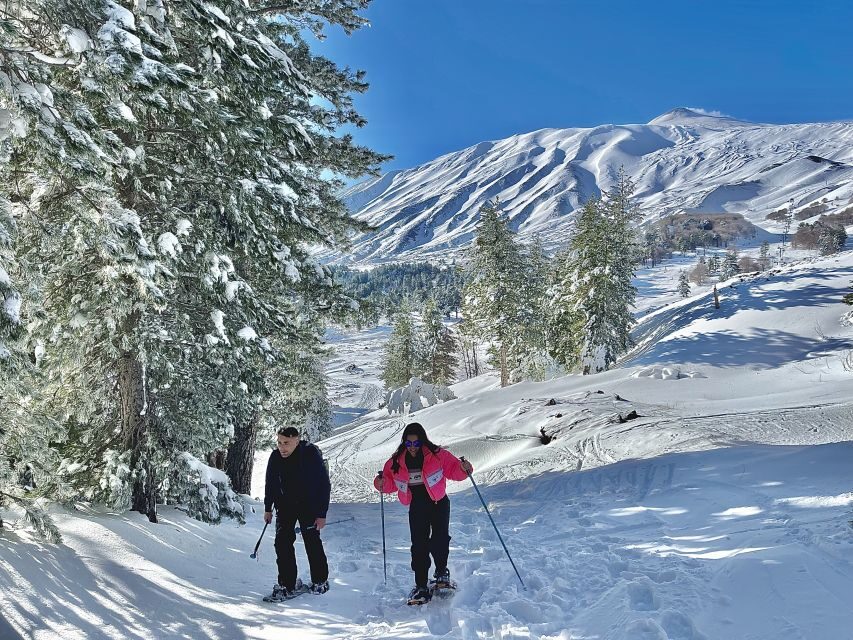
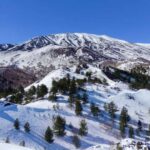
If you only know Etna as a summer volcano viewpoint, this changes your mental picture fast. Here, the mountain wears snow, and the ground beneath it looks like it belongs in a different world: dark lava flows, crater edges, and fractured volcanic terrain. The contrast between white snow and volcanic rock is the headline, but the experience has more depth than photos can show.
I like that the route focuses on real volcanic features, not just scenery. You pass areas linked to north-side eruptions and reach large craters tied to the destruction of the Piano Provenzana area. And you’re walking at altitudes around 1800 meters up to about 2200 meters, which matters because the air, light, and views tend to feel sharper and more dramatic than at lower elevations.
One more thing: the volcano is active. From the higher craters, you get the chance to admire a panorama up toward Etna’s top, where volcanic gases continue to be emitted. That gives the hike an honest, present-tense feeling instead of being only a history lesson.
You can also read our reviews of more guided tours in Catania
Meeting at Etna Nord: where the hike starts and why timing matters
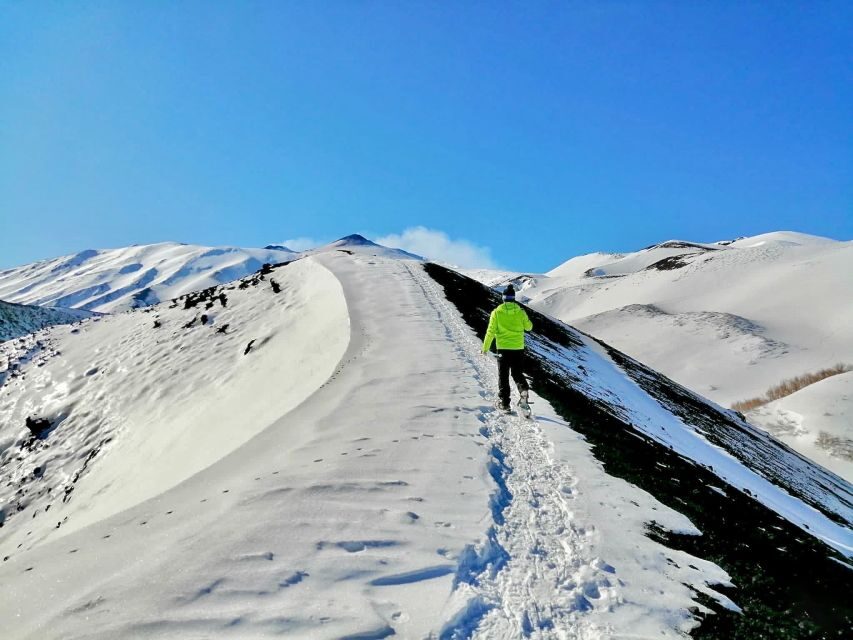
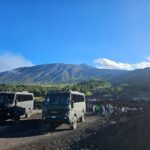
You meet your guide in the parking lot near the active chairlift at Etna Nord in winter, outside Chiosco Bar Mareneve. The setup is very much a ski-area vibe: cars arrive, skiers move, and the meeting point is built for winter access.
Timing is worth paying attention to. The start time can be brought forward to around 8:45–9:00 to help you find parking, since the area can get crowded during ski arrivals. If you’re coming from elsewhere in Sicily, plan a little buffer so you’re not rushing your gear and your mindset.
The guide’s first job is getting everyone safe and sorted. Expect a short window for getting ready and then a 15-minute safety briefing once you reach Piano Provenzana. This is a good moment to ask small questions too: how the group will move, what terrain to watch, and how to handle your snowshoe stride without turning it into a comedy sketch.
Getting geared up: what you bring vs what you rent on site
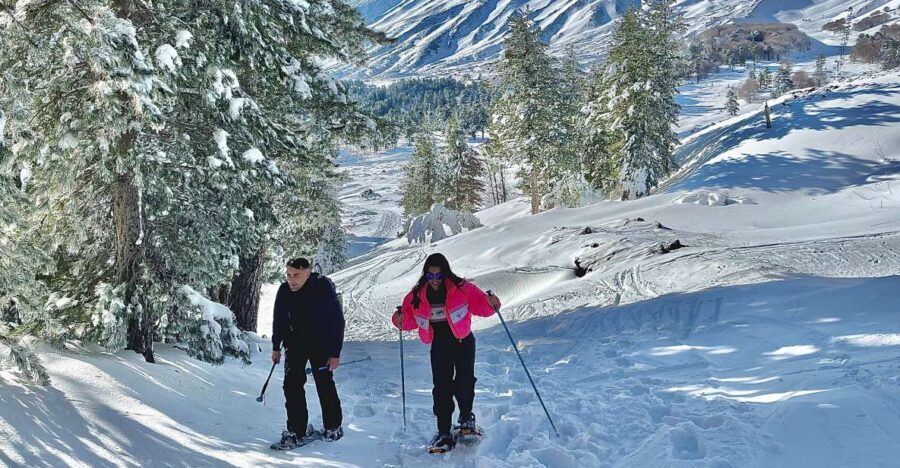
This is a snowshoe hike, and the cold is real at Etna’s elevations. Bring warm clothing, a hat, gloves, sunglasses, sunscreen, long pants, and weather-appropriate outer layers. You’ll also want rain gear, because winter weather can shift. If you can, pack a change of clothes for after the hike; your body will be working, and snowshoeing is sneaky sweat work even when the air feels biting.
Here’s what is typically not included:
- Snowshoes and trekking poles cost €12 per person to rent on site
- A windbreaker can be rented on the spot for €5
- Trekking shoes can be rented for €5 per pair
What is included is volcanology guidance, so you’re paying for the expertise that helps you interpret what you’re walking through. For me, the best value move is to arrive prepared enough that you don’t have to scramble for last-minute sizes.
Also, check footwear rules. High-heeled shoes are out, and so are sandals or flip-flops. Open-toed shoes are not allowed. You want solid traction for snow and uneven volcanic ground.
The hike plan in real time: stops, photos, and guided walking
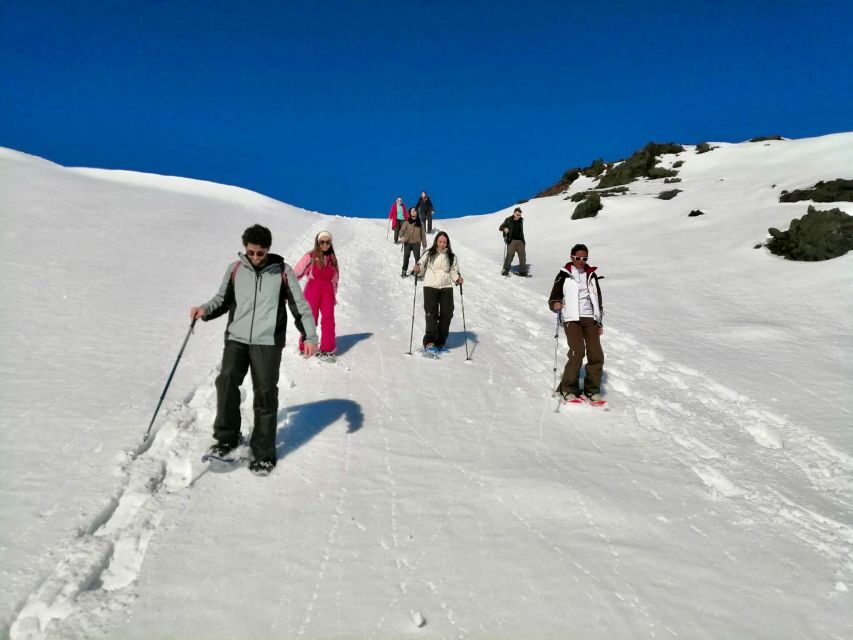
The full excursion is about 3 hours with a route length of roughly 5 km round trip. You’ll climb around 300 meters total, so it’s not an all-day grind. But the terrain is uneven, and snowshoe walking changes your pace, so go in ready to work your legs a bit.
The hike rhythm looks like this:
- Start at Piano Provenzana and get time for setup plus a 15-minute safety briefing
- A 10-minute photo stop where the guide helps you get oriented
- About 20 minutes of guided touring, focused on what you’re seeing as you move through the route
- A larger block of time at one of the key sections: 30 minutes that includes another photo stop, guided tour, and free time for sightseeing
What makes this timing useful is that it prevents the classic tour problem: rushing from one viewpoint to the next. You get enough guided time to understand the volcanic context, then enough quiet to absorb the view.
Walking from snowy forest into eruption scars
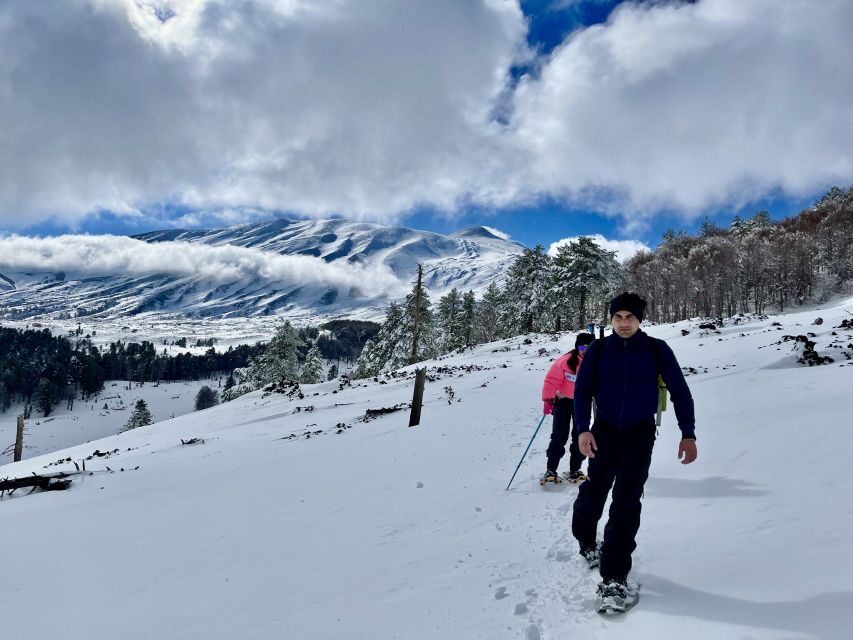
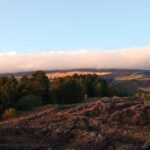
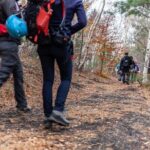
The hike begins in the snowy forest on Etna at around 1800 meters in Piano Provenzana. This matters because it changes how you experience the mountain. At first you’re in a colder, calmer-feeling environment, with snow cushioning parts of the ground and giving you more consistent footing than raw lava.
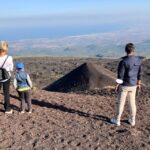
Then the route transitions into eruption features. You’ll cross lava flows from eruptions on Etna’s north side and pass through areas linked to structures destroyed by lava flows. In practical terms, that means the surface can shift between snow-dusted patches and exposed or fractured volcanic rock.
The highlights mention woods, lava flows, fractures, and lateral craters. That combination is why this hike feels more like a walk across a living geology lesson than a standard winter trail. Every turn can show a new pattern—where the snow sits differently, where the rock breaks, and where the terrain hints at how the eruption traveled.
For your expectations: you’re not just “seeing lava.” You’re moving through it, and your footing will be your main job. Bring gloves you trust and take your time on transitions.
You can also read our reviews of more hiking tours in Catania
Reaching the large side craters: why the altitude feels different
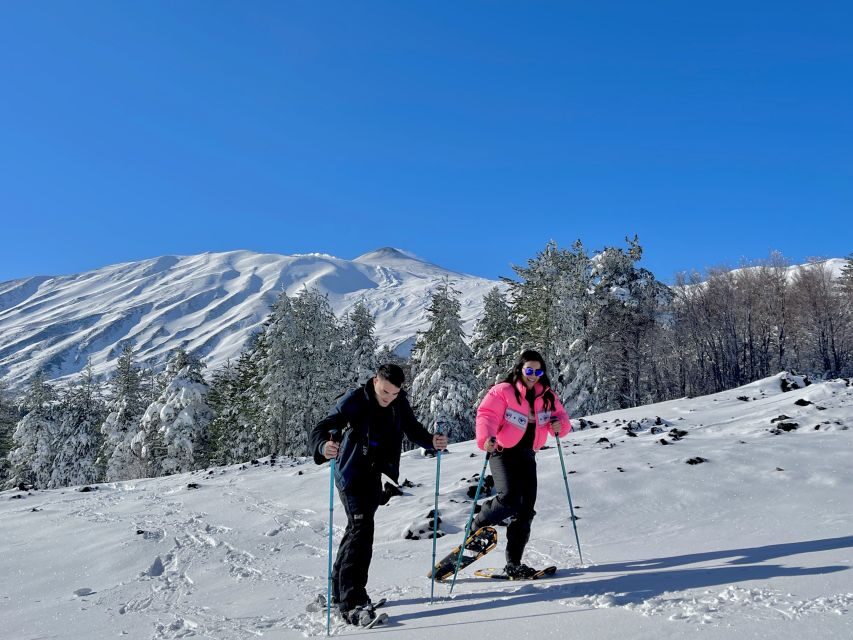
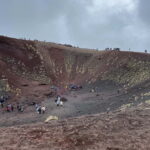
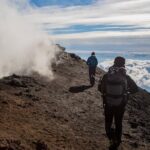
The big moment comes as you move up to the large side craters at about 2200 meters. This is where your walking effort pays off, because the panorama opens up toward Etna’s top while you’re still close enough to the crater zone to understand the terrain you’re on.
The route is designed to take you toward crater areas associated with the destruction of the Piano Provenzana tourist resort. That turns the hike from scenic to meaningful. You can stand near crater structures and see how the volcano’s shape has changed what people could build and live with.
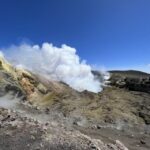
Also, the volcano remains active. From these higher craters, you’re given the opportunity to admire the panorama of the snow-covered volcano up toward the summit craters, where volcanic gases continue to be emitted. The guide’s role here is key: you get explanations that help you translate what you see—fractures, lateral craters, and volcanic features—into something more than a blur of rock.
If you get a little uneasy around steep drops or uneven ground, now is the time to slow down. Stick to the group pace and focus on where your feet are going.
Sea views and the Taormina connection: what you can spot on clear days
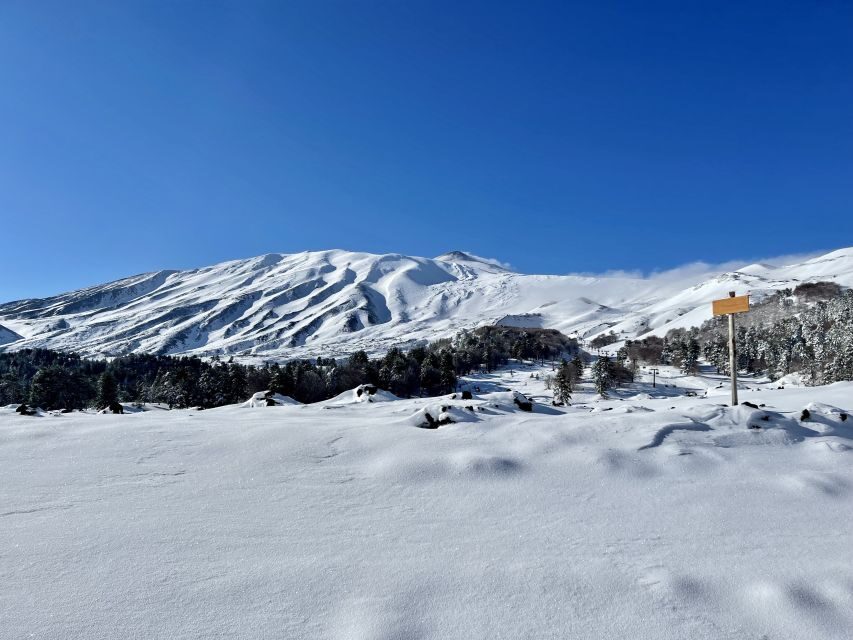
One of the most fun parts for photographers (and for everyone who just likes a good view) is that this hike includes sea and town perspectives. When visibility is good, you can admire the sea of Giardini Naxos and Taormina along the route. Even Calabria can be visible in clear conditions.
This is where the hike feels extra rewarding because you’re seeing the volcano in context. You’re not looking at Etna alone—you’re watching it sit above coastline and famous Sicilian viewpoints. It’s a reminder that the island’s geography is layered: ocean, hills, and then this massive volcanic system rising above everything.
What to do with this info as a practical traveler: if your weather is partly clear, hold your expectations lightly. Visibility is the variable, not the hike itself. You’ll still walk through snow, lava, and crater terrain even if the horizon is hazier.
Price and value: what €44 really covers, and what may cost extra
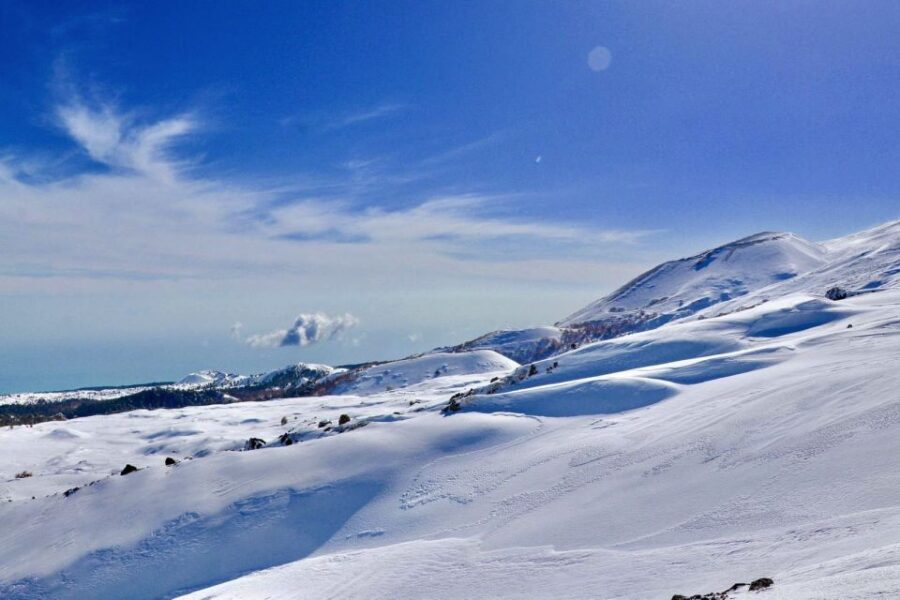
The tour price is $44 per person for a 3-hour guided snowshoeing experience. The included item is the volcanological guide service, which is the heart of what makes this worth booking. You’re paying for someone to connect the visuals—lava flows, fractures, and craters—to real volcanic explanations you can use while you’re on the ground.
What you should budget for on top:
- Snowshoes plus trekking poles: €12 per person (rental on site)
- Optional windbreaker rental: €5
- Optional trekking shoes rental: €5 per pair
- Parking ticket: €5 on weekdays or €8 on Sundays and public holidays
So the total can be higher than the base price if you need rentals. But even then, you’re still getting a focused guided outing designed for winter conditions on Etna, plus the trail time that lets you experience the crater area rather than just reaching one quick viewpoint.
I also like the structure of time on the mountain. The 3-hour duration is long enough to feel like you did something, but short enough that you’re not wrecked for the rest of the day.
Who should book this Etna snowshoe trek (and who shouldn’t)
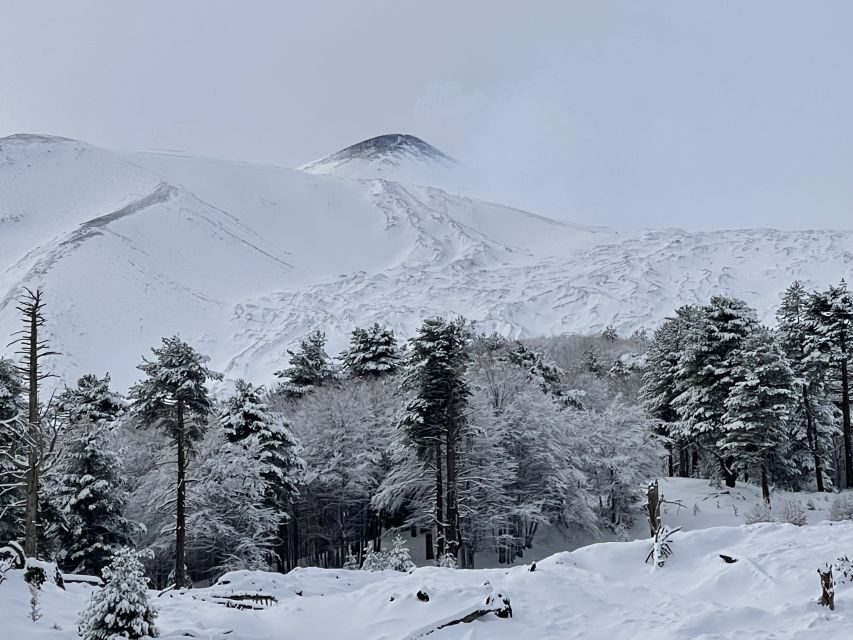
This hike is for fit, winter-comfortable walkers who enjoy uneven ground. It’s not a casual stroll. The route includes volcanic terrain and a 300-meter climb, with snowshoe walking that needs balance and attention.
It’s not suitable for:
- People with back problems
- Mobility impairments
- Heart problems
- People afraid of heights
- Respiratory issues
- Epilepsy
- People with pre-existing medical conditions
- People with high blood pressure
- People with recent surgeries
- People with low level of fitness
If you’re generally healthy and you’re comfortable walking on uneven, cold ground, you’ll likely enjoy it. You’ll also get the most out of it if you care about understanding what you’re seeing—lava flow scars, lateral craters, and the crater panorama where gases keep coming off the volcano.
Based on the guide quality emphasized in the positive feedback, the Guide Vulcanologiche Etna Nord approach seems to land well: clear explanations, strong attention to the route, and a focus on getting you to the right viewpoints at the right times.
What I’d do to prep like a pro
You can make this experience smoother in small ways:
- Wear gloves and a hat that stay warm even when you stop for photos
- Bring sunglasses. Snow glare is real at altitude.
- Use hiking shoes or rent trekking shoes on site; don’t guess with fashion footwear
- Pack a wind layer. If your outerwear is thin, the windbreaker rental at €5 can be worth it
- Bring change of clothes so the post-hike transition feels pleasant instead of miserable
And on the mountain: follow the guide’s pace, not your ego. Snowshoeing rewards steady rhythm. If you treat it like a normal walk, your legs will remind you quickly.
Also, remember: the guide provides volcanological context. If you’re curious, ask questions at the stops. The best part is often the moment you realize you’re standing on the result of the volcano’s movement, not just a pretty frozen scene.
Should you book this Piano Provenzana snowshoe hike?
Book it if you want a winter Etna outing that mixes snow with visible volcanic features and you like learning as you walk. The 3-hour format, the crater viewpoints around 2200 meters, and the chance to see the sea toward Giardini Naxos and Taormina (and Calabria in clear conditions) make this a strong value for people who want something more meaningful than a one-stop photo pull.
Skip it if you’re sensitive to uneven ground, have any of the listed medical limitations, or you freeze when there’s a drop or exposed terrain. And if you’re counting every extra euro, factor in snowshoe/pole rental, possible shoe rental, a wind layer, and parking.
If you’re ready for a winter workout with real geological storytelling, this is a booking that makes sense. You’ll leave with a different understanding of Etna: not just towering, but active and shaped—up close.
FAQ
Where is the meeting point for the Etna snowshoeing trek?
Meet your guide in the parking lot near the active chairlift at Etna Nord in winter, outside Chiosco Bar Mareneve.
How long is the snowshoeing experience?
The duration is 3 hours.
What’s the hike distance and total elevation gain?
The route is about 5 km round trip with a total positive difference in height of 300 meters.
Is the volcanological guide service included?
Yes. The volcanological guide service is included.
Are snowshoes and trekking poles included in the price?
No. Snowshoes + trekking poles cost €12 per person to rent from authorized rentals on site.
Can I rent a windbreaker or trekking shoes on site?
Yes. A windbreaker can be rented on the spot at authorized rentals for 5 euro, and trekking shoes can be rented for 5 euro per pair.
What should I bring for the hike?
Bring warm clothing, sunglasses, a hat, gloves, hiking shoes, sunscreen, rain gear, long pants, change of clothes, and weather-appropriate outdoor layers. You should also bring trekking gear and breathable clothing.
What shoes are not allowed?
High-heeled shoes, sandals or flip-flops, and open-toed shoes are not allowed.
What languages are the guides available in?
The live tour guide is available in Italian, French, and English.
Is this tour suitable if I’m afraid of heights or have respiratory/heart issues?
No. It is not suitable for people afraid of heights and those with respiratory issues or heart problems, among other listed medical conditions.