REVIEW · CATANIA
Benedictine Monastery of Catania – English Guided Tour
Book on GetYourGuide →Operated by Officine Culturali · Bookable on GetYourGuide
Catania has a monastery you can’t really find on your own. This Benedictine Monastery of Catania tour takes you through cloisters, kitchens, and working university spaces, with stories that link the Roman world to today’s student life. I especially love how the tour spotlights the late Baroque scale of the complex, and how an English guide makes the details easy to follow without turning it into a lecture. The main drawback to consider is that if you’re hoping for every possible viewpoint in the complex, your specific visit slot may not include access to a viewing platform.
What makes it feel worth the money is the access. You don’t just stroll the public rooms; you get into areas that are normally closed, including the 16th-century spaces now used by the university library. It’s also a tight 75 minutes, so come ready to walk and listen.
In This Review
- Key highlights in this English-guided San Nicolò l’Arena tour
- Benedictine Monastery of Catania in 75 minutes: why this tour is such good value
- First steps inside: finding the meeting point and getting your bearings
- The cloisters and monastic layout: where the story becomes physical
- From Roman houses to today’s university library mezzanine
- The novices’ garden and the everyday parts of monastic life
- 18th-century kitchens and the cellar built on lava
- The library connection: UNICT, the 16th-century cellar, and why it matters
- The restoration story: how this place took more than 30 years to save
- Monumental staircase moments and moving through the complex
- English guides that actually make the building feel alive
- Practical tips for a smooth visit to San Nicolò l’Arena
- Who should book this Benedictine Monastery of Catania tour
- Should you book the English-guided Benedictine Monastery of Catania?
- FAQ
- How long is the Benedictine Monastery of Catania English guided tour?
- Where do I meet the guide?
- What does the tour include?
- What areas of the monastery will we see?
- Is the tour offered in English?
- Is the tour wheelchair accessible?
- Can I get help if I don’t speak English well?
Key highlights in this English-guided San Nicolò l’Arena tour
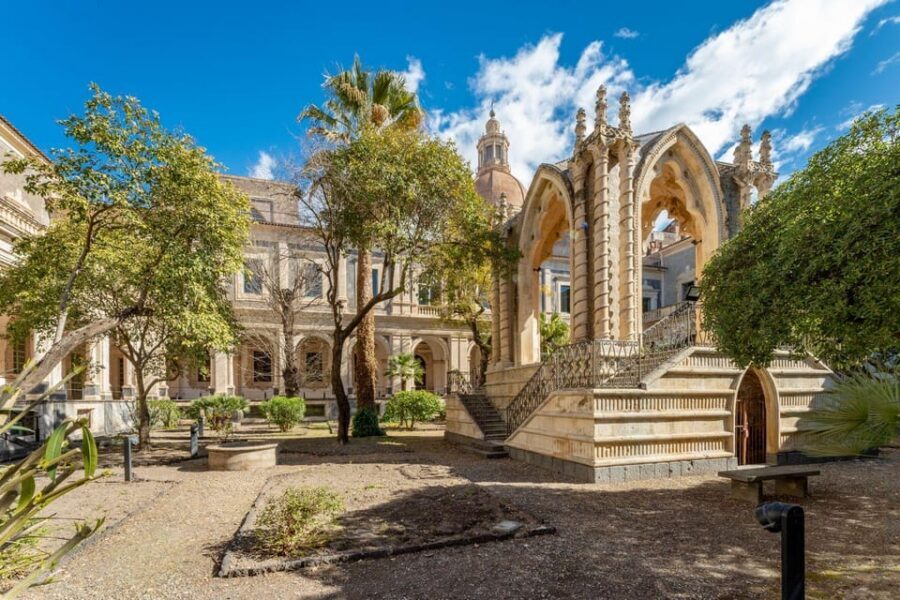
- Cloisters and corridors that show how the monastic layout works, not just how it looks
- Roman houses under a modern mezzanine, tied to the library’s university use
- A lava-built cellar now functioning as a university library space
- Famous kitchens and cellars that explain how the Benedictines lived day to day
- Late Baroque grandeur, including work connected to Vaccarini and major staircase moments
- Guides who keep it lively, with English that’s clear and often funny (Carmen, Giovanni, Nicola are common favorites)
Benedictine Monastery of Catania in 75 minutes: why this tour is such good value
Let’s be honest: you can waste time in a big building by wandering without a plan. This tour fixes that. In just 75 minutes, you get a structured walk through the parts that help you understand the monastery as a whole—religious life, architecture, and even what’s happening here now.
At about $11 per person, the value is unusually strong for what you get: an English live guide, access to areas that are not normally accessible, and enough variety to keep it interesting. You’re not just seeing one pretty courtyard. You’re watching the complex change roles over centuries.
This is also one of those places where the setting matters. San Nicolò l’Arena sits in Catania’s broader story, and the guide usually connects the monastery to the city in practical, human terms. That’s what makes the time pass fast—in a good way.
You can also read our reviews of more guided tours in Catania



First steps inside: finding the meeting point and getting your bearings
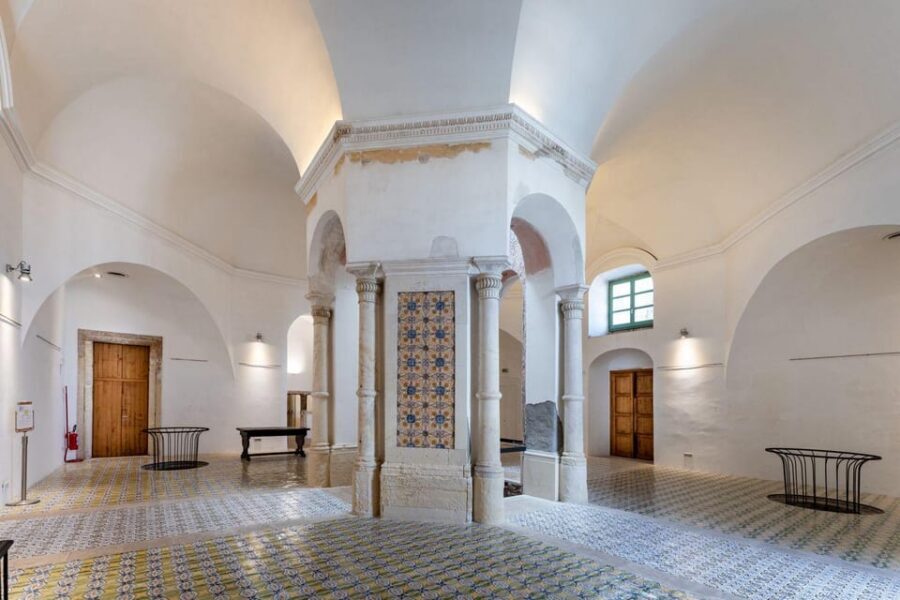
The meeting point is simple: once you pass the main gate on Piazza Dante, the info point is in the courtyard on the right. From there, you’ll start at Benedictine Monastery of San Nicolò l’Arena.
One thing I like about this setup is that you can skip the ticket line and just begin. That matters in places where you’re paying for a guide’s time, not your own waiting time.
Also, plan for the tour’s pace. It’s not a long sit-down museum hour. You’ll be moving through corridors and different levels. The complex has that labyrinth feel mentioned by many people—perfect for a guide-led route, because you’ll actually know what you’re looking at.
The cloisters and monastic layout: where the story becomes physical
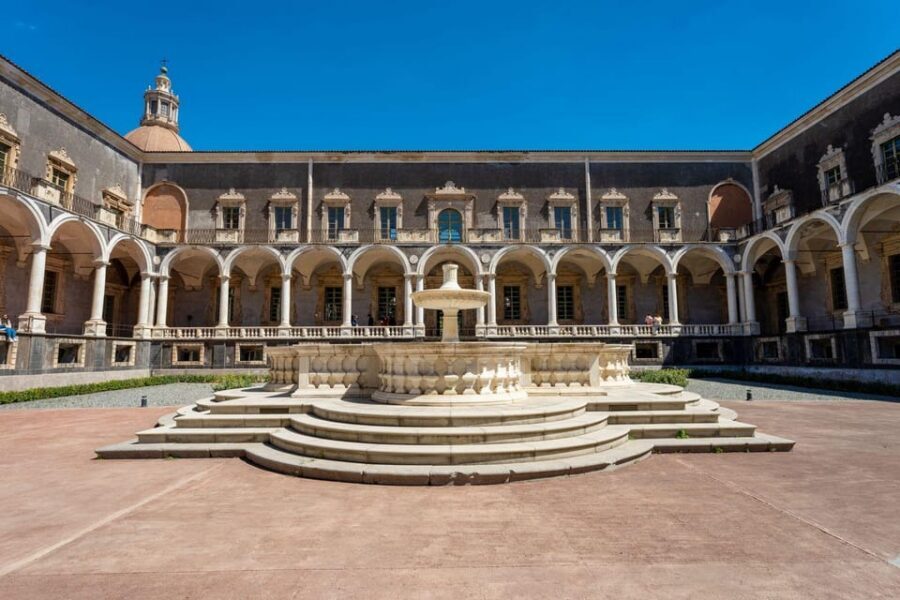
The tour’s backbone is the monastery’s layout, especially the two cloisters. Cloisters can sound boring on paper, but here they work like a map. You start to see how movement and daily routines were organized, and you get a feel for how the monks and their later occupants used the space.
I like that the guide doesn’t treat the cloisters as static “photo spots.” Instead, you’ll get practical context: what you’re looking at, why certain spaces exist, and how the monastery’s size created its own internal world.
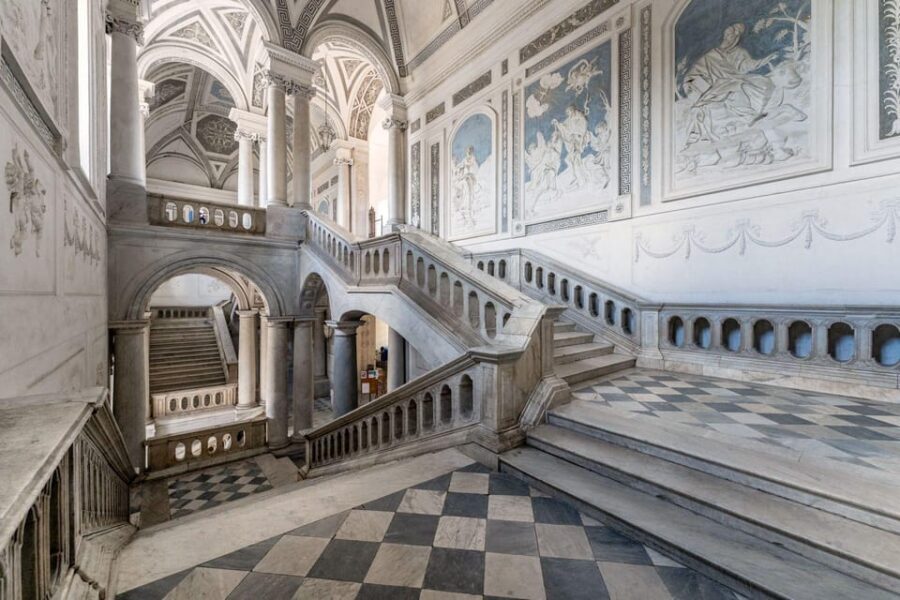
This part is also where you’ll likely feel the architecture’s scale. People talk about the late Baroque look and the monumental feel, and you can see why. Even if Baroque isn’t your style, you still end up appreciating the planning—how the complex holds so many functions under one roof.
From Roman houses to today’s university library mezzanine
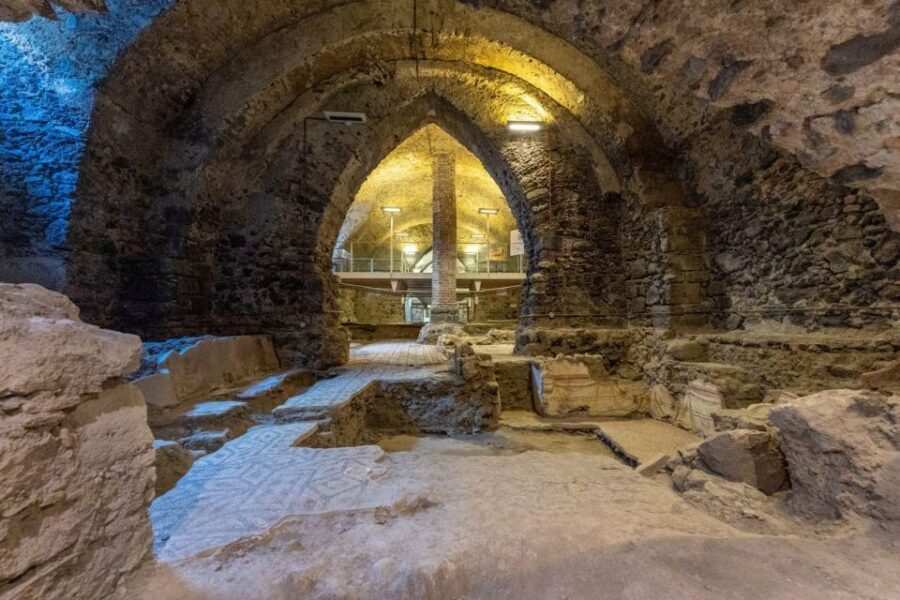
One of the most surprising moments is the shift from ancient to modern without leaving the same building. You’ll reach the Roman houses visible right under a modern mezzanine. That mezzanine isn’t just decorative. It’s used by students as part of the library.
This is a big reason the guided experience matters. If you visit on your own, you might notice Roman remains and think, Okay, cool. With a guide, it clicks into place: you see how new structures were layered over older ones, and how the monastery’s reuse kept the site alive rather than freezing it in time.
In Catania, you learn quickly that the city builds on itself. This stop gives you a clean, readable example of that idea.
The novices’ garden and the everyday parts of monastic life
Not every highlight is stone and grandeur. The tour also includes the Garden of the Novices, which helps balance the heavy architecture with something human.
Then you move into the spaces that explain how the Benedictines managed daily life: dining rooms, kitchens, and connected service areas. These rooms are especially valuable because they show wealth and discipline in the same breath. The monastery wasn’t just prayer spaces. It was a system.
When people say the tour shows the wealth enjoyed by the Benedictine order, this is where it becomes real. You can point to finishes, scale, and how kitchens and support areas were built to run efficiently.






18th-century kitchens and the cellar built on lava
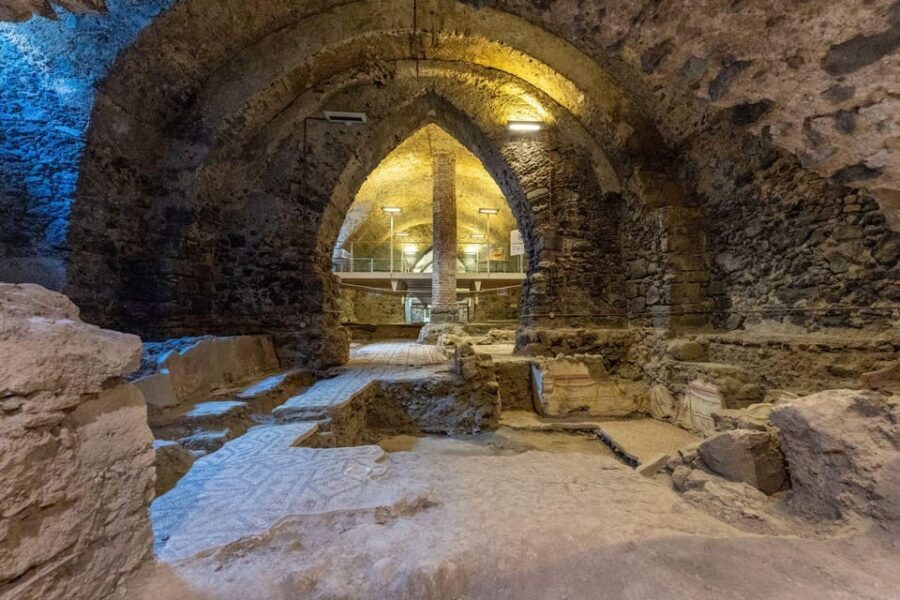
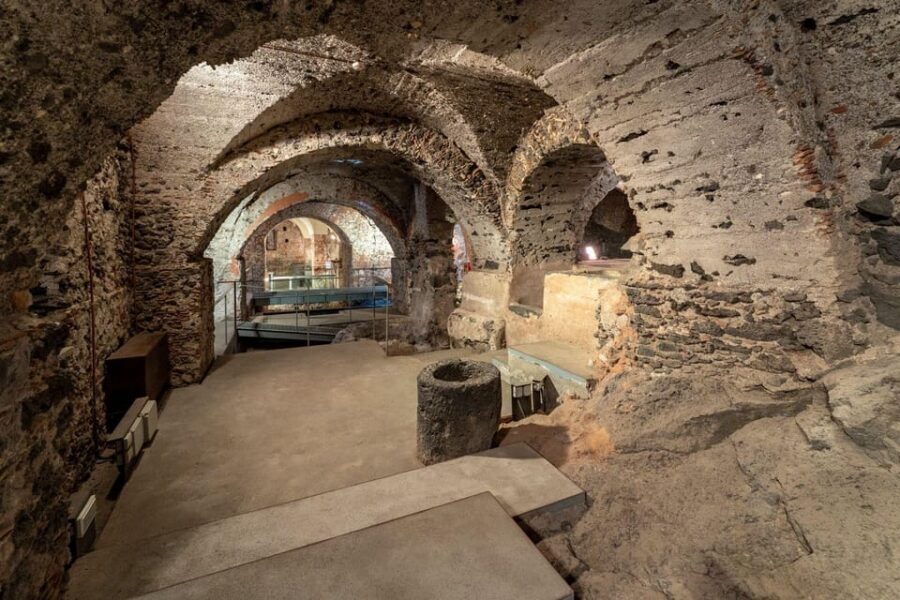
If you like sensory contrast, this is the section. You’ll visit the famous 18th-century kitchens and cellars, and then get to one of the tour’s signature visual elements: the cellar built on the lava.
That lava-built detail is more than a trivia point. It’s a reminder that this is Sicily. The ground isn’t neutral here, and the monastery’s construction reflects that reality.
Also, there’s a practical perk: lower areas can feel cooler when Catania is hot. Even if you’re not chasing comfort, it helps you keep energy for the full 75 minutes.
The library connection: UNICT, the 16th-century cellar, and why it matters
One of the tour’s smartest choices is the library integration. You’ll see the 16th-century cellar, now used as the Library of the Department of Humanities (UNICT).
That matters for two reasons. First, it changes how you read the space. A cellar becomes a place of study, not just storage. Second, it explains why some parts of the monastery survived: they found a new role without losing the old fabric.
And the tour makes the whole thing feel logical. You’re not just looking at books in the abstract. You’re seeing the building that now holds the university’s work, layered over older history.
The restoration story: how this place took more than 30 years to save
A monastery this big can’t be explained by one construction date. What seals the deal is the restoration timeline: the refurbishment took more than 30 years.
You’ll also hear about key figures behind the transformation. The monastery’s late-Baroque-era shaping connects with the architect Vaccarini, and the contemporary refurbishment is credited to Giancarlo De Carlo. That gives you a powerful “then-and-now” frame: centuries of building, then decades of careful preservation and reuse.
This is where I think the tour earns its serious tone. It’s not just wow-factor architecture. It’s a story of why these rooms still exist in usable form today.
Monumental staircase moments and moving through the complex
Monumental staircases are a clue that this site was designed for more than daily chores. You’ll see the monumental staircase as part of the route, along with the labyrinthine corridors that connect the different levels and functions.
I like this because it turns the complex into something navigable. You start thinking in routes and connections, not just individual rooms. That makes the architecture feel like it has a purpose—not just decoration.
And it helps you remember what you’ve seen. By the end, you can usually explain the monastery’s layout to someone else. That’s the best sign a tour did its job.
English guides that actually make the building feel alive
The English guide is a major part of the experience. The tour is live and in English, and the delivery is repeatedly praised for being clear and not dry. People mention guides like Carmen, Giovanni, and Nicola, and you can see a pattern: the best guides here use humor and small anecdotes to keep the flow moving.
If you speak English confidently, you’ll have a smooth time. If you don’t, the tour can provide written translations in French or Spanish when needed, which makes the content more accessible.
Tip: bring a small curiosity list. Ask what certain rooms were used for, or how the reuse as a university changed what visitors can see. A good guide will use those questions to give you better context.
Practical tips for a smooth visit to San Nicolò l’Arena
A few things to plan so the 75 minutes feel effortless:
- Arrive a little early so you’re not rushing at the start gate on Piazza Dante.
- Use the baggage storage at the meeting point if you’re carrying day bags.
- Wear shoes that work on indoor stone and levels; you’re moving through corridors and stair zones.
- If it’s a hot day, don’t be surprised if the underground/lower sections feel like a welcome change in temperature.
- If you’re sensitive to crowding, this is a guided route with a set path, so you’ll spend less time choosing where to go and more time looking.
One small caution: one visitor noted disappointment about not being able to access a viewing platform on their slot. So if that specific feature matters to you, ask about which areas are included at your starting time.
Who should book this Benedictine Monastery of Catania tour
Book it if you want a quick, high-impact orientation to Catania’s layers of time. This tour suits you if you care about:
- Architecture (especially late-Baroque scale and how it’s preserved)
- Religion and daily life, not just famous art objects
- Roman remains in a living setting
- A short timeframe (you get a lot in 75 minutes)
You might skip it if you’re only looking for a pure, long archaeological walk or if you’re specifically fixated on one viewing platform. For everyone else, the structured route is exactly what you need.
Should you book the English-guided Benedictine Monastery of Catania?
Yes, I’d book it—especially at this price. For around $11, you get a guided route that covers the big identity markers: cloisters, Baroque grandeur, Roman houses under a modern mezzanine, the UNICT library connection, and the lava-built cellar. That mix is rare, and it’s the kind of experience that makes Catania feel bigger than its street corners.
If your goal is to understand San Nicolò l’Arena in one focused visit, this tour delivers. Bring curiosity, expect a brisk pace, and you’ll leave with the monastery’s story in your head.
FAQ
How long is the Benedictine Monastery of Catania English guided tour?
The tour lasts 75 minutes.
Where do I meet the guide?
Meet at the info point in the courtyard on the right after you pass the main gate on Piazza Dante.
What does the tour include?
You’ll get access to the monastery, including parts not normally accessible, a live English guide, and baggage storage at the meeting point.
What areas of the monastery will we see?
You’ll visit major areas including the two cloisters, the kitchen, the novices’ garden, dining rooms, the library area connected to the 16th-century cellar, and the cellar built on the lava, along with Roman houses visible under a modern mezzanine, plus key architectural features like the monumental staircase.
Is the tour offered in English?
Yes, the guide provides the tour in English.
Is the tour wheelchair accessible?
Yes, it is listed as wheelchair accessible.
Can I get help if I don’t speak English well?
If English isn’t your main language, written translations in French or Spanish can be provided.