REVIEW · CATANIA
Catania: Underground Catania Tickets and Guided Tour
Book on GetYourGuide →Operated by Etna 'Ngeniousa · Bookable on GetYourGuide
Catania has a second city under your feet. This guided walk takes you from major Roman ruins down into underground churches, prehistoric lava spaces, and passageways traced to the Amenano waters. In about 2.5 hours, you’ll connect the street-level Sicily you know with the layers hiding below.
I like the way the tour gives you real variety: four different underground places with different time periods, not just one long cave stop. I also love the story structure, starting at the Black Amphitheater area and moving along Via Etnea, so you understand how Catania got rebuilt after lava and earthquakes.
One thing to think about up front: this is not a sit-and-watch tour. You’ll climb steps (some irregular and sometimes wet) and you’ll spend time underground at depth, so it’s tough for claustrophobia or anyone prone to motion sickness.
In This Review
- Key Things I’d Bet On
- Starting At The Black Amphitheater: Your Above-Ground Key
- Via Etnea Transfers: The Street-Level Warm-Up You Actually Need
- Stop 1: A Prehistoric Lava Cave With Etna’s Impact
- Amenano Underground River: Following Water Into the Quiet Dark
- Roman Layers: Ancient Monument Rooms You Can Only Reach This Way
- Late Baroque Church Mysteries: Where Art History Meets the Creepy Factor
- Practical Tour Value: Is This $29 Worth It?
- What to Expect Physically: Steps, Wet Stone, and Tight Corners
- Who Should Book This Underground Catania Tour
- Should You Book This Underground Catania Tour?
- FAQ
- How long is the underground Catania tour?
- How many underground places are included?
- Where do we meet for the tour?
- Is the tour offered in Italian or English?
- Does the tour run in bad weather?
- What’s included in the ticket price?
- Is hotel pickup or drop-off included?
- What items are not allowed during the tour?
- Can I cancel for a full refund?
Key Things I’d Bet On
- Four ticketed underground sites: not a quick peek, but multiple entrances you don’t normally access.
- Depth factor: you go down to -15 meters, so expect a real subterranean experience, not a basement tour.
- Amenano connection: you follow the underground river route tied to the springs under Catania.
- Etna’s fingerprints: a prehistoric lava cave ties the city’s history to volcanic events.
- Roman-to-Baroque storyline: Roman and late Baroque spaces are part of the same walking narrative.
- Guides like Oreste and Enzo: they’re often praised for turning history into an energetic, easy-to-follow route.
Starting At The Black Amphitheater: Your Above-Ground Key
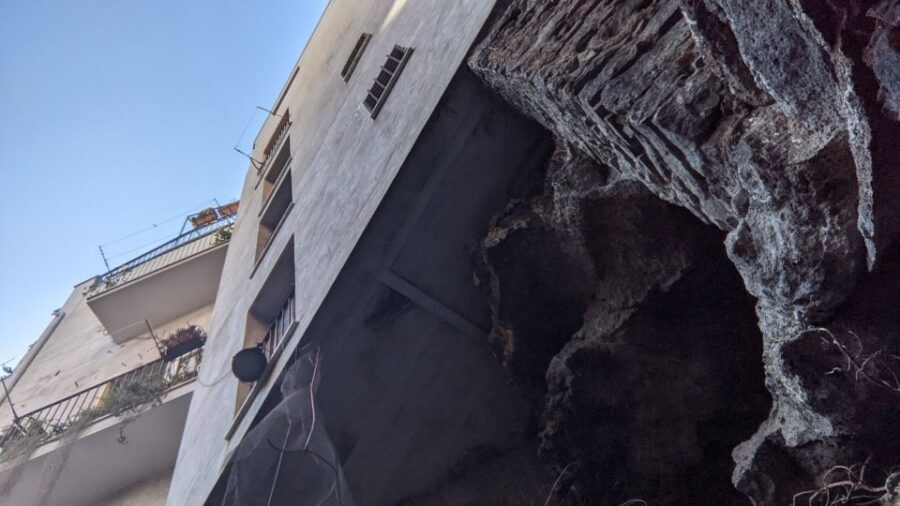
The tour begins where Catania’s power shows up in stone: the meeting point is in front of the ruins of the Black Amphitheater, a Roman building built for about 15,000 seats. Even if you’ve walked past major sights in Catania before, starting here matters. It gives you a mental anchor for everything that comes next, because the underground route is basically one long reminder that this city kept rebuilding itself.
From that starting point, your guide leads you to the underground sites through a connected route across central Catania. You’ll also get street-level context along the way, especially along Via Etnea, where aristocratic palaces and late Baroque churches line up like chapters in the same book.
This is a walking tour, so wear shoes you can trust. The experience is designed around transitions: short routes above ground, then a set of descents and entrances underground. If you’re expecting the underground part to feel optional, it won’t. It’s the whole point.
You can also read our reviews of more tours and experiences in Catania

Via Etnea Transfers: The Street-Level Warm-Up You Actually Need
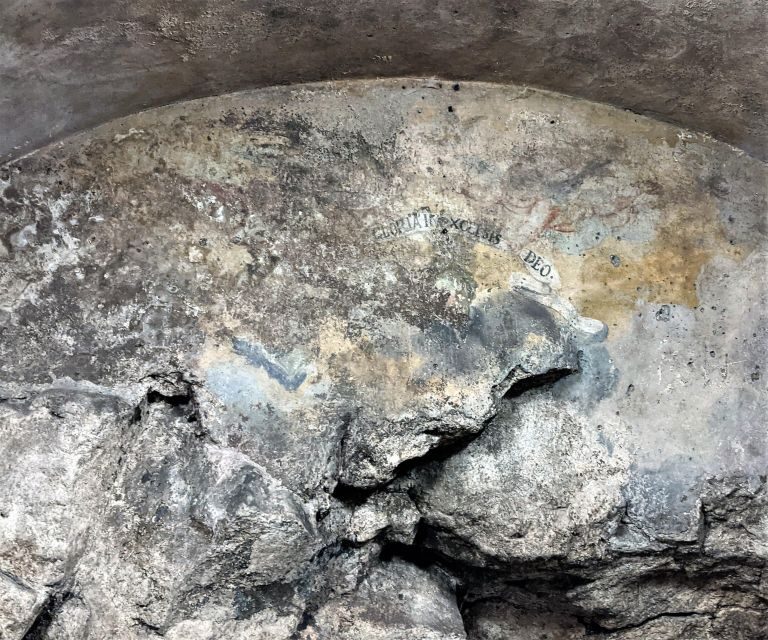
Between stops, you’re not stuck in transit the whole time. The route is built to move you from one underground location to another while keeping you oriented. You’ll travel via Via Etnea, passing by the kind of architecture that makes Catania feel layered even before you go below ground.
Those above-ground moments help in two ways. First, they help you understand what you’re seeing when you look at facades, church shapes, and neighborhood layout. Second, they keep the pacing from turning claustrophobic too fast. Even if you’re excited to go underground, those small street transfers give your brain a breather.
Also, since the tour runs rain or shine, those in-between stretches matter. You’ll want a light plan for wet sidewalks and uneven pavement. The tour doesn’t promise smooth, flat ground the whole way, and you’ll feel it more if you go in with flimsy shoes.
Stop 1: A Prehistoric Lava Cave With Etna’s Impact
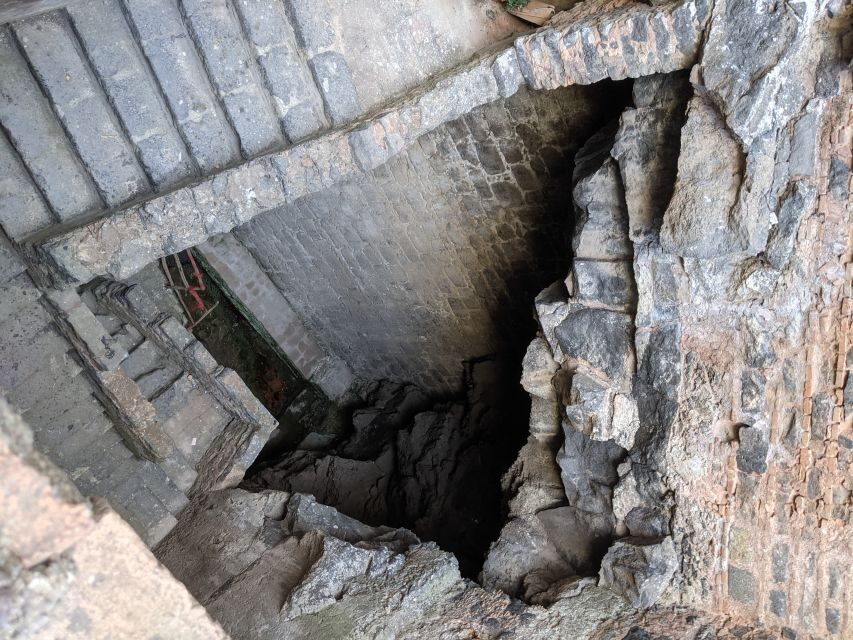
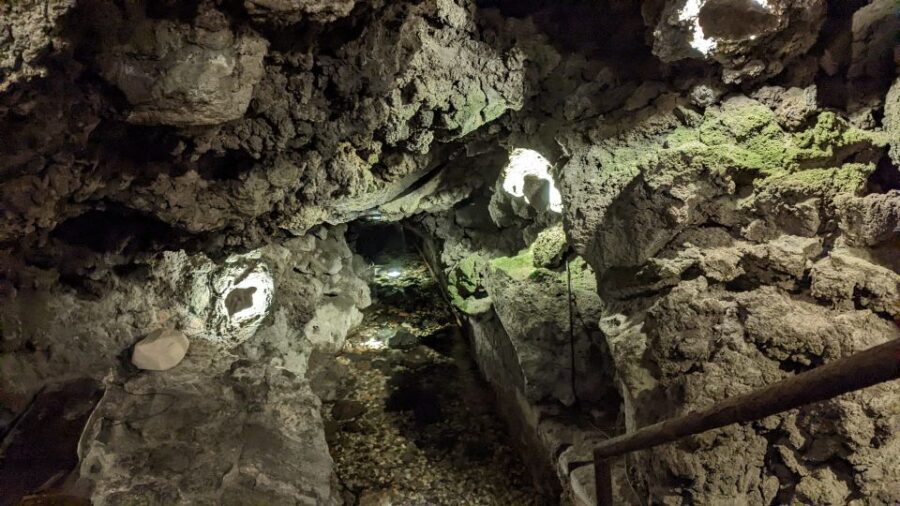
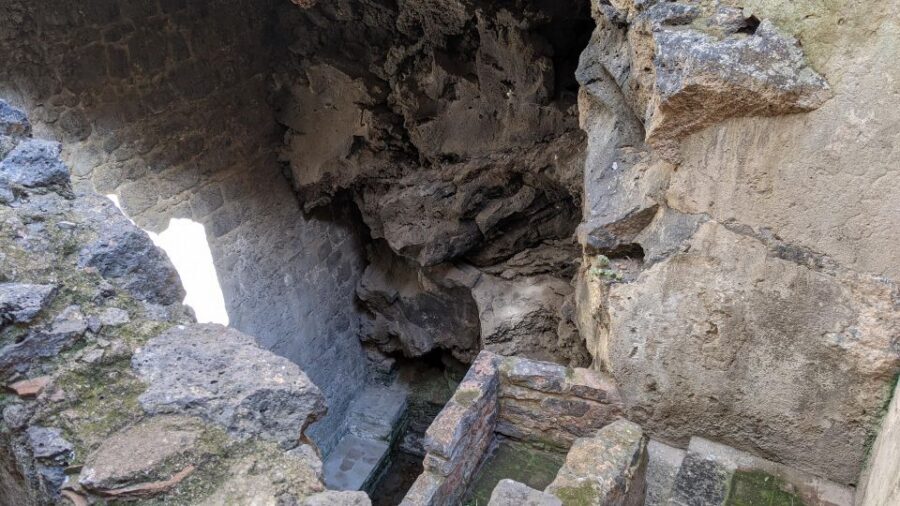
One of the most compelling parts of this tour is the prehistoric cave linked to Etna eruptions. The idea is simple but powerful: you’re not just touring a man-made building. You’re walking into spaces formed by volcanic activity, and then comparing that natural force to how humans later built churches, monuments, and city infrastructure around it.
This is a great stop if you like cause-and-effect tourism. Etna isn’t just a distant mountain here. It’s part of the physical reason Catania has the underground architecture it does. That’s why the cave works so well early in the tour: it sets the theme for everything else.
There’s a practical side too. Lava caves and underground passageways typically feel cooler, but they can also feel damp. You’re not expected to wear hiking gear, but you do need steady footing, because you’ll likely be on stone surfaces and stair sections designed long ago for different needs.
Amenano Underground River: Following Water Into the Quiet Dark
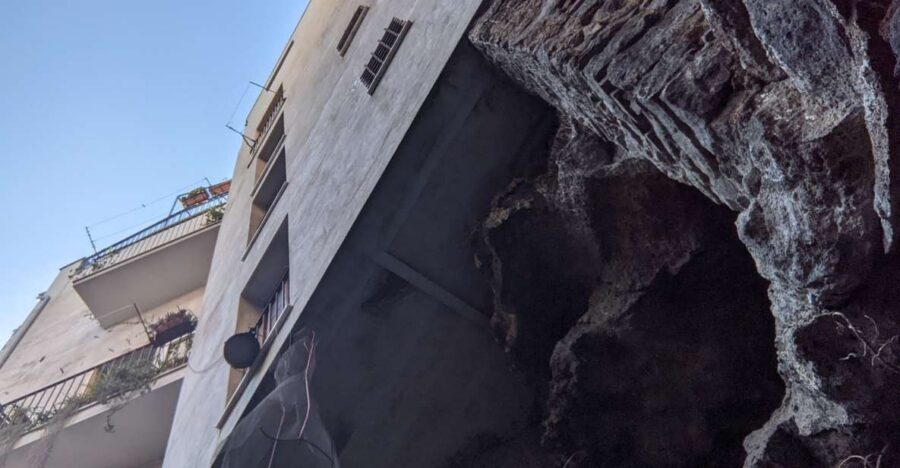
The tour’s underground “signature” is the route tied to Amenano, the mysterious underground river that feeds cave spaces linked to springs beneath Catania. This stop is where the tour starts to feel like a different world: the air changes, the light disappears fast, and your sense of distance gets weird in a way only underground can manage.
This also explains why the tour is such a good history-and-science combo. You’re learning how the city’s life connects to water sources below street level, then you’re experiencing that connection physically as you follow the underground river path.
Most of all, this is where the depth becomes real. The experience includes going down to -15 meters. That’s not just a number on a brochure. It affects temperature, echo, and how “enclosed” the space feels, especially if your comfort level is low in tight areas.
If you’re thinking about whether you should go, be honest with yourself here. Claustrophobia is listed as a no-go for a reason.
Roman Layers: Ancient Monument Rooms You Can Only Reach This Way
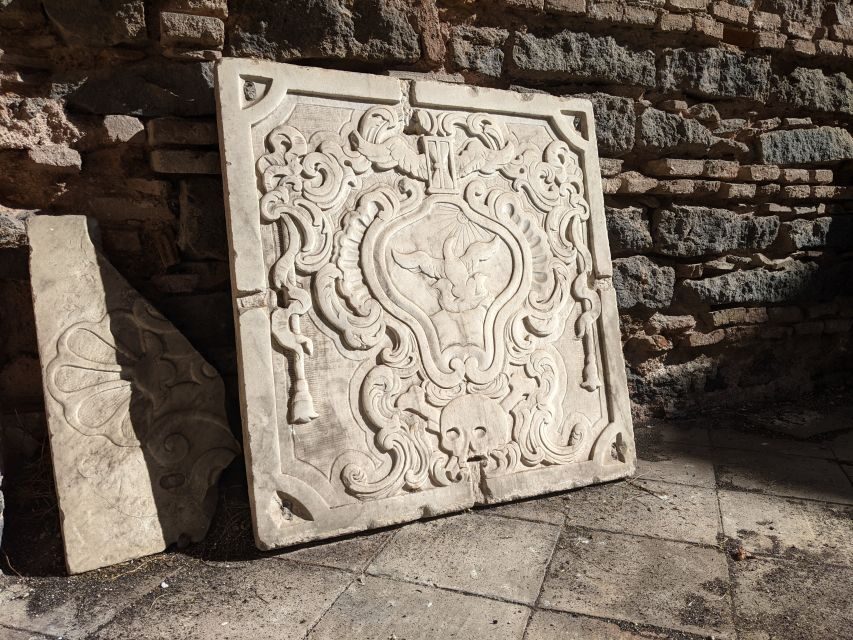
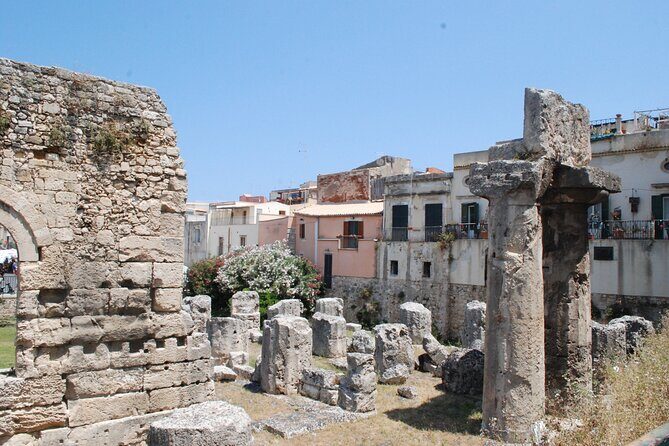
Another stop is an ancient Roman monument site. The value of this portion isn’t only that it’s old. It’s that it’s placed under the city’s more modern layers, so you see how Roman Catania relates to what’s above.
Roman structures under cities can feel like history “leaking upward.” You notice details in angles, materials, and how spaces were designed for a different kind of public life. And because you’re in an underground setting, you also see how later periods responded—building over, adapting, or preserving fragments where they could.
This stop typically works especially well if you’re the type who likes archaeology in motion. You’re not just looking at one room. You’re being routed through a set of underground entries that, together, tell a bigger story about the city’s survival.
You can also read our reviews of more guided tours in Catania






Late Baroque Church Mysteries: Where Art History Meets the Creepy Factor
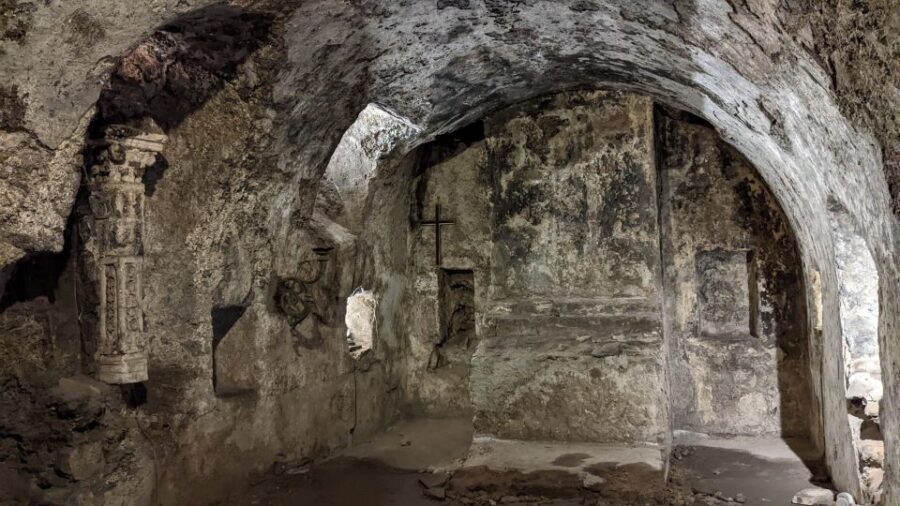
Then comes the late Baroque church connection, described as having creepy mysteries hidden in a magnificent church environment. This is where the tour’s mood shifts. Baroque design is dramatic above ground, but underground it can feel even more strange—stone, arches, and sacred architecture all softened by damp air and narrow passageways.
In the guided narrative, this stop is often tied to the early storage of religious relics and later episodes of conflict. In particular, you may hear the story around S Agatha’s relics and also connections to a bombed-out Church of S Euplius (the exact underground placement is handled by the organization based on what’s accessible).
Either way, the point is the same: you’re seeing how Catania’s religious life left physical footprints below street level. It’s an excellent counterpoint to the volcanic cave stop, because it shows the other force that shaped the city: faith and survival.
If you like your history with atmosphere, this is the part that tends to stay in your mind.
Practical Tour Value: Is This $29 Worth It?
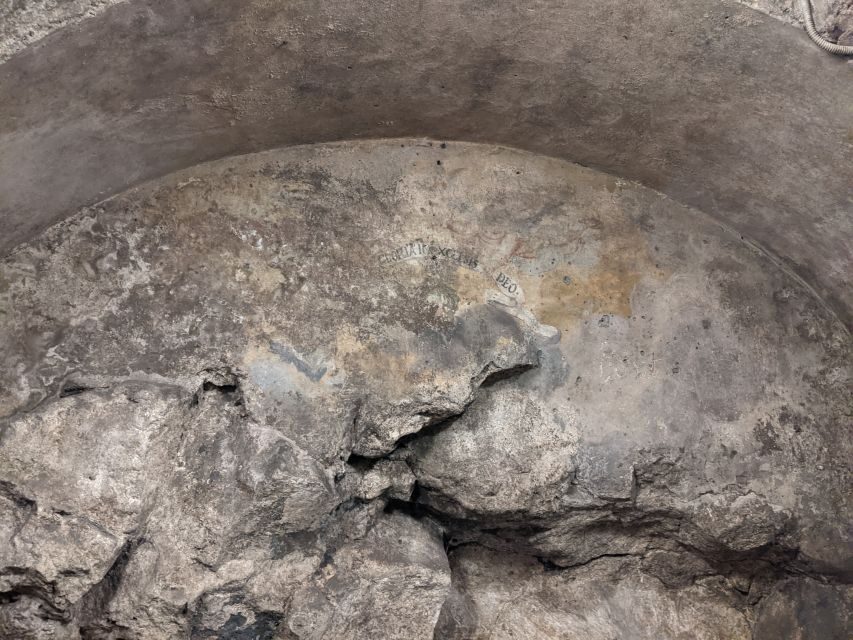
At around $29 per person for roughly 2.5 hours, the biggest value isn’t the price tag. It’s what’s included. You get entry tickets to four different underground places, plus the tour is set up with a guide who manages the transitions and skip-the-ticket-line access.
To judge value, I look for three things:
- Do you get more than one site?
- Do you need a guide to make it make sense?
- Does the price buy time and access?
Here, you get all three. The sites are not something you’d casually find and self-tour in one afternoon. Even if you’re good at independent travel, some of these locations simply aren’t set up for casual visitors. The guide route also connects the Roman, Baroque, and volcanic layers so you don’t leave with four separate “cool basements” but with one coherent city story.
One note on pacing: this is still a walking tour with steps. It isn’t a leisurely museum crawl. If you want comfort and minimal movement, factor that in when judging value.
What to Expect Physically: Steps, Wet Stone, and Tight Corners
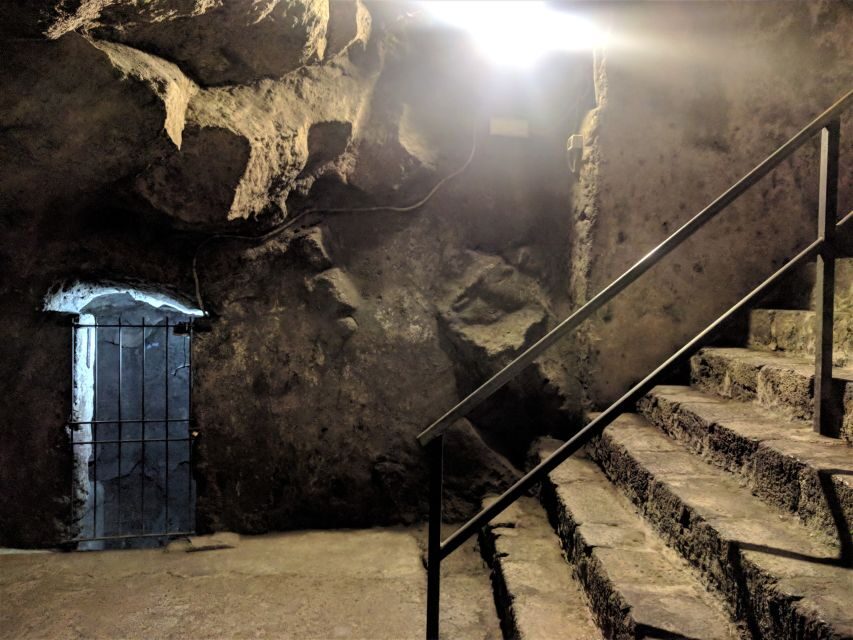
This tour includes climbing a few steps, and the steps may be irregular. Some sections can be wet, and underground surfaces can be slick. I strongly recommend planning for traction, not style.
It’s also not suitable for:
- people with mobility impairments or wheelchair users
- people with claustrophobia
- people with motion sickness
- people over 280 lbs (127 kg)
That list is not filler. Going to underground depths and moving through enclosed spaces changes how your body experiences the tour.
On top of that, there are “keep it easy” rules: no luggage or large bags, and no weapons or sharp objects. You’ll also want to avoid bringing anything that slows you down in tight entrances. Keep it simple: a small daypack and a layer for cool underground air usually makes the day feel easier.
And yes, it runs rain or shine. That means you should plan for wet streets even if the underground parts stay open.
Who Should Book This Underground Catania Tour
I’d put this tour high on your list if:
- you want a Catania experience that feels different from typical street sightseeing
- you like archaeology that connects to real city life above
- you enjoy guided storytelling with multiple time periods in one outing
- you’re curious about how Etna and water sources shaped the city’s underground world
It’s also a great choice if you want a structured route. Catania can be rewarding to wander, but this tour takes you to places you likely wouldn’t find or access on your own.
I’d skip it if you:
- get anxious in enclosed spaces
- struggle with stairs and uneven steps
- have motion sickness triggers
- need wheelchair-friendly access
If you’re unsure, look at what you struggle with most on other tours: tight spaces, steps, or sound levels. Underground echoes can make hearing harder, and large groups can add waiting time.
Should You Book This Underground Catania Tour?
Book it if you want four underground sites, guided context, and a real sense of Catania as a layered city shaped by Etna, water, Rome, and late Baroque faith. The structure is efficient, and the included ticket access makes it good value for a limited time visit.
Don’t book it if your comfort limits include claustrophobia, motion sickness, or difficulty with steps. Underground depth changes the experience fast.
If you fit the “comfortable walking + okay with caves” profile, this is one of the smartest ways to understand Catania in a short window.
FAQ
How long is the underground Catania tour?
It lasts about 2.5 hours.
How many underground places are included?
You’ll have entry tickets to four different underground places.
Where do we meet for the tour?
The meeting point is in front of the ruins of the Black Amphitheater in Catania, and the exact meeting spot can vary depending on the option booked.
Is the tour offered in Italian or English?
The live tour guide provides languages including Italian and English.
Does the tour run in bad weather?
Yes, it runs rain or shine. It may be canceled only in prohibitive conditions or if some sites become unusable, with an alternate underground site chosen instead.
What’s included in the ticket price?
You get entry tickets to four underground sites and skip the ticket line, with a live guide.
Is hotel pickup or drop-off included?
No. Hotel pickup and drop-off are not included.
What items are not allowed during the tour?
Weapons or sharp objects, luggage or large bags, alcohol and drugs, electric wheelchairs, and fireworks are not allowed.
Can I cancel for a full refund?
Yes. You can cancel up to 24 hours in advance for a full refund.