REVIEW · CATANIA
Etna Volcano: South Side Guided Summit Hike
Book on Viator →Operated by Ashàra Etna & Stromboli Guides · Bookable on Viator
Etna summit craters feel unbelievably close. I love getting a volcanologist guide who explains what you’re seeing in plain language, and I love that this hike doesn’t just look at Etna from a bus window—it takes you onto the rim of the summit craters. You’ll walk through lava flows and lunar-looking ground, then return with time for photos and crater views along the way.
The only real thing to plan for is that Etna is active. If gas/vapor or safety conditions are tough on the day, the route can change and you might not get every craterside viewpoint.
In This Review
- Key Highlights You’ll Actually Feel on the Hike
- From Rifugio Sapienza to Etna South: The Start That Matters
- Getting Up: Cable Car and the 4×4 Jump to the Trail (2,800–2,900 m)
- Walking the Summit Craters: Central Rim, Northeast Views, Southeast History
- Valle del Bove and Barbagallo Craters: When Etna Turns Into a Whole System
- The Descent Back to 2500 m: Tricky Feet, Big Views
- Gear, Clothing, and the Pace: What You Should Bring vs. What’s Provided
- Price and Value: What You’re Really Paying For
- Weather, Safety, and How to Think Like a Confident Hiker
- Who Should Book This Etna South Summit Hike
- FAQ
- Where does the tour start?
- What time does the hike begin?
- How long is the tour?
- Is this tour offered in English?
- What’s included in the price?
- What costs extra?
- How fit do you need to be?
- How many people are in the group?
- Can the route change on an active volcano?
- Should You Book This Etna South Summit Hike?
Key Highlights You’ll Actually Feel on the Hike
- Certified volcanology guides leading you up and keeping the safety talk practical
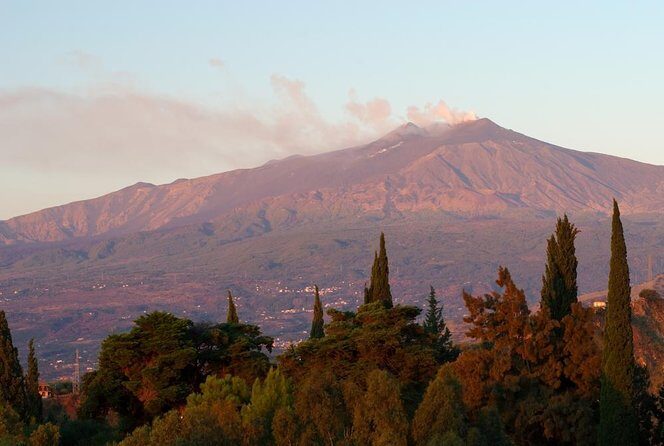
- Summit crater rim walking with views toward Central, Northeast, and Southeast craters
- A big altitude step-up via cable car and a 4×4 option to start the real trek high
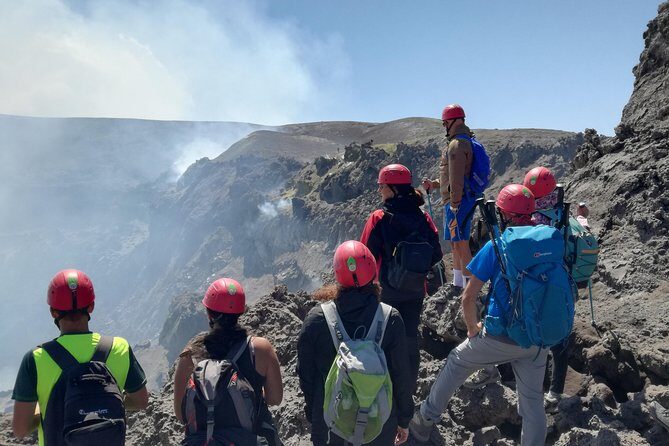
- Helmet, boots, trekking poles, and wind protection provided for the rough ground
- Photo stops timed for breaks—so you’re not hiking with your camera trapped
- Group size capped at 20, which helps but still means you’ll want to stay close to the front
From Rifugio Sapienza to Etna South: The Start That Matters
Most Etna South hikers meet at Piazzale Rifugio Sapienza (Etna South) near Nicolosi, with an 8:00am start. It’s a smart time to begin because the mountain gets windy and cold quickly once you’re higher up, and you want daylight for the crater views.
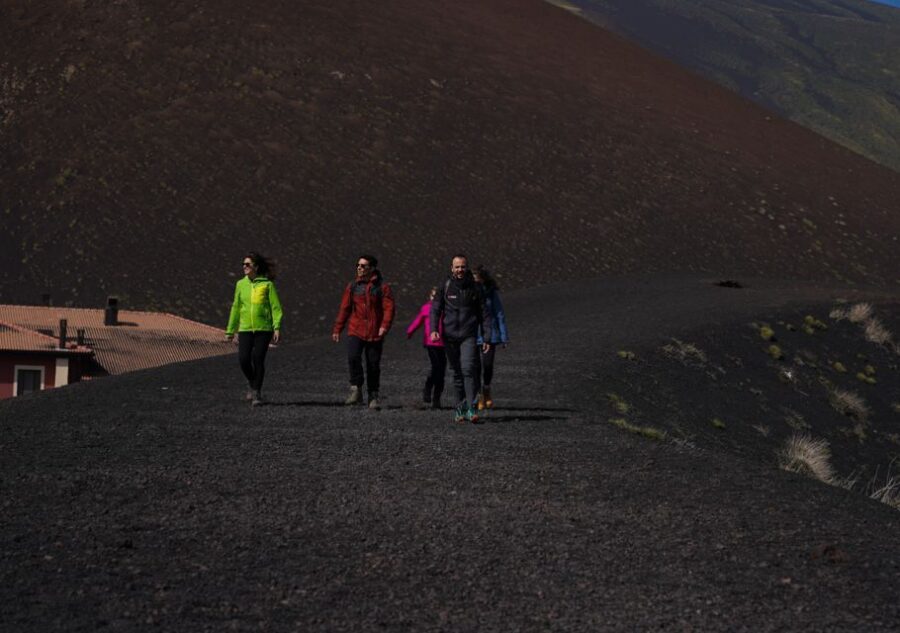
I like that this is set up for real hiking, not a short walk with a few scenic stops. You’ll be trekking on uneven volcanic ground for hours, and you’ll also have the kind of guided pacing that helps you stay steady when the terrain turns into loose sand, gravel, and rock.
You’ll also want to know one thing right away: the tour is built around an active volcano. That means your guide may adjust how close you go and what you prioritize if conditions shift during the day.
You can also read our reviews of more guided tours in Catania

Getting Up: Cable Car and the 4×4 Jump to the Trail (2,800–2,900 m)
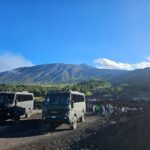
A big chunk of this experience happens before the first long uphill step. After meeting at Rifugio Sapienza, you reach roughly 2,800 meters (and around 2,900 meters depending on the route) using the cable car and a 4×4 bus/jeep option.
That matters because Etna’s elevation changes fast. Getting higher early saves your legs for the crater hike, not for a long slog from the base. It also helps you get more time for the walking section where the geology and views are the point.
Worth a note: the cable car and 4×4 tickets are not included. They’re listed as €65 per person, paid locally. Even with that added, this tour can still be good value if you want a guide-led summit experience instead of piecing together transport and then trying to figure out the science on your own.
Walking the Summit Craters: Central Rim, Northeast Views, Southeast History
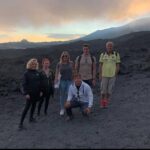
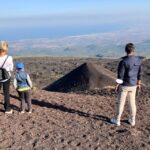
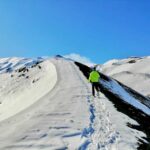
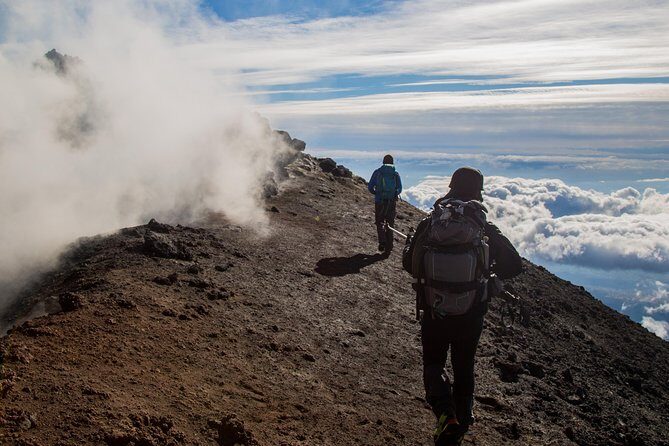
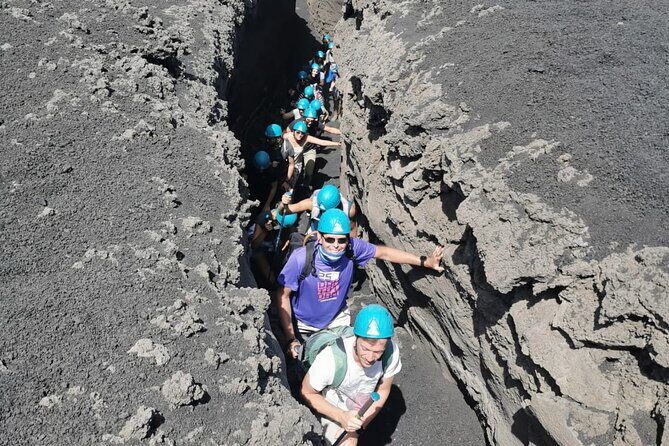
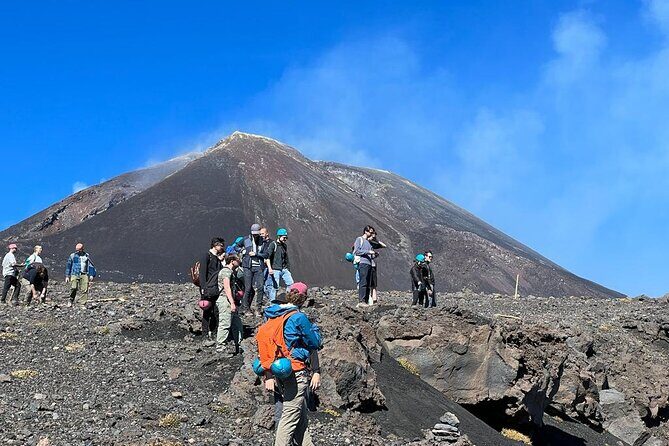
This is the part you came for: the trek to the summit craters area, built around walking on dramatic volcanic edges. After the high-altitude transfer, you’ll do about two hours of walking through lava flows and that classic Etna “moon land” ground texture.
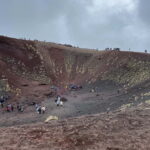
When you reach the crater zone, your route focuses on the rim walk and crater views. You’ll be able to take in:
- the Central Crater rim walk
- views toward the Northeast Crater
- sightlines toward the Southeast Crater, tied to the mountain’s more recent big eruptions
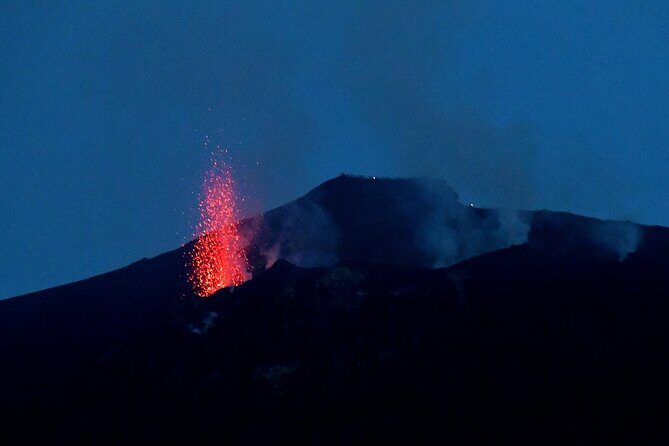
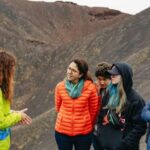
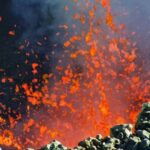
The guide’s job here isn’t just to say it’s volcanic. It’s to help you connect the visuals to what’s happening—like gases rising, volcanic bombs and spatter, and why the ground can look like it has different colors. One reason this hike feels so special is that you’re not only looking at a peak; you’re walking through an active process you can see.
Now the practical side. The rim section and uneven ground can feel exposed, especially if you’re not used to heights. The good news is you’re not doing this alone—your guide leads the group and keeps you moving at a pace that matches safety and conditions.
Also, Etna can be smoky. The tour specifically warns that conditions can vary due to an active volcano. If vapor and gas are too intense near a particular viewpoint, the plan may shift. Think of it as a safety-first hike: you’ll still get a lot of crater scenery even if the day’s access changes.
Valle del Bove and Barbagallo Craters: When Etna Turns Into a Whole System
After the main crater area, you’ll shift into the broader volcanic geography of Etna’s south side. The stop called Valle del Bove is one of those places where Etna stops being a single cone and starts behaving like a full landscape of pits, channels, and collapsed structures.
Even if the exact feeling depends on the day’s weather, Valle del Bove is where you can really grasp scale. The terrain looks engineered by eruptions and erosion, and it’s the kind of place your guide can point out patterns in lava flow direction and crater formations.
Later in the descent, you visit Barbagallo craters and cross a lava flow channel. Those details aren’t random. They help you understand how the mountain’s activity shapes routes over time—where lava moved, what hardened, and what the ground looks like after the chaos.
This also is where I notice how much the guide matters. A good guide turns “cool rocks” into “oh, I get how this area evolved.” You’re still walking, but you’re learning as you go.
The Descent Back to 2500 m: Tricky Feet, Big Views
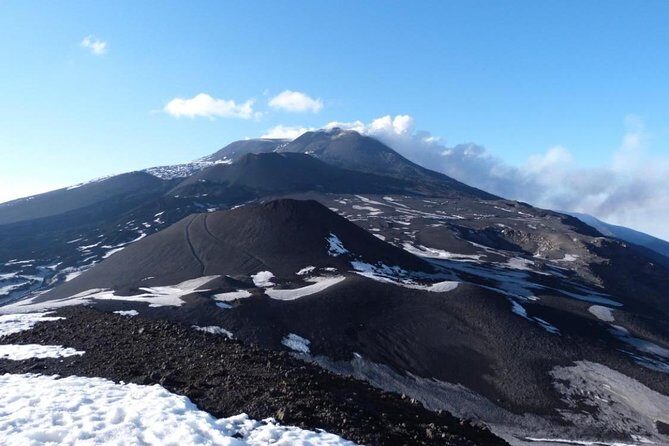
Coming down is often harder than it sounds. You’ll descend after spending time in the crater zone and nearby areas, and the ground can be slippery and uneven. Reviews for this tour highlight slippery soil on the decent and the need for solid shoes—so don’t treat “summit hike” as a casual label.
Expect your legs to feel it. You’re dealing with altitude changes, wind, and volcanic terrain that doesn’t behave like a forest trail. The descent is also when wind chill can suddenly bite, especially if you stop for photos and your body cools down.
Eventually, you return to around 2500 meters via the Etna cable car, and then you’re back at the starting area. That cable car return is useful because it ends the day with less foot pounding and gives you a clearer finish.
You can also read our reviews of more hiking tours in Catania
Gear, Clothing, and the Pace: What You Should Bring vs. What’s Provided
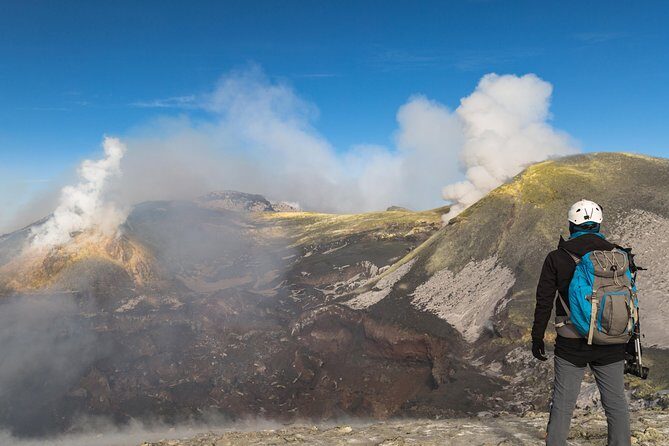
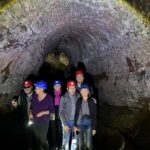
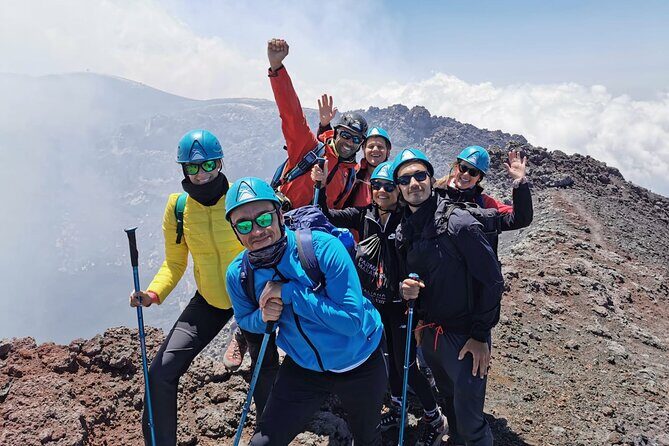
One of the best parts of this hike is that you’re not starting from scratch. The tour provides:
- Helmet
- Hiking boots
- Trekking poles/sticks
- Insurance and volcanological guides
The highlights also mention windbreakers and gloves provided, which is great because the summit zone can be brutally windy. Even with gear provided, you should plan as if you might need more layering than you think.
Based on common on-mountain realities (and what guides emphasize), here’s what I recommend packing in your day bag:
- Water (bottled water isn’t included)
- Snacks/lunch (snacks and food aren’t included)
- A wind layer even if some protection is provided
- Long pants and sturdy socks for gritty ground
- A hat and gloves if yours run cold easily
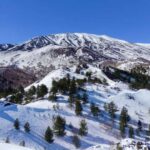
Reviews also mention people being surprised by cold snaps and strong winds at high altitude, including conditions with snow. You don’t need to panic about that, but you should respect altitude weather: it can shift fast, and it can feel much colder once you’re up around the craters.
Pacing-wise, the tour is rated medium-high. You’ll have breaks, and you can hike slowly, but you do need to be in decent shape and physically capable of roughly 8–10 km of hiking on uneven terrain (distance varies by actual route and conditions). If you’re new to hiking, this is not a “learn on Etna” day.
Group size max is 20 travelers. That’s a sweet spot, but in any group on a windy ridge, you’ll want to stay near the guide if you care about hearing the science.
Price and Value: What You’re Really Paying For
At $78.64 per person, this tour is priced around a guided summit hike with specialized staff. But the big item you should budget separately is transport to the high trail: €65 per person for the cable car and 4×4/jeep tickets, paid locally.
So what’s the value? You’re paying for three things that are hard to DIY:
- A volcanology-focused guide who explains crater zones and active processes while you walk.
- Safety equipment and support (helmet, poles, and guided decision-making on active volcanic conditions).
- A structured route that gets you into crater areas without you figuring out the timing and walking logic on your own.
If your alternative is doing a more basic Etna outing, you might save money. But if your goal is to actually walk the crater rims and lava terrain, a guided hike like this can be the more satisfying option—especially because the guide handles changing conditions.
Weather, Safety, and How to Think Like a Confident Hiker
This tour requires good weather. If conditions are poor, you’ll be offered a different date or a full refund. That’s not a small detail on Etna—it’s a core part of how this kind of hike stays safe.
Even in good weather, you should expect wind. High on Etna, wind can turn a “cool day” into a “why is it so cold?” moment fast. Dress for wind, not for sunshine.
Safety-wise, the guide will keep you alert to the realities of an active volcano. Think of the tour as “guided exposure to real volcanic features”—not a theme park viewpoint. That’s what makes it memorable, and it’s also why the itinerary can shift if gas/vapor levels or other conditions aren’t right near the craters.
Who Should Book This Etna South Summit Hike
This tour is a great fit if you:
- want a guided crater hike with volcanology explanations
- are comfortable with medium-high hiking effort and uneven ground
- like taking time for views and photos during a structured walk
- want equipment support like boots, helmet, and poles
It’s probably not ideal if you:
- hate heights or get very anxious on exposed ridges (the rim walk can feel vertiginous)
- can’t handle slippery, uneven terrain on the descent
- don’t want to think about clothing layers for wind and cold
FAQ
Where does the tour start?
It starts at Piazzale Rifugio Sapienza, 95030 Nicolosi CT, Italy.
What time does the hike begin?
The start time is 8:00 am.
How long is the tour?
The duration is about 6 hours.
Is this tour offered in English?
Yes, it is offered in English.
What’s included in the price?
The included items are a helmet, trekking boots, insurance, volcanological guides, and trekking sticks/poles.
What costs extra?
Cable car and 4×4 jeep tickets are not included and are listed as €65 per person, paid locally. Bottled water and snacks/food are also not included, and a wind jacket is not included.
How fit do you need to be?
You should have moderate physical fitness, but the level is described as medium-high, and people are expected to be in good condition for the activity.
How many people are in the group?
The tour has a maximum of 20 travelers.
Can the route change on an active volcano?
Yes. Because Etna is active, the itinerary may vary depending on safety conditions.
Should You Book This Etna South Summit Hike?
I’d book it if you want the real Etna experience: guided crater-rim walking, lava-flow terrain, and a volcanologist-style explanation while you’re still moving. This is a tougher, colder-in-the-wind kind of day, but it’s also the kind of hike that turns Etna from a postcard into a place you understand.
Just go in with the right mindset: bring your layers, plan for uneven/slippery footing on the descent, and accept that on an active volcano, your day’s exact crater access can change. If that’s your style, Etna South with a certified guide is a standout choice.