REVIEW · SICILY
Classical Ortigia Guided Group Tour
Book on Viator →Operated by Hermes Sicily Tourist guides group · Bookable on Viator
Ortigia makes sense fast on foot. This guided group route ties the Greek roots and Baroque centerpiece of Syracuse together in about 2 hours, starting at the Temple of Apollo and working toward the Piazza Duomo area. I like how the story stays practical, with clear explanations that help you connect what you see to why it mattered.
I also like the group size and pacing. With a maximum of 20 people, you’re not stuck behind a wall of shoulders, and you still get time to stop for photos and look closely as you walk the lanes. One thing to consider: the cathedral interior is optional and can require an extra ticket, depending on religious services.
In This Review
- Key Highlights You’ll Actually Feel
- Why Ortigia’s Classics Work Best on Foot
- Meeting at the Apollonion: Temple of Apollo First
- Palazzo Montalto and the Spirduta District Lanes
- Piazza Archimede and the Fountain of Diana
- Piazza Duomo: The Heart of Syracuse Meets a Cathedral on Older Stone
- Cathedral interior: optional, timing-dependent
- Santa Lucia alla Badia and Caravaggio’s Painting Moment
- Fonte Aretusa: Papyrus Plants and a Myth You Can See
- Lungomare di Levante and Cala Rossa Sea-Time
- Ending in Giudecca: Fish Bar La Via Della Giudecca and the Jewish Quarter
- Price and Value: What $30.12 Buys You Here
- Who This Tour Fits Best (and Who Might Prefer Something Else)
- Should You Book the Classical Ortigia Guided Group Tour?
- FAQ
- FAQ
- How long is the Classical Ortigia guided group tour?
- What language is the tour offered in?
- Where does the tour start and where does it end?
- Is the mobile ticket included?
- Is the cathedral interior included in the price?
- What admissions are included for the stops?
- How big is the group?
- Are radio receivers included?
- What happens if the weather is bad?
Key Highlights You’ll Actually Feel
- Temple of Apollo start point gives you Greek-city context right away
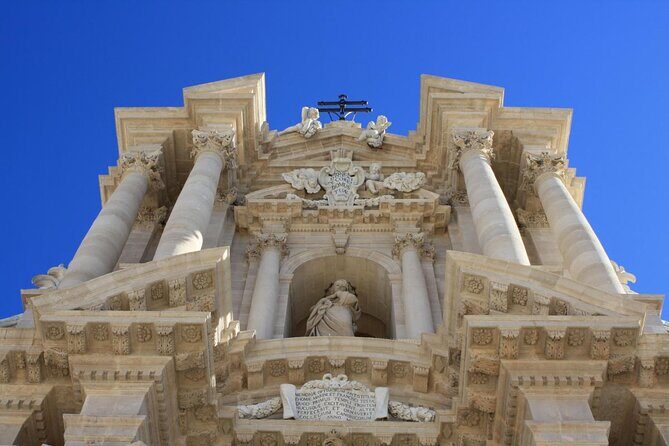
- Piazza Duomo + Cathedral shows Baroque layers sitting on an older Greek temple
- Caravaggio focus at Santa Lucia alla Badia adds a strong art moment to the route
- Fonte Aretusa includes a look at papyrus plants plus a romantic myth
- Cala Rossa and the eastern promenade give you sea views before the walk through Giudecca
Why Ortigia’s Classics Work Best on Foot
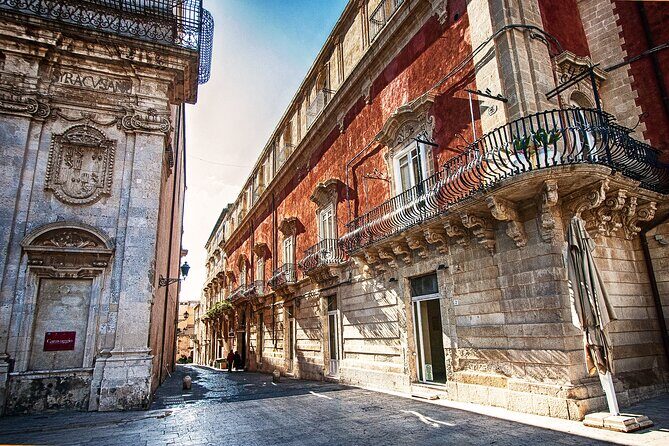
Ortigia is the kind of place where landmarks feel close, but understanding them takes effort. This tour is built to fix that. You cover the main sights in a tight loop, so you leave with a mental map of where the Greek story begins, where the Baroque story takes over, and where the myths and sea fit in.
The format matters for your comfort. It’s a guided group experience in English with a typical pace of quick stops (mostly around 10 minutes), plus a couple of longer moments where you can linger or take a breath. And because the group stays small, the walking feels like a coordinated stroll rather than a cattle drive.
You can also read our reviews of more guided tours in Sicily


Meeting at the Apollonion: Temple of Apollo First
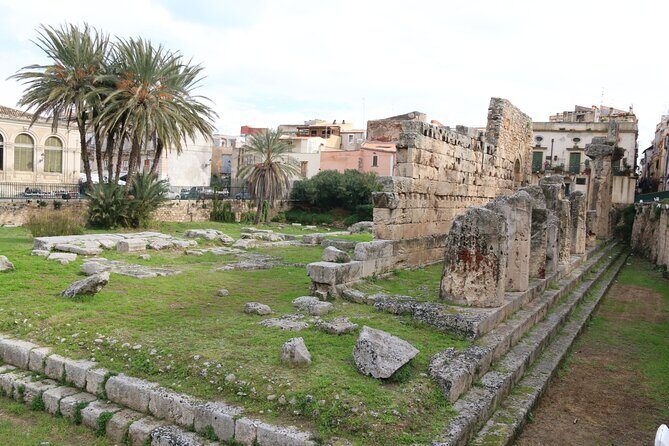
You start at the Temple of Apollo, also known as the Apollonion, in Syracuse (Syracusa). This is a smart move because it sets the timeline early. The guide explains the origins of the Greek city and points out what makes the temple dedicated to the god of light feel so tied to the identity of Syracuse.
This first stop is short (about 10 minutes), but it’s designed as orientation. If you’ve ever visited a Greek ruin and felt like you were just looking at stones, this helps you see patterns: sacred space, civic identity, and the idea of light and knowledge that comes up in the way people built and named these places.
Palazzo Montalto and the Spirduta District Lanes
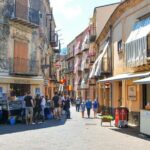
Next you head into the alleys of Ortigia and the older Spirduta district area. This stop centers on Palazzo Montalto, with the guide weaving in urban legends and the medieval feel of the neighborhood.
What I like here is that the tour doesn’t treat Ortigia as a museum. It treats it like a living maze of stories. You’ll get a sense of how medieval buildings fit into today’s street plan, and you’ll start noticing how the city’s “shape” influences the vibe of your walk—tight turns, sudden views, and buildings that feel close enough to touch.
Practical tip: wear shoes with grip. The route is made for walking, and the best viewpoints pop up when you can move quickly and safely.
Piazza Archimede and the Fountain of Diana
From the side streets you reach Piazza Archimede and the neoclassical Fontana di Diana. This stop is also about 10 minutes, but it’s one of the places where the square layout does some of the storytelling for you.
The fountain is the center, and the surrounding buildings give you context for how the square functions as a pause point in the day. The guide also sets it up thematically, so Diana becomes more than a decorative landmark. It’s a structured way to connect art, mythology, and city design without needing a whole separate museum visit.
If you care about photos, this is a good place to slow down just a bit. The square gives you cleaner lines than the narrow lanes, and it helps you capture Ortigia’s balance between myth and architecture.
Piazza Duomo: The Heart of Syracuse Meets a Cathedral on Older Stone
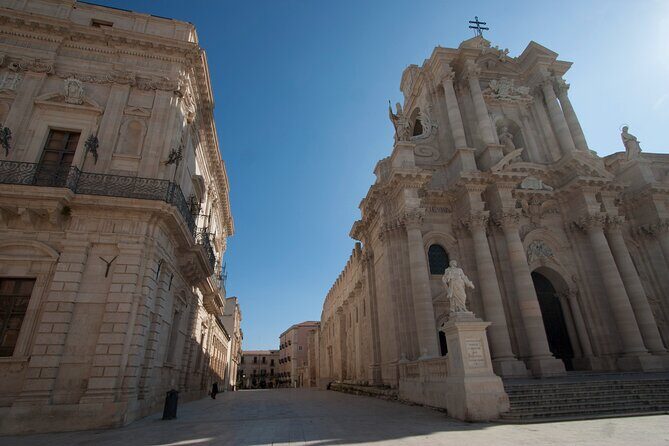
Piazza Duomo is the beating heart of Syracuse, and the tour gives it the time it deserves (another 10-minute focus at the square itself). The guide frames what you’re seeing as part of the city’s identity—how the buildings around the square keep pulling the eye back to the central religious and civic power.
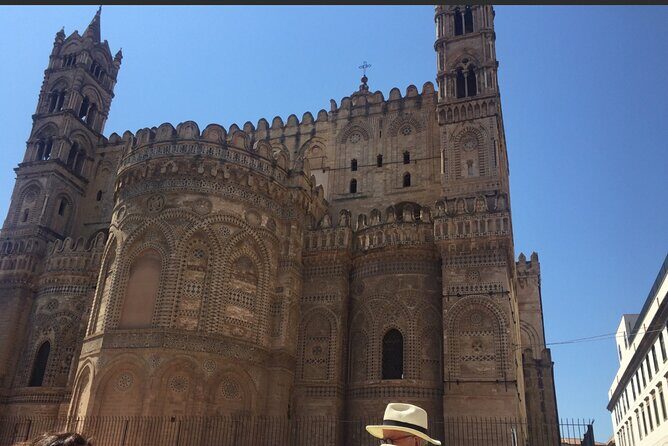
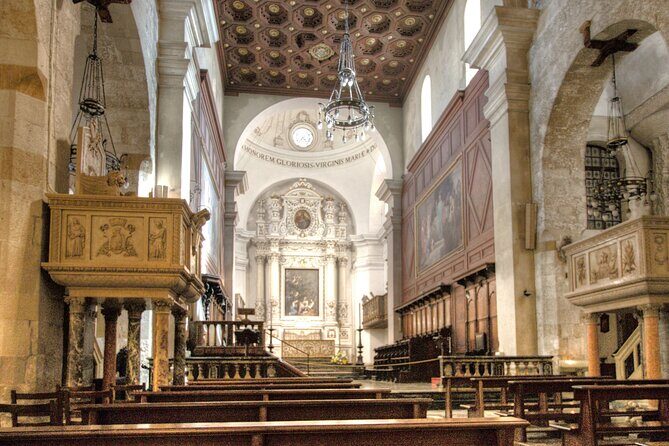
Then you move to Syracuse Cathedral. This is the big architectural twist. The guide explains why the Cathedral of Syracuse feels unique: it’s a Baroque-style cathedral built on an ancient Greek temple. That one fact changes how you read the whole scene. Instead of seeing just one era, you start spotting layers—new forms placed over older foundations.





Cathedral interior: optional, timing-dependent
The interior visit is optional. If there are no religious functions, you may be able to go inside, but the entrance ticket is not included and costs 2 euros per person. If you prefer not to visit, the tour includes a short coffee break.
This matters for your planning. Since the visit depends on whether services are happening, you should keep your schedule flexible. Even without the interior, the exterior and the guide’s explanation make the stop worth it.
Santa Lucia alla Badia and Caravaggio’s Painting Moment
After the cathedral area, you’ll visit the Chiesa di Santa Lucia alla Badia. This stop runs about 15 minutes and focuses on religious tradition as well as art.
The guide talks about the important religious holiday tied to Santa Lucia and highlights the most important painting of Syracuse, a work by Caravaggio. Even if you’re not the type to chase major masterpieces around Italy, this is a good way to experience one of Ortigia’s cultural anchors in a short amount of time.
A tip: this is a great stop to ask yourself what you care about most—architecture, religious tradition, or art. This part hits art and local devotion, and it balances nicely between the larger stone scenes and the quieter seaside mythology later.
Fonte Aretusa: Papyrus Plants and a Myth You Can See
Then you head toward the sea, leaving Piazza Duomo to reach Fonte Aretusa. This is one of the tour’s most atmospheric moments, with about 15 minutes here.
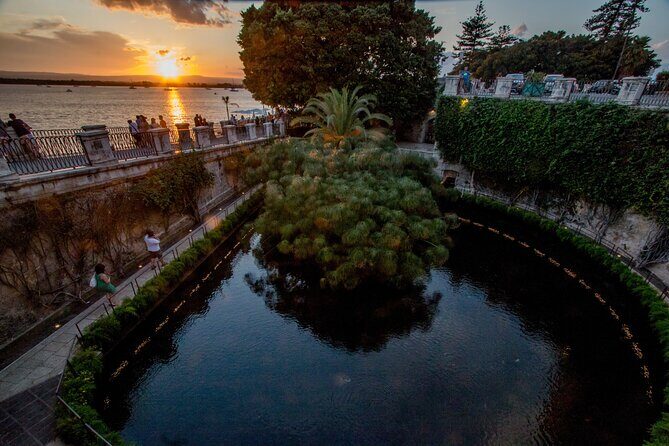
You’ll learn the legendary side of the spring and you can actually admire the papyrus plants. That physical detail makes the myth feel grounded instead of purely symbolic. The guide shares the romantic myth linked to this place, and you’ll understand why this spot has such a hold on visitors and locals alike.
If you’re the type who likes to connect stories to scenery, you’ll enjoy this stop most. It’s the point where Ortigia shifts from buildings and facades to water, plants, and the kind of place where people can believe in legends.
Lungomare di Levante and Cala Rossa Sea-Time
From Fonte Aretusa you cross the island toward the eastern promenade, the Lungomare di Levante. This stop is shorter (about 10 minutes), but it gives you exactly what a walking tour should: a break from the dense streets.
You’ll reach the small beach of Cala Rossa. Even if you don’t plan to swim, you’ll get that sea-air reset. The guide’s framing helps you notice how the promenade works as a connector between the town’s center and its coastline—Ortigia isn’t only stone, it’s also edge, horizon, and light.
Practical note: this is where weather matters. Good sky gives you better views and a calmer mood, especially near the water.
Ending in Giudecca: Fish Bar La Via Della Giudecca and the Jewish Quarter
The final stretch crosses through the Giudecca district, the ancient Jewish quarter of Syracuse. The last stop is at Fish Bar La Via Della Giudecca, lasting around 20 minutes.
This is a meaningful ending because it widens the lens. You started with Greek temple context, moved through medieval and Baroque Syracuse, added art and myth, and now you finish with a neighborhood chapter that reminds you Ortigia’s story includes multiple communities over time.
Also, 20 minutes is long enough to slow down. You can take photos, regroup, and get your bearings for what you want to do next on your own.
Price and Value: What $30.12 Buys You Here
At $30.12 per person, this tour sits in a sweet spot for a guided highlight route. You’re paying for a compact itinerary, in-English guidance, and a structure that prevents the common problem of wandering without context.
Here’s what’s included that helps justify the cost:
- The guide provides a radio guide receiver if the group is large
- The itinerary stops have free admission for everything except the optional cathedral interior
- The tour runs about 2 hours, so you’re not buying a whole day to see a few blocks
You should also know what costs extra. If you want the Cathedral of Syracuse interior visit, the entrance ticket is 2 euros per person. That’s reasonable, and it’s still optional—so you’re not forced into a plan that might conflict with religious functions.
One more value detail: a maximum of 20 travelers keeps the experience easier to manage, especially in narrow Ortigia streets where crowding can kill your enjoyment.
Who This Tour Fits Best (and Who Might Prefer Something Else)
This is a strong choice if you want a guided overview that feels coherent fast. It’s ideal for first-timers in Ortigia, or for people who have a short window and don’t want to spend that time figuring out order and meaning.
It also works well if you’re the kind of person who likes story-driven stops—Greek temple origins, medieval legends, a neoclassical fountain, Caravaggio at Santa Lucia, papyrus plants at Aretusa, and then the sea promenade. You get variety without it turning into a rushed speed-run of 15 separate sites.
If you’re traveling with someone who hates walking or wants long museum-level time inside major interiors, this might feel short in the cathedral area. The interior is optional and timing-dependent, so if that’s your main goal, plan to be flexible.
Should You Book the Classical Ortigia Guided Group Tour?
I’d book it if you want Ortigia to make sense quickly. The route connects the major anchors—Temple of Apollo, Piazza Duomo and the cathedral’s layered story, Santa Lucia with Caravaggio, Fonte Aretusa with papyrus and myth, and a finish through Giudecca—without dragging you around for half a day.
The biggest reason to book is the guide’s impact. The tour is repeatedly praised for how well it explains each stop, and the name Eva shows up in the strongest feedback for clear, engaging guidance. You’re not just getting photos and landmarks—you’re getting explanations that make the city feel readable.
The main reason to hesitate is the cathedral interior. Since it depends on religious functions, you shouldn’t assume you’ll get inside. If you can live with an exterior-focused cathedral visit (plus a short coffee break option), that’s not a dealbreaker.
FAQ
FAQ
How long is the Classical Ortigia guided group tour?
It lasts about 2 hours.
What language is the tour offered in?
The tour is offered in English.
Where does the tour start and where does it end?
It starts at the Temple of Apollo (Apollonion) in Syracuse and ends at Piazza Archimede in Siracusa SR, Italy.
Is the mobile ticket included?
Yes, you’ll receive a mobile ticket.
Is the cathedral interior included in the price?
The cathedral interior is optional and not included. The entrance ticket is 2 euros per person.
What admissions are included for the stops?
Admission is free for the listed stops, except for the optional internal visit to the cathedral.
How big is the group?
The tour has a maximum of 20 travelers.
Are radio receivers included?
Radio guide receivers are included if the group is large.
What happens if the weather is bad?
The experience requires good weather. If it’s canceled due to poor weather, you’ll be offered a different date or a full refund.