REVIEW · PALERMO
Markets and Monuments: Walking Tour in the Center of Palermo
Book on Viator →Operated by Cavallaro Fabrizio · Bookable on Viator
Palermo moves fast, but this walk keeps you moving with purpose. You’ll tackle capo sights and Cathedral-class architecture, plus real talk about the Arab-Norman layers that earned Palermo its UNESCO status. I especially like the way this tour pairs big-name landmarks with a food market stop that feels local, not staged.
The other thing I like: the pace works. In about three hours you hit major squares and churches without the usual rushing, and you get a guide who clearly enjoys explaining the city. One drawback to plan for: if you’re going in hot weather, you may feel the lack of frequent breaks for water, so bring a bottle and don’t show up empty-handed.
In This Review
- Key Highlights You’ll Actually Care About
- Piazza Vincenzo Bellini to Santa Caterina: The 3-Hour Route in Plain Terms
- Capo Street Market: How to Spot Real Sicilian Flavor on a Short Stop
- Teatro Massimo and Palermo Cathedral: Big Architecture, Story-First Explanations
- Teatro Massimo
- Palermo Cathedral (Cattedrale di Palermo)
- Quattro Canti and Fontana della Vergogna: The Squares That Teach You Palermo’s Layout
- Quattro Canti (Piazza Vigliena)
- Fontana della Vergogna (Piazza Pretoria)
- La Martorana (Santa Maria dell’Ammiraglio) and San Cataldo: Styles From Different Centuries, Plus Marzipan
- Santa Maria dell’Ammiraglio (La Martorana)
- Church of St. Cataldo (San Cataldo)
- What You’re Paying For: Value at $39.91 and How to Budget Snacks/Entrances
- Who This Tour Fits Best (And When to Skip It)
- Should You Book This Walking Tour?
- FAQ
- What’s the duration of the walking tour?
- Where do you meet, and where do you end?
- Is the tour offered in English?
- Are entrance fees included for churches and museums?
- Is food included?
- How many people are in a group?
Key Highlights You’ll Actually Care About
- Capo Street Market: a classic old-school market with fruit, vegetables, and fish at street level
- Teatro Massimo: Italy’s largest opera house, built in 1875, with lots of legend-filled story value
- UNESCO Arab-Norman focus: you’ll connect what you see to why the district matters
- Quattro Canti + Fontana della Vergogna: Baroque and Renaissance-era Palermo in walking distance
- La Martorana (Santa Maria dell’Ammiraglio): style changes across centuries, plus the marzipan tradition of frutta di Martorana
- San Cataldo (San Cataldo): the three red domes are a quick, memorable stop
Piazza Vincenzo Bellini to Santa Caterina: The 3-Hour Route in Plain Terms
This tour is built around a tight loop in central Palermo. You start at Piazza Vincenzo Bellini and finish in front of Santa Caterina church, about a 20-minute walk from where you began. That means you’re not stuck back at square one when you’re done—you can keep exploring on your own right away.
The group size stays small: the tour caps at 18 people, with a minimum of 2 per booking. It’s offered in English, uses a mobile ticket, and the dress code is smart casual. Most people can join, and it runs about 3 hours.
Two practical notes that will make your life easier:
- Wear shoes you don’t mind getting a little scuffed—this is walking plus uneven streets.
- If it’s warm, plan for it. One review complained about heat and wanting more water breaks, so bring water and take small pauses when you can.
You can also read our reviews of more walking tours in Palermo
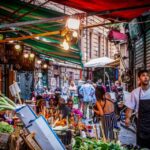
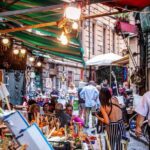
Capo Street Market: How to Spot Real Sicilian Flavor on a Short Stop
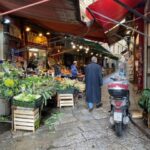
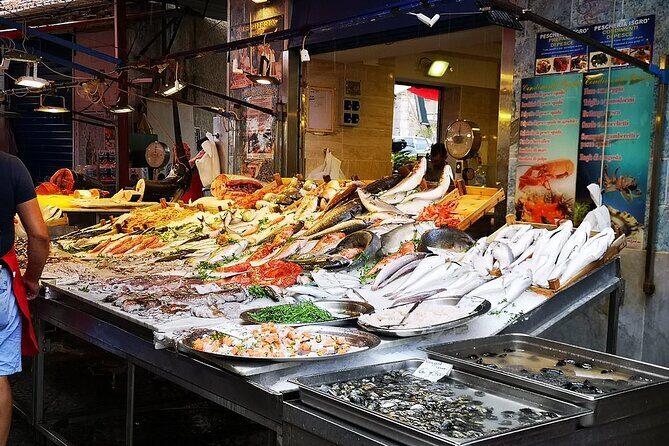
Your first stop is Capo Street Market, one of the most traditional and popular old food markets in Palermo. Expect street-level energy and the kinds of everyday sights you won’t get from a photo-only itinerary: piled Sicilian fruits, vegetables, and fish that make the city’s food culture feel immediate.
This is one of those moments where the guide’s role matters. You’re not just walking past stalls—you’re learning what you’re seeing and how locals think about ingredients and seasonal choices. It’s also the place where you’ll likely start getting hungry, fast.
You’ll have the option to purchase classic snacks during the tour, but food and drinks are not included. So treat it like a tasting opportunity, not an all-you-get meal. If you want to keep costs down, decide in advance what you’ll buy—otherwise the market will do its best to sell you “one more thing.”
Teatro Massimo and Palermo Cathedral: Big Architecture, Story-First Explanations
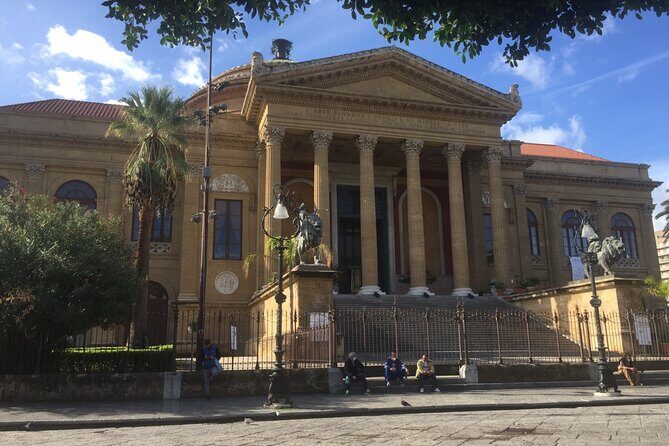
After the market, the tour shifts into monumental mode.
Teatro Massimo
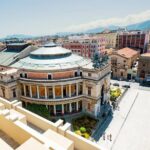
You’ll stop at Teatro Massimo, the largest opera house in Italy and the third largest in Europe, built in 1875. It’s famous for history—and yes, there are legends. Even if you don’t go in, the outside setting gives you a sense of Palermo’s theatrical seriousness: this is a city that knows how to stage drama.
Important for planning: entrance isn’t included. So if you want to go inside, you should be ready for additional cost. For many people, simply standing and taking in the structure works as a good payoff on a walking tour, especially when the rest of the route includes churches that can be free or included.
Palermo Cathedral (Cattedrale di Palermo)
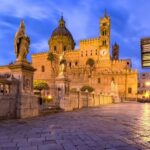
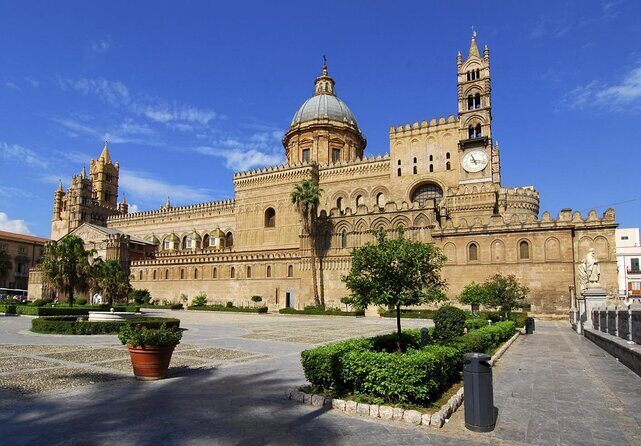
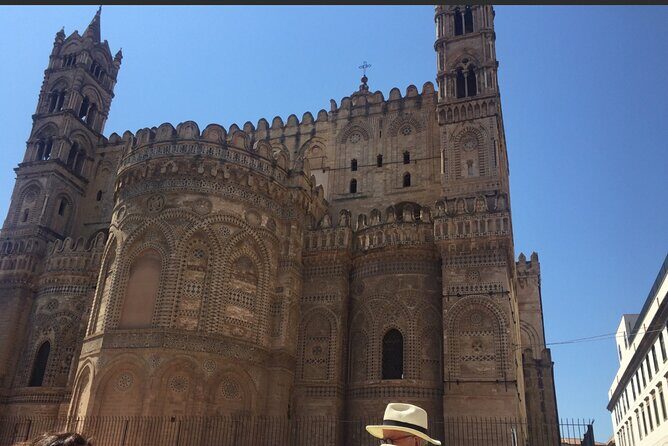
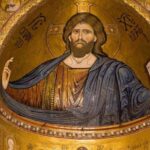
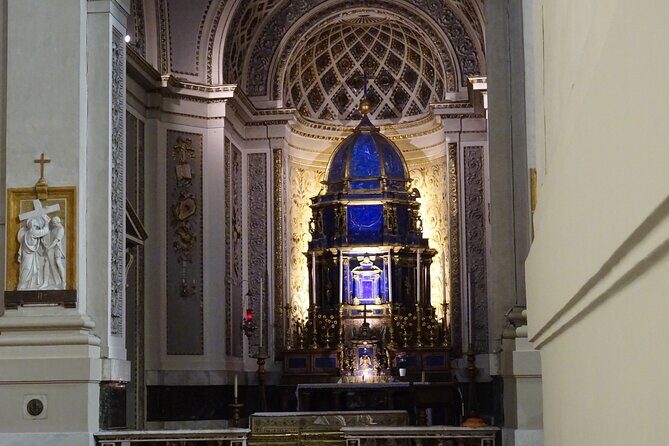
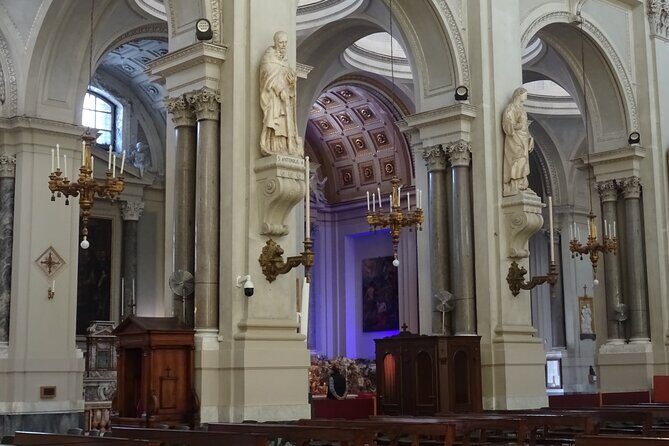
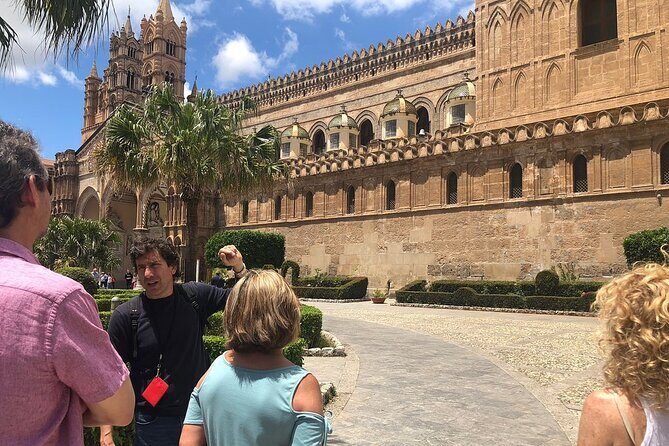
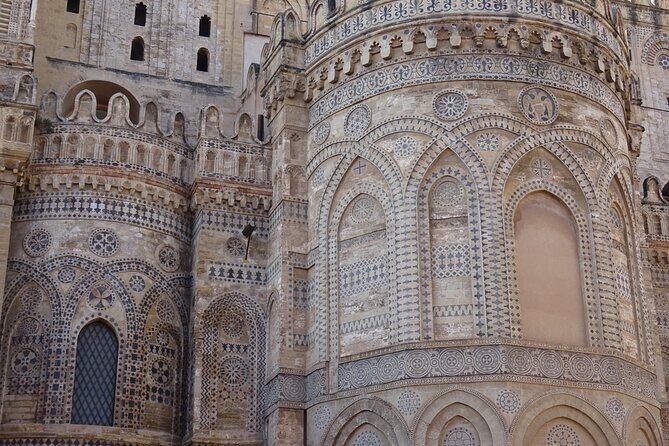
Next up is Cattedrale di Palermo, the Arab-Norman Palermo Cathedral that’s tied to UNESCO’s listing. Here’s what I love about placing this stop right after Teatro Massimo: you get contrast. One is imperial and public-facing. The other is a layered sacred complex that shows how Palermo absorbed different cultural influences over time.
The good news: the stop is listed as free. And you’ll also see it inside, which is where architecture details become less “wow from outside” and more “oh, that’s why it matters.”
As you walk, listen for how your guide connects features to the UNESCO Arab-Norman story. It’s much easier to remember the city when you know what to look for—otherwise churches can blur together.
Quattro Canti and Fontana della Vergogna: The Squares That Teach You Palermo’s Layout
Two stops that many people skip on their own are the ones you’ll actually need to get your bearings.
Quattro Canti (Piazza Vigliena)
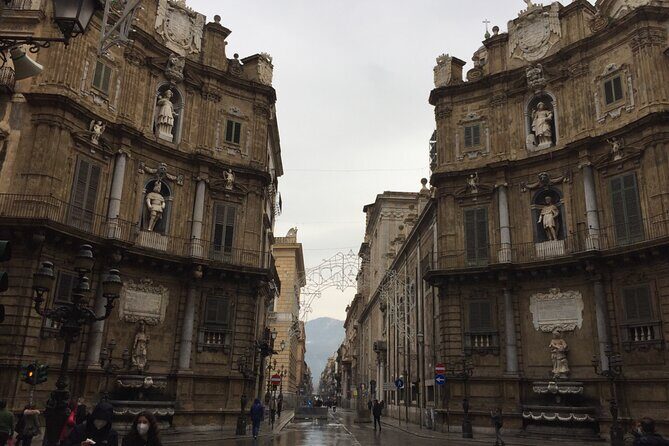
You’ll visit Quattro Canti, officially Piazza Vigliena, a Baroque square built in the 17th century at the crossing of two main streets: Via Maqueda and Corso Vittorio Emanuele. This is one of those places where the city plan becomes part of the attraction. It’s not just pretty stone—it’s a traffic-free lesson in how Palermo organizes space.
Fontana della Vergogna (Piazza Pretoria)
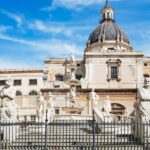
Then you’ll get to Fontana della Vergogna, a monumental fountain in Piazza Pretoria, built in 1574. Even if you only spend a few minutes here, it’s a strong visual anchor. The fountain works well as a “reset” stop between churches—something you can look at without needing to read signage or buy a ticket.
Both of these stops are listed as free, so you’re getting high impact without extra fees.
La Martorana (Santa Maria dell’Ammiraglio) and San Cataldo: Styles From Different Centuries, Plus Marzipan
This is where the tour turns more personal. Not with feelings—just with details you’ll remember after you leave.
Santa Maria dell’Ammiraglio (La Martorana)
La Martorana (Santa Maria dell’Ammiraglio) is known for the multiplicity of styles that show up because the church was enriched over centuries. That means you’ll see more than one design language stacked together. It’s a quick introduction to how Palermo changes through time rather than staying frozen in one era.
There’s also a delicious angle. The nuns of the Martorana became famous for making moulded marzipan in the form of fruits—frutta di Martorana. Even though the convent no longer exists, the marzipan tradition is still one of Palermo’s most distinctive foodstuffs.
Entry isn’t included here, so you may or may not go inside depending on the tour’s flow and what’s open. Either way, this stop gives you a story you can pair with a later snack purchase if you want to taste the tradition yourself.
Church of St. Cataldo (San Cataldo)
The final church stop is San Cataldo, built in the 12th century, famous for its three red domes. This is one of the easiest “spot it fast, remember it forever” sites on the route. Even if you’re tired from walking, those red domes are doing the work.
As with La Martorana, entrance isn’t included, so don’t plan on a full interior visit unless you’re ready for extra cost.
What You’re Paying For: Value at $39.91 and How to Budget Snacks/Entrances
At about $39.91 per person for roughly 3 hours, the value depends on what you want to see inside. This price is really paying for:
- a local guide who coordinates the route and tells you what matters
- a structured walk that mixes free highlights with a few paid-access possibilities
- a market stop where you’re not just passing through
What’s included:
- local guide / professional guide
- port pickup (the specifics of where you’re picked up aren’t detailed here, but it’s part of the package)
- the walking tour experience with the stops
What’s not included:
- food and drinks (but you have the option to buy snacks during the tour)
- entrance fees in museums/buildings/churches
- infant meals (not relevant for most adult travelers, but it’s listed)
Here’s the practical way to think about cost: several of the stops are listed as free (like the market, cathedral, Quattro Canti, and Fontana della Vergogna). But Teatro Massimo, La Martorana, and San Cataldo have “not included” admission. So if you want full interiors at those, you should budget a bit extra.
If you like architecture but you don’t need every room opened, you’ll likely feel good about the price.
Who This Tour Fits Best (And When to Skip It)
This walking tour is a strong fit if you:
- want a first-time orientation to central Palermo
- like mixing food culture with monuments
- enjoy stories—UNESCO context and architecture explanations help a lot on this route
- are traveling with limited time and want a single, organized morning/afternoon plan
It’s also a good match for people who don’t want museum-level pacing. The route is short stops, clear focus, and you’re always moving toward the next sight.
When to think twice:
- If you hate heat and hate walking in it, plan your timing carefully or bring your own water strategy.
- If you need nonstop breaks, this might feel a bit tight. The route is designed to cover a lot in three hours.
Should You Book This Walking Tour?
Yes—if you want a smart, doable intro to Palermo’s center. The best reason to book is the combination: market + major landmarks + UNESCO context in one compact walk. That’s the kind of coverage that helps you understand the city faster and choose what to revisit later.
Book it especially if you:
- like practical guidance (where to look, what the buildings mean, what the food tradition connects to)
- want an easy starting point near Piazza Vincenzo Bellini
- are okay paying a little extra if you decide to go inside Teatro Massimo, La Martorana, or San Cataldo
One last tip: build a few extra minutes into your arrival at the meeting point. In a city where streets and piazzas can feel similar, being early keeps stress off the table.
FAQ
What’s the duration of the walking tour?
It runs for about 3 hours.
Where do you meet, and where do you end?
You start at Piazza Vincenzo Bellini and finish in front of Santa Caterina church.
Is the tour offered in English?
Yes, it’s offered in English.
Are entrance fees included for churches and museums?
No. Entrance fees in buildings and churches are not included, though some stops are listed as free.
Is food included?
No. Food and drinks are not included, though you can purchase classic snacks during the tour.
How many people are in a group?
The booking can include a maximum of 18 travelers, with a minimum of 2 people per booking.