REVIEW · PALERMO
Palermo No Mafia walking tour: discover the Anti-mafia culture in Sicily
Book on Viator →Operated by Addiopizzo Travel · Bookable on Viator
Palermo gets under your skin for the right reasons. This 3-hour walking tour connects major landmarks with the real story of how Palermo confronted Cosa Nostra—and how ordinary people helped break its grip. You’ll see sites like Teatro Massimo and the Wall of Legality, with clear explanations of how the city organized resistance.
I especially like the way the tour stays practical: it teaches you the anti-mafia ideas behind the scenes, not just mafia myths from movies. I also like the human scale—small group size (up to 15) means you can ask questions, and the guide keeps the story grounded in daily life, including extortion called pizzo.
One possible drawback: the route includes several short stops where you’ll mostly stand and listen, so if you prefer a more “walk-while-you-talk” style, build in patience (and comfy shoes).
In This Review
- Key highlights you’ll care about
- Palermo No Mafia: what this walk really teaches
- Price and timing: good value for 3 hours in Palermo
- The route in real life: from Piazza Giuseppe Verdi to Fontana Pretoria
- Teatro Massimo: rebirth after decades of violence
- Wall of Legality: 70 meters of names and faces
- The open-air market stop: shopkeepers under pressure
- Palazzo di Giustizia and Piazza della Memoria: the people the mafia couldn’t silence
- Palermo Cathedral: where Catholic space meets anti-mafia history
- Cappadonia Gelati and Addiopizzo: refusing pizzo, publicly
- Palazzo Pretorio and City Hall: corruption fought from within
- Guides and tone: passionate storytelling, with room for questions
- Who should book this Palermo No Mafia tour?
- Should you book? My straight call
- FAQ
- How long is the Palermo No Mafia walking tour?
- What does it cost?
- Is the tour offered in English?
- How many people are in the group?
- Where does the tour start and where does it end?
- Is there a mobile ticket?
- Are there any admission fees mentioned for the stops?
- What should I wear or bring?
- Does the tour include a donation?
- Is free cancellation available?
Key highlights you’ll care about
- Small group (max 15) for more back-and-forth with the guide
- Addiopizzo focus on resistance, including pizzo and why people refused to pay
- Wall of Legality (70 meters) for faces, names, and memory you can photograph
- Major landmarks on the route like Palermo Cathedral and Teatro Massimo
- A concrete mission moment, including a solidarity quote to an Addiopizzo local NGO
- End in central old town near Fontana Pretoria, so you can keep exploring right after
Palermo No Mafia: what this walk really teaches
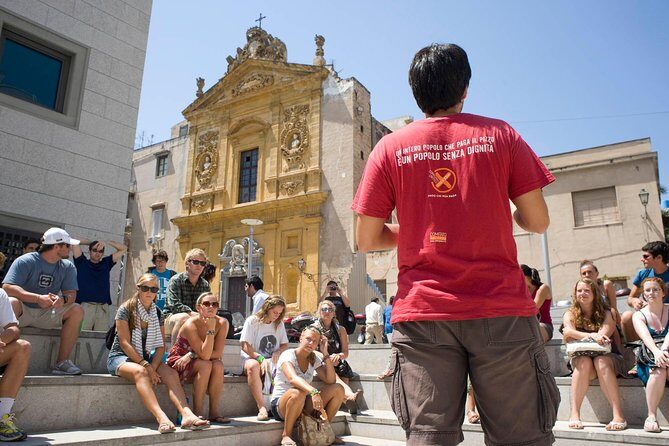
Palermo has a reputation in pop culture that’s mostly about power, fear, and stylized violence. This tour takes a different route. Instead of glamorizing criminals, it explains the city’s anti-mafia culture—how judges, institutions, shopkeepers, and local movements pushed back over time.
You’ll start where the city’s theater life and identity meet history: Teatro Massimo. Then you move into public spaces where the message is literally painted, memorialized, or posted on shop windows. It’s a walking lesson in how a society refuses to accept intimidation as normal.
Also, it’s not just a history lecture. You’ll hear how the mafia’s influence worked in daily life—and why pizzo (extortion) mattered so much. From there, the story becomes about the people who said no, even when it cost them something. That’s the heart of the tour.
You can also read our reviews of more walking tours in Palermo
Price and timing: good value for 3 hours in Palermo
At $39.30 per person for about 3 hours, you’re paying for a guided route that clusters multiple major sights into one focused theme. Many city walks force you to pick between “landmarks” or “story.” Here you get both: big places and the meaning behind them.
Why that feels like value: the tour doesn’t treat anti-mafia culture like a side note. It’s the organizing thread. You’ll spend your time at spots that connect directly to that thread, including free-to-see stops such as Palermo Cathedral and the memorial area by the Palazzo di Giustizia.
Two practical bits to plan around:
- You’ll be moving through central streets at a walking pace, with a few short standing moments for commentary.
- It’s English-only, and the tour is designed for most people to participate. Still, bring the right footwear because Palermo streets can be uneven.
The route in real life: from Piazza Giuseppe Verdi to Fontana Pretoria
The meeting point is P.za Giuseppe Verdi, 455, 90133 Palermo. The tour ends in the historic center near Fontana Pretoria, Piazza Pretoria. That end location is handy. It puts you close to more wandering options right away, without needing a bus plan.
In the middle, the walk follows a classic Palermo rhythm: a major public building, a street-art memory wall, a loud market atmosphere, and then legal and religious landmarks that anchor the story in institutions. The route is also timed to keep each stop meaningful rather than sprawling. Each site is given only what it needs—enough context to understand why it matters, then you move on.
If you’re the type who likes to see photos develop as you go, this route helps. The Wall of Legality is built for visual storytelling, while the memorial and cathedral stops give you a different kind of scene—less photo-op, more “pause and absorb.”
Teatro Massimo: rebirth after decades of violence
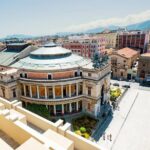
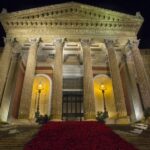
Your first major landmark is Teatro Massimo, Palermo’s opera house. Expect a quick, strong framing: this is a symbol of the city’s rebirth after decades of Mafia violence, not just an architectural stop.
You’ll also hear how pop culture shaped perceptions, since the theater has a link to The Godfather III setting in people’s minds. But the point of the stop is bigger than film trivia. The guide uses the theater as a starting symbol: Palermo isn’t only a place where intimidation happened. It’s also a place where the city rebuilt itself, culturally and publicly.
Practical tip: since it’s early in the tour, this is where you’ll want to get your questions ready. Ask what pizzo is in plain terms or how anti-mafia efforts changed over time. The guide usually builds the rest of the route from there.
Wall of Legality: 70 meters of names and faces
Next is the Wall of Legality, described as the longest wall painting in Italy (70 meters). This stop is short, but it’s the emotional centerpiece for many people.
Here’s what makes it work: it’s not abstract. The painting represents well-known mafia victims, and you get a chance to become familiar with faces and names. It’s also tied to urban renewal, which matters. The city doesn’t just remember; it repaints the streets with public accountability.
Bring your camera mindset, but also bring patience. A wall like this encourages slow looking. If you rush through it, you lose the point. Take a minute to find the areas your guide highlights, then get your best photos once you’ve actually read what you’re seeing.

The open-air market stop: shopkeepers under pressure
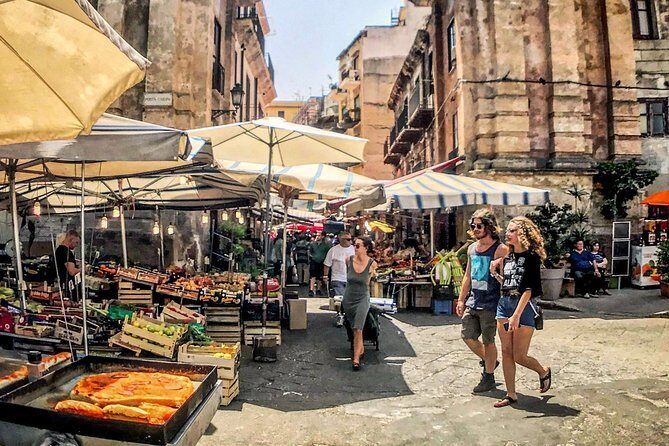
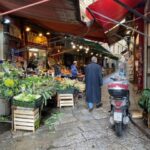
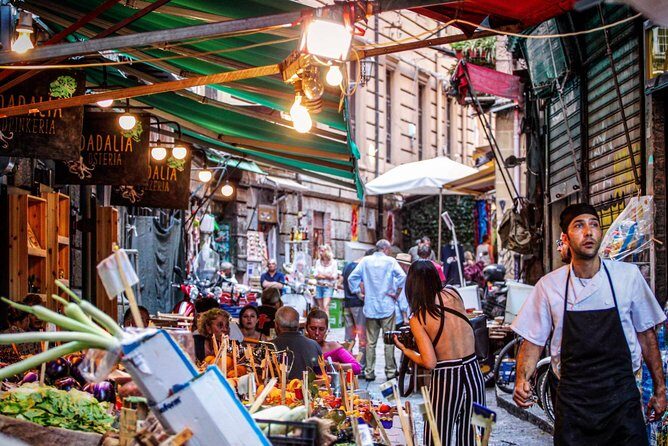
You’ll then hit an old open-air market area—colorful, busy, and loud. This is an important shift from monuments to daily life.
The tour uses the market to explain the relationship between the mafia and shopkeepers. That connection is often flattened in casual conversation, but here it gets grounded in the idea that extortion wasn’t only about money. It was also about controlling who could trade freely and who had to “pay to operate.”
This stop is likely to feel lively compared with the memorial and courthouse areas. It’s also where you’ll best understand how anti-mafia action could be practical. Saying no to intimidation wasn’t only an abstract moral choice. It was a decision that affected the shop, the family, and the neighborhood.
If you get sensory overload easily, take a slower pace here. You’re allowed to absorb the noise without rushing to the next corner.
Palazzo di Giustizia and Piazza della Memoria: the people the mafia couldn’t silence
The tour heads to Palazzo di Giustizia, specifically the memorial space at Piazza della Memoria, dedicated to judges and prosecutors killed by the Mafia.
This is one of the stops where the tour’s focus becomes very clear. The story isn’t simply about crime. It’s about institutions and individuals who tried to enforce the rule of law—and paid for it.
Expect the guide to connect the legal system to anti-mafia resilience. When you understand how judges and prosecutors were targeted, the broader theme clicks: resistance wasn’t just street-level heroics. It was also legal courage in the face of terror.
Drawback to note: because it’s a memorial setting, you’ll likely spend more time standing and listening than walking. That’s normal. Still, plan your water break before you get stuck in the “brief standing, then next site” rhythm.
Palermo Cathedral: where Catholic space meets anti-mafia history
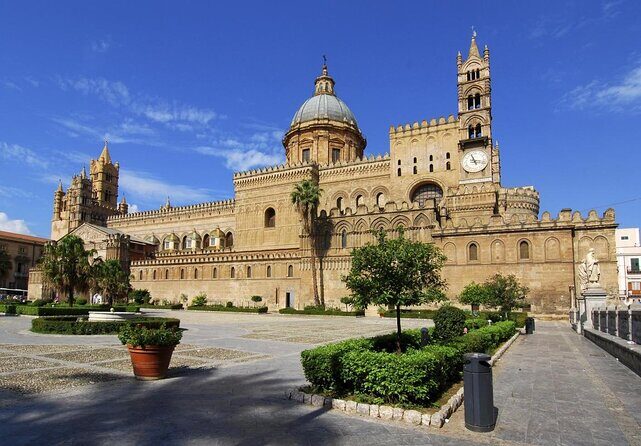
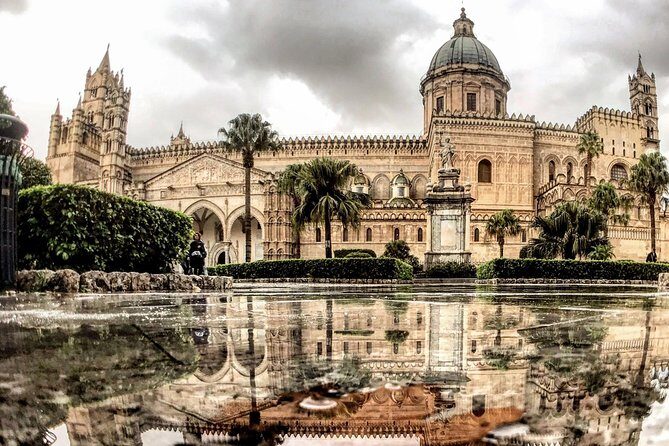
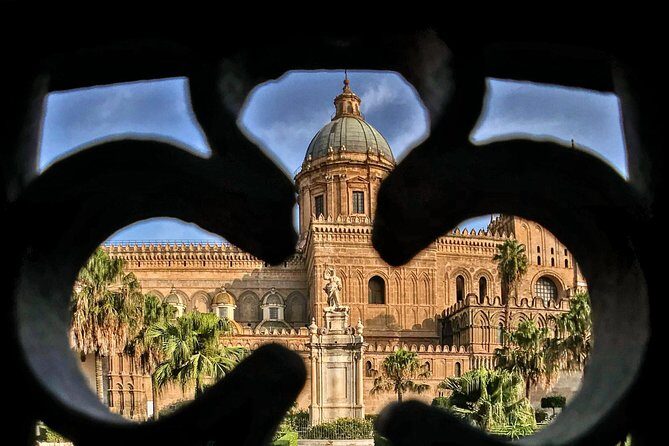
In front of the Arab-Norman Cathedral of Palermo, the guide explains the relationship between the Catholic Church and the Mafia.
This is a tricky topic, and it’s also why the stop can be so useful. The church appears in Palermo’s history in more than one role: as a spiritual center, a historical institution, and a public actor. The tour uses the cathedral as a focal point to discuss how those roles intersected with mafia influence and how anti-mafia efforts shaped that intersection over time.
If you like tours that stick to one theme, you’ll appreciate this stop’s function. It doesn’t wander into generic cathedral facts. It ties the building to a specific story line: authority, moral pressure, and public accountability.
Cappadonia Gelati and Addiopizzo: refusing pizzo, publicly
Along the Cassaro, you’ll reach Cappadonia Gelati, identified by an orange sticker on the window. That sticker signals that the owners, like other businesses linked with the Addiopizzo grassroots movement, have said no to paying pizzo.
This is where the tour turns into a real-world action story. The mafia sought control through extortion. Anti-mafia culture responded through collective refusal, visible solidarity, and community pressure. When you see the sticker on a gelato shop, it turns policy and courage into something you can literally buy and taste.
What I like about this stop: it’s not preachy. It offers the idea that ethical resistance can also look like everyday life. If gelato is your thing, this becomes a reward moment that fits the message.
If you’re not a gelato person, that’s okay. The point is the gesture: refuse extortion, show it, and keep trading anyway.
Palazzo Pretorio and City Hall: corruption fought from within
The final stretch brings you to Palazzo Pretorio and the Municipio di Palermo (City Hall).
This stop is framed as a place with ties to corrupted politicians, alongside those who fought against the mafia. In other words, the tour won’t let you think this was a clean story with villains always outside. Instead, it shows how power and politics were contested from inside the same civic spaces.
That’s useful for your understanding of Palermo. It helps you see anti-mafia work as a long public struggle, not a one-time event. The same city hall streets that held corruption also hosted resistance, and that duality keeps the story from turning simplistic.
You’ll also end near Fontana Pretoria, which gives you a visually satisfying final beat. It’s the kind of city-center landmark that helps you shift from heavy themes back into normal tourism energy.
Guides and tone: passionate storytelling, with room for questions
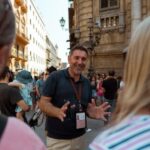
A huge part of why this tour earns sky-high ratings is the guide experience. Names that have led the walk include Sylvia, Mariela, Frederico, Ermes, Salvador, Giuseppe, Maranella, Laura, Valeria, and Francesco. Across these different guides, one consistent theme shows up: the storytelling is serious, but it stays clear and answer-focused.
If your English listening stamina is good, you should be fine. The tour is designed for easy participation, and the small group size gives you a better shot at hearing what you care about. If you’re on the shy side, it helps that the stops themselves invite questions, like what the sticker means or why memorial sites are placed where they are.
Who should book this Palermo No Mafia tour?
This is a strong choice if you:
- Want the anti-mafia story, not mafia cosplay
- Like city tours that explain how institutions and everyday choices connect
- Prefer a guided route that includes key Palermo landmarks while keeping one theme
It may not be the best match if you:
- Want a primarily art-and-architecture tour
- Hate short standing moments and prefer constant movement
It’s also a great pairing for the rest of your trip. This tour sets context fast, so when you later visit museums or read about Sicily’s modern history, you’ll know what questions to ask.
Should you book? My straight call
Yes, I’d book it. The combination of small group, a focused theme on anti-mafia culture, and stops that link directly to public memory and civic resistance makes this more than a novelty walk.
For the best results, go in expecting emotion and context. Bring comfortable shoes, and if rain rolls in, follow the practical advice: bring an umbrella and a dry jacket. Then use the time at each stop to ask one question you genuinely want answered. When the guide is giving you names, motivations, and the meaning behind pizzo and resistance, your curiosity will be rewarded.
If your goal is to understand Palermo as a living city with a moral backbone—not just a backdrop—this tour fits.
FAQ
How long is the Palermo No Mafia walking tour?
It’s about 3 hours (approx.) long.
What does it cost?
The price is $39.30 per person.
Is the tour offered in English?
Yes, it’s offered in English.
How many people are in the group?
It has a maximum size of 15 travelers.
Where does the tour start and where does it end?
It starts at P.za Giuseppe Verdi, 455, 90133 Palermo and ends in the area of Fontana Pretoria, Piazza Pretoria, 90133 Palermo.
Is there a mobile ticket?
Yes, the tour uses a mobile ticket.
Are there any admission fees mentioned for the stops?
For the major listed stops, the tour notes admission ticket free for each of them.
What should I wear or bring?
Comfortable shoes are suggested. In rainy weather, the tour advises bringing an umbrella and a dry jacket.
Does the tour include a donation?
Yes. It includes a solidarity quote, described as a small contribution to an Addiopizzo local NGO.
Is free cancellation available?
Yes, you can cancel for a full refund up to 24 hours in advance.