REVIEW · SICILY
ETNA CENTRAL CRATER EXCURSION (3,345 m a.s.l.)
Book on Viator →Operated by Etna Touring · Bookable on Viator
Etna is the kind of mountain you can’t fake. This excursion gets you toward the volcano’s Central Crater zone with expert help, mountain gear, and a small-group pace built for real walking.
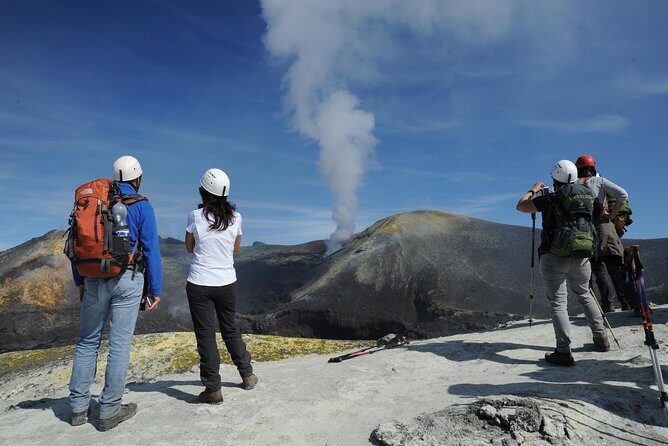
I like that you’re not just dropped at a viewpoint: you get a mountain volcanological guide and the key trekking tools (poles, helmet, trekking shoes, and even a jacket). I also like the overall structure, with a clear start at La Baita 3L Ski-Lab in Nicolosi and an end back at the same meeting point.
The big consideration is that “Central Crater” plans can change fast. Weather or volcanic conditions can force the guide to modify or cancel the itinerary, sometimes even very close to departure. And even when you go, you may stop before the crater if activity is too intense.
In This Review
- Key things to know before you go
- Mount Etna at 3,345 m: what this day is really about
- Price and value: why this can make sense even with extras
- Meeting at La Baita 3L Ski-Lab in Nicolosi
- What’s included on the mountain (and why it matters)
- The pace: moderate fitness, real walking, cold wind potential
- Stop on Etna: aiming toward the Central Crater zone
- Cable car and 4×4 minibus: what to expect (and budget for)
- Central Crater access can change suddenly
- The reality check: what you’ll see even if you stop short
- Who this tour fits best (and who should pass)
- Practical tips to get the most from your Etna morning
- Should you book the Etna Central Crater excursion?
- FAQ
- How long is the Etna Central Crater excursion?
- Where does the tour start?
- What time does the excursion begin?
- What is included in the price?
- What is not included?
- Is the tour offered in English?
- Is admission ticket included?
- What age is the tour suitable for?
- What fitness or health conditions should I consider?
- Can the itinerary change because of weather or volcanic conditions?
Key things to know before you go
- Small group size (max 15) makes it easier to move as one unit and get guidance on the ground
- Gear is included: helmet, trekking poles, trekking shoes, and a jacket—handy if you don’t want to pack for Etna
- Start time is fixed (9:30am) at La Baita 3L Ski-Lab in Nicolosi
- Cable car and 4×4 minibus are extra and paid on site, so budget for the ascent logistics
- Central Crater access isn’t guaranteed; you might receive updated instructions if conditions don’t allow it
- Moderate fitness is required and it’s not for everyone (asthma, heart problems, dizziness)
Mount Etna at 3,345 m: what this day is really about
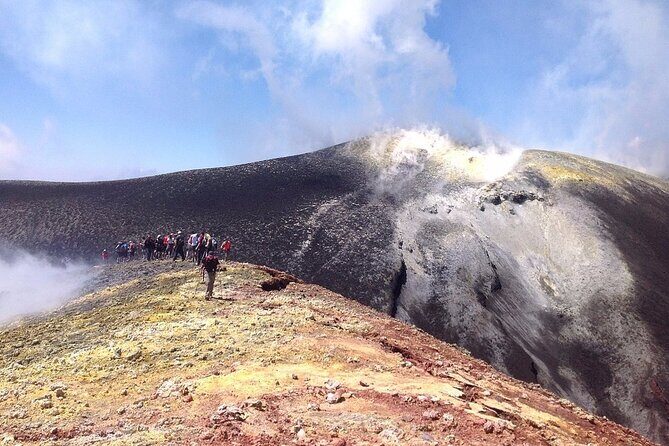
This is an Etna trek built around a simple idea: you want to see a live volcano, but you want to do it with the right people and the right safety mindset. The excursion is designed for a walking-focused experience, with the mountain guide steering the route based on what’s safe and practical that day.
The headline is the Central Crater, listed at 3,345 m a.s.l., but the honest value of this tour is the combination of direction + gear + route decisions. On Etna, conditions change. A good tour isn’t the one that promises the same view no matter what—it’s the one that keeps you flexible and informed.
Your day is also timed like a real excursion, not a casual stroll. You should expect about 5 to 6 hours total, with a main 6-hour outing on the mountain. That works best if you like moving through a place, not just standing for photos.
You can also read our reviews of more tours and experiences in Sicily.

Price and value: why this can make sense even with extras
The tour price is $54.31 per person, and the included core is the guide and the trekking gear. Admission for the activity is listed as free, but the ascent experience usually depends on lifts and mountain transport.
Here’s the practical reality: the cable car and the 4×4 minibus service are not included and are paid separately on site. In other words, your all-in cost may climb from the booking price once you add that part of the route.
So is it still good value? Often yes—because you’re getting more than a guide. You’re getting:
- Trekking poles
- Helmet
- Trekking shoes
- Jacket
If you’re traveling light or you don’t want to buy rental gear at the last second, that matters. Etna’s weather can turn quickly, and having the right outer layer and proper footwear is a bigger deal than many people expect.
Meeting at La Baita 3L Ski-Lab in Nicolosi
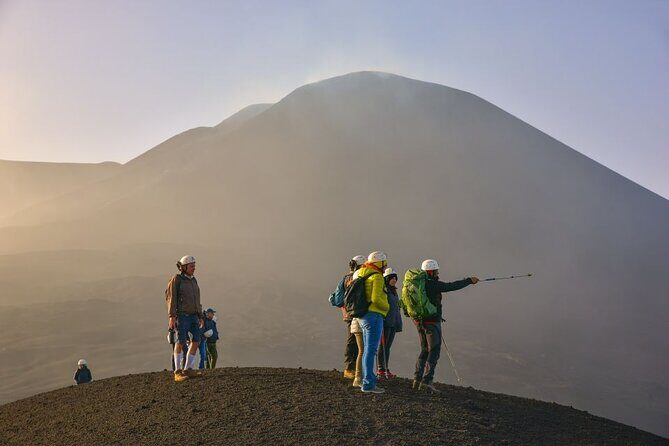
Your day begins at La Baita 3L Ski-Lab in Nicolosi, on SP92 (Contrada Cantoniera, Nicolosi CT, Italy). Start time is 9:30am, and the activity ends back at the same meeting point.
This is good for two reasons:
- You don’t lose time figuring out transfers at the end of a long walk.
- The meeting point is described as near public transportation, which helps if you’re not driving.
If you’re the kind of traveler who likes a day that starts on schedule, this one is built that way. Just plan to arrive early enough to check in and get your gear squared away before you head up.
What’s included on the mountain (and why it matters)
The included items are not fluff. They directly affect comfort and safety on a volcanic hike.
You get a mountain / volcanological guide, and the guide also provides:
- Trekking poles (huge on uneven volcanic ground)
- Helmet (important when you’re walking near volcanic areas)
- Trekking shoes and a jacket (so you don’t show up with flimsy footwear or the wrong layer)
This is especially helpful if you’re visiting Sicily without packing for high-altitude walking. Even if you do pack, it’s often nice to avoid the “did I bring the right shoes?” stress.
The tour is offered in English, and the group stays intentionally small (max 15 travelers). That combination makes a difference on a mountain day where you want clear answers and quick adjustments.
The pace: moderate fitness, real walking, cold wind potential
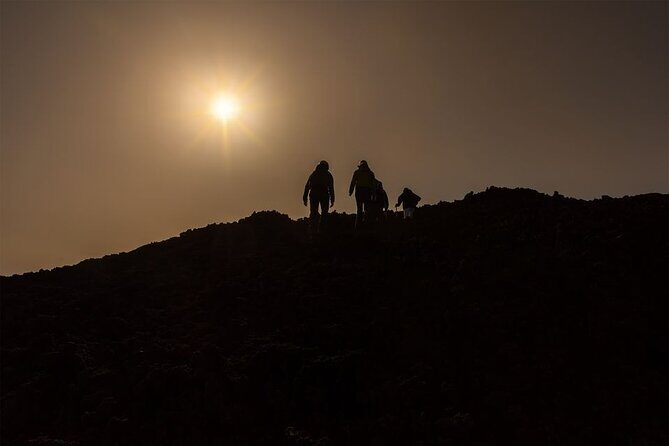
This experience is listed for people with moderate physical fitness. It’s also described as suitable for children aged 8 and up, but only if they’re used to walking.
That tells me the tour isn’t designed for toddlers-and-strollers pacing. It’s for people who can handle sustained movement at altitude and changing terrain.
Two more cautions are spelled out:
- not recommended for asthma, heart problems, or dizziness
- the guide may modify the route due to weather or volcanic conditions
If you’re unsure where you fit, be honest with yourself. If walking at higher elevation makes you feel lightheaded or short of breath, this is the wrong day to “push through” just to prove a point.


Stop on Etna: aiming toward the Central Crater zone
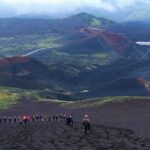
The excursion focuses on one main stop: Mount Etna, with about 6 hours of mountain time.
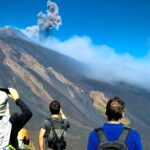
You’ll spend your day moving in the high zone where volcanic activity shapes the ground. That’s the thrill—but it’s also why the tour is guided. The guide’s job isn’t just to explain what you’re seeing. It’s to keep the group on a route that fits the conditions and current access.
Cable car and 4×4 minibus: what to expect (and budget for)
The cable car and the minibus 4×4 service are not included. You pay them on site, as needed for the ascent and getting into the walking area.
This is worth planning around:
- If you’re trying to save money by skipping the cable car, you may end up hiking more exposed uphill sections than you expect.
- The cable car is often the fastest way to gain altitude efficiently.
- The 4×4 minibus is part of how the tour gets people to the right start point when the terrain or access requires it.
One practical tip from people who’ve done it: don’t underestimate the cable car. It gets you far up the mountain, and on Etna, saving energy for the walking part can make the whole day more enjoyable.
Central Crater access can change suddenly
The hardest part of an Etna day is accepting that the volcano is the boss. Even though the tour is branded around the Central Crater, you should treat that as an aim, not a promise.
You may receive updated information from the guide by email, potentially the day before, explaining that going all the way to the central crater isn’t possible due to volcanic activity. If that happens, the tour typically stops earlier than you might have hoped.
Also remember the guide reserves the right to modify or cancel the itinerary due to prohibitive weather or volcanic conditions—even on the morning of the excursion.
This is not a flaw. It’s how these excursions stay responsible. The best mindset is to show up ready for Plan B: still an Etna hike, still impressive, just not the exact same crater point every day.
The reality check: what you’ll see even if you stop short
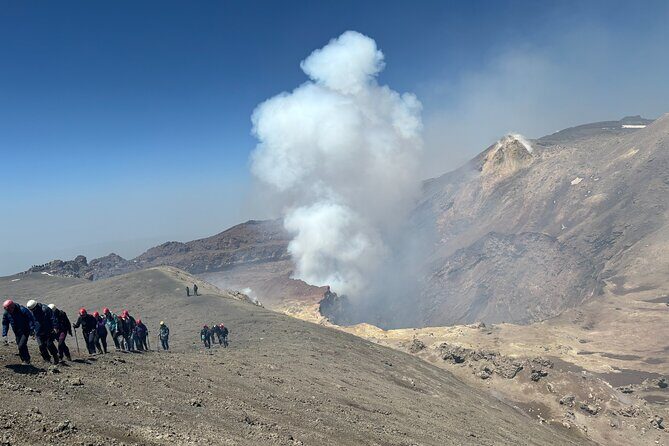
If you don’t reach the central crater itself, you can still end up with a very real Etna experience. The value is that the guide helps you read the volcano on the ground: what the terrain suggests, how the activity affects access, and where the safe walking route makes sense.
In other words, the “wow” isn’t only one specific endpoint. It’s the whole progression: gaining altitude, seeing the volcanic ground close up, and understanding what you’re looking at while you walk.
If your goal is to get one perfect photo at one perfect spot, this is a tougher fit. If your goal is to spend time on Etna with guidance and come away with context, it’s a strong choice.
Who this tour fits best (and who should pass)
This is a good match if you:
- want a guided Etna day with safety-first route changes
- prefer small groups and English support
- don’t want to worry about renting poles, helmet, shoes, and a jacket
- can handle moderate walking for roughly half a day
It’s not a good match if you:
- have asthma, heart problems, or dizziness
- need a completely predictable route to one exact crater point
- expect a gentle stroll or a stroller-friendly outing
Families can work here with kids 8+ who are used to walking. That’s an important line. Etna doesn’t do “sit down every 10 minutes” unless you can keep the pace without losing momentum.
Practical tips to get the most from your Etna morning
A few small moves can help you enjoy the day more, even when conditions shift.
- Wear the trekking shoes provided, and make sure they’re properly tied. Volcanic ground doesn’t forgive loose laces.
- Bring layers you can adjust. Even with a jacket included, temperature and wind can change as you climb.
- If you’re sensitive to altitude or weather swings, treat this as a “plan your comfort” day, not a “tough it out” day.
- If you’re going out specifically to reach the central crater, set a backup expectation: you may get partial access and still have a meaningful trek.
Should you book the Etna Central Crater excursion?
Book it if you want a guided, gear-supported Etna hike and you’re comfortable with the fact that access can change. The tour’s value is strongest when you appreciate practical help: a volcanological guide, a small group, and provided equipment that keeps you ready for the mountain.
Skip it or look for alternatives if you need a fixed itinerary no matter what, or if your health situation falls into the listed caution categories like asthma, heart problems, or dizziness.
If you’re on the fence, here’s my simple decision rule: if you’re excited by the idea of walking Etna with expert guidance and you can handle route changes, this tour is a solid pick.
FAQ
How long is the Etna Central Crater excursion?
It runs for about 5 to 6 hours (approx.), with around 6 hours on the mountain.
Where does the tour start?
The start point is La Baita 3L Ski-Lab in Nicolosi (Contrada Cantoniera, Nicolosi, SP92, 95030 Nicolosi CT, Italy).
What time does the excursion begin?
The start time is 9:30am.
What is included in the price?
Included are a mountain / volcanological guide and trekking gear: trekking poles, helmet, trekking shoes, and a jacket.
What is not included?
Food and beverages are not included. Also, the cable car and the minibus 4×4 service are paid extra on site.
Is the tour offered in English?
Yes, it is offered in English.
Is admission ticket included?
The Mount Etna admission ticket is listed as free for this activity.
What age is the tour suitable for?
It is suitable for children aged 8 and up who are used to walking.
What fitness or health conditions should I consider?
You should have moderate physical fitness. It is not recommended for people suffering from asthma, heart problems, or dizziness.
Can the itinerary change because of weather or volcanic conditions?
Yes. The guide can modify or cancel the itinerary, even on the morning of the excursion, due to weather or volcanic conditions. Confirmation details are provided at booking time.