REVIEW · PALERMO
Palermo: NO Mafia Walking Tour
Book on GetYourGuide →Operated by Addiopizzo Travel · Bookable on GetYourGuide
Mafia myths meet real civic courage. This guided walk through Palermo’s historic center turns the usual crime-movie chatter into a grounded look at the Mafia and the anti-mafia movement shaping everyday life in Sicily.
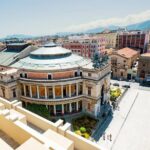
I love how guides like Linda and Valeria tell the story with clarity and energy, using major landmarks like Teatro Massimo as anchors for bigger themes. I also like the practical, human detail you can actually see: the orange stickers on shops along the Cassaro tied to pago chi non paga, the message of refusing extortion.
One consideration: this tour tackles heavy real-world history, and it is still a full 3 hours on foot, so bring comfortable shoes and be ready for serious subject matter.
In This Review
- Key highlights you will feel on this walk
- Why this Palermo walk hits harder than crime tourism
- The 3-hour route: how the pacing works
- Teatro Massimo: culture, identity, and the setting for power
- Il Capo market area: daily life you can picture
- Piazza Della Memoria: why names matter
- Along the Cassaro: orange stickers and pago chi non paga
- Piazza Beati Paoli, the cathedral, and city hall: the layers of Palermo
- Finishing in old-town Palermo: what your guide hands you next
- Guides make the difference: names you may hear
- Price and value: why $40 can make sense here
- Who should book this tour (and who might not)
- Practical tips before you go
- Should you book the Palermo No Mafia Walking Tour?
- FAQ
- How long is the Palermo No Mafia Walking Tour?
- How much does it cost?
- What is included in the tour price?
- Are museum or monument entrances included?
- What sights will we visit?
- How big is the group?
- What languages are offered for the live guide?
- What should I bring?
- Is free cancellation available?
Key highlights you will feel on this walk
- Teatro Massimo to the market stalls: you connect Palermo’s cultural icons with the realities people lived under.
- Piazza Della Memoria: a stop that explains why prosecutors and judges were targeted, and what that loss meant.
- Orange stickers on the Cassaro: a visible symbol of everyday refusal through pago chi non paga.
- More than myths: the Mafia story is framed as a system embedded in society, not just gangster drama.
- Addiopizzo support built in: your ticket includes a contribution to an anti-mafia charitable effort.
- Small-group format: more room for questions while you learn.
Why this Palermo walk hits harder than crime tourism
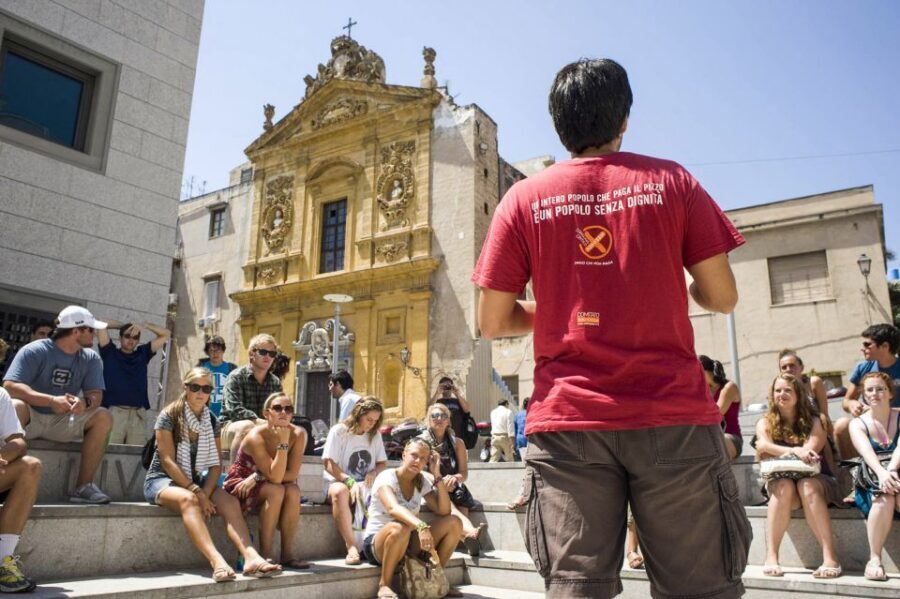
Most Mafia stories stop at stereotypes: suits, bravado, and myth-making. This tour refuses that shortcut. Instead, you walk Palermo’s historic center while you build a clear picture of how the Mafia operated in real life, and how ordinary citizens fought back through organized civic action.
What I like about the approach is the balance. You learn about the Mafia phenomenon in Sicily, but you also spend real time on the anti-mafia movement—how change comes from communities, not only from famous court cases. It is history you can map onto streets you are actually standing on.
And yes, you still get the big “Palermo” sights. You are not forced to choose between architecture and activism. The landmarks simply become evidence in a bigger story.
You can also read our reviews of more walking tours in Palermo
The 3-hour route: how the pacing works
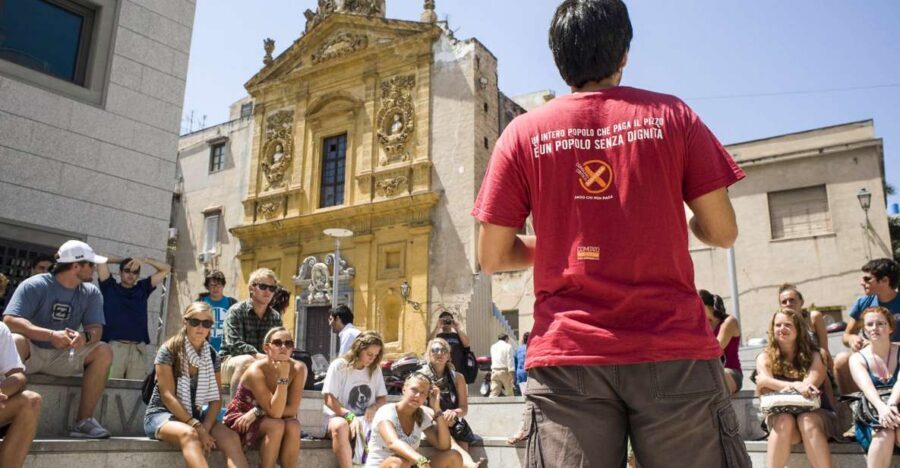
This is a 3-hour walking tour through Palermo’s historic center. That time window matters because it is long enough to connect multiple neighborhoods and themes, but not so long that you are exhausted before the best parts land.
You start with a meet-up point that can vary depending on the option you book, then head out with a live guide (Spanish, French, English, Italian are offered). Expect a steady rhythm: short walks, frequent story stops, and enough time for Q&A in a small-group setting.
Also pay attention to how the tour is framed. It is not marketed as a “sites of Mafia activity” scavenger hunt. The emphasis is on explanation—what the Mafia did, how it influenced social and economic life, and how local resistance changed the long-term trajectory.
Teatro Massimo: culture, identity, and the setting for power
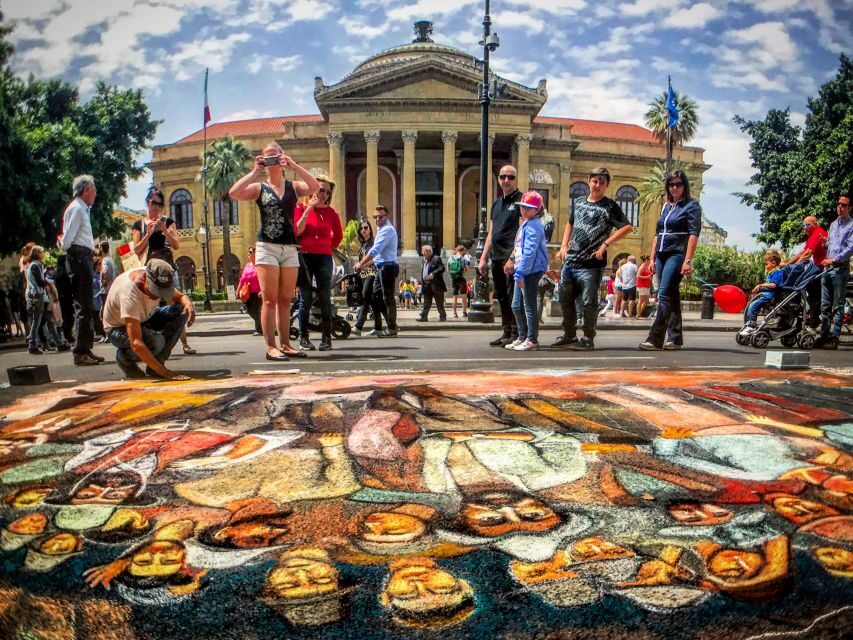
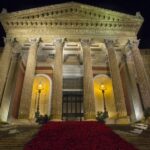
One of the best parts of Palermo is how the city holds contradictions in the same frame. Teatro Massimo is a prime example: a majestic opera house that signals art, civic pride, and public life.
On this tour, you do not just admire it from the outside and move on. You use it as a starting point to talk about how Palermo’s institutions and everyday routines existed alongside Mafia influence. That context changes the way you look at the building. It stops being only “beautiful architecture” and becomes part of a larger question: who gets to shape public life?
If you care about how cities function—politics, economy, community—the stop at Teatro Massimo helps anchor the rest of the walk. You start to see how culture and power can overlap, even when the public face looks calm.
Il Capo market area: daily life you can picture
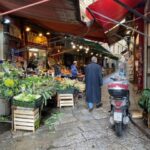
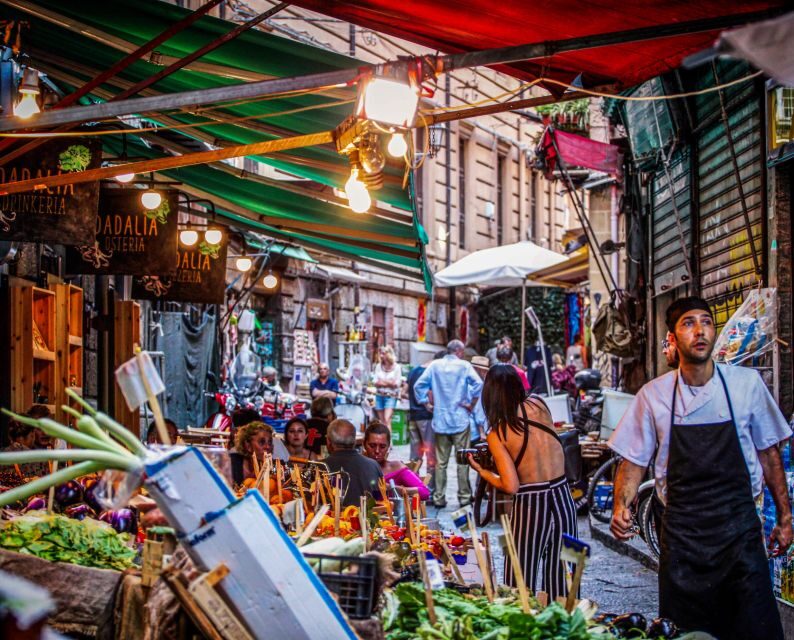
The Il Capo open-air market area is one of those Palermo scenes that feels like you are watching the city breathe. Here, the tour shifts from landmark mood to street-level reality.
Markets are where economic pressure becomes personal. When a system affects business survival, it shows up in stalls, shops, and the rules people feel they must follow. This is why the tour pairs market energy with anti-mafia themes instead of keeping the story stuck in theory.
Even if you are not shopping, the stop helps you understand the lived texture behind extortion and resistance. You can almost imagine the everyday decisions people faced, and how refusing the racket came with consequences.
Piazza Della Memoria: why names matter
This is the stop that gives the tour its emotional weight. Piazza Della Memoria is a memorial dedicated to prosecutors and judges killed by the Mafia. It is not a generic monument stop. You learn what these deaths represented and why the targeting of justice mattered so much.
When you understand that, the whole tone of the walk changes. The anti-mafia movement stops being an abstract concept and becomes a story of people who insisted that law and civic life should not be overridden by violence and intimidation.
You will feel it most if you pay attention to the details your guide shares about the reasoning and impact, not just the fact that a memorial exists. This is also where questions often pop up—how change happened, what it cost, and why persistence mattered.
Along the Cassaro: orange stickers and pago chi non paga
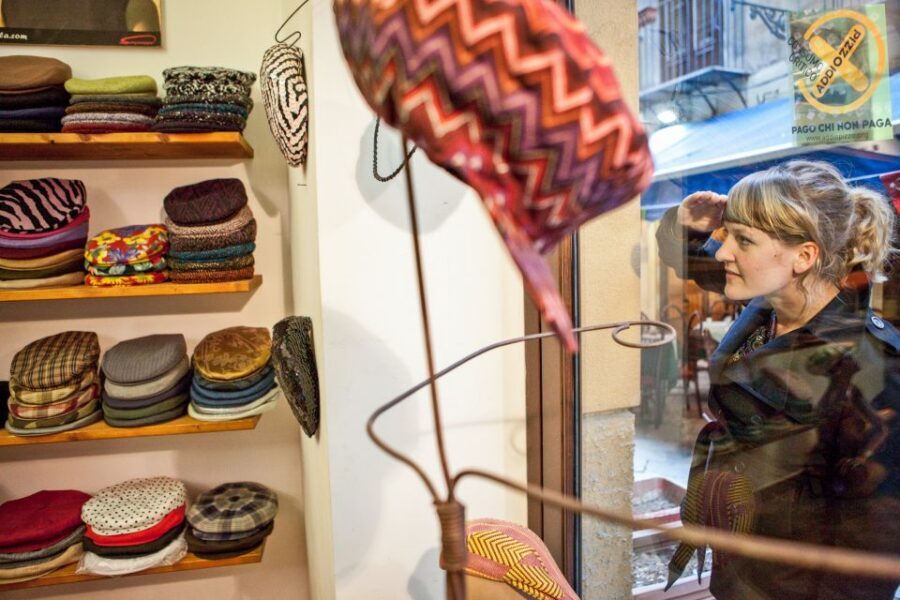
If you want a concrete symbol of resistance, the tour gives you one. Along the Cassaro, you look for shops and businesses with orange stickers—a visible sign that owners have said no to paying extortion and joined the ethical consumer campaign called pago chi non paga, I pay who does not pay.
This is one of my favorite “learning by seeing” moments, because the message is both simple and brave. It turns anti-mafia work into something you can recognize in real time, not just read about later in a book.
It also helps you grasp how grassroots action works. You are not relying only on courts, police, or leaders. You are seeing an ecosystem of people who decide to break the pattern—at personal risk, and in a way that reshapes local norms.
Practical tip: if your guide points out sticker locations, linger for a few seconds and scan shopfronts nearby. It helps the city stick in your memory long after the tour ends.
Piazza Beati Paoli, the cathedral, and city hall: the layers of Palermo
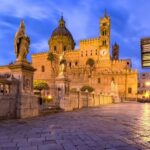
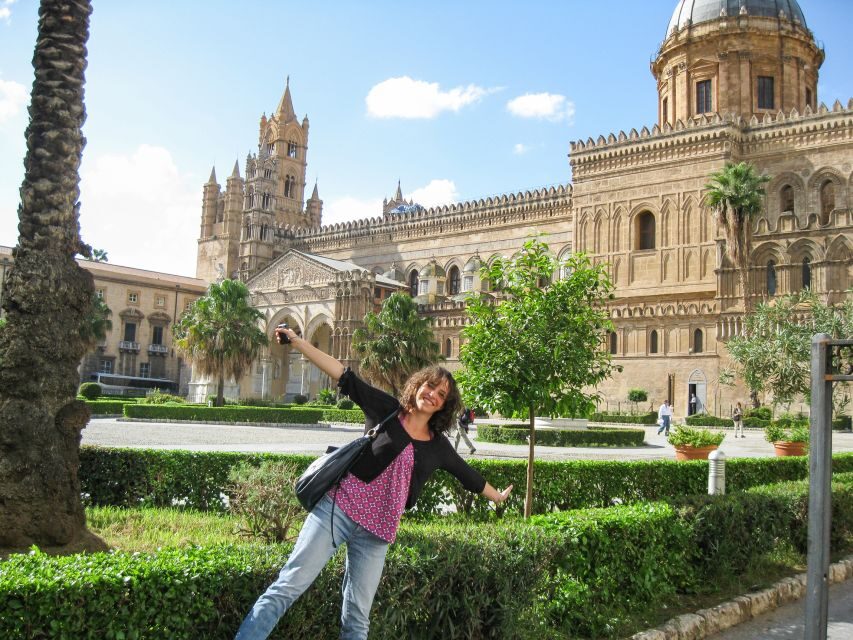
From there, the tour keeps building connections across key central sights, including Piazza Beati Paoli, Palermo Cathedral, and the city hall area.
These stops matter because they show how Palermo’s identity is layered. Places tied to civic life, religion, and local legend can all be connected to the bigger story of influence and resistance. It is not a “follow the gangsters” itinerary. It is more like a guided timeline drawn on top of the city map.
Piazza Beati Paoli is often linked with Palermo’s darker myths and folklore, so it is an interesting contrast point. Then you move into spaces like the cathedral where community life gathers and continuity feels strong. That push and pull helps you understand how the Mafia phenomenon could coexist with ordinary public routines.
And when you get to city hall, you are reminded that civic institutions are part of the story—what happens when governance is threatened, and how communities demand accountability.
In one version of the route, you might also pass notable symbolic points like the fountain of shame. Even if that is not part of your exact sequence, the tour’s focus stays consistent: civic memory, intimidation tactics, and the push for change.
Finishing in old-town Palermo: what your guide hands you next
The tour wraps up in the heart of Palermo’s old town center. The “finish strong” part is the human one: your guide gives tips on where to taste Sicilian specialties.
This is not filler. After a heavy topic like organized crime and civic resistance, you will want normal pleasures. Food recommendations help you transition from lessons to lived experience—what to order, where to go, and how to keep your day moving without feeling like you spent it only thinking.
If you can, plan a meal afterward in the same general area. You will get more out of the tour when your next stop is something you can enjoy.
Guides make the difference: names you may hear
This tour’s standout theme is not only the topic—it is the delivery. In the names repeatedly praised, you will see guides such as Linda, Valeria, Giuseppe, Salvatore, Ermes, Claudio, and Laura.
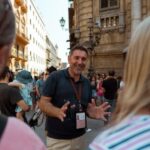
The best guides do two things well. First, they keep the story grounded and clear, so you are not drowning in dates. Second, they make room for questions, which is key for topics that raise strong reactions and big curiosity.
If you want a guide who balances facts, context, and plain speaking, you are in the right place. Several guides tied to this tour are highlighted specifically for engaging storytelling, good pacing, and strong command of English for international visitors.
Price and value: why $40 can make sense here
At $40 per person for a 3-hour guided walking tour, the price looks very reasonable when you compare it to the “two things at once” problem. You are paying for a guided city route plus a serious educational framework—without needing museum tickets.
The tour includes:
- the guide
- the walking tour itself
- a contribution to the Addiopizzo charitable organization
It does not include entrance fees for museums or monuments, so you are not paying extra for ticketed stops you can avoid anyway. That keeps the total cost focused on the guide and the experience.
Where the value really shows is in how you leave. You are not only going to say you saw Teatro Massimo and the cathedral. You will understand why the anti-mafia movement matters, how civic action operates, and what everyday refusal looks like in Palermo. That kind of context makes your remaining time in the city more meaningful.
Who should book this tour (and who might not)
This is a great fit if you:
- want Palermo beyond architecture photos
- care about how organized crime works as a social system
- like guided storytelling that connects places to real-world consequences
- enjoy asking questions and hearing thoughtful answers
It may not be your best match if you prefer light, entertainment-style walking tours with no heavy content. This one is serious by design. Even when guides add humor, the subject remains grounded in violence, intimidation, and civic resilience.
If you are coming with kids or teens, the tone is still likely to hold attention because the guide explains rather than performs. Still, I would choose based on your comfort discussing tough history in a walking setting.
Practical tips before you go
- Bring comfortable shoes. The tour is a real walk, and you will be standing and moving repeatedly through central streets.
- Wear clothes that handle shade and sun changes, since Palermo can switch feel quickly while you are on foot.
- If you can, schedule it early in your Palermo days. Getting the civic context first makes later sightseeing click faster, including the markets, churches, and civic buildings you will see again.
And one more thing: take the guide’s food tips seriously. After learning about community struggle, you deserve a good Sicilian meal. Palermo is at its best when your day includes both truth and pleasure.
Should you book the Palermo No Mafia Walking Tour?
Yes, if you want a tour that treats Palermo as more than a movie set. The combination of major landmarks (Teatro Massimo and the cathedral area), meaningful stops like Piazza Della Memoria, and visible civic resistance along the Cassaro gives you something most standard city walks do not: a real understanding of how a society pushes back.
Choose it with clear expectations. This is not a fun gangster photo tour. It is a thoughtful, street-level explanation of Mafia influence and the anti-mafia movement, with a direct link to Addiopizzo through your ticket.
If that sounds like your kind of travel—curious, grounded, and a bit eye-opening—book it. Then wear your walking shoes and bring your questions.
FAQ
How long is the Palermo No Mafia Walking Tour?
It lasts about 3 hours.
How much does it cost?
The price is $40 per person.
What is included in the tour price?
You get a live guide, the walking tour, and a contribution to the Addiopizzo charitable organization.
Are museum or monument entrances included?
No. Entrance to museums and monuments is not included.
What sights will we visit?
You’ll see key places in Palermo’s historic center such as Teatro Massimo, the Il Capo open-air market, Piazza Della Memoria, the Cassaro, Piazza Beati Paoli, Palermo Cathedral, and the city hall area.
How big is the group?
The tour offers a small-group format.
What languages are offered for the live guide?
Spanish, French, English, and Italian are available.
What should I bring?
Bring comfortable shoes.
Is free cancellation available?
Yes. You can cancel up to 24 hours in advance for a full refund.