REVIEW · SICILY
4 Hours Guided Tour to the Archaeological Park of Neapolis and Ortigia
Book on Viator →Operated by Sicily in Travel · Bookable on Viator
Syracuse packs 3,000 years into one outing. You’ll get a guided tour of Neapolis with the Greek theater and the Ear of Dionysius, then switch gears to Ortigia to see major landmarks like the Temple of Apollo and Fonte Aretusa.
I especially like two things: the storytelling and the speed of clarity. Guides such as Silvia and Luca use clear English and lots of concrete details, and you move at a comfortable pace with energy and humor (plus good photo stops along the way, if that helps you plan your walking route).
One consideration: entrance fees are extra for the Neapolis Archaeological Park and Cathedral, and transportation from the Archaeological Park to Ortigia and back is not included. If you’re trying to keep everything hands-off, that part needs a bit of planning.
In This Review
- Key highlights you’ll care about
- Neapolis Archaeological Park: your 90-minute hit of Greek and Roman Syracuse
- What can feel hard about Neapolis
- The Ear of Dionysius and the cave of the Cordari: why these stops get attention
- Practical tip
- Ortigia in 90 minutes: Temple of Apollo, Piazza del Duomo, and Fonte Aretusa
- Why Ortigia works for short itineraries
- What can slow you down in Ortigia
- Price and logistics: what $414.02 covers, and what you must add
- Is it worth the money?
- The English specialist guide: what you’re really paying for
- What to ask your guide
- Timing and the 4-hour pace: how to make it feel relaxed
- Who this tour fits best
- Should you book 4 Hours Guided Tour to the Archaeological Park of Neapolis and Ortigia?
- FAQ
- What’s the total duration of the tour?
- Is this tour private?
- What language is the tour offered in?
- Where do you meet, and where do you end?
- Are entrance tickets included?
- What’s included in the price?
- Is free cancellation available?
Key highlights you’ll care about
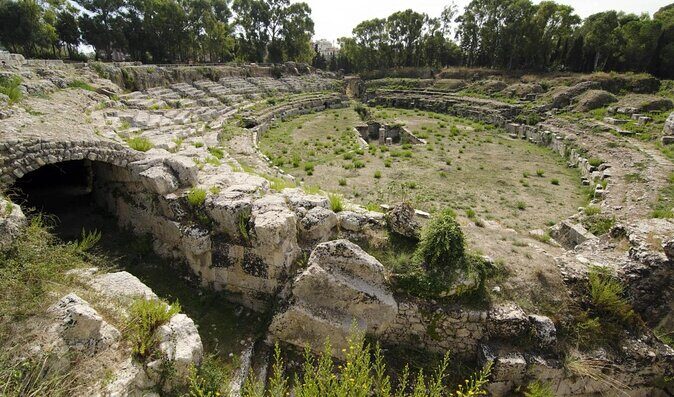
- Neapolis big hitters in 90 minutes: Greek theater, Roman amphitheater, Ear of Dionysius, and the cave of the Cordari
- A real switch of atmosphere: from carved stone ruins to Ortigia’s compact historic core
- English specialist guidance: clear explanations and strong presentation, like Silvia’s style
- Private group setup: only your party goes along (up to 15 people)
- You finish on Ortigia: you can keep walking independently right after the tour
Neapolis Archaeological Park: your 90-minute hit of Greek and Roman Syracuse
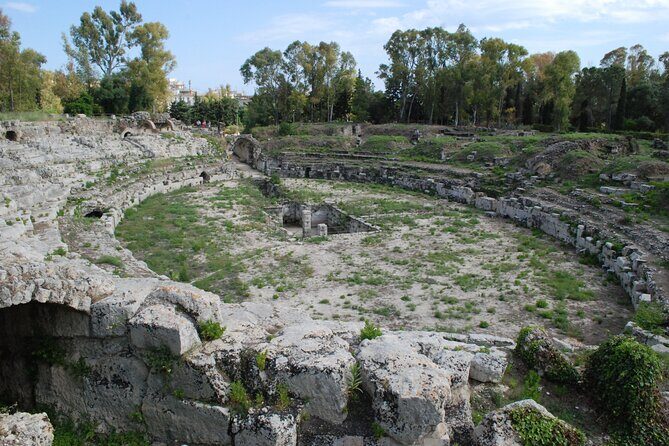
Neapolis is where Syracuse flexes its ancient muscles. In about 1 hour 30 minutes, you’ll move through the key stops that connect Greek and Roman building styles in one concentrated area. This is ideal when your time is tight, because you’re not trying to figure out the order by yourself while reading everything at the same time.
You’ll start with the Greek theater. It’s one of those places where you can immediately understand how public life worked: sitting, watching, listening. A guide helps you connect what you see to why it was built the way it was, including how performance and crowds shaped the space. Next up is the Roman amphitheater, which gives you a clear contrast in both design and purpose.
Then the tour shifts toward two of the most distinctive names in the park: the Ear of Dionysius and the cave of the Cordari. Even if you’ve heard the legends before, having them explained in context makes a difference. You stop treating them like trivia and start seeing how ancient design mixed function, atmosphere, and storytelling.
You can also read our reviews of more guided tours in Sicily


What can feel hard about Neapolis
Neapolis involves walking on-site. If your legs are already tired from city exploring, bring shoes you trust. Also, the admission ticket for the park is not included, so you’ll want to budget for that before you go.
The Ear of Dionysius and the cave of the Cordari: why these stops get attention
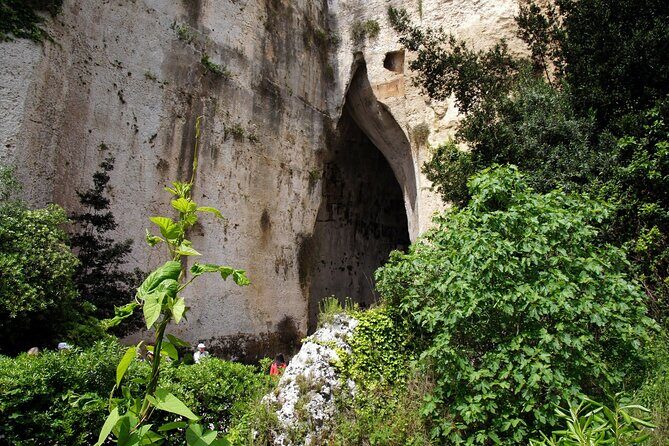
The Ear of Dionysius is famous for a reason, and it tends to catch people’s imagination fast. Your guide’s job here is to take that curiosity and turn it into understanding: what you’re looking at, how the space works, and how it fits into the broader history of the park.
The same approach applies to the cave of the Cordari. The name alone sparks questions, and your guide can help you connect the cave to the larger story of how people lived, worked, or gathered in different parts of ancient Syracuse. You’ll get a guided narrative that’s built to make the site feel coherent, not like random points on a map.
This is where the quality of the guide matters most. In the feedback I’ve seen reflected across different guides, the strongest impressions often come from clear English and an energetic delivery. Silvia, for example, is praised for having a voice that carries and an excellent command of English, which matters in outdoor sites where sound can get messy.
Practical tip
This is a great part of the tour to ask your guide questions. Don’t be shy. If something clicks for you—an architectural detail, a story behind a name—ask follow-ups while you’re still standing in the exact spot. That’s when the explanations have the most meaning.
Ortigia in 90 minutes: Temple of Apollo, Piazza del Duomo, and Fonte Aretusa
After Neapolis, the tour moves to Isola di Ortigia, and the feel changes quickly. Neapolis is about monumental ruins and worn stone; Ortigia is about street-level history—monuments, squares, and the kind of wandering you can do right after your guide finishes.
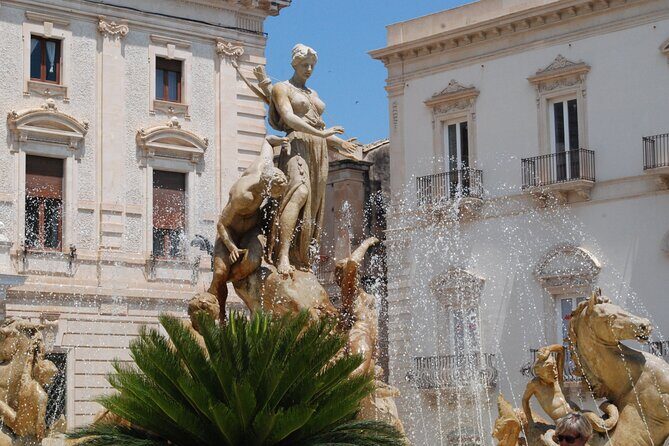
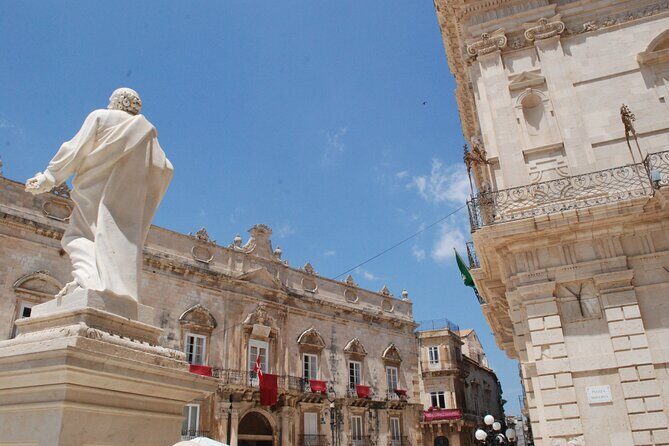
You’ll cover major Ortigia landmarks, including the Temple of Apollo, Piazza del Duomo, and Fonte Aretusa. This combo is smart because it mixes cultural meaning with visual variety. The Temple of Apollo anchors the ancient angle, while Piazza del Duomo helps you understand how later eras kept building over, around, and beside earlier foundations. Fonte Aretusa adds a human scale because it’s a focal point you can actually pause at and watch the flow of the square.
Your tour also includes time for the Cathedral area—there’s a separate Cathedral entrance fee listed as €4 per person. If you plan to go inside, budget for it so you’re not surprised mid-tour.






Why Ortigia works for short itineraries
Ortigia is compact enough that a guided loop makes sense, but it’s also open enough that your walk can keep going after the tour ends. The tour finishes on the island of Ortigia, so you can continue exploring at your own pace without needing to reverse everything immediately.
What can slow you down in Ortigia
Crowds and narrow streets can affect walking pace, especially around major squares. If your group includes people who need slower movement, keep the group together and let the guide adjust timing rather than rushing to hit everything.
Price and logistics: what $414.02 covers, and what you must add
The price is listed as $414.02 per group (up to 15) for a roughly 4-hour private guided experience in English. For a private setup, that can be good value—especially if your party is bigger than two or three people.
Here’s the breakdown you should plan around:
- Included: a guided tour with a specialist guide
- Not included:
- Entrance fees to Neapolis Archaeological Park (€17 per person)
- Cathedral entrance ticket (€4 per person)
- Transportation from the Archaeological Park to Ortigia and back
That last point is the one most likely to trip people up. Since transportation is not included, you’ll want to decide ahead of time how you’ll cover the transfer between Neapolis and Ortigia. Even if it’s easy, it’s still time you need to account for so the 4-hour experience stays enjoyable rather than rushed.
Is it worth the money?
I think it’s worth it when you want two things at once: a guided explanation of high-significance ruins and a practical walking plan through Ortigia landmarks. If you’re the type who likes to understand what you’re seeing—why a theater looks the way it does, what a name like Ear of Dionysius is tied to—having a guide is where your money pays off.
If you’re more of a do-it-yourself explorer, you might find the extra guide cost hard to justify, particularly because some entry fees and transport are still on you.
The English specialist guide: what you’re really paying for
This tour lives and dies by guide quality, and the feedback is consistent about what matters. Different guides were praised for energy, clear English, and being willing to adjust for what the group wants.
Examples of what you can expect in real terms:
- Clear presentation style, including guidance from Silvia noted for loud, clear voice and excellent English
- Confident storytelling, like Luca’s energetic and personable approach
- A comfortable pace with humor and a lot of answers—Galina was described as giving a huge amount of historical information while staying at a manageable rhythm
- A focus on architectural and historical connections—Valentina was praised for marrying those ideas into an inspiring story
If you want the tour to feel custom, bring a couple of specific interests. Maybe you care more about architecture, or maybe you want the stories behind famous sites and names. A good guide can steer explanations to match, and the tour format gives them enough time to do it without turning the day into a sprint.
What to ask your guide
Keep it simple. Ask about:
- how Neapolis connects Greek and Roman eras in what you can still see today
- why Ortigia’s main monuments are where they are
- what to pay attention to at the Ear of Dionysius and the cave of the Cordari
Timing and the 4-hour pace: how to make it feel relaxed
Four hours is short, so you’ll want to protect your energy. Here’s how I’d aim to enjoy it:
- Plan your day so you’re not rushing from one long activity to another right before the meeting point at Neapolis Archaeological Park, Via Luigi Bernabò Brea 14, Siracusa SR.
- Wear comfortable walking shoes. Both Neapolis and Ortigia involve walking on uneven surfaces at times.
- Bring a bottle of water. You’ll be outside for multiple stretches.
- If you’re visiting the Cathedral, decide early so you don’t end up choosing at the last minute.
At the end, you finish on Ortigia, which is a gift. Instead of scrambling to get out quickly, you can keep strolling around the island under your own schedule.
Who this tour fits best
This is a strong match if:
- you want an organized overview without spending your entire day sorting sites on your own
- you like history that’s explained clearly, not just read off signs
- you’re traveling in a group up to 15 and want a private experience
It’s also a good choice if you like flexibility after the tour, since you end on Ortigia and can continue walking independently.
This can be less ideal if you strongly prefer self-guided exploring only, since some costs are extra and the tour time is fixed. Also, because transportation between Neapolis and Ortigia is not included, you’ll want to be comfortable arranging that part.
Should you book 4 Hours Guided Tour to the Archaeological Park of Neapolis and Ortigia?
If you want a guided, English-language tour that covers the major Neapolis sites and the key Ortigia landmarks in one focused 4-hour block, I’d book it. The value comes from the guide’s delivery and the fact that you get two very different parts of Syracuse in one clean plan: ancient theater and amphitheater energy, followed by Ortigia’s main squares and monuments.
Just do your homework on two things before you go: budget for Neapolis (€17 pp) and the Cathedral (€4 pp), and plan how you’ll handle the transfer between Neapolis and Ortigia since transportation is not included.
FAQ
What’s the total duration of the tour?
The tour lasts about 4 hours.
Is this tour private?
Yes. It’s a private tour/activity, and only your group participates (up to 15 people).
What language is the tour offered in?
The tour is offered in English.
Where do you meet, and where do you end?
You start at Neapolis Archaeological Park, Via Luigi Bernabò Brea, 14, 96100 Siracusa SR, Italy. You end on the island of Ortigia, Italy, where you can continue walking independently.
Are entrance tickets included?
No. Entrance fees to Neapolis Archaeological Park are €17.00 per person. The Cathedral ticket is €4.00 per person. The Ortigia sightseeing highlights are listed as free for admission.
What’s included in the price?
The guided tour and a specialist guide are included.
Is free cancellation available?
Yes. You can cancel for a full refund up to 24 hours before the experience’s start time.
If you want, tell me your travel dates and group size, and I’ll help you estimate the total cost with the extra tickets and a realistic buffer for the Neapolis-to-Ortigia transfer.