REVIEW · CATANIA
Etna North Sunset: Summit area & Craters of 2002
Book on GetYourGuide →Operated by ALTERNATIVETNA · Bookable on GetYourGuide
Etna at sunset feels like science fiction. This 3-hour Etna North Sunset trip takes you by 4×4 buses into the summit area, then you walk up to a viewpoint near the North-East crater to watch the sky change over the volcano. I like that it’s not a lecture tour; it’s a moving, outdoor “see it, understand it” experience on Etna’s north side.
One thing to consider: the off-road ride can be very bumpy, so if you’re prone to motion sickness, plan for that. Also, the live guide speaks English and Italian, but the clarity of English can vary a bit depending on the guide, so it helps to be okay with some effort if English isn’t your strongest language.
In This Review
- Key points to know before you go
- Starting at Piano Provenzana: where the sunset hike begins
- Up on 4×4 buses: getting to 2900 meters without losing the show
- 2002 eruption rift: lava and volcanic sand in plain sight
- North-East crater and the observatory zone: the stop that shapes the rest
- The 300 m climb through scoria and bombs to the sunset viewpoint
- Watching the north side craters as evening settles
- Coming back down: Piano delle Concazze to Piano Provenzana
- Who should book this Etna North Sunset tour
- Tips to make the experience smoother at altitude
- Should you book this tour?
- FAQ
- Where does the tour meet?
- How long is the Etna North Sunset tour?
- How do you travel to the summit area?
- What altitude does the tour reach?
- Is there a walking section?
- What volcanic terrain will we hike on?
- What languages are available for the guide?
- What should I bring?
- Is the tour wheelchair accessible?
Key points to know before you go
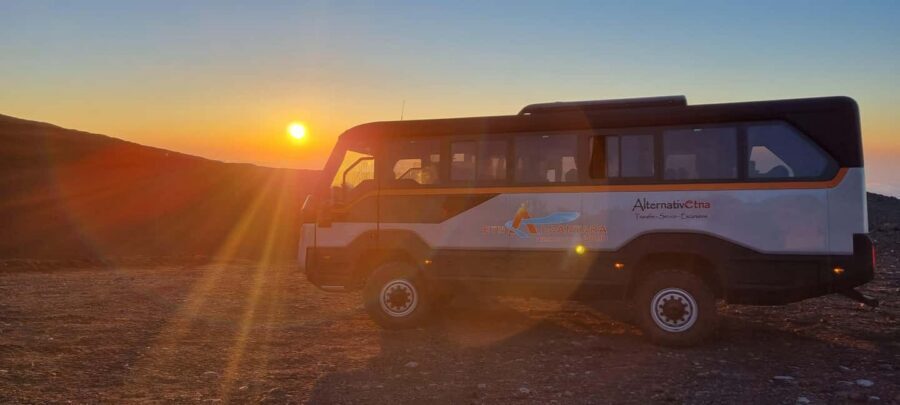
- 4×4 buses to the summit zone save time and get you to the action fast
- Piano Provenzana start sets you up for a high-altitude trail right away
- 2002 eruption rift views show lava-and-sand terrain in a very direct way
- North-East crater stop (observatory area) gives the tour its volcanic focus
- 300 m of walking on scoria and bombs leads to a sunset viewpoint at about 2900 m
- Clear-weather visibility can include the Lion and Bove areas from the roof-of-Sicily outlook
Starting at Piano Provenzana: where the sunset hike begins
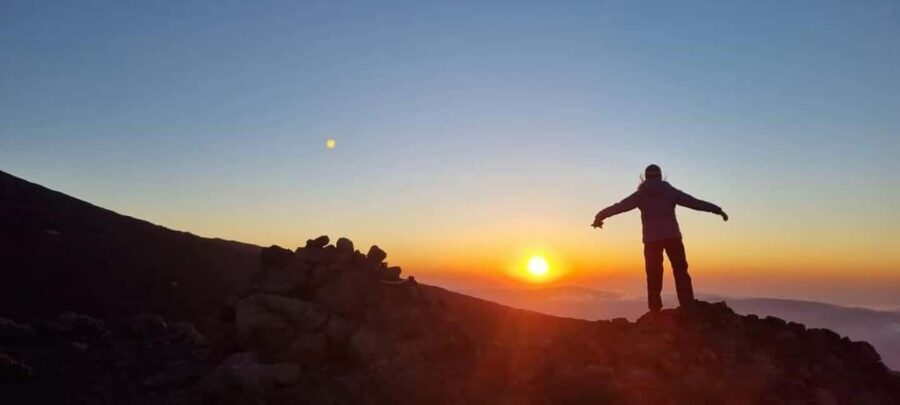
The tour starts at Piano Provenzana. Your meeting point is at the office near these coordinates: 37.79744338989258, 15.03928279876709. If you like arriving early, do it. Even on a short 3-hour schedule, you want time to settle your shoes and water before the climb begins.
This is a walking-and-watching outing, not a “sit on a bus” tour. Plan on being in long pants and comfortable shoes from the start, because the path and volcanic ground can be uneven.
If you’re thinking about mobility needs, this activity is listed as wheelchair accessible. Still, that won’t change the fact you’ll be on a volcano and moving between vehicles and trail areas, so bring a realistic expectation of what you can comfortably cover.
You can also read our reviews of more evening experiences in Catania
Up on 4×4 buses: getting to 2900 meters without losing the show
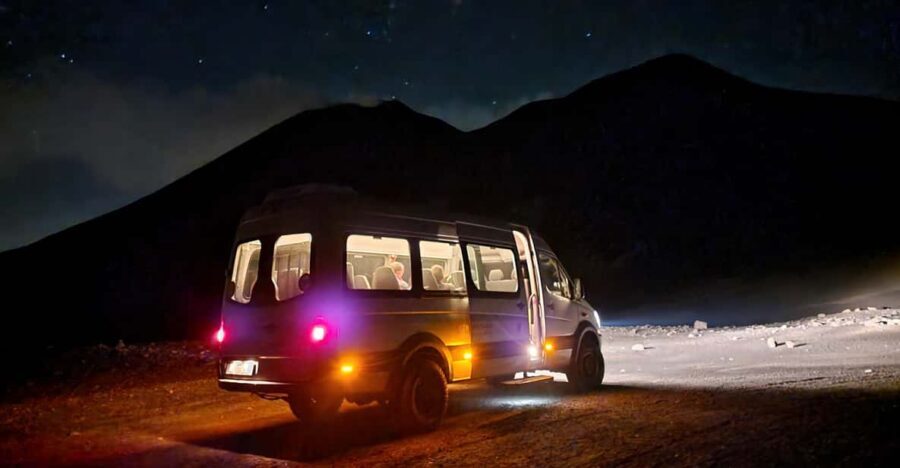
One of the best parts of this experience is the way the tour uses rugged transport to get you close to the summit zone. You’ll head out by off-road vehicle from Piano Provenzana, then continue traveling uphill via vehicles again after the initial trail segment.
The trade-off is comfort. Expect a jolty ride because it’s an off-road route. A smart move is to bring anything that helps you handle bumpy roads, especially if you’ve ever felt queasy in cars on winding streets.
Time matters here. You’re aiming for a sunset viewpoint, so saving daylight by using 4×4 access feels practical. You’re not spending hours driving around; you’re spending it at altitude, walking a bit, then watching the craters.
2002 eruption rift: lava and volcanic sand in plain sight
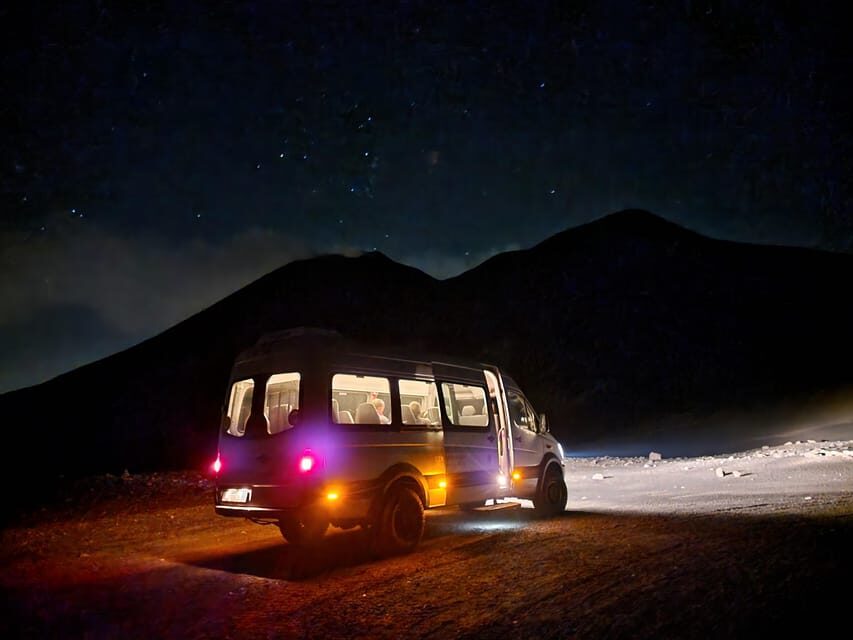
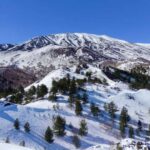
Your route follows a mountain trail at around 2900 meters, where the scenery starts doing the talking. The tour specifically includes the area framed by the rift created during the 2002 eruption. That means you’re not only looking at Etna in general—you’re seeing the marks of a specific event.
You’ll pass through terrain described as lava and volcanic sand. Even if you’re not a geology person, this kind of close-up detail clicks faster in your brain. You can visually connect how volcanic material spreads, how the ground looks when it’s newly formed or rearranged, and why the next stops matter.
This part of the tour also helps you understand why the north side of Etna has such a distinct feel. The views open up, and the ground looks different from what most people imagine when they think of a volcano.
North-East crater and the observatory zone: the stop that shapes the rest
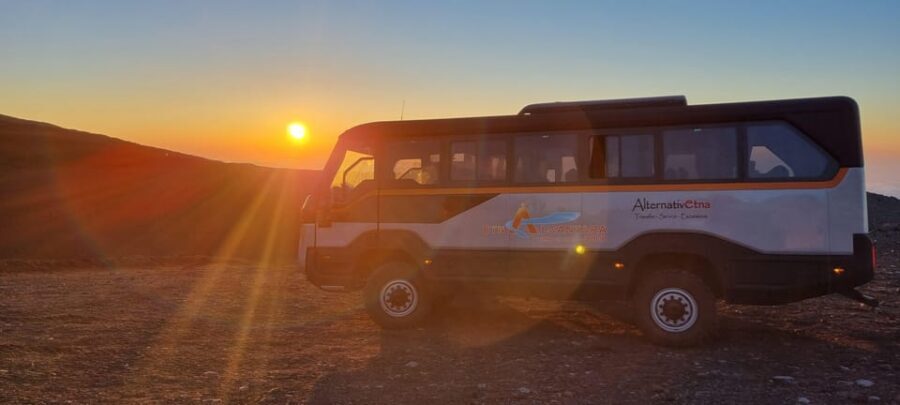
After the initial trail segment, you continue by off-road vehicles up to about 2900 meters near the North-East crater. This is the crater where the volcano observatory is located, and that location gives the whole outing a grounded, real-world feeling.
From here, the tour starts the next phase with a climb on foot. This is where you shift from “ride and look” to “walk and watch closely.” You’ll be moving along a path surrounded by volcanic scoria and bombs—material that’s part of the volcano’s rough building process.
The crater stop works as a pivot point. Once you’re in that zone, you start seeing the volcano as an active system: vents, deposits, and the way different crater areas sit relative to one another.
The 300 m climb through scoria and bombs to the sunset viewpoint
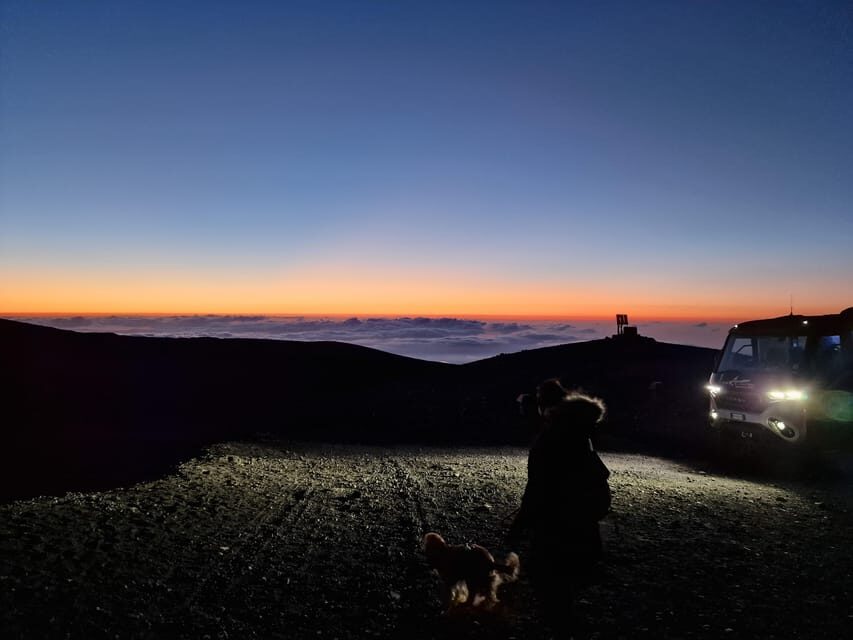
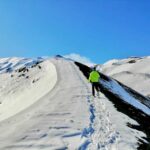
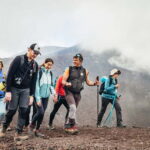
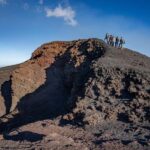
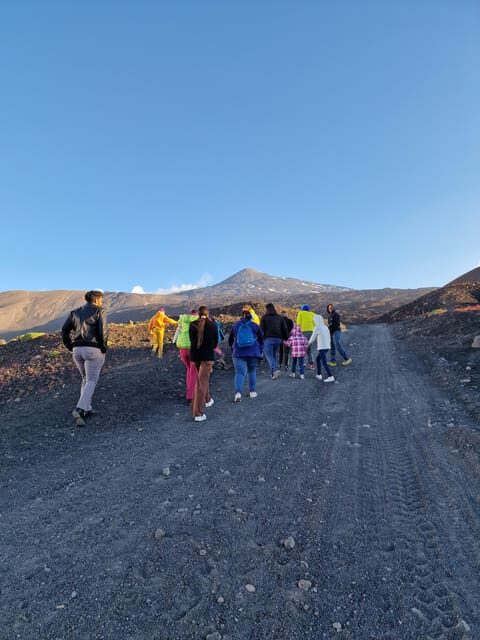
This is the active part of the outing. The total climb is listed as 300 meters, and you’ll reach a viewpoint at about 2900 meters. Along the way, you’ll hike on paths surrounded by volcanic scoria and bombs.
What does that mean for you? It means traction matters and footwear matters. Comfortable shoes are a must, and long pants help with the dust and grit you may encounter. A daypack is useful too, even just for a layer and essentials.
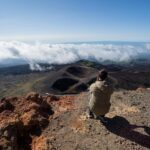
When you reach the viewpoint, you stop to admire the volcanic environment and the processes that create it. Then the payoff starts: you’re in a position often described as the roof of Sicily, with huge open sightlines when the weather is clear.
On clear days, you can see both the Lion and the Bove. That’s one of those details that turns a good photo into a memorable mental image. Even if visibility is hazy, you’ll still get that big sense of scale that Etna is famous for.
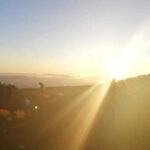
And yes, sunset is the point. You’ll have time to stand, look, and let the colors shift over the craters.
Watching the north side craters as evening settles
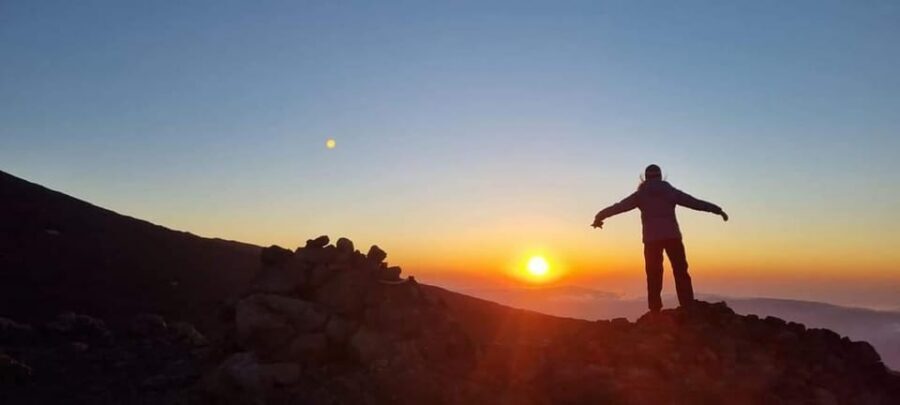
From the viewpoint, the tour waits for sunset. The focus stays on Etna’s crater areas, including the North-East and South-East craters mentioned in the tour description. This is your slow moment, the one where you stop thinking about hiking and start thinking about what you’re looking at.
A helpful way to enjoy this section is to keep one question in mind: how does the shape of the crater and the surrounding ground connect to what the volcano has been doing? The tour’s route through the 2002 eruption area sets you up for those kinds of connections.
If the sky cooperates, sunset turns the terrain into something different. Shadows stretch across the volcanic surfaces, and the texture you noticed earlier starts looking more dramatic. It’s still outdoors and raw, not movie-perfect. That realism is part of why this works.
Coming back down: Piano delle Concazze to Piano Provenzana
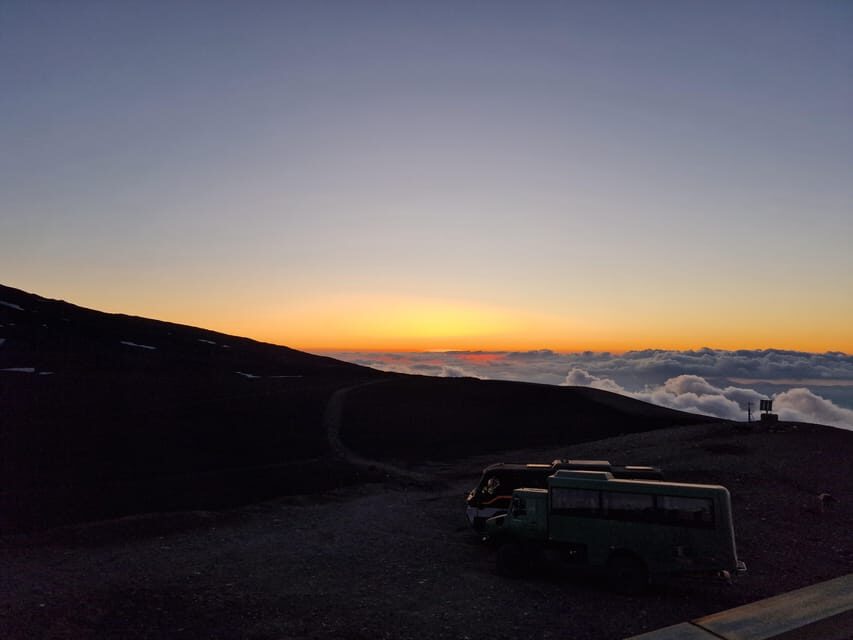
After the sunset viewing, you conclude the afternoon and start the return drive. The route includes crossing Piano delle Concazze before heading down to Piano Provenzana, where you started.
This “get out and come back” rhythm matters because it keeps the whole trip to about 3 hours. It’s not a full-day Etna adventure, so you’re not left with an all-day logistics burden. You do need to stay mindful of your energy, though, since you’ve had a short but real climb and time at altitude.
If you brought a layer, this is usually when you’ll appreciate it. High places can cool off fast once the sun goes down, and you’re still outside during the return.
Who should book this Etna North Sunset tour
You’ll love this tour if you want Etna close-up without committing to a long hiking day. It’s especially good for people who like nature and big views, not just the technical side of volcanology.
It also suits you if you appreciate smart shortcuts. The mix of trail walking plus off-road vehicle access means you spend your effort near the crater areas rather than stuck in transit.
This is not ideal if you get motion sick easily. The route is done by off-road vehicle and can be very bumpy. It also may not fit if you expect very polished English narration all the time, because guide language clarity can vary.
Tips to make the experience smoother at altitude
Bring what the tour asks for: comfortable shoes, long pants, a daypack, and biodegradable sunscreen. That last one sounds like a small detail, but it’s the kind of respectful choice that makes sense in active natural areas.
Also, pack for the reality of volcano hikes: traction and coverage matter more than fashion. The ground is volcanic material. Plan accordingly.
If you care about understanding everything the guide says, consider using the Italian option if that’s easier for you. The tour provides a live guide in English and Italian.
Lastly, aim for clear weather when you can. The tour explicitly calls out better visibility for seeing the Lion and Bove areas from the viewpoint.
Should you book this tour?
Book it if you want the north side of Etna at sunset, with a short climb to crater viewpoints and close access to the 2002 eruption terrain. The value here is the mix of proximity and timing: you’re getting up near 2900 meters, walking about 300 meters of elevation, then using that vantage point to watch the volcano as the light changes.
Consider skipping or switching tours if:
- you’re very sensitive to bumps or motion sickness,
- you need perfectly clear English narration with no effort on your part,
- or you prefer longer, gentler walks over short, active segments on volcanic ground.
If your ideal Etna day is “close, fast, and dramatic,” this one fits well. Just take the ride seriously, dress for the ground, and give yourself time to look at the craters when the sun finally drops.
FAQ
Where does the tour meet?
The meeting point is at the office at the coordinates 37.79744338989258, 15.03928279876709.
How long is the Etna North Sunset tour?
The duration is 3 hours.
How do you travel to the summit area?
You travel by off-road vehicle and 4×4 buses to reach the summit area, then you also walk part of the route.
What altitude does the tour reach?
The tour involves traveling and hiking around 2900 meters, including the crater area and the viewpoint.
Is there a walking section?
Yes. After reaching the North-East crater area, the route includes an ascent on foot with a total climb of about 300 meters to the viewpoint.
What volcanic terrain will we hike on?
The ascent path is described as being surrounded by volcanic scoria and bombs.
What languages are available for the guide?
The live tour guide is available in English and Italian.
What should I bring?
Bring comfortable shoes, biodegradable sunscreen, long pants, and a daypack.
Is the tour wheelchair accessible?
The activity is listed as wheelchair accessible.