REVIEW · SICILY
Summit Etna North 3380mt: 4×4 and trekking
Book on Viator →Operated by Guide Vulcanologiche Etna Nord · Bookable on Viator
Hit altitude on Etna’s wild north side.
This is one of those tours where the route actually makes sense: you start in the Piano Provenzana area (less crowded than Etna’s south) and you climb with volcanology guides who keep the walk safe as conditions change. I love how you get real gear for the hike and a plan that aims for the most active craters, not just a quick look. You also get the kind of views that spread across northern Sicily, the Aeolian Islands, and the seas when the sky cooperates.
One thing to consider: this is a serious high-altitude trek (up to around 3,380 m), with a pace that can feel fast if you’re not used to regular physical activity. At the top it can be cold and exposed, and the guide may adjust the route on the fly for gas, heat, or fractures.
In This Review
- Key Things I’d Plan Around
- Why Etna’s North Side Feels Different
- Piano Provenzana: Your Etna Baseline Before the Climb
- The 4×4 Ride: Fast Panoramas, Real Lava Terrain
- Crateri Sommitali Route: From Forest Edges to Volcanic Scrapes
- Summit Trek to 3,380 m: Four Craters and a Route That Adapts
- What You’ll Feel on the Way Down (and How to Dress)
- Gear, Guides, and the Small-Group Advantage
- Price and Value: What You Pay vs. What You Add on the Day
- Who This Etna North 4×4 + Trek Suits Best
- Should You Book This Summit Trek from Piano Provenzana?
- FAQ
- Where is the meeting point for the Etna north summit trek?
- How long does the experience last?
- What time do morning and afternoon tours depart?
- How high do you hike on this tour?
- What is included in the tour price?
- What extra costs should I expect?
- Do I need to bring trekking shoes or poles?
- What should I pack for weather and cold?
- Is this tour safe for everyone?
- What happens if weather or volcanic conditions change?
Key Things I’d Plan Around
- Piano Provenzana start point: a volcanic meeting area tied to the 2002 eruption
- Authorized 4×4 up the north flank: saves your legs for the real crater walk
- Crateri Sommitali route: a longer track crossing lava features and deep lateral craters
- Summit trek to 3,380 m: about 550 m ascent and crater-rim walking
- Small group size: capped at 10 travelers for a more manageable experience
- Guides adjust the safest path: the route can change daily with volcanic conditions
Why Etna’s North Side Feels Different
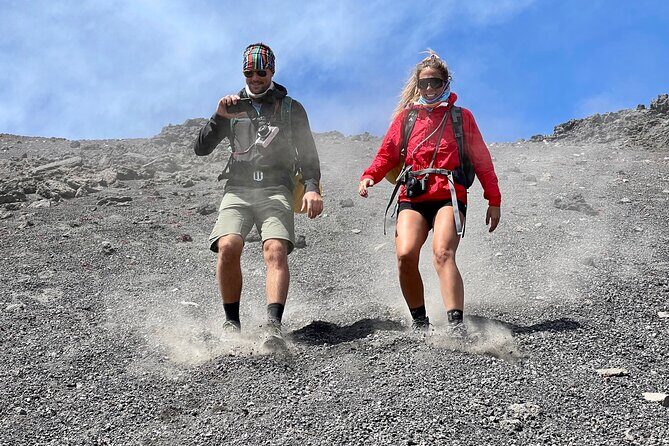
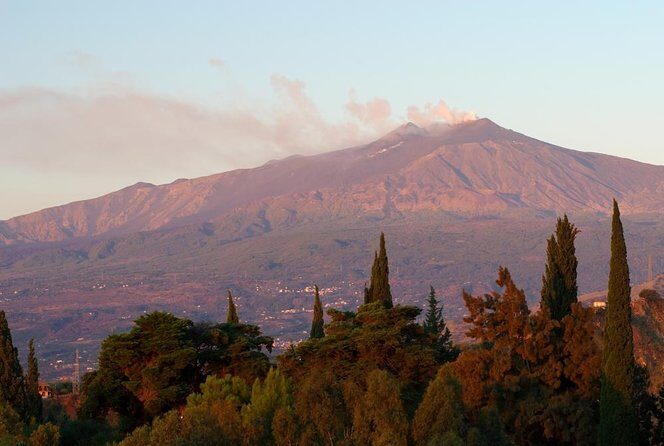
If you only see Etna from the south, you miss a lot. The north side is where you feel the volcano’s edges in a more direct way: more terrain changes, fewer crowds, and more of a sense of raw, working geology. With smaller groups, the day feels less like a conveyor belt.
This tour is built around that idea. You get a 4×4 ride up the rougher flank to save energy, then you walk to the summit area. And because volcanic activity can change quickly, the guides don’t treat the route like a rigid script.
You can also read our reviews of more hiking tours in Sicily
Piano Provenzana: Your Etna Baseline Before the Climb
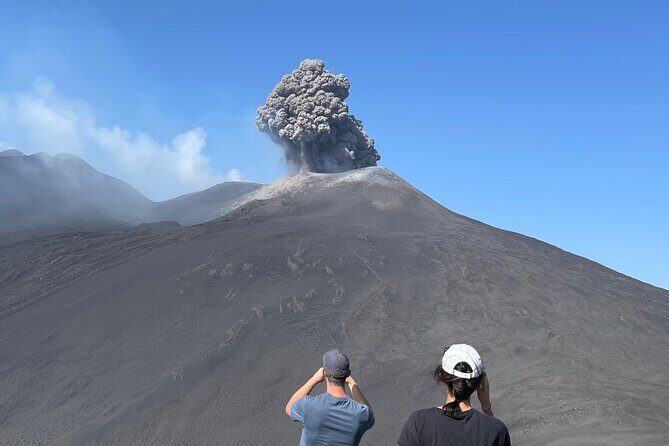
You’ll meet at CHIOSCO BAR MARENEVE DI FERRARO Etna nord – Piano Provenzana, Via Provenzana, 95015 Linguaglossa CT. From there, you’ll have time before departure to use restrooms and grab a quick coffee or pastry at the local café.
Piano Provenzana is also a practical base. You can reach it by private or rental car on paved public roads, and it’s surrounded by pine forest and lava fields. After the eruption on October 27, 2002, the original facilities were destroyed, so what you’re seeing now is shaped by that event and the volcanic aftermath.
Two smart planning notes here:
- In winter, snow chains or winter tires are advised because conditions can turn fast.
- You’ll want to refill water before you move into the higher, harsher zone.
The 4×4 Ride: Fast Panoramas, Real Lava Terrain
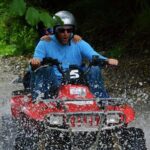
From the meeting area, you’ll transfer onto authorized 4×4 vehicles with volcanology guides. This part climbs through lava fields and past lateral craters, reaching around 2,960 m where the trek begins.
This ride matters more than it sounds. It gets you into the high country efficiently, and it also puts you in the right mindset: you’re already moving across volcanic ground before the walking starts. Expect bumpy terrain—this is not a smooth “sightseeing bus” situation.
Also, keep your day flexible. The tour notes that environmental, climatic, and volcanic conditions can lead to route variations or interruptions. That’s not bad planning—it’s the way you stay safe on an active volcano.
Crateri Sommitali Route: From Forest Edges to Volcanic Scrapes
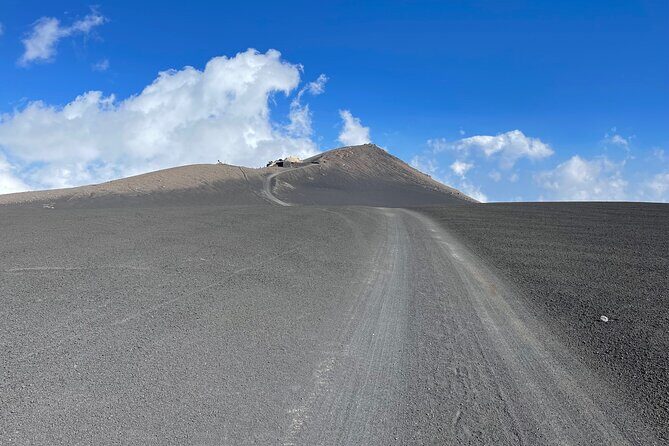
On the way up, you follow a panoramic, authorized route along an unpaved track. The start times depend on the season: mornings run with a meet time around 7:45 a.m. and departures between 8:00 and 8:15 a.m. There’s also an afternoon start at 1:00 p.m. from May to October.
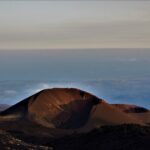
The drive and track climb from roughly 1,800 m to 2,960 m, covering about 9.5 km on the scenic approach. This is where you learn how varied Etna can be in a single day. You move through areas with forests, then shift toward more recent lava flows and volcanic features like fractures and lateral craters.
What you’ll likely notice:
- The ground and textures keep changing, so you’re not just walking the same trail.
- You get broad visibility when the air is clear. The route can offer views toward northern Sicily, the Aeolian Islands, the Strait of Messina, Calabria, and both the Ionian and Tyrrhenian Seas.
- On rare clear days, you may even see additional ranges in the distance.
A nice detail: guides accompany you during both the drive and the hike. That matters because on Etna, context and safety go together—gas, heat, and unstable footing aren’t “scenery,” they’re real conditions.
Summit Trek to 3,380 m: Four Craters and a Route That Adapts
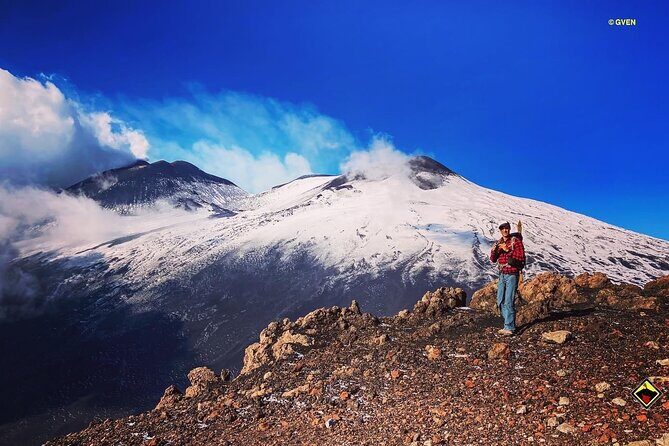
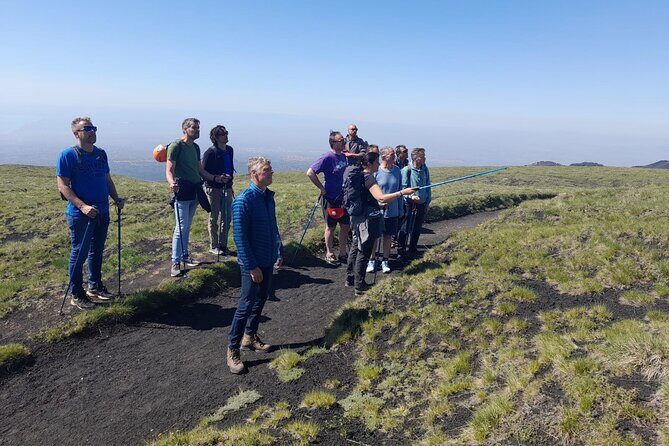
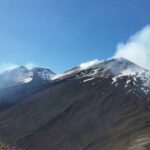
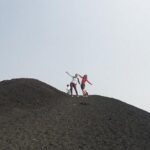
Once you reach about 2,960 m, the summit trek begins. It’s a guided hike of roughly 5 km with about 550 m of ascent. The goal is the summit area and the rim sections around four main craters: North-East, Voragine, Bocca Nuova, and South-East.
Here’s the part that makes this tour feel more real than a checklist. Volcanic activity changes daily, so the guides choose the safest route toward the most active yet secure crater. If gas concentrations, heat, or fractures change, the walk can shift. You’re hiking in a place where conditions can move under your feet—high rocks, fumaroles (gas vents), and unstable ground mean you follow instructions closely.
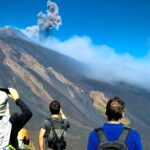
At the top, you walk along crater rims and see volcanic gas releasing from fumaroles, bright mineral colors, and evidence of recent lava. If the visibility is decent, the views reach across Sicily, the seas, and toward the Aeolian Islands and Calabria. This is the moment where the whole day’s effort pays off.
And yes, altitude is part of the equation. The range here climbs up to about 3,380 m, so mild altitude effects are possible. The tour advises you to report any health issues to the guides, especially if you have breathing or cardiovascular concerns.
From there, you descend using soft scoria channels for about 4 km and around 600 m of drop. Total walking tends to land around 8–9 km for the day, done in roughly 5 hours overall (including the 4×4 transfer segments).



What You’ll Feel on the Way Down (and How to Dress)
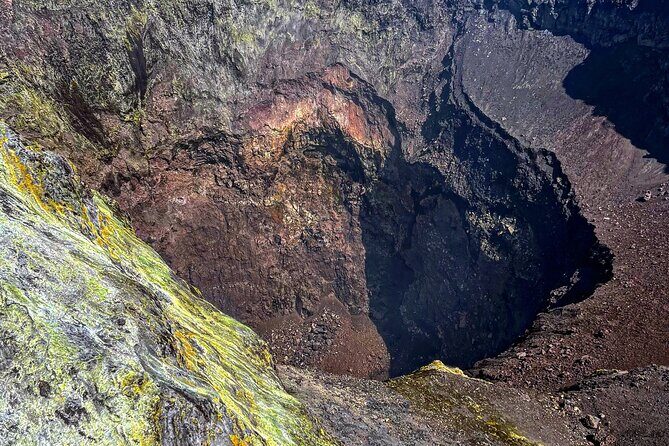
The descent is not automatically easy just because you’re going downhill. Scoria channels can be loose underfoot, and your legs still need to work on that uneven surface. Trekking poles help, and you’ll have them provided—but you still need to treat the footing seriously.
Temperature can surprise you. Even in late September, one review highlighted top temps around 2°C and the need for layers. That matches what you’d expect at this altitude. You’ll feel the cold more once you stop moving, too.
Bring or plan for:
- Layers you can adjust quickly
- Sunglasses and sunscreen (you’re high and exposed)
- If traveling in autumn, winter, or spring: a rain jacket (K-way), plus a hat and gloves (these are not included)
Also, skip contact lenses. The guidance specifically recommends not using them due to volcanic gases and ash, which could cause issues.
One more practical point: volcanic soil can be inconsistent and unstable, so keep your pace steady and don’t assume every step is firm.
Gear, Guides, and the Small-Group Advantage
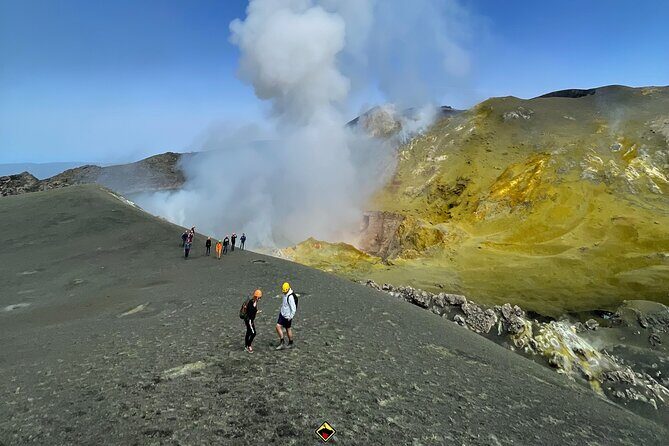
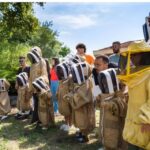
This is one of the better “guided and equipped” Etna options. You get trekking shoes, trekking poles, socks, a backpack, jackets, and protective helmets. Accident insurance is also included.
You’ll also likely remember your guide. People have named guides like Vincenzo, Francesco, Andreo, and Nikos in standout feedback. I like this because the north-side Etna approach depends on a guide who can explain what you’re seeing while also reading conditions and moving safely.
Group size is capped at 10 travelers, which helps with pacing and route decisions. On an active volcano, that’s not a luxury—it’s how you keep the whole group from turning into a traffic jam on narrow, changing paths.
Price and Value: What You Pay vs. What You Add on the Day
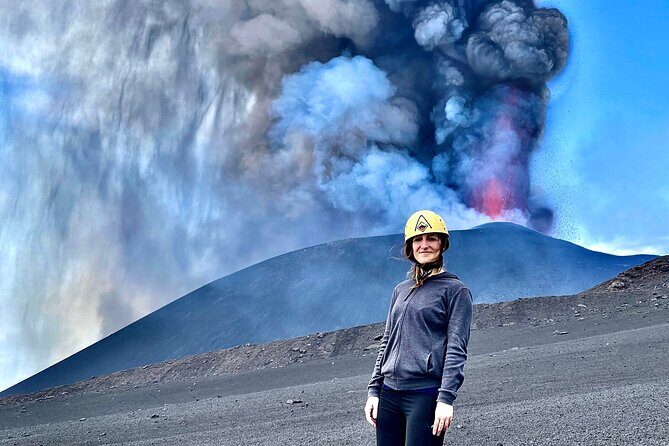
The listed price is $78.61 per person for a roughly 5-hour experience, usually booked about 39 days in advance. The big value angle is that the tour includes the volcanology guide plus a lot of what you’d otherwise rent or scramble to find: helmets, poles, trekking shoes, and other hike gear. Accident insurance is covered too.
But don’t miss the day-of costs. The authorized off-road vehicle portion (round trip from about 1,800 m to 2,825 m) is 60 Euro per person, paid on the spot. Parking is also extra: €5 for the day on weekdays and €8 on Sundays and public holidays. Lunch isn’t included.
So the best way to think about value is:
- You’re paying for guided safety, crater access via the summit trek, and the hiking kit.
- You still need to budget cash for the off-road vehicle and your own food and parking.
If you’re comparing options, factor those extras in early. Then the tour often looks like a fair deal for the north-side experience and the amount of walking involved.
Who This Etna North 4×4 + Trek Suits Best
This is a strong fit if you want the volcano on its own terms. You like hiking, you can handle cold and altitude, and you’re okay moving at a purposeful pace while the guides keep an eye on gas, heat, and ground conditions.
It’s also a good choice if you want the north side specifically. The route is described as less touristy, with smaller groups, and it reveals more of Etna’s volcanic variety than a quick up-and-down.
This is not a fit if:
- You’re under 12 (the tour isn’t suited for children under 12)
- You have cardiovascular problems, breathing problems, or hypertension
- You don’t do physical activity regularly (the guidance strongly discourages those who don’t train)
- You use contact lenses and don’t want to deal with the gas/ash concern
Should You Book This Summit Trek from Piano Provenzana?
If your goal is crater-rim walking with a volcanology team on Etna’s north side, I’d say yes. The combination of authorized 4×4 access plus a guided summit trek to the active crater area is exactly what makes the day feel like more than a photo stop.
Book it if you can handle:
- A real ascent and descent at high altitude
- Unstable volcanic ground
- A route that may change for safety reasons
Skip it if you want an easy stroll, you’re sensitive to cold, or you have health concerns that the tour flags as higher risk.
If you’re on the fence, your best move is simple: be honest about your fitness and tell the guides your health limits before you go. On Etna, good planning helps you enjoy the volcano instead of just surviving it.
FAQ
Where is the meeting point for the Etna north summit trek?
You meet at CHIOSCO BAR MARENEVE DI FERRARO Etna nord – Piano Provenzana, Via Provenzana, 95015 Linguaglossa CT, Italy. The tour ends back at the same meeting point.
How long does the experience last?
It’s listed at about 5 hours (approx.), with the hike taking most of that time plus a return 4×4 ride.
What time do morning and afternoon tours depart?
The morning schedule includes meeting around 7:45 a.m. with departure between 8:00 and 8:15 a.m. An afternoon start at 1:00 p.m. runs from May to October.
How high do you hike on this tour?
The summit trek climbs to the summit area around 3,380 m, with the walking beginning around 2,960 m.
What is included in the tour price?
Included items cover an authorized volcanological guide, trekking shoes, trekking poles, socks, protective helmets, a backpack, jackets, and accident insurance.
What extra costs should I expect?
The authorized off-road vehicle portion is not included and costs 60 Euro per person to pay on the spot. Parking is also extra (about €5 on weekdays and €8 on Sundays/public holidays). Lunch and transport from your accommodation are not included.
Do I need to bring trekking shoes or poles?
No. Trekking shoes, trekking poles, socks, and protective helmets are included.
What should I pack for weather and cold?
Dress in layers. The guidance specifically warns it can be cold at the top, and it recommends sunglasses and sunscreen. In autumn, winter, and spring, a rain jacket (K-way), hat, and gloves are recommended but not included.
Is this tour safe for everyone?
It is not suited for children under 12. It’s discouraged for people with cardiovascular problems, breathing problems, or hypertension. You should report health conditions to the guides, and it’s advised not to use contact lenses.
What happens if weather or volcanic conditions change?
The excursion depends on good weather. It can be varied or interrupted at the guides’ discretion for safety if volcanic, environmental, or climatic conditions change. If canceled due to poor weather, you should be offered another date or a full refund.