A morning of black sand and quiet fire is waiting. This is a private Mt. Etna full-day trek that also takes you into a lava tube, with the route kept off the main tourist paths. I love that you’re getting both Valle del Bove scenery and a real underground look at volcanic eruptions, not just photos from a viewpoint. I also like that the tour supplies practical gear—helmets and flashlights—so you can focus on the walk instead of packing for it.
The day runs about 6 to 7 hours with round-trip transfers from a central Catania meeting point. You hike roughly 3 to 3.5 hours, gaining about 350 meters (1150 feet), and then you spend focused time at Valle del Bove and the Silvestri Craters. One thing to consider: you’ll want trekking shoes you don’t mind ruining a bit, because the route includes a thrilling descent over desert-like black sand.
In This Review
- Etna From Catania: Private Pickup and an 8:30 Start That Works
- Off the Tourist Tracks on Mt. Etna: 5.5 km, 350 m Up, and Black Sand
- What You Learn as You Walk: Lava Flows, Craters, and Valle del Bove
- Gear That Actually Helps on Etna: Helmets, Flashlights, Sticks, and Warm Layers
- Entering a Lava Tube: A Different Kind of Etna
- Valle del Bove: A Protected Basin with Real Scale
- Silvestri Craters at 1,900 m: Pyroclastic Cones North of Nicolosi
- Timing, Transfers, and Why the Day Length Feels Right
- Price and Value: What $78.61 Covers (and What It Doesn’t)
- What to Bring for a Volcano Walk (So You’re Not Miserable)
- Who This Tour Fits Best (and Who Should Rethink It)
- Should You Book Etna’s Valle Bove & Lava Tunnel Trek?
- FAQ
- How long is the Etna trekking and lava tunnel experience?
- What difficulty level is the hike?
- Where do we meet in Catania and what time does it start?
- What gear is included for the lava tube part?
- Are Valle del Bove and the Silvestri Craters included in the same day?
- Is lunch or bottled water included?
- What happens if weather is poor?
Etna From Catania: Private Pickup and an 8:30 Start That Works
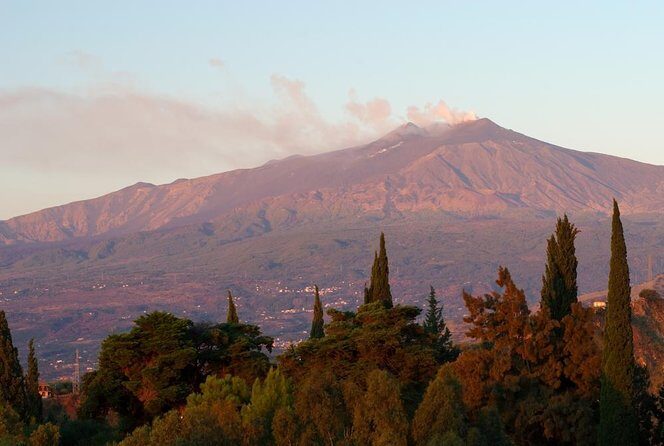
This tour starts at Via Alcalà, 13/15 in Catania at 8:30 am. The big practical win is that you’re not stitching together buses or rental cars. You get private transportation and come back to the same meeting point, which makes the whole day feel simple even if Etna day trips usually aren’t.
You’ll also receive a mobile ticket after booking. It’s the kind of detail that saves time when you’re traveling—less fumbling, more walking. And since this is booked fairly far in advance on average, I’d treat it like a plan-you-early type of excursion, especially if you’re traveling in peak season.
Off the Tourist Tracks on Mt. Etna: 5.5 km, 350 m Up, and Black Sand
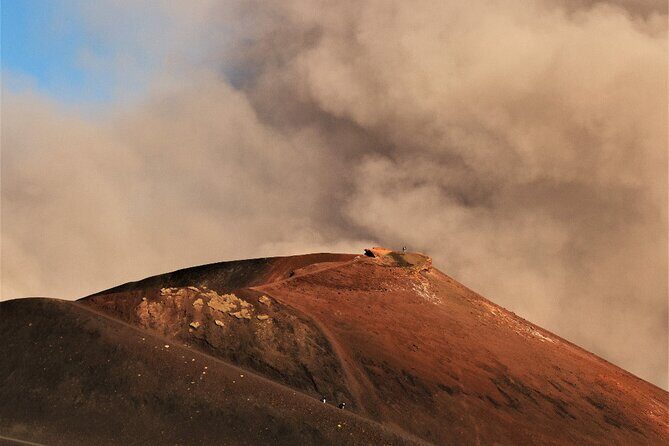
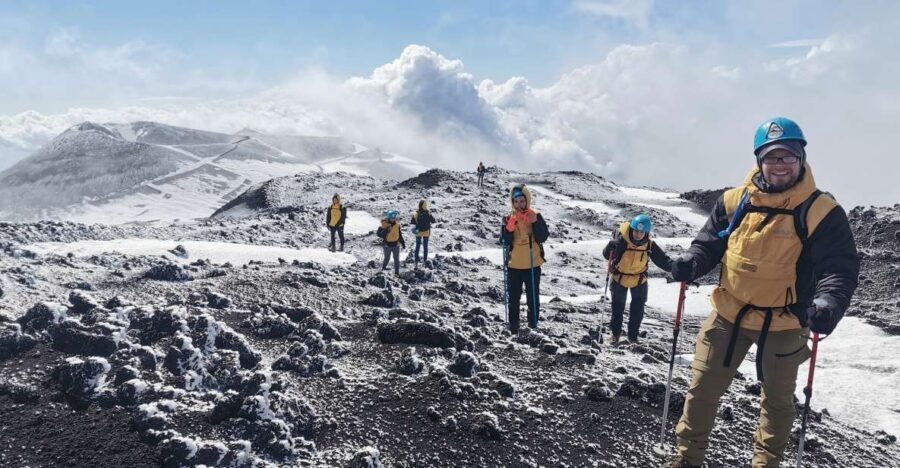
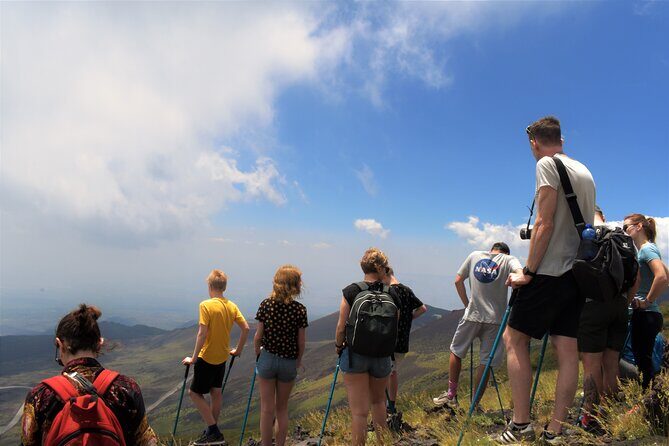
The main trek is the heart of the experience. You’ll cover about 5.5 km total, with an elevation gain of roughly 350 meters (over around 3 to 3.5 hours of trekking). The stated difficulty is medium-easy, which is a nice label—just remember it’s still Etna. You’re walking on volcanic terrain, not a paved trail.
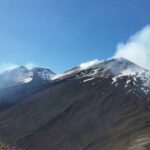
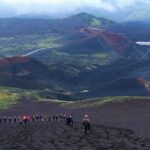
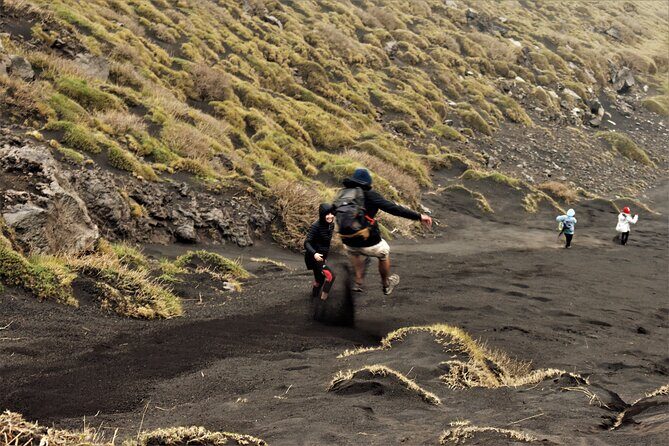
What I’d mentally prepare for is the mix of surface types: lava flows, old craters, and patches that shift from rocky ground to darker, sandier areas. The tour specifically calls out that you’ll cross deserts of black sand, including at some point a thrilling descent. That’s why trekking shoes matter. If you bring your nicest sneakers, you’ll regret it the moment the ground turns gritty.
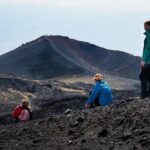
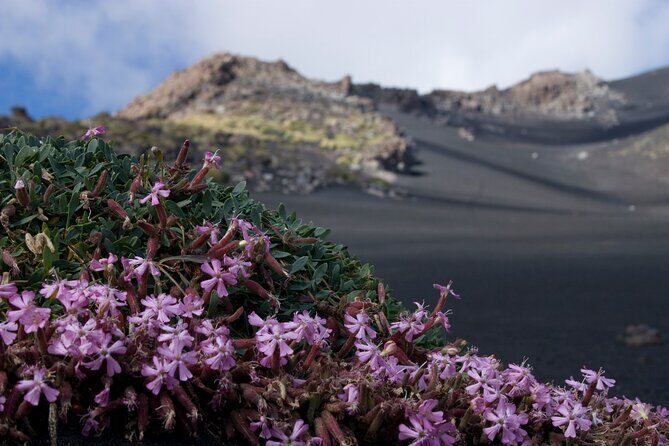
The scenery during the hike is also part of why this works. You’re surrounded by a moonlike volcanic world—paths through areas with typical flora and fauna that’s adapted to volcanic conditions. Even if you think you already know Etna from a postcard, the scale hits differently when you’re walking through it.
You can also read our reviews of more hiking tours in Sicily
What You Learn as You Walk: Lava Flows, Craters, and Valle del Bove
This isn’t a route where you sprint between stops. Instead, the pacing is built around learning as you go. Your guide(s) take you along paths that help you understand Mount Etna as a UNESCO World Heritage Site, with the volcanic structure visible in the way the ground rises, breaks, and layers.
Along the way you’ll move through a patchwork of volcanic features, including:
- woods and lava flows (older and more recent)
- old craters you can actually approach
- the transition toward Valle del Bove
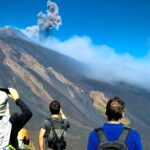
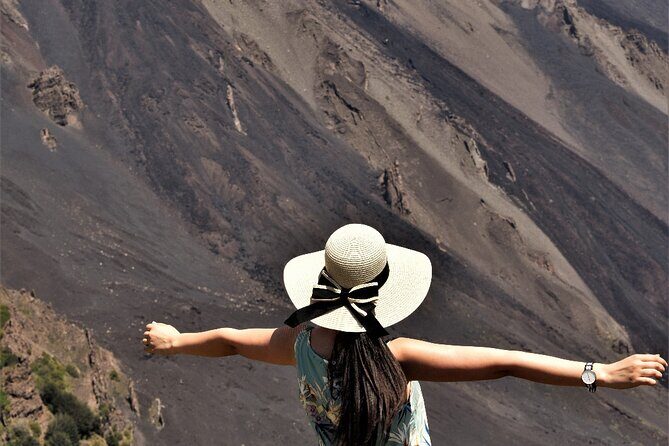
Valle del Bove is the big visual payoff later, but you start feeling how it’s shaped while you hike. It’s like seeing the outline of a huge bowl form as the terrain changes. For photographers, it’s also a gift: you’re not stuck in one direction. You’ll get angles where the slopes and valleys open up, and then other angles where the ground looks textured and layered up close.
Gear That Actually Helps on Etna: Helmets, Flashlights, Sticks, and Warm Layers
One reason I like this tour is that the gear list is practical for the exact challenges you’ll face. You’re provided:
- helmets
- flashlights
- walking sticks
- jackets and sweaters (warm outerwear)
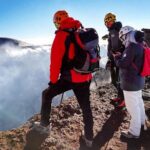
That setup matters most for the lava tube portion. Once you go underground, the challenge is not just dark—it’s confined space, uneven surfaces, and the need to move carefully. Having a helmet and a flashlight takes away the guesswork and helps you feel safer as you follow the group.
The sticks are also a quiet advantage on uneven volcanic ground. You might not think about it until you’re halfway up or when the footing gets softer near sandy stretches. You’ll also appreciate the warm layers because volcanic areas can feel colder than you expect, even in good weather.
Entering a Lava Tube: A Different Kind of Etna
The tour includes time inside lava tubes, formed during Etna’s eruptions. This is one of those experiences that’s hard to get from viewpoints. Underground, you see the logic of the volcano in a direct, physical way: the shapes, the tunnel path, and the way darkness takes over.
With helmets and flashlights in hand, you’re not just walking into a cave. You’re exploring volcanic “leftovers” that the mountain created and then sealed under rock. It’s also a reminder that the volcano is still active in the way it shapes the ground—even when the surface is calm.
A quick mental note before you go: if you dislike enclosed spaces or you’re prone to getting anxious in the dark, tell yourself you’ll be moving with a guide and a group. The tour is set up for walking safely through this part, not wandering off on your own.
Valle del Bove: A Protected Basin with Real Scale
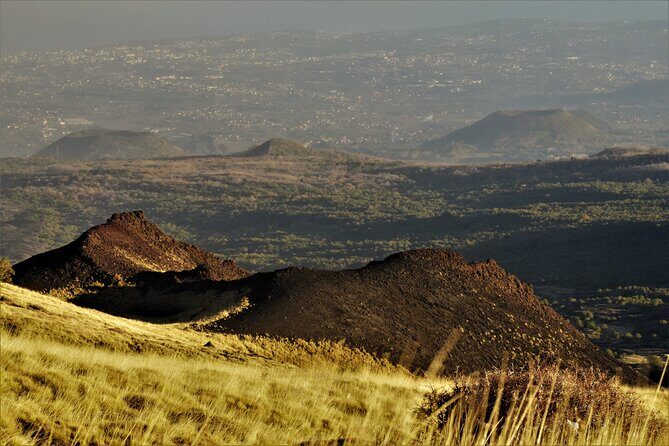
After the main trekking segment, you get a dedicated stop at Valle del Bove. It’s described as a large basin on the eastern side of Etna’s volcanic building, within the protected area of Etna Park, in the territory of Zafferana Etnea.
What you’re looking for here is scale and structure. Valle del Bove isn’t a small crater you peek into—it’s a broad formation. Standing at the basin, you get a clearer sense of how Etna’s eruptions shaped an entire section of the mountain over time.
The stop is short—about 20 minutes—so it’s not the time for a long, slow wander. Instead, it’s a moment to absorb the big picture, ask questions, and take photos before you move on.




Silvestri Craters at 1,900 m: Pyroclastic Cones North of Nicolosi
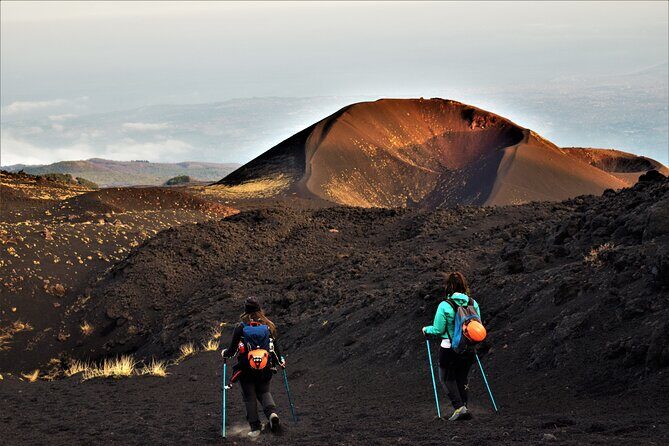
The last featured stop is at the Silvestri Craters, also called Silvestri Mountains. These are two pyroclastic cones formed north of Nicolosi, at an altitude of about 1,900 meters.
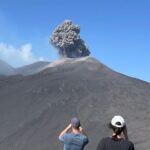
What’s good about including this is the variety of what you see. A pyroclastic cone gives you a different volcanic geometry than lava flows and lava tunnels. You also get the feel of Etna’s activity styles—different eruption materials and different ways they build up the mountain.
This stop is around 15 minutes, which is exactly right for keeping the day moving while still letting you see something distinct before returning to base.
Timing, Transfers, and Why the Day Length Feels Right
The full outing runs 6 to 7 hours. Inside that, the trekking time is 3 to 3.5 hours, and the rest is made up by travel, gear time, and the two short scenic/admission stops.
This time structure works well for most people who want a meaningful Etna experience without turning the day into a 10-hour grind. You get a proper walk, then you get those specific Etna features in a controlled sequence. And because this is a private tour for just your group, you’re not getting squeezed by the slowest person in a huge crowd.
One more detail to be ready for: if the weather turns or there’s a real safety risk, the route can change at the guide’s discretion. You’ll still be doing the core experience, but the exact path may shift. That’s not a deal-breaker. It’s how you stay out of trouble on an active mountain.
Price and Value: What $78.61 Covers (and What It Doesn’t)
At $78.61 per person, this tour is priced like a solid day excursion—especially because it includes more than just a guide. You get:
- private transportation from central Catania
- helmet and flashlights
- walking sticks
- jackets and sweaters
- admission ticket(s) included for the Mount Etna segment and the stops at Valle del Bove and the Silvestri Craters
What’s not included is also clear: lunch and bottled water. That means you should plan to bring cash or card for food nearby, or you can pack something if that works for you.
For value, the big point is that the tour saves you effort. You don’t have to source gear or figure out entrances, and you don’t have to manage public transport while you’re walking in volcanic terrain.
Also worth knowing: cancellation is free up to 24 hours in advance for a full refund. It’s a useful cushion when you’re scheduling around weather.
What to Bring for a Volcano Walk (So You’re Not Miserable)
Even with jackets and sweaters provided, you’ll want to show up ready for the ground. Here’s what I’d pack based on how this tour runs:
- trekking shoes with solid grip (and yes, you might soil them)
- a small daypack to keep things together
- layers you can adjust (provided warmth helps, but you’ll still feel temperature swings)
- sun protection if it’s clear—Etna can be bright
- no water or lunch included, so plan your intake accordingly
And if you’re thinking about clothing: wear comfortable trekking pants you don’t mind getting dusty. You’ll be walking on volcanic surfaces, and the black sand doesn’t care about your outfit.
Who This Tour Fits Best (and Who Should Rethink It)
This is a great pick if you want a hands-on Etna experience that includes both surface trekking and a lava tube walk. The difficulty is listed as medium-easy, and the activity calls for travelers with moderate physical fitness.
You’ll likely enjoy it most if:
- you’re comfortable walking 3 to 3.5 hours
- you can handle uneven ground and a sandy descent
- you like guided explanations and not just passive sightseeing
- you want a more controlled group day rather than a big bus tour
You might want to reconsider if you have strong claustrophobia around underground spaces or you’re not steady on uneven footing. The tour does everything it can with helmets, flashlights, and sticks, but it still involves moving through volcanic terrain and going into lava tubes.
Should You Book Etna’s Valle Bove & Lava Tunnel Trek?
I’d book this if you want Etna to feel physical, not distant. The combination of a guided off-the-main-tracks hike, an elevation gain you can actually feel, and a lava tube stop with real gear makes it more than a “drive up and look” day.
It’s especially worth it if you’re traveling in a group that wants privacy and you don’t want to manage transfers or gear on your own. The only reason not to book is if black sand hiking or underground tunnels would make you anxious, or if you’re not willing to plan for lunch and water.
If weather is good, you’ll come away with a clearer understanding of Etna’s shapes—on the ground and underground—and you’ll have spent your hours walking where most people only ever pass by.
FAQ
How long is the Etna trekking and lava tunnel experience?
The full experience runs about 6 to 7 hours, with roughly 3 to 3.5 hours of trekking during the day.
What difficulty level is the hike?
The trek is listed as medium-easy. You should have moderate physical fitness, and the route includes uneven volcanic terrain and a black sand descent at some point.
Where do we meet in Catania and what time does it start?
The meeting point is Via Alcalà, 13/15, 95129 Catania, Italy, and the start time is 8:30 am.
What gear is included for the lava tube part?
You’ll be provided a helmet and flashlight. You’ll also have walking sticks, plus jackets and sweaters for warmth.
Are Valle del Bove and the Silvestri Craters included in the same day?
Yes. Valle del Bove is a stop of about 20 minutes, and the Silvestri Craters are a stop of about 15 minutes.
Is lunch or bottled water included?
No. Lunch and bottled water are not included.
What happens if weather is poor?
The experience requires good weather. If it’s canceled due to poor weather, you’ll be offered a different date or a full refund. The guide may also adjust the route if there are adverse weather conditions or real safety risks.