REVIEW · SICILY
Hike near the summit craters up to the maximum safe altitude currently foreseen
Book on Viator →Operated by Guide Vulcanologiche Etna Nord · Bookable on Viator
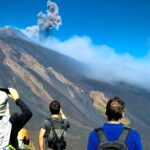
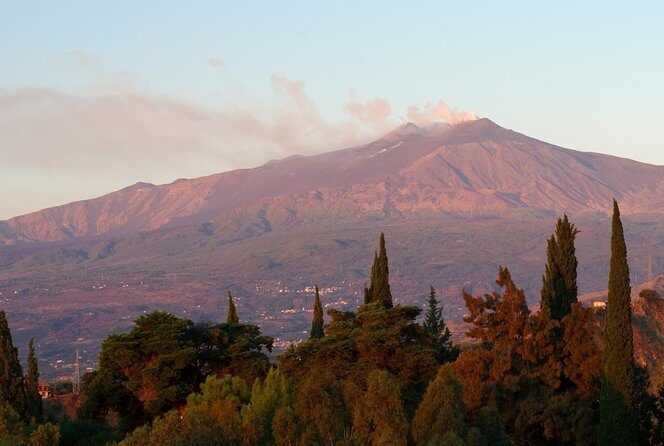
Etna at 3,000 meters feels like you’re walking on the edge. This hike takes you up Europe’s highest active volcano to the maximum allowed altitude, with views of the South-East Crater from a safe, regulated zone.
What I love most is the mix of effort and payoff: you gain about 500 vertical meters on volcanic terrain, yet the route stays high enough for big, uninterrupted summit perspectives. I also really like the guide setup—this is run with authorized vulcanological guidance, and guides like Filippo (a PhD geologist) can explain what you’re seeing in plain language while still keeping it serious.
One drawback to flag: you’re hiking on uneven volcanic ground at altitude, and the crater-rim sections can trigger dizziness for sensitive people. If you’re prone to lightheadedness, take it slow and tell your guide early.
In This Review
- Key highlights you’ll actually care about
- Why Etna’s 3,000m limit is the point (not a compromise)
- Getting to the trail: the Nicolosi start and high-mountain pacing
- The 500m climb: lava fields, craters, channels, and fumaroles
- Summit views from a safe distance: the South-East Crater experience
- Descent details: on-foot crater walking then cable car back down
- Gear and what to bring: you’re covered, but not for everything
- Price and logistics: is $66.38 good value for Etna?
- Who should book this Etna hike (and who should skip it)
- Guides make the difference: Filippo, Vincenzo, Podlo, and Daniele
- Should you book this tour?
- FAQ
- What time does the Etna hike start?
- How long is the hike?
- How high do we hike on this tour?
- Is the cable car included?
- What kind of difficulty should I expect?
- What gear is provided?
- Do I need to bring gloves and a hat?
- Are contact lenses recommended?
- Is this tour suitable for children?
- Can the tour be suspended if conditions change?
- What’s the cancellation rule if weather changes?
Key highlights you’ll actually care about
- Max safe altitude (3,000 m) gives summit access without the riskier, restricted cone approach
- South-East Crater views from a regulated distance, even when access is closed
- Vulcanologist guide focus means the hike feels like field science, not just sightseeing
- Helmets, warm layers, poles, and extra socks reduce the “did I pack right?” stress
- Small group size (max 15) helps you move as a unit on fragile terrain
- High-altitude reality check: cold air + volcanic ash/gases means you plan smarter
Why Etna’s 3,000m limit is the point (not a compromise)
This tour isn’t about climbing into the danger zone. It’s about reaching the maximum safe altitude currently allowed by summit ordinances—3,000 meters—and doing it with rules that protect both you and the group.
That limit matters because the most active parts of Etna can be closed when heat, instability, or potential collapses are higher risk. In other words: sometimes the cone access is shut. But the experience is still built around seeing the volcano up close from allowed vantage points. You still get dramatic crater views, lava features, and an understanding of why certain areas are reachable and others aren’t.
I like that this turns Etna into a hike you can trust. You get the excitement of a real active volcano, without the “wait, is this too risky?” feeling.
You can also read our reviews of more hiking tours in Sicily
Getting to the trail: the Nicolosi start and high-mountain pacing
The meeting point is EsagonalPiazzale Funivia Etna, Sud, 95030 Nicolosi CT, Italy, with an 8:30 am start and return to the same place. Plan on a total outing of about 5 hours.
You begin around 1,900 m for check-in and tickets with your guide, then take the cable car up to 2,500 m. That cable-car hop is a smart move for most people. It shortens the grind and gets you to the higher altitude quickly—so the main hike is focused on the volcanic features between 2,500 m and 3,000 m.
From there, you hike roughly 6.5 km total (distance can vary) with about ~500 m of gain. The difficulty is rated E and the big caveat is not technical scrambling. It’s altitude familiarity. If you’re used to hiking near sea level, the air at 3,000 m will ask a bit more of your lungs.
A practical tip: treat the first part as warm-up time. Let your breathing settle before you judge your effort.
The 500m climb: lava fields, craters, channels, and fumaroles
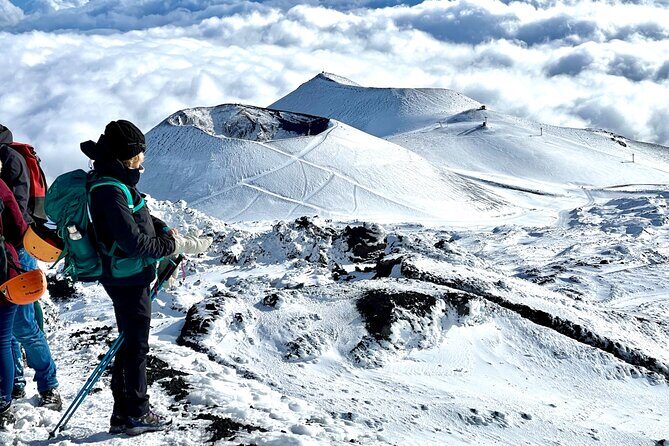
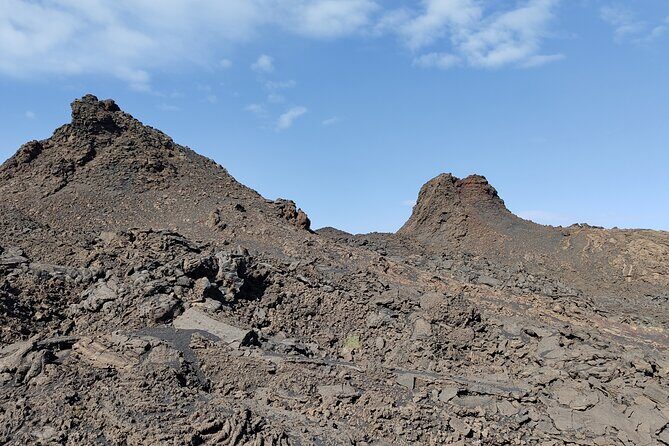
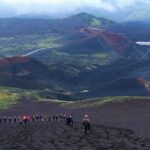
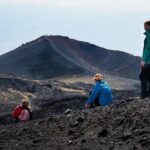
The main “work” is the ascent from 2,500 m to 3,000 m at the base of Etna’s South-East Crater. Over that stretch, you’ll gain height by walking across volcanic terrain: lava fields, crater areas, lava channels, and hot fumaroles.
This is where a good guide changes everything. A vulcanologist guide doesn’t just point and say volcano. They help you connect the visible shapes—lava flow paths, crater rims, and steam vents—to what those features usually mean in an active system.
I also like how the route stays above 2,500 m. That keeps the experience feeling like you’re living in the high zones rather than doing a long transition hike.
Terrain note: volcanic ground can be uneven and unstable. Even if you’re fit, you still want to move carefully. Trekking poles help a lot here, and you’ll have access to them.
Summit views from a safe distance: the South-East Crater experience
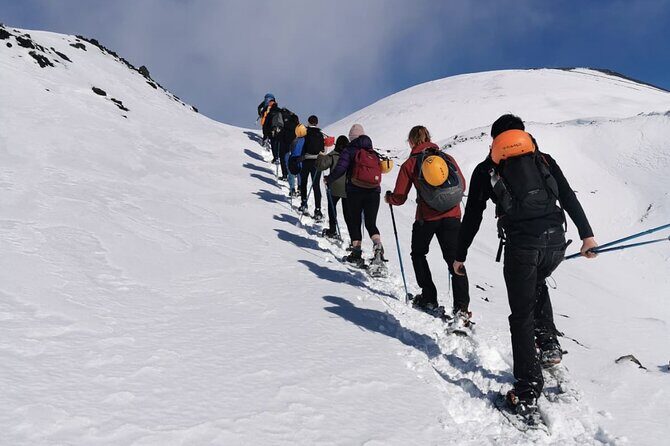
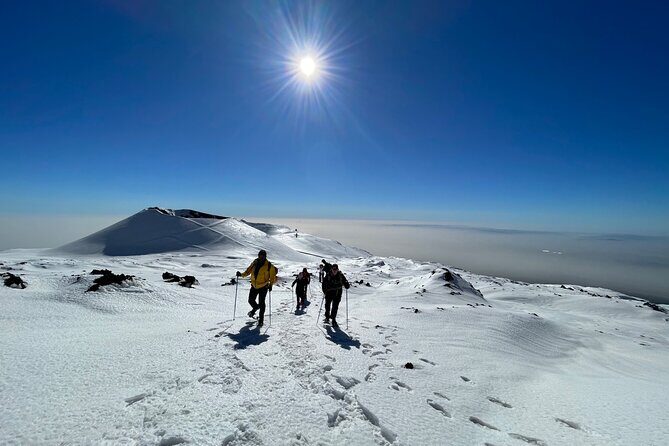
You reach the key point at 3,000 m, which is as high as summit ordinances currently allow. From there, you look at Etna’s most active cone from an approved distance, focusing on the South-East Crater.
This part is all about regulated access. In some situations, the cone is closed because of extreme heat or instability—especially when magma is shallow. When access is closed, you still get crater views and a route that stays within the safety perimeter.
One of the most satisfying things about Etna is how much it shows at once: steam, rock textures, crater edges, and the sense that you’re standing near ongoing processes. You don’t need to be at the edge of restricted ground to feel that.
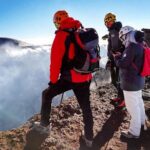
Also, the tour description makes it clear the route can include walking along crater rims. If you get lightheaded, go slower and keep your eyes on the ground in front of you when needed. It’s not a shameful thing—it’s smart mountain behavior.
Descent details: on-foot crater walking then cable car back down
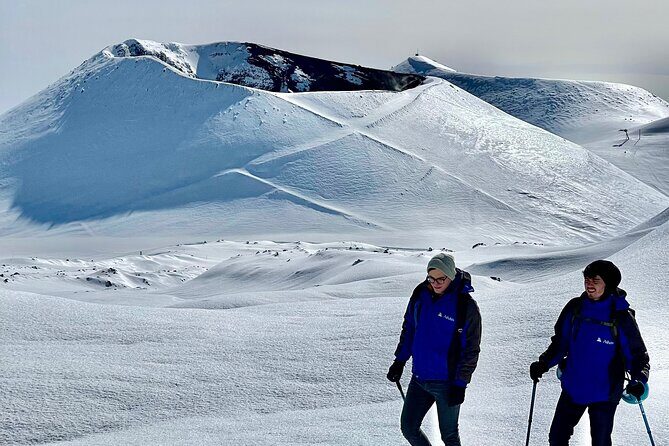
After reaching the maximum allowed altitude, you descend on foot from 3,000 m to the cable-car station, then take the cable car back to where you started.
Even though the descent is shorter on paper, your legs still work because the footing is volcanic—often loose, uneven, or both. Poles help again, and helmets are part of the kit for a reason: volcanic terrain comes with hazards you don’t always see from far away.
Sometimes the route includes additional highlights on the way down, like old lava tunnels and stops around older craters such as the 2002 area. The exact pattern can adjust based on volcanic and environmental conditions, but the overall goal stays the same: keep you high, keep you safe, and keep the story of Etna moving.
One more thing I appreciate: the itinerary can be adjusted at the guide’s discretion or suspended if conditions change. That sounds boring on a website. On a real volcano day, it’s a good sign. Safety decisions are part of the experience.

Gear and what to bring: you’re covered, but not for everything
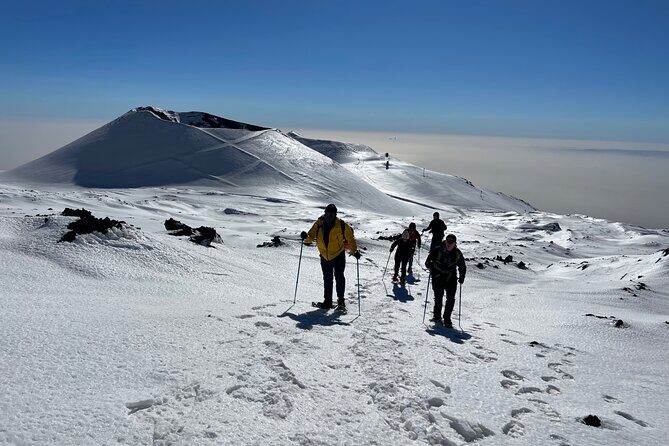
This tour is set up to take the pain out of packing for a cold, high, volcanic walk.
Included gear:
- Helmets
- Warm jacket
- Trekking poles
- Trekking shoes
- Extra socks
- Extra backpack (provided)
- Accident insurance
They also provide practical help for people who don’t have the right gear. On at least some days, you can borrow items like boots and jackets, which reduces the stress if your suitcase is light.
What you should bring (not included):
- Hat and gloves
- Good eyewear. Contact lenses are not recommended because volcanic gases and ash can irritate eyes. If you do wear contacts, use sunglasses too.
Also, wear layers. Even when it looks fine at ground level, high altitude can bite. People often underestimate how quickly the air gets colder around 2,500–3,000 m.
Price and logistics: is $66.38 good value for Etna?
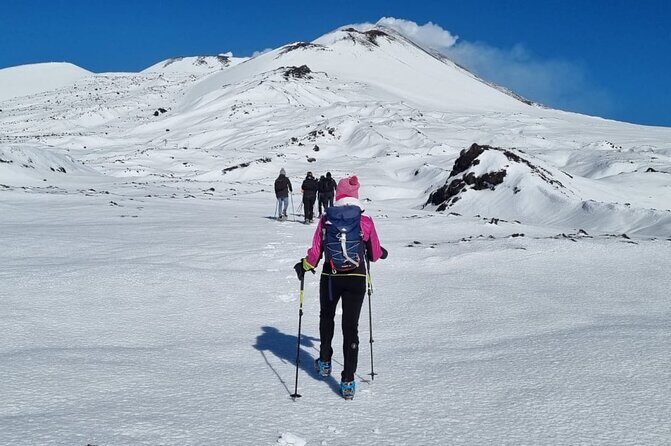
The listed price is $66.38 per person, and the tour duration is about 5 hours with admission to Mount Etna included.
Here’s the key value question: you also need to budget 52€ per person on site for round-trip cableway tickets. That’s not a small add-on, but it’s also part of how Etna keeps the hike feasible. The cable car gets you quickly to the high zone where the volcanic features are.
So what are you really paying for?
- Expert guidance that’s authorized and vulcanology-focused
- Safety gear that’s actually useful at altitude and on volcanic terrain
- A route designed around the maximum allowed summit altitude
- Accident insurance
If you show up unprepared, the included gear can save you from buying cold-weather basics you’ll only use once. And the guide component is the real differentiator: Etna is interesting even without a tour, but with a trained guide you understand what you’re seeing and why certain areas are closed.
One more logistics note: this runs with max 15 travelers, and language is English. Booking tends to be in advance, so plan ahead if your dates are fixed.
Who should book this Etna hike (and who should skip it)
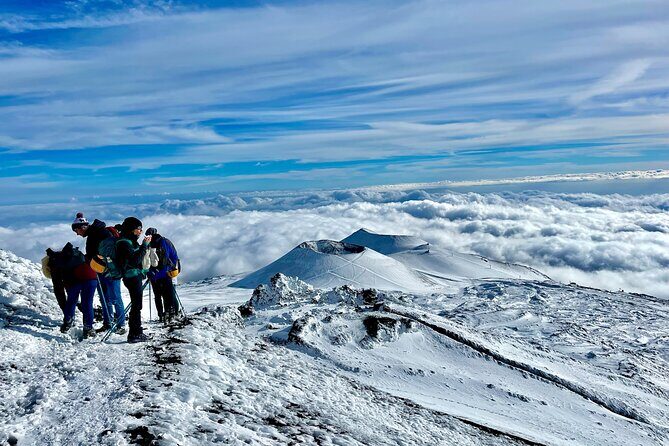
This experience fits best if you can handle altitude walking and you want a structured, science-led volcano day.
It’s suitable for:
- People with moderate physical fitness
- Hikers who are comfortable walking on uneven terrain
- Families with children over 7 who are accustomed to walking
It may not be ideal if:
- You engage in little physical activity (it’s not recommended)
- You have cardiovascular or respiratory issues, or hypertension
- You get easily dizzy on crater rims
- You’re expecting a gentle stroll. The distance isn’t huge, but the altitude makes it feel bigger
If you have medical conditions, the tour explicitly encourages telling the guide. That’s not over-cautious. On active volcano terrain, your guide can adjust pace and position in the group.
Also, the use of contact lenses is discouraged. If you’re a contact wearer, switch to glasses for this one if you can.
Guides make the difference: Filippo, Vincenzo, Podlo, and Daniele
A volcano hike isn’t just about oxygen and rock. It’s also about interpretation—turning what looks like chaos into something you can track.
The guides in this program are trained for volcano explanation. In the experience set you provided, I saw repeated praise for guides like:
- Filippo, described as a PhD geologist who gives lots of knowledge and encouragement to reach the top
- Vincenzo, praised for being friendly and for detailed crater and volcano information
- Podlo, noted for making the day unforgettable through strong guidance
- Daniele, highlighted as fantastic and very educational, with real highlights like an old lava tunnel and walking around the 2002 crater area
Even the best view gets better when someone can explain what created it and why it matters today.
Should you book this tour?
Book it if you want:
- A real summit-near Etna hike that goes to the highest safe altitude (3,000 m)
- Guided science with an authorized vulcanologist
- A day that mixes exertion with big, regulated crater views
- Included high-altitude gear so you don’t overpack
Skip it (or choose a different option) if:
- Your main goal is a flat walk
- You know you struggle with altitude dizziness or have relevant medical conditions
- You can’t comfortably handle uneven volcanic ground
If your Sicily trip needs one standout “active volcano” morning, this is a strong bet. It’s the kind of tour where safety rules don’t drain the adventure—they shape it into something you can enjoy all the way to the top.
FAQ
What time does the Etna hike start?
The tour starts at 8:30 am and ends back at the same meeting point.
How long is the hike?
The duration is about 5 hours (approx.).
How high do we hike on this tour?
You start around 1,900 m, go by cable car to 2,500 m, then hike up to 3,000 m, which is the maximum altitude allowed by current summit regulations.
Is the cable car included?
You’ll take the cable car as part of the route, but you should pay 52€ per person on site for round-trip cableway tickets.
What kind of difficulty should I expect?
Difficulty is rated E, and it’s mainly for hikers who are used to high altitude. The terrain can be uneven and unstable because it’s volcanic.
What gear is provided?
Included items are trekking poles, trekking shoes, helmets, warm jacket, extra socks, and extra backpack, plus accident insurance.
Do I need to bring gloves and a hat?
Yes. Hat and gloves are not included, and high altitude can be colder than you expect.
Are contact lenses recommended?
Contact lenses are not recommended due to volcanic gases and ash that can irritate your eyes. Sunglasses are advised if you wear contacts.
Is this tour suitable for children?
It’s suitable for children over 7 years old who are accustomed to walking.
Can the tour be suspended if conditions change?
Yes. The route may be adjusted or the excursion can be suspended if environmental, weather, or volcanic conditions create risk for safety.
What’s the cancellation rule if weather changes?
This experience requires good weather. If it’s canceled due to poor weather, you’ll be offered another date or a full refund. You can cancel up to 24 hours in advance for a full refund.