REVIEW · SICILY
Group guided tour of the archaeological park of Neapolis
Book on Viator →Operated by Hermes Sicily Tourist guides group · Bookable on Viator
Neapolis history packs a lot into 90 minutes. You get a focused look at Neapolis with stops for legends, major theaters, and a panoramic walk, all explained in clear English with a radio guide so you do not miss key bits. I especially like how the route mixes different periods without feeling rushed, and how the guide keeps the story moving from one site to the next. One possible drawback: during spring and summer shows, the Greek theatre is covered and you’ll see only part of it.
This is a small-group outing (max 15) that starts at Largo Anfiteatro, 2, near public transport. You’ll carry a mobile ticket, and you can expect English narration throughout, with guides such as Federica, Eva, Gaetano, and Sebastiano known for pacing that works for both adults and families.
In This Review
- Key highlights at a glance
- How a compact Neapolis tour works in real life
- Meeting at Largo Anfiteatro: arrive early and find the right entrance
- Parco Archeologico della Neapolis: your orientation start
- Ear of Dionysius: a cave visit with legend in the background
- Teatro Greco: Greek theatre history, plus the show-season caveat
- Ara di Ierone: a short stop that gives bigger meaning
- Syracuse Roman Amphitheater: when the story shifts into Roman hands
- Latomia del Paradiso: quarry gardens, plus a real walking moment
- Guides matter: Federica, Eva, Gaetano, and Sebastiano set the tone
- Price and tickets: what you’re paying $26.43 for
- Timing, weather, and booking smart
- Who this tour is best for
- Should you book this Neapolis guided tour?
- FAQ
- How long is the Neapolis archaeological park guided tour?
- How much does the tour cost?
- Is the tour offered in English?
- How big is the group?
- Do I need a park entrance ticket?
- Are the other sites included without extra admission?
- What meeting point should I use?
- Is the radio guide included?
- What if the Greek theatre is covered during shows?
- Can I cancel if plans change?
Key highlights at a glance
- Small group, max 15 people, so questions and pacing stay manageable
- Radio guide included, letting you follow even if you drift a bit behind
- Ear of Dionysius visit inside the cave area, with no extra admission listed
- Greek and Roman stops in one pass, including a Greek theatre and a Roman amphitheater
- Latomia del Paradiso panorama, with gardens from an ancient stone quarry
- Spring/summer reality check: Greek theatre coverage can limit what you see
How a compact Neapolis tour works in real life
This tour is built for people who want a smart overview, not a half-day of wandering with a map and hope. Expect about 1 hour 30 minutes, with a guided flow that keeps you moving between the most important parts of the Neapolis archaeological area. It is priced at $26.43 per person, which is mainly for the guided experience and the radio guide—not for park admission.
Because the group is capped at 15, you’re not lost in a crowd. That matters at Neapolis, where crowds can build fast, especially around cruise days. You’ll also appreciate the English delivery. If you do not want to rely on app translations, this setup keeps things simple.
You can also read our reviews of more guided tours in Sicily



Meeting at Largo Anfiteatro: arrive early and find the right entrance
The meeting point is Largo Anfiteatro, 2, 96100 Siracusa SR, Italy, and you end back at the same spot. It is near public transportation, so you can usually stitch this into a day without a private transfer.
Here’s a practical tip that can save you stress: arrive a bit early, because the tour start point is described as being at the street entrance area. If you only look for the main ticket gate, you might waste a few minutes. Once you’re there, you can handle any needed park admission on the spot (or nearby), then join the group right away.
Also keep in mind that this experience requires good weather. If weather turns poor, you’ll be offered a different date or a full refund. So if you’re visiting in shoulder season, keep one more day in mind if possible.
Parco Archeologico della Neapolis: your orientation start
Your tour begins at Parco Archeologico della Neapolis with a meeting at the park entrance and a historical introduction to the ancient city. This first segment is short—about 5 minutes—but it sets the tone. You learn what you’re looking at and how the sites connect, so later stops feel less like random ruins.
Important money detail: the admission ticket for the park is not included unless you choose a tour + ticket option. That means you’ll likely need to purchase park entry separately. The tour still counts even if you’re not sure where to start—your guide handles the storytelling side—but you do not want to be stuck at the wrong gate when time is tight.
Ear of Dionysius: a cave visit with legend in the background
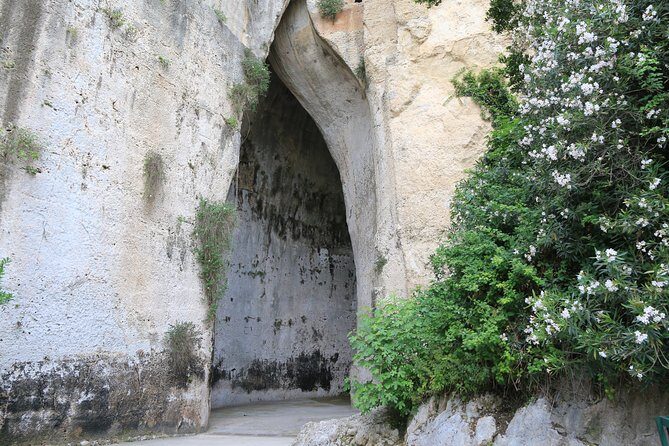
Next comes the Ear of Dionysius, a legendary cave called The ear of Dionysus. You’ll spend about 15 minutes on an internal visit. The best part here is the guide-led context. A cave like this can feel confusing if you just walk in and take photos. With guidance, it becomes part of the bigger Neapolis story, not just a stop you check off.
Admission for this segment is listed as free, so you’re not adding extra ticket purchases mid-tour. That also keeps the schedule predictable—useful if you’re on a tight sightseeing day.
If you like stops that feel a bit different from open-air ruins, this is one of the more memorable sections. It also gives you a break from intense sun and long outdoor walking.
Teatro Greco: Greek theatre history, plus the show-season caveat
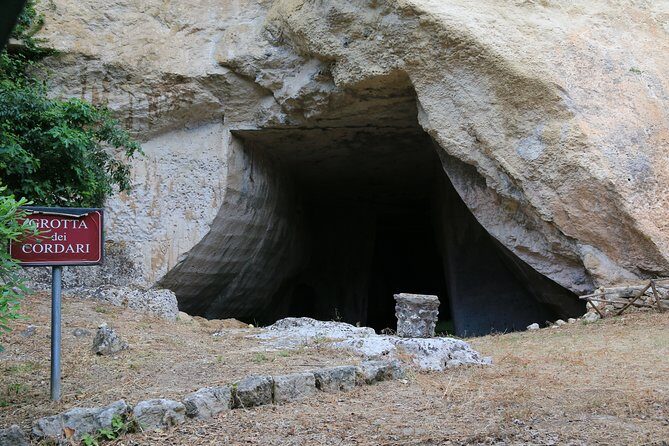
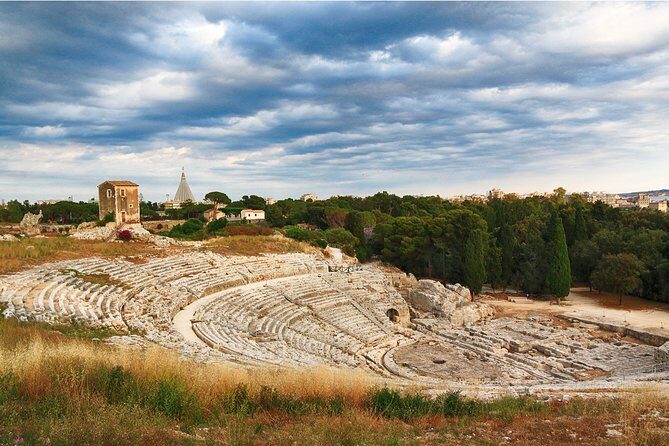
Then you’ll visit the Greek theatre. Plan for about 30 minutes. The guide explains archaeological details and talks about the history and use of the theatre. This is one of the key “why Neapolis matters” moments, because Greek and Roman architecture are not just pretty stone. They show how power, culture, and public life were designed to work.
Here’s the heads-up you should actually care about: during the period of the shows, usually spring and summer, the theatre is covered and only partially visible. If you are planning for maximum photo views, adjust expectations. You may still get strong understanding from the guide, but visually the theatre could be less dramatic than you imagined.
If you can choose dates, traveling outside that show season usually means a more complete view. If not, go anyway—just let the guide’s explanation do the heavy lifting when visibility is limited.






Ara di Ierone: a short stop that gives bigger meaning
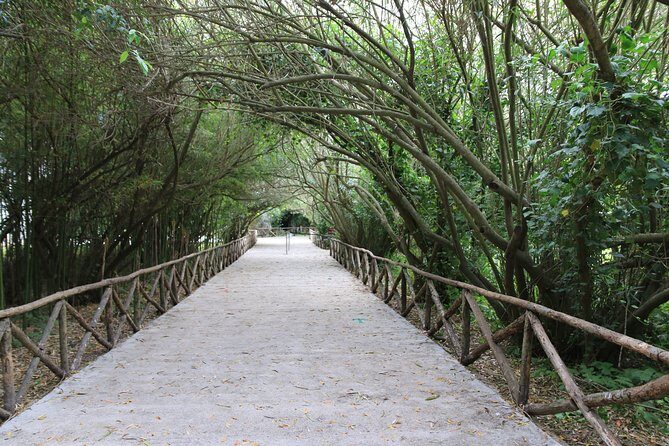
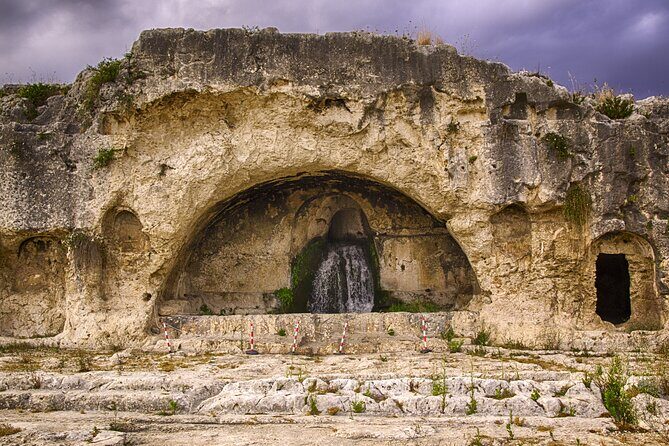
Ara di Ierone is next, with about 10 minutes for a guided look at this suggestive monument and its history. This part of the tour is brief, but it helps connect the architecture to the city’s meaning. Small stops like this are often what prevent a tour from turning into a pile of separate photos.
The practical upside: it fits well into a timed route. You’re not waiting around for long explanations at every site. You get a clear moment, then you move on.
Syracuse Roman Amphitheater: when the story shifts into Roman hands
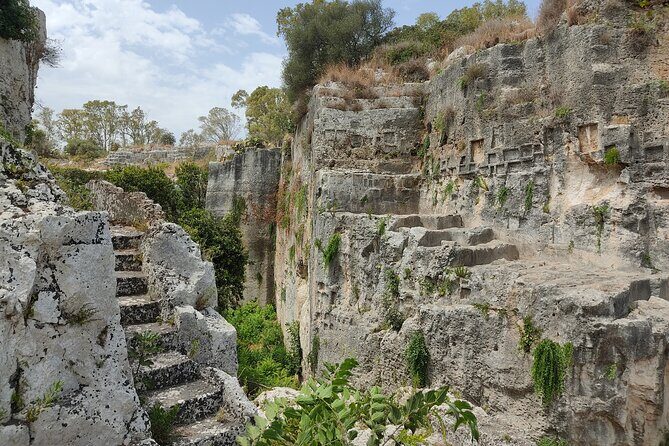
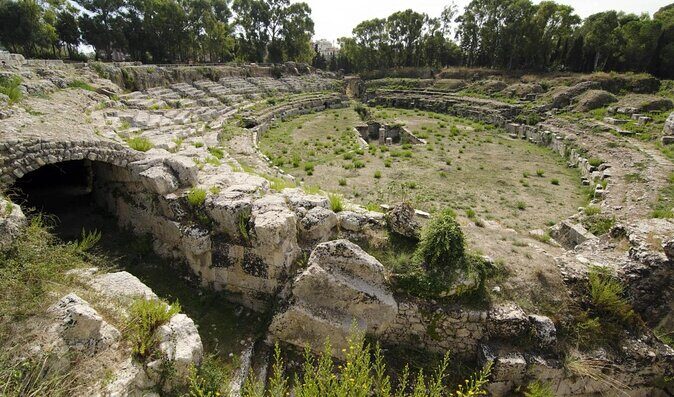
After the Greek theatre, the route shifts into Roman Syracuse with a guided visit to the Roman amphitheater. This segment runs about 20 minutes. Even without deep technical details, it’s a valuable transition. You start noticing differences in how these public spaces were used and how the city evolved.
This stop also works well if you like comparison. Greek theatre and Roman amphitheater are two different design languages, and having both explained back-to-back makes it easier to understand what you’re seeing.
Admission for this amphitheater is listed as free during the tour, so again you’re not adding extra costs mid-route.
Latomia del Paradiso: quarry gardens, plus a real walking moment
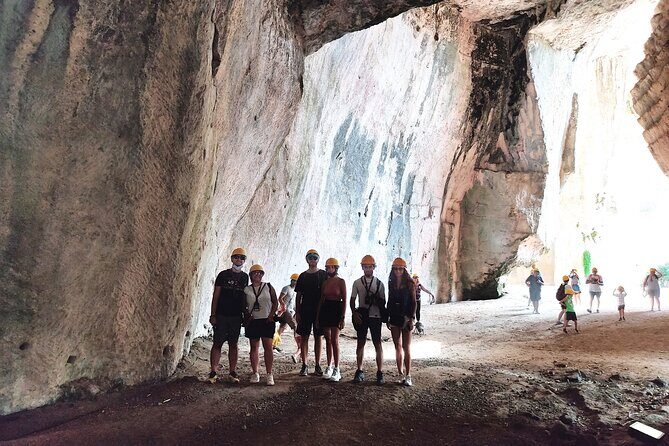
The last stop is Latomia del Paradiso, with about 20 minutes for a panoramic and guided walk through the gardens of the ancient stone quarry. This is where the tour slows into a more scenic rhythm. Instead of standing and looking, you’re walking with viewpoints.
This segment is especially good for photos and for taking a breath. It also rounds out the “ruins only” feeling. Neapolis is not just stones and seats. It’s also an outdoor space shaped by quarrying and then turned into gardens and viewpoints.
Wear comfortable shoes. You’re doing a guided walk, not a sit-down visit. Even if you’re not “hiking,” the terrain and steps can still add up over a short day.
Guides matter: Federica, Eva, Gaetano, and Sebastiano set the tone
What makes this experience work is the human part. The guides leading this Neapolis route—people like Federica, Eva, Gaetano, and Sebastiano—are known for clear pacing and storytelling that stays understandable even without Italian.
I also like the way guides on this route manage crowds. If your visit happens on a busy day, having a guide who can steer you around the worst pressure points can turn chaos into calm.
When the guide adds small details—like noticing plants and trees—you end up with a fuller feel for the site. It is not just about naming buildings. It is about understanding what kind of place this was and what it looks like today.
Price and tickets: what you’re paying $26.43 for
At $26.43 per person, the price is competitive for a guided, timed, multi-stop experience. Here’s the part to double-check before you go: the entrance ticket is not included (unless you select the tour + ticket option).
In practice, that means you may need to buy the park admission ticket separately. Once you’re in, the other listed stops are shown as free admissions within the tour context: Ear of Dionysius, Greek theatre, Ara di Ierone, Roman amphitheater, and Latomia del Paradiso. So you’re not paying multiple entry fees on the fly.
That structure can be a value win if you’re the type of person who likes certainty: buy the park ticket once, then enjoy the guided pass through the highlights. If you hate ticket logistics, choose the tour + ticket bundle if it’s available at checkout.
Timing, weather, and booking smart
On average, this tour is booked about 20 days in advance. That tells you two things: it fills up, and you should not wait until the morning of if your dates are fixed. With a max of 15 travelers, availability can tighten quickly.
Weather matters here. The tour requires good weather, and if it is canceled for poor conditions, you’ll be offered another date or a refund. So plan this for a day when you’re not already committed to fragile outdoor-only plans.
If you’re visiting in spring or summer, plan around the theatre coverage issue. You can still get a great experience, but your expectations for full visual openness at the Greek theatre should be flexible.
Who this tour is best for
This is a great pick if you:
- Want a guided overview of Neapolis without spending half a day getting oriented alone
- Prefer English explanations and like following along with a radio guide
- Enjoy comparing Greek and Roman public spaces in one outing
- Are okay with a short, guided walk at Latomia del Paradiso
It is also a solid option for people traveling with varied ages, because the guide style tends to keep the pace friendly and the stories clear. Service animals are allowed, which is useful to know when planning.
If you’re the type who wants to wander slowly and linger at every corner for hours, you might feel the time limits. But for most first-time Syracuse visitors, this tour hits the sweet spot.
Should you book this Neapolis guided tour?
I’d book it if your goal is clarity and highlights in a short window. The mix of Greek theatre, Roman amphitheater, the Ear of Dionysius cave, and Latomia del Paradiso makes the tour feel like a real “route,” not a random set of stops. Add the radio guide, the small group size, and English narration, and you get a solid value for $26.43—assuming you handle the park admission ticket correctly (or pick the tour + ticket option).
I would think twice only if your trip is locked into spring or summer and you’re specifically counting on a fully open, visually dramatic Greek theatre. Even then, you can still enjoy the explanation and the overall Neapolis sweep. It just won’t match a best-case viewing scenario.
FAQ
How long is the Neapolis archaeological park guided tour?
It lasts about 1 hour 30 minutes (approx.).
How much does the tour cost?
The price is $26.43 per person.
Is the tour offered in English?
Yes, it is offered in English.
How big is the group?
The tour has a maximum of 15 travelers.
Do I need a park entrance ticket?
The admission ticket is not included for the park at the start, unless you choose the tour + ticket option.
Are the other sites included without extra admission?
For the listed internal visits during the tour (Ear of Dionysius, Teatro Greco, Ara di Ierone, Syracuse Roman Amphitheater, and Latomia del Paradiso), admission tickets are marked as free.
What meeting point should I use?
Meet at Largo Anfiteatro, 2, 96100 Siracusa SR, Italy. The tour ends back at the meeting point.
Is the radio guide included?
Yes, a radio guide is included so you can follow the guide even remotely.
What if the Greek theatre is covered during shows?
During the show period, usually spring and summer, the Greek theatre is covered and only partially visible.
Can I cancel if plans change?
Yes. You can cancel for a full refund up to 24 hours in advance. Weather cancellations due to poor conditions also lead to an offered different date or a full refund.