REVIEW · SICILY
Classical Syracuse – Half day guided tour
Book on Viator →Operated by Serena Guida turistica Siracusa · Bookable on Viator
Ancient ruins with practical guidance always beats wandering alone. This half-day tour is built around the Neapolis UNESCO site and the island of Ortigia, with a guide keeping you on track through big names like the Greek Theater and Ear of Dionysius. I especially like how the route pairs major archaeology with real city landmarks, so the history doesn’t feel like disconnected stops.
Two things I also really appreciate: you get a guided walk through the key sites in Neapolis, and then you shift to Ortigia’s highlights like the Cathedral area and Fonte Aretusa. The main consideration: admission tickets and food aren’t included, and the schedule is weather-dependent, so you’ll want sturdy shoes and a little flexibility.
You’ll finish near Arethusa Spring, with your route ending in the oldest part of town. It’s a private setup for up to 15 people, and you’ll use a mobile ticket—handy when you’re moving fast.
In This Review
- Key highlights worth your time
- Neapolis: how to see the big names without getting lost
- Greek Theater and the Amphitheater contrast
- Latomie del Paradiso and Ear of Dionysius
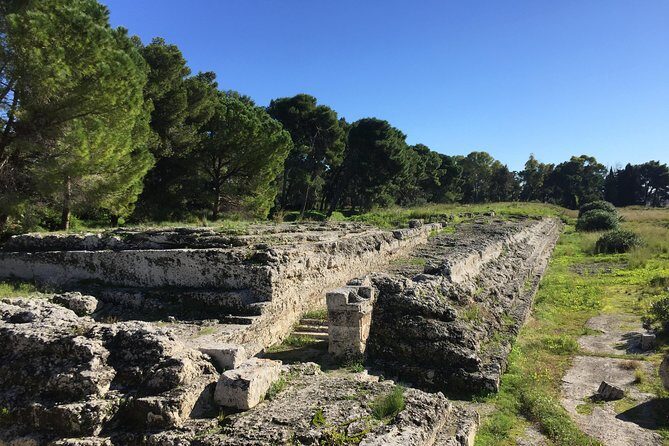
- Ara of Hieron II: a “less famous” highlight
- Papyrus Oasis: why you’ll like the pace change
- Ortigia: the island walk that feels like a city museum
- Temple of Apollo and Cathedral area
- Santa Lucia alla Badia and the Caravaggio painting
- Fonte Aretusa: the ending you’ll remember
- Price and value: what $238 per group really means
- Timing and logistics that actually matter
- Who this tour fits best
- Should you book?
- FAQ
- How long is the Classical Syracuse half-day guided tour?
- Where does the tour start?
- Where does the tour end?
- What is included in the price?
- What is not included?
- Does the tour use a mobile ticket?
- Is admission included for the sites?
- What happens if weather is poor?
- Can I cancel for a full refund?
Key highlights worth your time
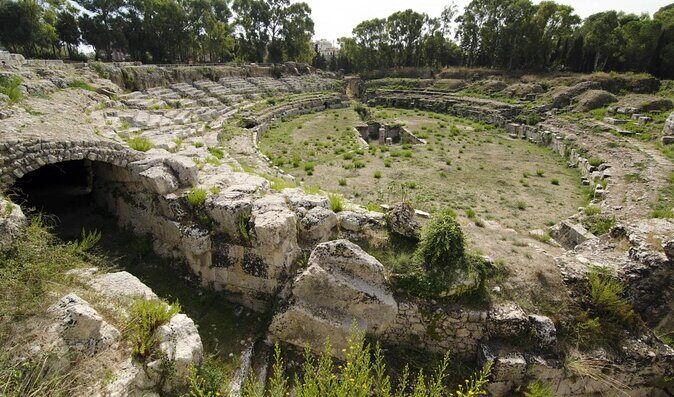
- Neapolis UNESCO focus: Greek Theater, Latomie del Paradiso, Ara of Hieron II, and the Roman Amphitheater
- Ear of Dionysius moment: one of the most distinctive stops in the whole area
- Papyrus Oasis + small zoo: a calmer change of pace after the big ruins
- Ortigia walking route: Temple of Apollo, Cathedral area, Santa Lucia alla Badia, and Fonte Aretusa
- Private group up to 15: a more personal rhythm than a giant bus tour
Neapolis: how to see the big names without getting lost
Start at the Neapolis Archaeological Park. This is where Siracusa stops being a normal city and turns into an open-air timeline. You’ll have a guide with you for the core sights, which matters because this area is spread out and easy to mis-sequence if you’re on your own. The tour route is designed to group the major monuments into a logical path.
The star cluster here is the classic mix of Greek and Roman use of space—same terrain, different eras, different storytelling. That’s why I like a guided approach: you get the “what you’re looking at” context as you walk, so each stop clicks into the next.
You can also read our reviews of more guided tours in Sicily

Greek Theater and the Amphitheater contrast
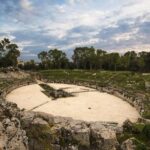
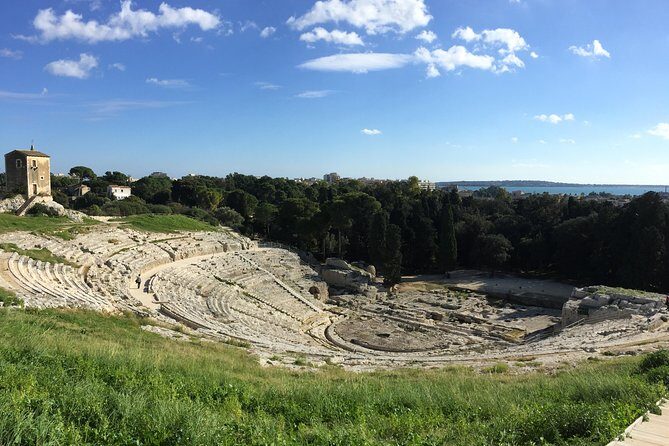
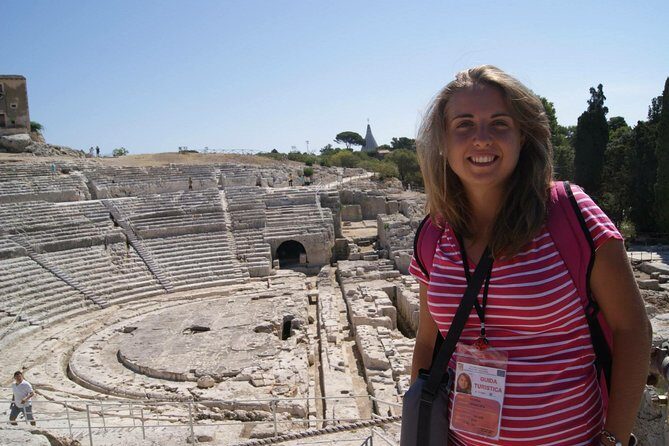
The visit includes the Greek Theater and the Roman Amphitheater. Even if you’ve seen other theaters around Italy, this pairing is useful because it shows how later cultures reused and adapted a performance space rather than starting from scratch. You’ll likely notice how the design choices reflect the era’s priorities—Greek public spectacle on one hand, Roman scale and engineering on the other.
Practical tip: go slow on the steps and look back along the structure once or twice. The park is part of the experience, and taking a moment helps you connect the site layout to the views.
Latomie del Paradiso and Ear of Dionysius
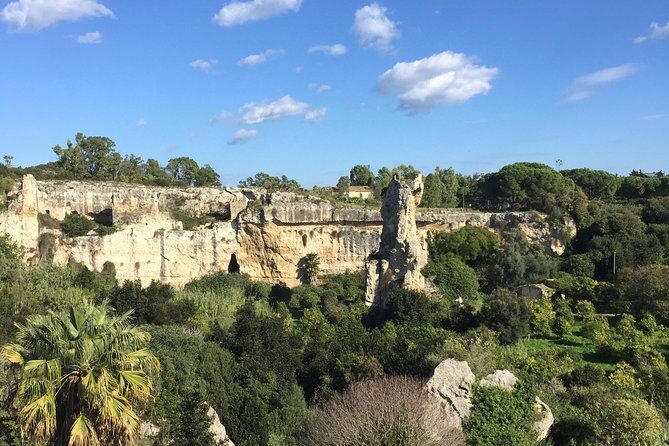
One of the most memorable parts is the Latomie del Paradiso and the Ear of Dionysius. These quarry-cave settings create a totally different mood from the open-air theaters. The “ear” stop is especially striking because it turns a weird underground feature into something you can understand through a guide’s explanation.
This is also where you feel why the tour lasts long enough to be satisfying. A quick photo stop usually doesn’t cut it with places like this; you need time to process the space.
Ara of Hieron II: a “less famous” highlight
The Ara of Hieron II is included, and that’s a good sign. It’s the kind of site that often gets skipped if a tour is only chasing the most Instagram-friendly spots. Having it on the route helps you round out what Neapolis was about beyond theaters and caves.
If you’re the type who enjoys when a tour shows you more than the obvious, you’ll appreciate that the itinerary includes this “in-between” highlight.
Papyrus Oasis: why you’ll like the pace change
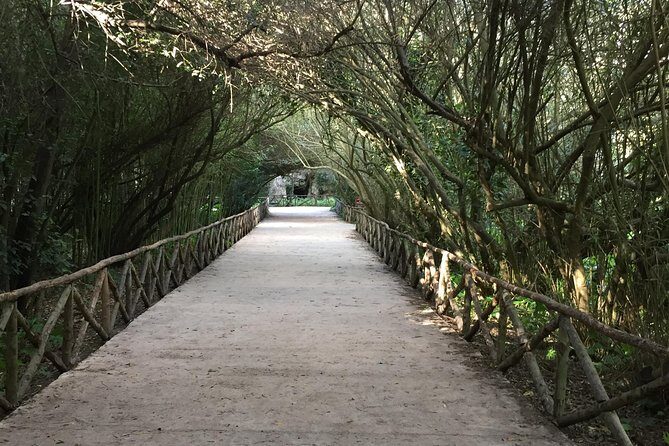
After the main archaeology sequence, the tour includes a transfer on foot to the Papyrus Corner. Then you get a guided visit to the Oasis and Small Zoo, which is a meaningful shift in pace.
This part is valuable for two reasons. First, it breaks up the heavier walking and heat that come with archaeological parks. Second, it gives you a different kind of setting—still outdoors, but calmer and more varied than stone monuments.
If you’ve been in-and-out of ruins all morning, this is where your body and brain get a rest. And because it’s included, you don’t have to figure out how to slot it into a separate plan.






Ortigia: the island walk that feels like a city museum
The second half of the tour moves to Ortigia, Siracusa’s historic core. Here, the vibe changes quickly: from archaeological park paths to lively streets and famous buildings close together. The guide route starts around the Temple of Apollo, then continues to key religious and civic landmarks.
Temple of Apollo and Cathedral area
You’ll begin at the Temple of Apollo and continue to the Cathedral. This part matters because Ortigia is where you see how ancient and medieval layers overlap. You can stand near the ancient structure and then watch the city’s later identity take over around it.
A walking tour helps here because the architecture becomes more meaningful when you see it from different angles instead of just from one street corner.
Santa Lucia alla Badia and the Caravaggio painting
The itinerary includes the Church of Santa Lucia alla Badia, known for a Caravaggio canvas. This is one of those stops where your guide’s explanation can help you appreciate what you’re seeing without turning it into a lecture.
Even if you’re not a die-hard art fan, this is still worth it because it adds a different kind of cultural weight: not just ruins, but a strong tradition of visual art in a working city.
Fonte Aretusa: the ending you’ll remember
The tour finishes near Fonte Aretusa, the legendary spring. It’s included on the route, and it’s a great place to end because it’s easy to keep exploring from there afterward, without forcing yourself into a new “getting oriented” phase.
This is also one of those spots where the setting helps the story. You’ll likely find yourself pausing more than you planned, just to take in the atmosphere.
Price and value: what $238 per group really means
The price is listed as $238.17 per group (up to 15 people), and it’s a private tour/activity. That pricing structure changes the math. If you’re traveling as a small group, this can be a smart way to spread the cost and still get a guide through two very different areas.
But if you’re going solo or as a couple, the “per group” price can feel steep because the cost doesn’t shrink unless you’re splitting it with others. Also note: tickets aren’t included, along with food and transfer costs. That’s normal for many guided experiences in Sicily, but it’s important for planning your total day budget.
My practical advice: treat the base price as the guide-led experience, then add whatever admission fees you’ll pay once you’re on-site. You’ll get a clearer picture of the real total cost before you commit.
Timing and logistics that actually matter
The tour is about 3 hours 30 minutes. Neapolis gets around two hours, and Ortigia gets about one hour, with walking between parts. That split is realistic for a guided half-day: enough time to see major highlights, but not so long that it becomes exhausting.
The meeting point is at the Neapolis Archaeological Park (Via Luigi Bernabò Brea, 14, Siracusa). The end is at Arethusa Spring (Largo Aretusa). Since you end in Ortigia’s neighborhood, it’s an easy base for continuing your own wandering after the tour.
Weather matters here. The tour requires good weather, and it can be rescheduled or refunded if conditions are poor. If you’re planning around this tour, pick dates with decent forecast odds and bring something for sun or light rain just in case.
One more practical note: if you book through a third-party channel, I recommend you confirm the day-of details in writing—meeting time and meeting point. A tour that doesn’t start on time can turn archaeology into frustration fast.
Who this tour fits best
This is a great fit if you want a structured introduction to Siracusa in half a day. You’ll likely enjoy it most if:
- you want a guide to connect the Greek and Roman sites with modern-day Ortigia landmarks
- you like efficient routes that still include meaningful stops (not just quick photo moments)
- you’re traveling with a small group and want a private pace
It’s also ideal if you’re short on time. If you’re spending only one day in Siracusa, this gives you the two main “must-see” zones: Neapolis and Ortigia.
Should you book?
I’d book this tour if you value guidance and want your time in Siracusa to feel organized. The route covers major sites in Neapolis, then transitions smoothly into Ortigia’s city highlights, with a nice change of pace at the Papyrus Oasis.
I’d think twice if you’re traveling with no flexibility on ticket costs or weather constraints, because admissions and some expenses aren’t included. Also, if you hate walking, the itinerary includes walking between areas, so plan footwear accordingly.
If you’re ready for a focused, half-day route that ends in a beautiful place to keep exploring, this one is a strong choice.
FAQ
How long is the Classical Syracuse half-day guided tour?
It’s approximately 3 hours 30 minutes.
Where does the tour start?
The meeting point is Neapolis Archaeological Park, Via Luigi Bernabò Brea, 14, 96100 Siracusa SR, Italy.
Where does the tour end?
The tour ends at Arethusa Spring, Largo Aretusa, 96100 Siracusa SR, Italy.
What is included in the price?
Included are the tour guide, Papyrus Oasis, and a travel agent.
What is not included?
Food, tickets, and transfer are not included.
Does the tour use a mobile ticket?
Yes, the tour features a mobile ticket.
Is admission included for the sites?
No. The listed entry includes admission ticket not included for the Neapolis portion.
What happens if weather is poor?
The tour requires good weather. If canceled due to poor weather, you’ll be offered a different date or a full refund.
Can I cancel for a full refund?
Yes. You can cancel up to 24 hours in advance for a full refund.