REVIEW · CATANIA
Trekking at 3000 meters on Etna
Book on GetYourGuide →Operated by ETNA QUAD E TREKKING · Bookable on GetYourGuide
Etna at 3000 meters hits different. This day trip climbs by cable car and then turns into real crater trekking with alpine and volcanology guides who focus on safety and the science.
I especially like how the route mixes big-time views with hands-on geology. And when the wind picks up, you’ll understand why the guides keep pace and footing in check.
What I love most is the walking itself: you move across recent lava flows and then step into parts of the 2002 system that shaped the ground you’re standing on. It’s visually wild, and it also teaches you how Etna actually erupts.
The main drawback? This is not a casual stroll. You’re at high altitude, on rough volcanic terrain, often in strong wind, and the tour isn’t suitable if you have vertigo, breathing issues, heart problems, or problems with altitude tolerance.
In This Review
- Key points to know before you go
- The cable car start: why it changes the whole day
- Walking the 2002 lava flows: where the science turns physical
- Entering the effusive crater of 2002 and the lava channel
- The climb toward the explosive craters: edging closer to the summit
- Belvedere della Valle del Bove: the big ancient view
- Skirting the Laghetto cone and returning smoothly
- Price and value: what $59 buys (and what doesn’t)
- Gear that actually helps at 3000m
- Who the guides are worth listening to
- Fitness reality check: moderately exhausting is the truth
- Is this tour right for you?
- Should you book this Etna 3000m Craters excursion?
- FAQ
- How long is the Etna Craters excursion at 3000 meters?
- What’s included in the price ($59 per person)?
- Is the return cable car ticket included?
- Where do I meet the group?
- What languages are the guides?
- What should I wear or bring?
- Who should avoid this excursion?
Key points to know before you go
- Cable car rise to 2,500m first, so you start the hike at real altitude instead of wrestling uphill from sea level
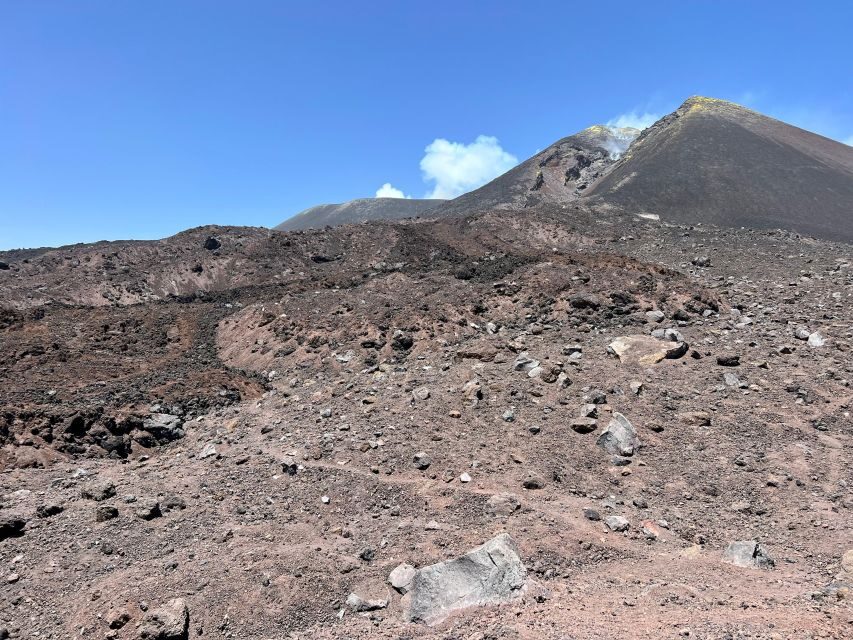
- Trekking on 2002 lava across fresh, dramatic terrain that makes Etna’s recent history feel immediate
- A guided walk inside a 2002 lava channel gives you a rare, close-up look at how eruption flow forms the landscape
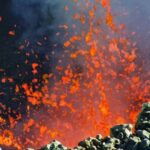
- Explosive crater edge views where you can admire summit craters up close and spot the latest lava activity
- Belvedere della Valle del Bove outlook for a big-picture view of an ancient eruptive caldera
- Fit matters: plan for 4–5 hours of walking effort at altitude, in wind, with the right gear
The cable car start: why it changes the whole day
The excursion begins with a cable car ride from about 1,900 meters up to roughly 2,500 meters. That one decision makes the hike feel different from many “climb to a view” tours. Instead of spending your energy grinding uphill, you save your legs for the crater section, where the walking is actually interesting.
From your perspective, it means you get to spend more time at the elevations where Etna’s features show clearly: the texture of the lava, the shapes of the cones, and the way the terrain rises and falls around the crater systems. From the tour’s perspective, it also helps the guides manage the group’s energy and timing.
One thing I’d plan for: even if the ride is comfortable, the air at higher elevations can feel sharper. Bring layers and the wind gear they provide, and treat the first part like a warm-up for what comes next.
You can also read our reviews of more hiking tours in Catania
Walking the 2002 lava flows: where the science turns physical
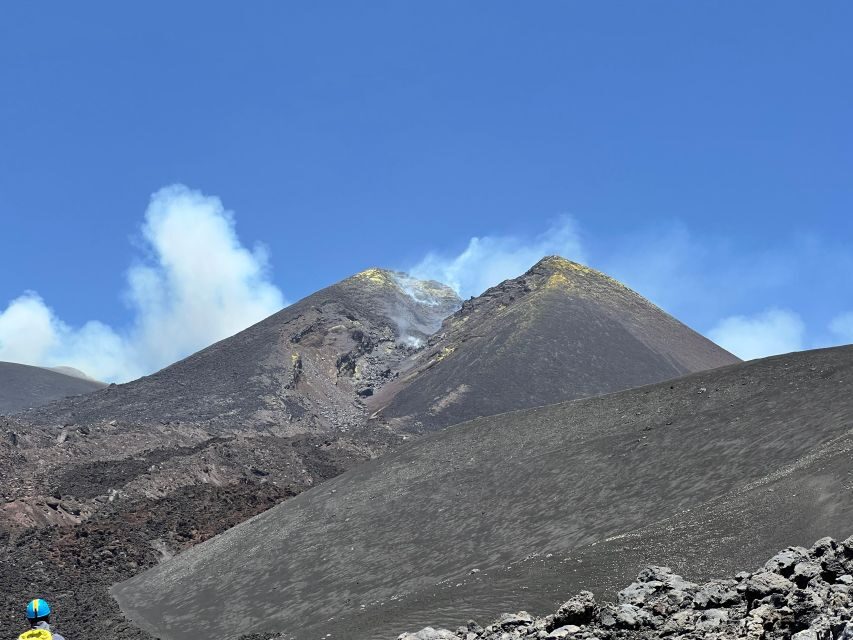
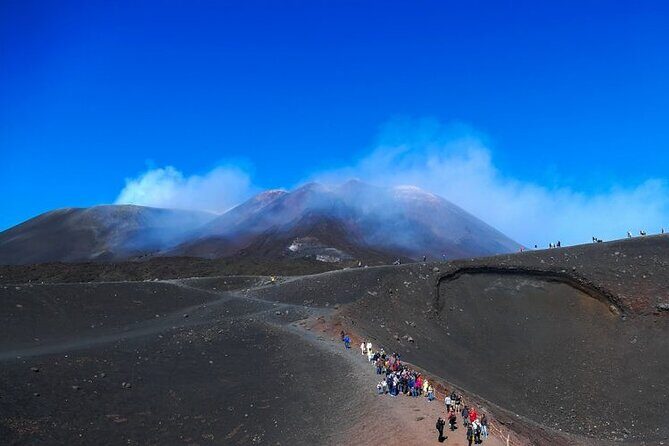
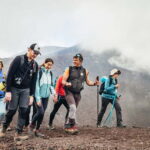
Once you reach around 2,500 meters, you start walking to the north-west on lava erupted during the 2002 eruption. This is the part where Etna stops being a view and becomes a walking textbook.
You’re not strolling on a trail that existed before the eruption. You’re moving across volcanic ground that formed recently in geologic terms. Lava flows have their own “rules”: uneven surfaces, sharp bits, and places where the flow hardened in ridges or channels. The guides matter here because good footing and controlled steps keep the experience safe and comfortable.
If you’re the type who likes to understand what you’re seeing, this section is satisfying. You’ll feel how the lava’s movement created the ground under your boots. And if you just want the drama, it still delivers: the textures, the slopes, and the sense of scale are hard to beat.
Entering the effusive crater of 2002 and the lava channel
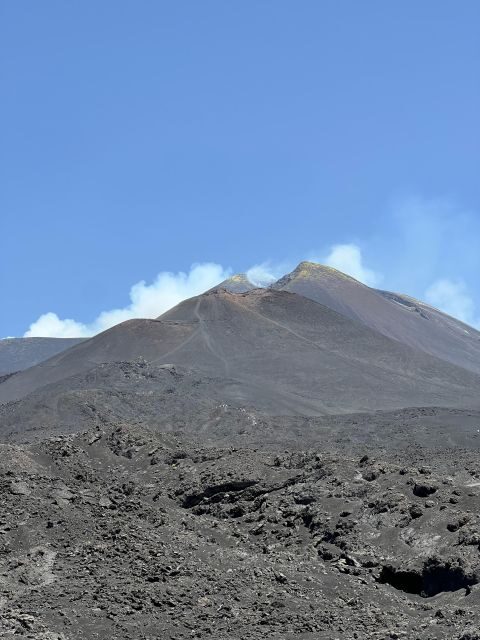
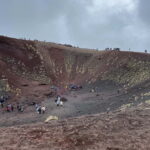
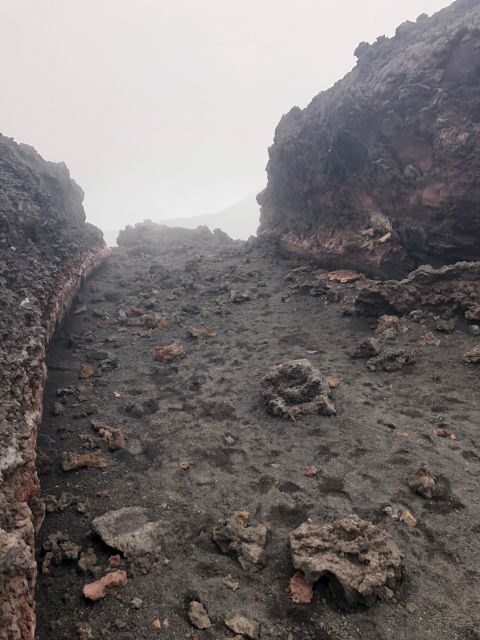
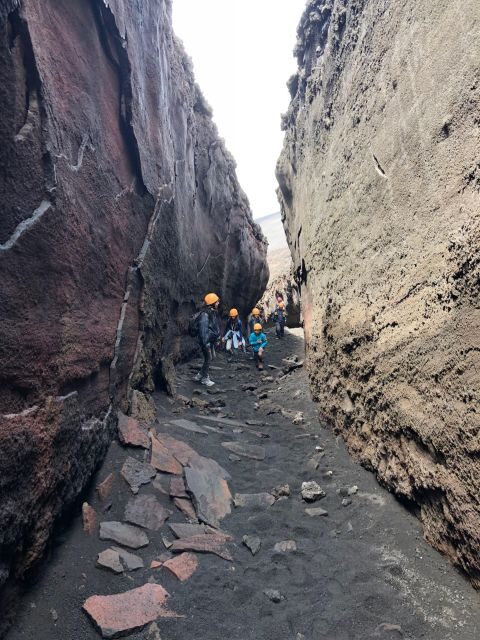
Around 2,700 meters, the route brings you into the effusive crater of 2002, including a walk inside a lava flow channel created during that eruption. This is one of the most compelling moments in the whole day because you’re seeing eruption mechanics up close.
Inside a lava channel, the ground is shaped by flow behavior: where material pooled, where it traveled, and how the system hardened. You get a tighter, more enclosed sense of how an eruption shapes the “plumbing” of the volcano, not just the final big pile of rock.
There’s also a practical side. Walking in these areas can feel more demanding than it looks from above. The surface can be uneven and the footing requires focus. This is where the supplied trekking poles, the high-collar hiking shoes, and your own pace discipline become real comfort tools, not just add-ons.
The climb toward the explosive craters: edging closer to the summit
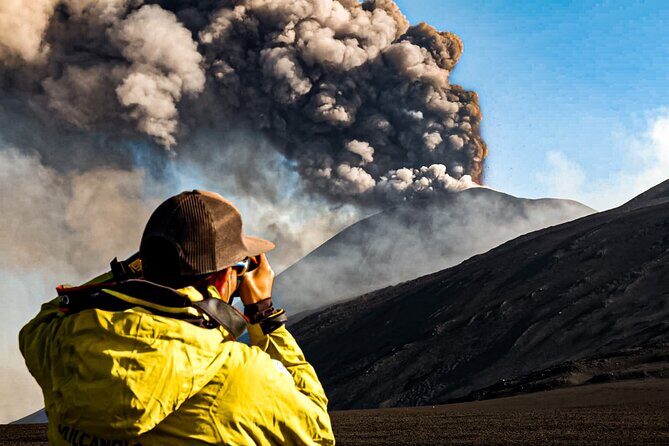
After a short break, the climb continues until you reach the highest point of the explosive craters formed in 2002 on Etna’s southern slope. From here, the experience shifts from “walk through volcanic forms” to “stand where explosions happened.”
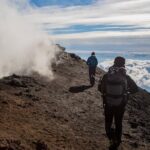
You’ll be able to walk along the crater edge and then admire the Summit Craters up close, including the latest lava flows visible from that vantage. This is the moment many people remember because you’re not watching Etna from far away. You’re seeing it as an active system with visible results.
Two practical tips for this section:
- Let the guide set the pace. High altitude plus uneven terrain can make you feel slower than normal.
- Protect your eyes. Sunglasses matter, and so does the wind layer, even when the sun is out.
If the day is clear, this is the pay-off segment. If clouds roll in, you’ll still get the crater geometry and the walk itself, but the “wow” factor changes.
Belvedere della Valle del Bove: the big ancient view
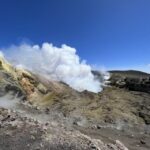
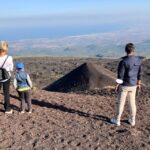
Next comes the stretch through moon-like volcanic terrain, leading to an overlook of the Belvedere della Valle del Bove, tied to ancient eruptive centers. This is where the tour balances the recent history (2001–2002 activity) with the older architecture Etna built over time.
What I like about this shift is that it gives you context. After walking through the 2002 formations, you suddenly look out and realize you’re inside a much larger volcanic system. The caldera viewpoint helps you connect today’s cones and craters to the long-term evolution of the volcano.
It also tends to be a good place to slow down mentally. Take a minute to look for how the terrain folds back on itself. Etna can look like a chaotic jumble of rock until you start seeing the patterns, and this viewpoint is one of the easiest ways to make those patterns click.
Skirting the Laghetto cone and returning smoothly
The route continues by skirting the eruptive cone of the Laghetto Crater, born with the 2001 eruption. Then you reach the cable car terminal that brings you back comfortably to the starting point.
This last segment matters because it keeps you moving through the volcano’s “latest important lateral activities,” not just ending after the most dramatic crater edge. You get to connect more dots across different eruption years, which makes the day feel like a coherent story rather than disconnected stops.
When the cable car ride starts, you’ll feel it in your legs. You’ll likely be tired in a satisfying way. If you’ve been using poles and keeping your effort steady, the descent by cable car feels like a well-earned reset instead of a relief you didn’t properly plan for.
Price and value: what $59 buys (and what doesn’t)
The tour price is $59 per person, and for Etna, that’s a pretty straightforward way to buy into guided crater trekking. Here’s what you get in that core price: volcanology or mountain guide service plus a package of trekking support gear.
Included gear can make a real difference. You get hiking shoes with high collar, new socks, a windbreaker, trekking poles, a protective helmet, and a bit of food discount (20% off sandwiches, snacks, and drinks). For many visitors, that reduces the hassle of packing equipment that’s specific to altitude hiking and windy volcanic terrain.
The big extra cost to plan for is the return cable car ticket, listed at €52 and not included. That’s a meaningful chunk, so do the math early and don’t assume the full “up and back” is already paid.
Still, even with the cable car cost, what you’re paying for is safety-led crater trekking with expert guidance. Etna isn’t the place to “wing it,” and having guides trained in volcanology is part of why this experience feels higher quality than a generic hike.
Gear that actually helps at 3000m
You’ll be given gear, but you should still show up properly dressed. The recommended equipment list includes long pants, a cap, gloves, sunglasses, protective creams, and a scarf.
Here’s how I’d interpret that list in plain terms:
- Gloves and scarf are about wind chill. At altitude, wind can steal warmth fast.
- Sunglasses protect your eyes from brightness and dust-like conditions that can happen on volcanic ground.
- Protective creams are sun armor. Even if you think it’s cool, sun at altitude can still get you.
One review detail that seems spot-on: wind can be strong. The included windbreaker helps, but your personal layers still matter.
Also, don’t underestimate the walking shoes requirement. High-collar support helps on uneven surfaces and on lava ground where footing can shift under your weight. If you have your own hiking shoes that fit perfectly, you can still consider using them, but the included option is there for a reason.
Who the guides are worth listening to
The tour runs with live English and Italian guides, and you’ll be walking with qualified alpine and volcanological professionals. You can feel the difference when a guide doesn’t just point and talk, but actually manages safety, pacing, and group flow.
In particular, I’ve seen a pattern of guides like Giuseppe, Antonio, Edo, and Mario being praised for being friendly and passionate, and for adjusting tempo so everyone reaches the summit point. That matters because crater hiking isn’t only about strength. It’s about pacing your breathing, choosing stable steps, and staying comfortable enough to enjoy what you’re seeing.
If you’re the kind of person who likes asking questions, this is a good fit. The route is full of geology cues, so a guide’s explanations can turn the hike into something you remember intellectually, not just visually.
Fitness reality check: moderately exhausting is the truth
The tour is described as moderately exhausting, and the 4–5 hour walking effort at high altitude makes that make sense. Even if you hike regularly, 3000 meters changes how your body feels.
Plan for:
- High altitude exertion
- Uneven volcanic terrain
- Wind exposure
- Time on your feet moving between crater zones
This excursion is not suitable for children under 6, pregnant women, and people with mobility impairments, heart problems, vertigo, respiratory issues, epilepsy, visual impairment, altitude sickness, or high blood pressure. It’s also not for people with low fitness, and it’s not recommended for people over 95.
If any of those apply, don’t treat the “moderately exhausting” label as a soft suggestion. On Etna, conditions can be unforgiving, and the goal is to keep everyone safe.
Is this tour right for you?
This is a great choice if you want a guided day on Etna that focuses on crater terrain and the story behind it. It’s especially suited to:
- People who like geology and want to connect eruptions to what they can walk on
- Hikers comfortable with uneven ground and altitude effort
- Travelers who prefer guided structure over wandering
- Anyone who appreciates a safety-first approach and clear pacing
It might not be your best match if you want an easy walk, if you hate wind, or if you need fully accessible routes.
If you’re deciding between Etna experiences, this one stands out because it’s not just a viewpoint. You’re inside the volcanic systems—on lava, in channels, and along crater edges.
Should you book this Etna 3000m Craters excursion?
Book it if you’re excited by crater trekking and you’re willing to handle altitude hiking with wind and rocky terrain. The included gear and poles reduce headaches, and the guide focus on volcanology makes the day feel meaningful, not random.
Skip it if you know altitude will hit you hard, if medical conditions apply, or if you’d rather do a less strenuous option. On Etna, comfort and safety come first.
If you’re ready for a strong walking day and want to experience the volcano’s recent history up close, this excursion is a smart pick.
FAQ
How long is the Etna Craters excursion at 3000 meters?
It’s a 1-day experience, and the guided walking portion is described as about 4 hours including scenic views on the way.
What’s included in the price ($59 per person)?
The tour includes volcanological or mountain guide service, plus hiking shoes with high collar, new socks, a windbreaker, trekking poles, a protective helmet, and a 20% discount on sandwiches, snacks, and drinks.
Is the return cable car ticket included?
No. The return cable car ticket is not included, and the cable car journey costs €52.
Where do I meet the group?
You meet at Bar Ristorante Crateri Silvestri, and you need to enter inside the bar.
What languages are the guides?
The live tour guide is available in English and Italian.
What should I wear or bring?
Bring or plan for long pants, a cap, gloves, sunglasses, protective creams, and a scarf. The tour also provides trekking footwear and other gear.
Who should avoid this excursion?
It is not suitable for children under 6, pregnant women, people with mobility impairments, heart problems, vertigo, respiratory issues, epilepsy, visual impairment, altitude sickness, high blood pressure, people with low fitness, and people over 95.