REVIEW · SICILY
Pantalica nature history and archeology
Book on Viator →Operated by Gregorio Chiarenza · Bookable on Viator
Pantalica is history you can actually walk through. I love how the site blends prehistoric archaeology and real outdoor nature in just a few kilometers, and I love the way the guide ties plants and animals to human use and survival. One thing to consider: the experience depends on good weather, and the 3-hour timing can leave you wanting more time in this huge reserve.
In This Review
- Why this tour works
- A practical heads-up
- Key highlights worth your attention
- Pantalica’s strange magic: UNESCO tombs next to living nature
- The 3-hour format: how a 5 km route still feels full
- Entering the prehistoric core: the Bronze Age necropolis that dominates Europe
- Byzantine villages and rock churches: San Micidiario and San Nicolicchio
- The Anaktoron: imagining a prince’s palace in the XII century BC
- From Greek traces to a railway you can picture: layers after Bronze Age
- Botanical stops: endemic Iblea plants, orchids, and medicinal uses you won’t forget
- Calcinara water and karst caves: the weather-dependent bonus
- Meeting Gregorio Chiarenza: what kind of guide you get
- Price and value: what you get for $85.97
- Who should book this Pantalica hike?
- Practical tips for your morning at Piazza San Sebastiano
- Should you book Pantalica nature history and archeology?
- FAQ
- Where does the tour start?
- What time does the experience begin?
- How long does the visit last?
- How much walking is involved?
- How many people are in the group?
- Is a mobile ticket used?
- Is breakfast included?
- What’s included with the tour besides the guide?
- What if the weather is bad?
- Can I cancel for a full refund?
Why this tour works
The whole outing moves through multiple eras, from 12th century BC power and Bronze Age tombs to later Byzantine rock churches and even a narrow-gauge railway you can still imagine moving through the valley. You also get a botanical focus, including local endemic plants and orchid sightings, plus explanations of medicinal and other uses of many species.
A practical heads-up
Because the walking route tops out at about 5 kilometers and the reserve is outdoors, you’ll want solid shoes and a flexible mindset. If weather or conditions don’t cooperate, the plan can shift (including whether you get a swim or access to cave areas).
You can also read our reviews of more historical tours in Sicily

Key highlights worth your attention
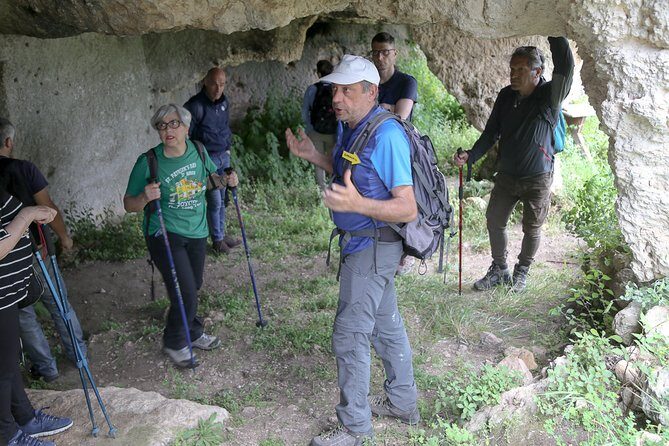
- Largest final Bronze necropolis in Europe with 5,000 artificial cave tombs
- Byzantine rock churches at San Micidiario and San Nicolicchio (4th century)
- Anaktoron, the prince’s palace tied to XII century BC local power
- Botanical stops explaining therapeutic, officinal, and even toxic uses
- Optional break for Calcinara water and active karst cave visits if weather allows
Pantalica’s strange magic: UNESCO tombs next to living nature
Pantalica sits in the heart of the Iblean plateau, where the terrain is carved by the Anapo River and its Calcinara tributary. The reserve sits in a limestone-marl massif from the Miocene era, so even before you reach any ruins you’re already surrounded by geology that explains why caves, rock-cut spaces, and dramatic gorges exist here.
What makes the place special is the mix. Yes, Pantalica is famous for its prehistoric rock tombs, and yes, it’s enormous. But it’s also a hiking environment with a genuine nature feel: plants you can recognize, birds and other wildlife you may notice, and a landscape of limestone walls that guides the eye from one historical layer to the next. I like that you’re not stuck inside a museum where the story is frozen; you move through it, at walking speed.
This is also the kind of UNESCO site where the setting matters. When you understand how the river valleys, rock types, and vegetation work together, the human choices across centuries start to make more sense.
The 3-hour format: how a 5 km route still feels full
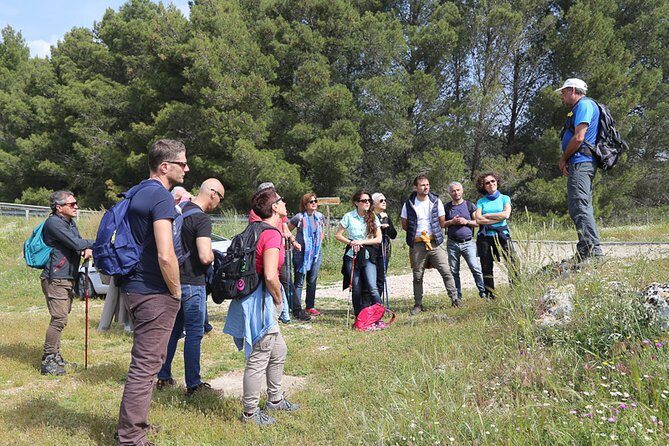
You start at Piazza San Sebastiano in Ferla (with the tour scheduled for 9:30 am), and you end back at the same meeting point. Expect around 3 hours, with a maximum walk length of about 5 kilometers. That’s short enough that families can manage it, but it still gives you time to stop, look, and listen without rushing.
The group is kept to a maximum of 12 travelers. That matters more than it sounds. When the group stays small, you get more natural pacing and more chances to ask questions while you’re standing right next to the rock-cut history.
On the practical side, trekking poles are available on request. If you’ve got knee issues or you simply prefer extra stability on uneven ground, this is worth using.
One more detail I appreciate: the hiking style is described as simple and non-binding. Translation: you’re there for the sites and the explanations, not for training for a marathon.
Entering the prehistoric core: the Bronze Age necropolis that dominates Europe
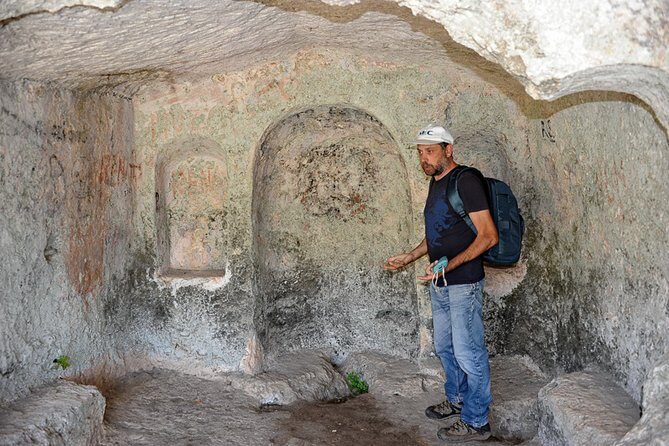
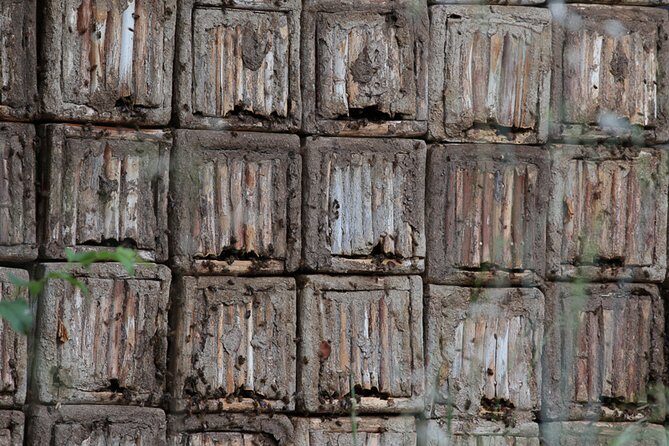
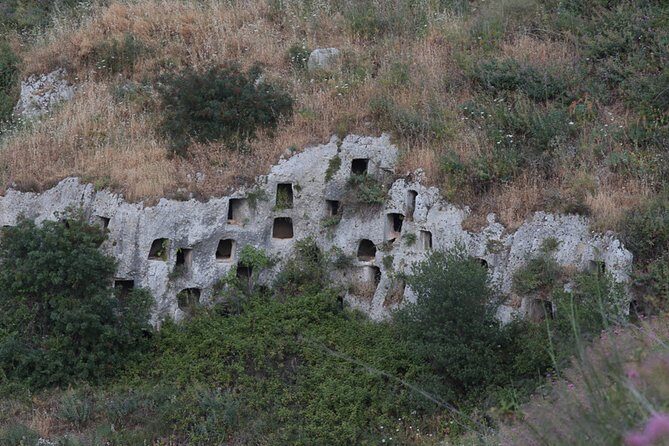
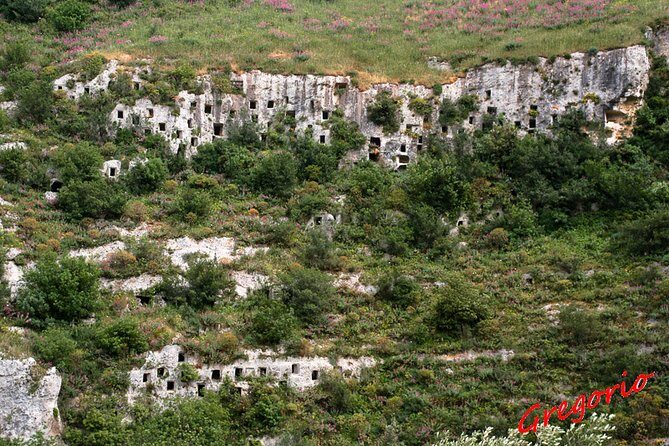
The biggest archaeological focus is Pantalica’s final Bronze Age necropolis. This is the part people remember, and for good reason. You’ll see the largest final bronze necropolis in Europe, built around about 5,000 artificial cave tombs.
What hits you isn’t just the number. It’s the way these tombs carve into the rock and how the necropolis sprawls across the reserve. The guide’s job here is to help you read the site visually: where the space is cut, how the tombs relate to one another, and what it means to build a burial landscape so intentionally.
A useful way to enjoy this section is to slow down when you first arrive, then again about halfway through the prehistoric area. The first pass helps you understand the scale; the second pass helps you understand the pattern.
If you’re into archaeology, this stop gives you a powerful sense of how communities marked place and memory. If you’re more into the outdoors, it’s still fascinating because you’re surrounded by rock walls, plant cover, and the real feel of the valley.




Byzantine villages and rock churches: San Micidiario and San Nicolicchio
After the prehistoric tombs, the story shifts in a way that makes the reserve feel like a timeline you can follow with your feet. You visit the Byzantine villages of San Micidiario and San Nicolicchio, along with 4th-century rock churches.
This is one of my favorite kinds of historical sites: places where daily life and worship happened literally carved into the same stone that held earlier burials. It makes the continuity feel physical. You don’t just learn that Byzantines lived here; you stand in rock-cut spaces that help you imagine how that life would have felt.
A consideration here: rock churches and carved areas can involve steps, uneven footing, and close, echoing spaces. The tour is designed for most travelers, but you’ll still want comfortable shoes and a careful pace.
The Anaktoron: imagining a prince’s palace in the XII century BC
Another key stop is the Anaktoron, described as the prince’s palace and a seat of local power tied to the XII century BC. Even if you’re not a classic history buff, this is a great moment to connect what you’ve been seeing.
You’ve just spent time among burial spaces. Then you’re asked to picture a center of authority. The contrast helps your brain reset from “memory and death” to “power and control,” and it makes the broader human story feel less abstract.
The guide’s interpretation is important here. Sites like this can feel like “ruins” if nobody helps you visualize their purpose. With the right explanations, you start seeing the function behind the stones: where power likely stood, how the structure shaped movement, and why the location mattered in the broader reserve.
From Greek traces to a railway you can picture: layers after Bronze Age
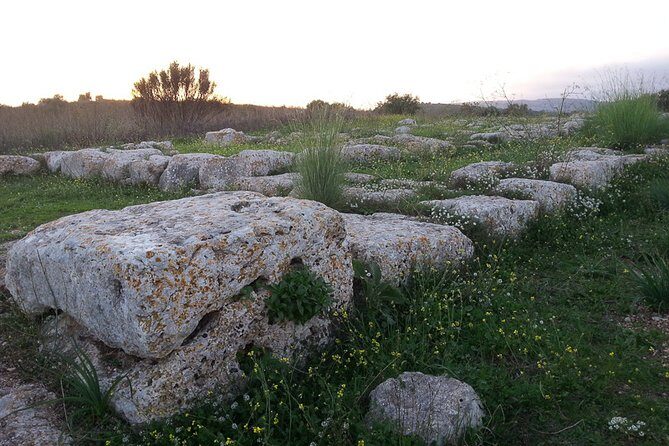
Pantalica doesn’t stop at the ancient high points. You’ll also see remains of a Greek trench, which adds another historical layer to the story. Even the word remains matters here: you’re not always looking at intact structures, and part of the experience is learning to read what’s left.
Then there’s a surprisingly modern-feeling twist. You’ll encounter the narrow gauge railway known as Ciccio Pecora, which was in operation until the last century. That detail helps the reserve feel less like a single era frozen in time and more like a living place people used for practical movement and work over generations.
I find that these later touches do two things. They ground the site in reality, and they show that humans kept adapting the terrain rather than abandoning it.
Botanical stops: endemic Iblea plants, orchids, and medicinal uses you won’t forget
Pantalica isn’t only stone. It’s also a plant-filled walking reserve, and the tour leans into that hard. You’ll encounter Iblea endemic flora, spontaneous orchids, and characteristic plants of Mediterranean scrub.
I like that the guide doesn’t treat plants like a nature slideshow. The tour includes explanations of the therapeutic, officinal, phytoalimurgical, and toxic uses of each plant you meet. That’s a big deal in Sicily, where traditional knowledge often comes from living close to the land.
You may also hear about notable species such as the oriental plane tree, and the reserve’s nature includes fauna highlights too, including the very rare Macrostigma Trout. Even if you don’t spot every creature directly, hearing how rare species exist here adds weight to why the reserve matters beyond tourism.
A good way to enjoy these botanical moments is to listen for patterns. When the guide links plant traits to uses, you start understanding the local logic: which plants offer practical help, which require caution, and why certain species dominate in this kind of limestone environment.
Calcinara water and karst caves: the weather-dependent bonus
If weather permits, you can do two extra nature experiences. First, you might bathe in the cool waters of Calcinara. Second, you may visit an active karst cave in the area.
This is the part of the tour that depends most on conditions, so I recommend you mentally separate the experience into two layers: the history and the walking are the foundation. The water and caves are the add-ons that can make the day feel more personal and memorable.
If you’re planning to swim, go prepared for a quick, practical dip rather than a long beach session. The water is described as cool, and the timing is short because the tour is still centered on the reserve’s key sites.
Meeting Gregorio Chiarenza: what kind of guide you get
The experience provider is Gregorio Chiarenza, and the guiding style is a major part of the value. From what’s described, he blends competence across nature and archaeology with explanations that keep the sites lively. The tone is friendly and sharp, with some humor mixed in.
That matters because Pantalica can feel overwhelming at first: so many tombs, so many historical layers, so many plants. A guide who can explain without turning everything into jargon helps you actually absorb the place.
In particular, the promise is kept: nature, history, and archaeology are all covered, and the day doesn’t feel like it’s cutting one category short to rush through another.
Price and value: what you get for $85.97
At $85.97 per person for about 3 hours, the price is in the reasonable range for a specialist guided hike in a major UNESCO reserve. You’re paying for more than access. You’re paying for someone to help you interpret:
- the scale and meaning of the 5,000 cave tombs
- the specific Byzantine sites at San Micidiario and San Nicolicchio
- the logic behind places like the Anaktoron
- the “why” behind the botanical education and uses
You also get small group pacing (max 12) and a mobile ticket. Trekking poles are included if you request them.
If you were trying to do all of this on your own, you’d need research time and local knowledge to understand what you’re looking at. Paying for a guide is often cheaper than paying with confusion, and that’s what makes this feel like good value.
Who should book this Pantalica hike?
This works well if you want a balanced day: history plus real outdoor nature, with a short enough route (about 5 km max) to keep the day enjoyable instead of exhausting.
It’s especially suitable if:
- you like archaeology but also want plant and ecology context
- you want a small group hike rather than a big bus tour
- you’re traveling with mixed interests (one person into tombs, another into nature)
It’s a weaker fit if:
- you hate walking on uneven ground and prefer fully paved routes
- you’re counting on the swim or cave visit as a guaranteed plan (because weather can change what’s possible)
Good news: most travelers can participate, and service animals are allowed. So the general entry bar is not extreme.
Practical tips for your morning at Piazza San Sebastiano
You’ll begin at Piazza San Sebastiano in Ferla (starting at 9:30 am) and return there. A few smart prep ideas help everything go smoother:
- Wear comfortable shoes you trust on rocky paths.
- Bring water, even though the walk is only about 3 hours.
- If you think you might swim, pack something to change into after.
- If you’re sensitive to sun or heat, plan for some exposed walking.
Because confirmation is subject to availability and you’ll receive it within 48 hours, I suggest keeping an eye on your schedule in the days right before.
Also remember: the experience requires good weather. If it’s canceled due to poor weather, you’ll be offered a different date or a full refund.
Should you book Pantalica nature history and archeology?
Yes, if you want a UNESCO site that’s more than photos. I’d book it when you like the idea of walking through time: Bronze Age necropolis, Byzantine rock churches, a prince’s palace concept, Greek traces, and even the memory of Ciccio Pecora.
I’d also book it if you care about plants and want practical explanations, not just names. The botanical focus and the guide’s ability to connect nature to human use makes Pantalica feel like a living classroom.
The only reason to hesitate is the weather dependence and the short route length. If you’re the type who wants to stay for many hours or cover far more ground, you may finish the 3-hour experience wishing you had more time. Still, the combination you get is strong for a half-day.
FAQ
Where does the tour start?
The tour starts at Piazza San Sebastiano, 96010 Ferla SR, Italy.
What time does the experience begin?
It starts at 9:30 am.
How long does the visit last?
The duration is about 3 hours.
How much walking is involved?
The walking route has a maximum length of five kilometers.
How many people are in the group?
The group has a maximum of 12 travelers.
Is a mobile ticket used?
Yes, mobile ticket is part of the experience.
Is breakfast included?
No, breakfast is not included.
What’s included with the tour besides the guide?
Trekking poles are included on request.
What if the weather is bad?
This experience requires good weather. If it’s canceled due to poor weather, you’ll be offered a different date or a full refund.
Can I cancel for a full refund?
Yes. You can cancel up to 24 hours in advance of the experience for a full refund. If you cancel less than 24 hours before, the amount paid won’t be refunded.