REVIEW · SICILY
Etna quad tour – half day
Book on Viator →Operated by Etna Quad Adventure · Bookable on Viator
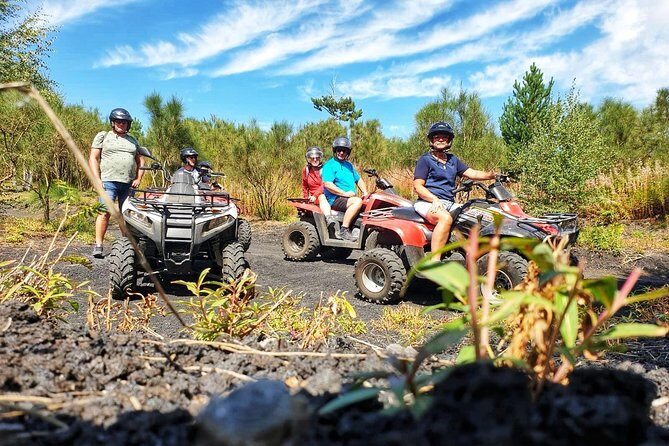
Etna by quad feels like the fastest way to see the mountain up close. I love the mix of 90% off-road driving and on-foot exploring of lava caves and tunnels. I also like that the group stays small—up to 10—so the pace feels personal instead of rushed. One thing to plan for: the ride is not smooth. Expect shaking and dust, so dress smart.
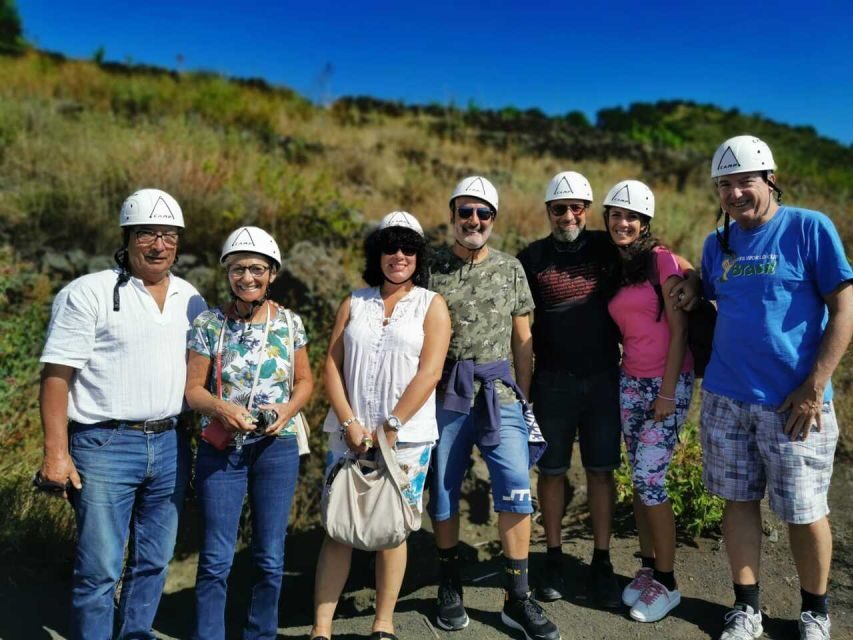
What I really like most is the route itself: you roll out through the Ragabo pine forest and head toward old lava streams, using mountain trails once walked by mules. You’re not just staring at Etna—you’re moving across its past. And with helmet + underhelmet provided, you can focus on the driving and the views without extra gear hassle.
The main drawback is the physical side. This is listed as needing moderate physical fitness, and it involves time in uneven terrain plus dusty conditions. If you’re pregnant, this tour is forbidden, and you’ll also want to skip it if you hate bumpy rides.
In This Review
- Key highlights worth getting excited about
- From Ragabo pine forest to lava streams: the quad part that actually matters
- What you should expect from the driving
- Stop 1: Mount Etna’s working volcano feeling—without needing climbing gear
- Why this opening stop is useful
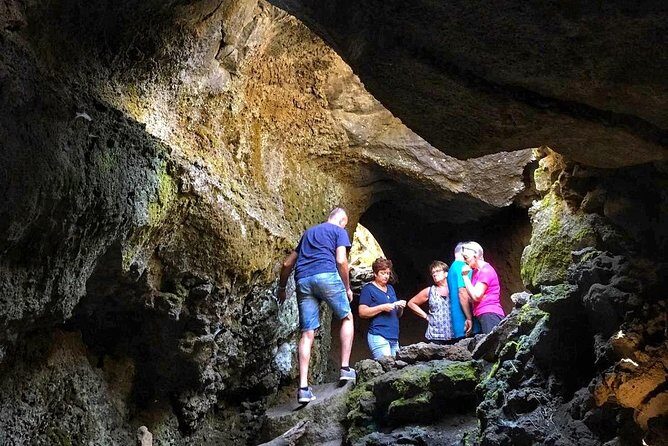
- Stop 2: lava caves and lava tunnels on foot—the best part for many people
- The drawback here: you’re not in a museum
- The Zappinazzu pine tree and a viewpoint for the sea (and sometimes Taormina)
- What makes the viewpoint worthwhile
- Max altitude around 1,800 meters: the 2002 eruption context you’ll actually remember
- Why eruption context boosts the experience
- What’s included (and what you’ll need to bring yourself)
- Value for money: $245.30 per group up to 2, plus a small-group cap
- Who this Etna quad tour suits best (and who should skip it)
- Weather and timing: why your day depends on the mountain’s mood
- Practical expectations so you don’t get surprised
- Should you book Etna Quad Adventure?
- FAQ
- Is this quad tour in English?
- How long is the Etna quad tour?
- Where does the tour start and end?
- What should I bring since jacket and sunglasses aren’t included?
- What’s included in the price?
- What’s the minimum age and physical requirement?
- What happens if weather is bad?
Key highlights worth getting excited about
- 90% off-road quad route that feels remote and real, not like a paved shortcut
- Lava cave and lava tunnel walking after the quad ride, so you see what the volcano left behind
- Zappinazzu, Etna’s oldest pine tree, plus a viewpoint for sea views (and sometimes Taormina)
- Max altitude around 1,800 meters, timed to show the power of Etna’s 2002 eruption on the north side
- Small group size (max 10), which usually means better guidance and a calmer feel
From Ragabo pine forest to lava streams: the quad part that actually matters
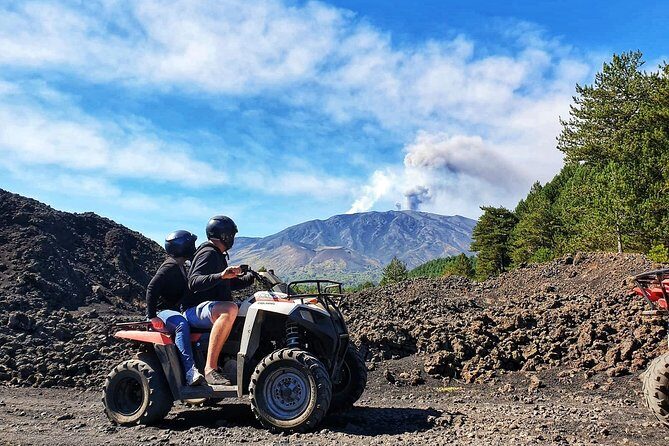
The meeting point is Rifugio Ragabo (Strade Mareneve, Linguaglossa). The start matters here because the tour begins in a pine forest zone, then pushes outward toward the older lava areas. That shift is part of the fun: you start in familiar greenery, then you gradually trade that for volcanic textures—rock, ash, and the odd beauty of land that doesn’t look like it was ever meant to grow anything.
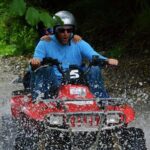
The big promise is serious off-road time. You’re riding on a course that’s described as 90% off the beaten track, and you’ll feel it in the way the quad handles bumps, uneven ground, and loose dust. For most people, that’s the point. If you want a gentle, scenic drive with zero drama, this is probably not your match. If you like a little intensity, you’ll have a grin-first day.
Also note the group size. Even though the price is listed per group up to 2 people, the overall experience caps at 10 travelers. That usually translates to: clearer briefings, less waiting around, and more time actually doing the driving and seeing things instead of watching others go.
You can also read our reviews of more tours and experiences in Sicily.

What you should expect from the driving
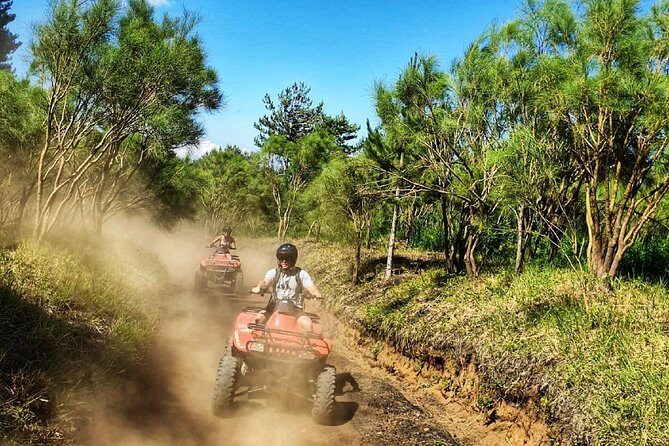
The quad ride is built to teach you the basics and get you comfortable enough for the terrain. You’ll drive toward the lava cave and tunnels area along old mountain trails—routes shaped by what the land allowed long ago. One helpful tip from rider feedback is simple: bring something for the dust. Layers help, and a scarf can protect your face if wind picks up or the track is dry.
And yes, the ride can feel a bit wild. One comment captures it well: it’s not exactly a relaxing sit-and-glide. The quad moves, the terrain changes, and you’ll probably feel it in your body a bit afterward. Think adventurous, not spa-day.
Stop 1: Mount Etna’s working volcano feeling—without needing climbing gear
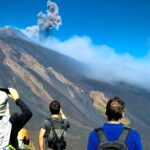
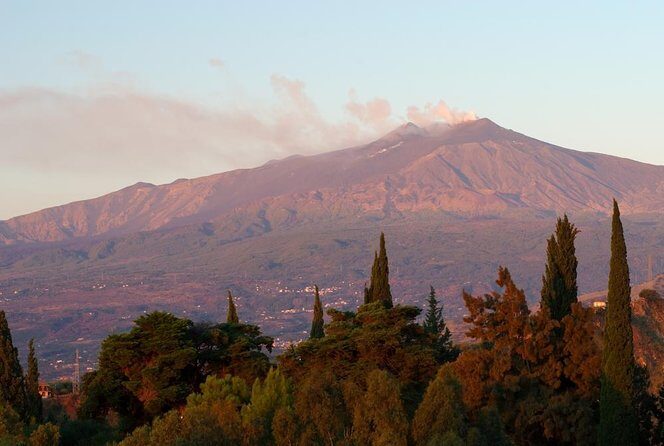
Your first big stop is Mount Etna. This is where the tour starts connecting the dots between “beautiful mountain” and “active volcano system.” You won’t be on foot scrambling in technical rock, but you will be moving through the zones where Etna’s effects show up clearly: volcanic ground, damage patterns, and the scale of older lava flows.
If you’ve never been around an active volcano before, the mental trick is to stop treating Etna as a single cone and start seeing it as a living machine with changing surfaces. This tour helps you do that by routing you through different volcanic features during a short half-day.
Why this opening stop is useful
The value of starting with Etna is that it primes your brain for the rest of the experience. Once you’ve seen the area and reached a ride/walk transition point, the lava cave exploration feels less like a random attraction and more like you’re following the volcano’s logic—how it forms tunnels, how lava travels, and what gets left behind.
Stop 2: lava caves and lava tunnels on foot—the best part for many people
The heart of this tour is not only the quad. It’s what you do once you park the machine and go explore lava cave and lava tunnels on foot. This is where you trade speed for close-up reality.
These stops are special for a few reasons:
- You see the inside story. Surface lava tells part of the tale; tunnels show how lava moved when it flowed and cooled.
- You feel the scale. The size of the caverns and the shapes of the channels make the volcano’s force more believable.
- You slow down. Walking gives you time to notice textures and understand why lava is so different from regular rocks.
There’s also a practical side. Walking in and around caves can be cooler than the sun outside, but it can also feel dusty or uneven at ground level. Helmet + underhelmet are provided for the quad part; for walking you’ll want your hands free and your shoes ready for real terrain. If you’re prone to slipping, pick footwear with solid grip.



The drawback here: you’re not in a museum
Lava tunnels and caves are not smooth, polished showrooms. You’re moving through natural spaces with uneven ground and changing light. That’s a big part of the appeal. But if you hate enclosed or dark spaces, or if you’re uncomfortable with uneven walking, this is worth considering.
The Zappinazzu pine tree and a viewpoint for the sea (and sometimes Taormina)
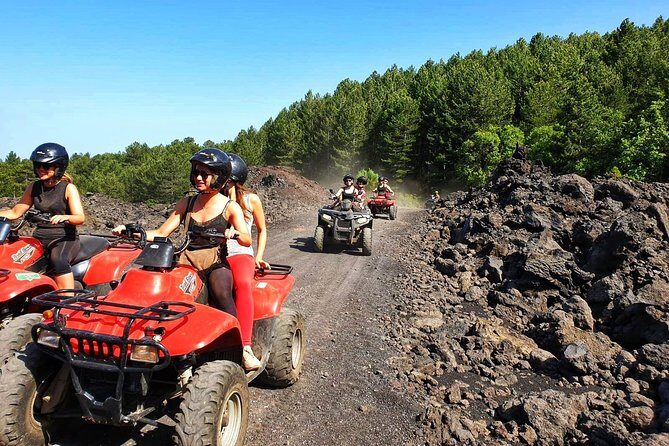
A standout included stop is Zappinazzu, described as Etna’s oldest pine tree. I love this kind of detail because it reminds you the volcano isn’t only destruction. Life works its way in, slowly and stubbornly. A very old tree in a volcanic area turns the day from a thrill ride into a lesson about survival and time.
After that, you go to a viewpoint. On a clear day, you can see the sea, and if weather conditions are good you can even spot Taormina. Even when visibility is just average, you still get that high-ground perspective that makes Etna’s scale click. The mountain stops being a background feature and becomes the whole map.
What makes the viewpoint worthwhile
This is the moment to catch your breath and compare what you saw underground with what you see outside. Lava caves connect you to what happened long ago; the viewpoint connects you to how Etna sits in the real geography of eastern Sicily—near towns, near the coast, and close enough that weather can change fast.
Max altitude around 1,800 meters: the 2002 eruption context you’ll actually remember
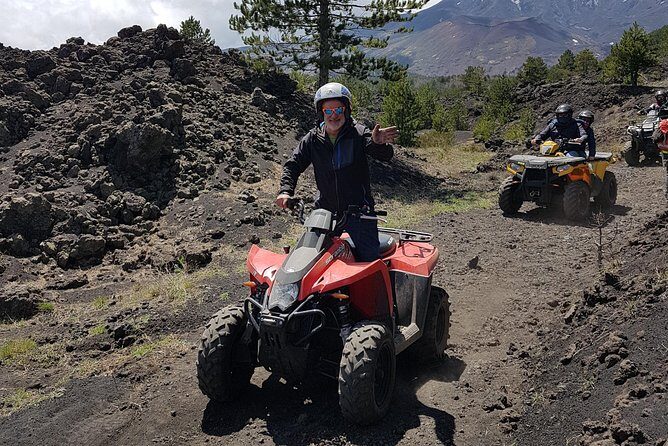
During the ride you go up to about 1,800 meters. At that altitude, the day has a “now I get it” quality. You’re higher up where the terrain opens and the volcanic damage patterns become easier to visualize.
Here’s the key historical moment the guide shares: the major eruption on the north side of Etna in 2002. Even if you don’t know anything about Etna’s recent history, this tour frames what you’re seeing in plain terms—why that eruption mattered and how it reshaped the area you’re exploring.
Why eruption context boosts the experience
Without context, caves and lava flows can feel like cool rock. With context, the features become a timeline. You start to read the terrain instead of just watching it. That’s why the guide is important on this tour. The route is intense enough that you’ll miss details unless someone helps you connect them.
What’s included (and what you’ll need to bring yourself)
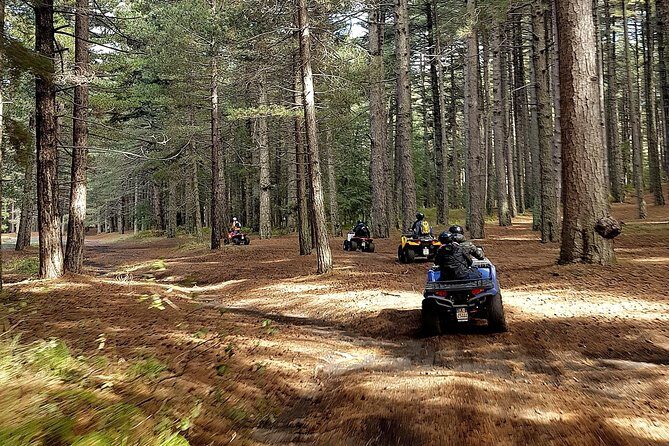
This tour includes helmet and underhelmet, fuel, and an experienced guide. That’s a solid base package. You won’t have to hunt for gear before you show up.
What’s not included is lunch, a jacket, and sunglasses. And that’s exactly where smart preparation pays off. Even in good weather, Etna can be windy and dusty, and the quad ride means you’ll feel it on your face and clothes.
Here’s what I suggest you pack:
- Layers (you’ll likely change temperatures between forest, lower areas, and higher altitude)
- Scarf or face covering for dust (this came up as a practical tip)
- Sunglasses with a strap or secure fit
- Sturdy shoes with grip for walking in caves/tunnels zones
If you don’t want to carry much, you can often handle the lunch part nearby since there’s food available close to where the quads are.
Value for money: $245.30 per group up to 2, plus a small-group cap
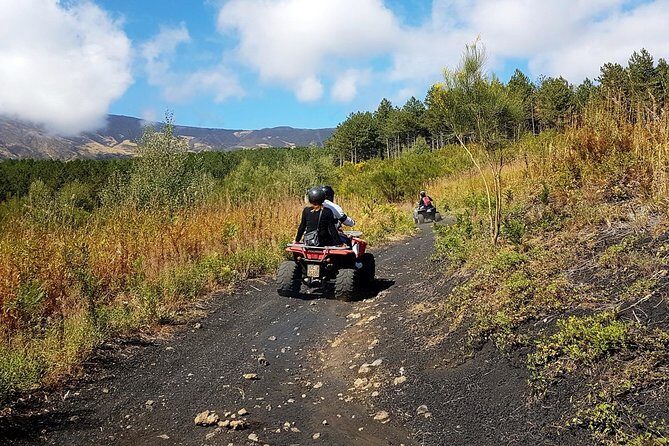
The price is $245.30 per group (up to 2) for about 3 hours 35 minutes. That “per group” detail matters, because it means you can book for just two people without paying a bigger solo surcharge (as long as the group size stays within that up-to-2 structure).
At the same time, the experience itself is capped at 10 travelers. For a quad tour, that small upper limit is the difference between feeling like a herd and actually getting attention. You also get a guide-led route that includes both quad driving and the walking cave/tunnel part. That’s more than a basic ride-and-photos session.
Could it cost less elsewhere? Maybe. But here you’re paying for:
- off-road driving time,
- guided interpretation of volcanic features,
- and a mix of driving + walking that takes you beyond the obvious viewpoints.
If you’re the type who hates tours that feel like a loop, this format is a strong fit.
Who this Etna quad tour suits best (and who should skip it)
This is best for people who want action and learning in the same half-day. You’ll enjoy it if you:
- like off-road driving and don’t mind bumps,
- can handle walking on uneven ground for cave/tunnel sections,
- enjoy a clear explanation of what you’re seeing,
- and want a small-group experience instead of a mass excursion.
You should think twice or skip it if you:
- have no tolerance for shaking or dusty conditions,
- can’t manage moderate physical activity,
- or fall under the pregnancy restriction.
Age-wise, the minimum is 7 years old (with good ability to hold themselves). If you’re traveling with kids, this is not just a “kids sit and look” outing—the child needs enough balance and comfort for the ride and the walking parts.
Weather and timing: why your day depends on the mountain’s mood
This experience needs good weather. If conditions are poor, you’ll be offered a different date or a full refund. That’s important on Etna, because off-road routes and cave areas can get unpleasant in the wrong conditions.
You’ll also want to plan for changeable weather up at altitude. The viewpoint can be spectacular when clear, and less dramatic when it’s hazy. Either way, the core of the tour is the volcano terrain and lava features, not just one photo spot.
Practical expectations so you don’t get surprised
- The driving portion is intense enough to be memorable. Wear proper clothes and expect dust.
- The cave and tunnel section turns it into a mixed day: quad + walking.
- You’ll reach about 1,800 meters, so treat it like an altitude day even if it’s short.
- The guide role is more than safety. You’re there to make sense of lava, caves, and eruption effects.
If you go in with that mindset, you’ll come out with a better story than just a set of Instagram images.
Should you book Etna Quad Adventure?
If you want a half-day that blends real volcano terrain, small-group attention, and a guided look at lava caves and tunnels, this is a strong choice. The small max group size (10) and the “mostly off-road” quad route are the combination that makes it feel like an adventure, not a checklist.
Book it if you’re comfortable with moderate physical activity and can handle a bumpy ride. Skip it if you want a calm, easy outing, or if dust and uneven walking are deal-breakers.
FAQ
Is this quad tour in English?
Yes. The experience is offered in English.
How long is the Etna quad tour?
It runs for about 3 hours 35 minutes.
Where does the tour start and end?
It starts at Rifugio Ragabo Strade Mareneve, 95015 Linguaglossa CT, Italy, and ends back at the same meeting point.
What should I bring since jacket and sunglasses aren’t included?
Bring your own jacket, sunglasses, and plan for dust. Layers and a scarf/face covering are especially helpful.
What’s included in the price?
Helmet and underhelmet, fuel, and an experienced guide are included.
What’s the minimum age and physical requirement?
Minimum age is 7 years old, and children should have good ability to hold themselves. The tour requires moderate physical fitness.
What happens if weather is bad?
The experience requires good weather. If it’s canceled due to poor weather, you’ll be offered another date or a full refund.