REVIEW · SICILY
Arancino Making – 2 Hours to Learn how made Real Sicilian Arancino!
Book on Viator →Operated by Porta Messina Restaurant Cooking Class · Bookable on Viator
Arancini look simple. They are not. This chef-led class is built to teach you the method behind real Sicilian arancino—rice, stuffing, shaping, and frying—then you get to eat what you made right after.
I love how fast you move from theory to hands-on work. I also like the small-group focus, because you’re not stuck watching while someone else does the work. One thing to consider: you’ll be working outside while frying, and in Taormina that can mean wasps around your food.
In This Review
- What makes this class worth your evening
- Quick take: key things to know
- Sicily’s arancino is a technique sport (and you’ll learn it)
- Porta Messina in Taormina: where your “kitchen classroom” starts
- The 2 hours: how the evening is structured
- Rice first: getting the base right
- Then the stuffing: flavor and portion control
- Forming the arancini: the part that feels like fine art
- Frying outside at Porta Messina: the moment of truth
- What you eat: freshly made arancini, wine, and end treats
- Allergy-friendly arancini: what to ask before you go
- Small-group pace: personal attention without dragging on
- English teaching in a real Sicilian food setting
- Price and value: is $96.11 fair for 2 hours in Taormina?
- Who should book this (and who might skip it)
- Should you book Arancino Making in Sicily?
- FAQ
- Is the arancino-making class offered in English?
- How long does the class last?
- Where does the class meet in Taormina?
- What time does the experience start?
- Is it a small group?
- Do you get to eat what you make?
- Can the class accommodate dairy allergies?
What makes this class worth your evening
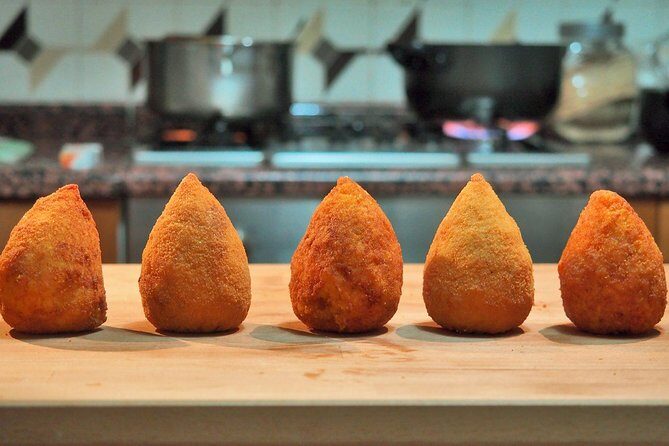
The format is straightforward: about two hours, one restaurant base in Taormina, and a step-by-step chef who keeps the pace moving. You’ll get to sit down afterward, taste, and relax instead of racing to squeeze this into sightseeing time.
Quick take: key things to know
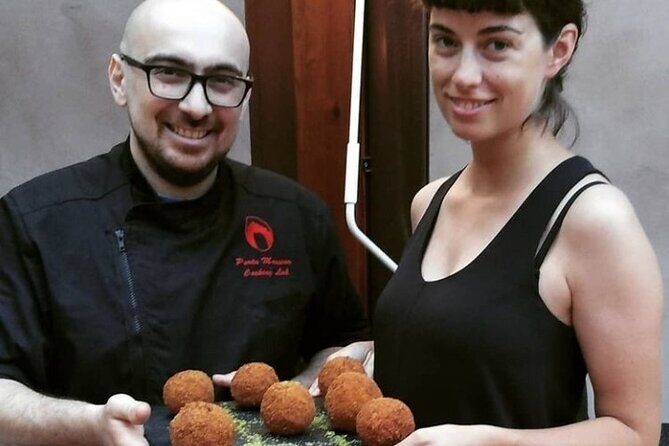
- Chef-led, step-by-step instruction from rice cooking through stuffing and frying
- You make multiple arancini, not just a demo plate
- Small-group feel with a class capped at 40 participants
- Dairy-free adaptations can be possible if you ask (details below)
- Outside frying setup means you should be ready for summer insects
You can also read our reviews of more tours and experiences in Sicily



Sicily’s arancino is a technique sport (and you’ll learn it)
Arancini are one of those Italian foods that look like comfort food, but they’re really about technique. The rice has to be right. The stuffing needs balance. And the final shape needs to hold together once hot oil hits.
That’s exactly why I think this class is a good use of time. In a short evening, you learn why the steps matter, not just what to do. The end result is practical too: you can take the method home and try again without guessing.
Porta Messina in Taormina: where your “kitchen classroom” starts
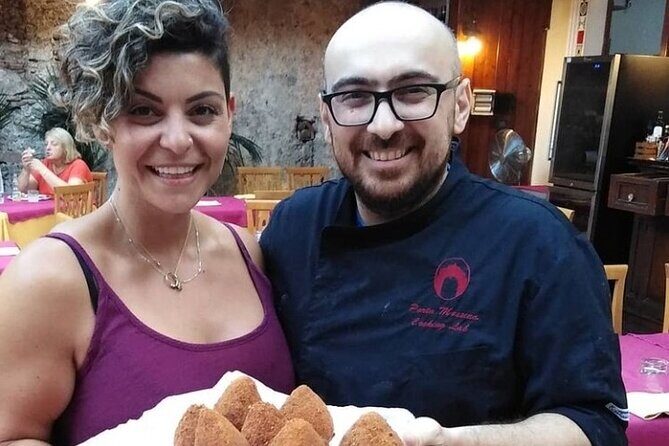
Your class meeting point is Largo Giove Serapide, 4, 98039 Taormina (ME), Italy, with a 6:30 pm start. It’s near public transportation, so you’re not stuck playing transit roulette before dinner.
This is held through Porta Messina Restaurant Cooking Class. That matters more than you might think. You’re learning in a real working restaurant environment, not a detached cooking studio where everything feels staged. The workflow is built for making food efficiently, and you’ll feel that in the pacing.
Also, the class is offered in English, which keeps the technical steps clear. When you’re learning a recipe where small details make a big difference, language clarity is not a luxury. It’s the whole point.
The 2 hours: how the evening is structured
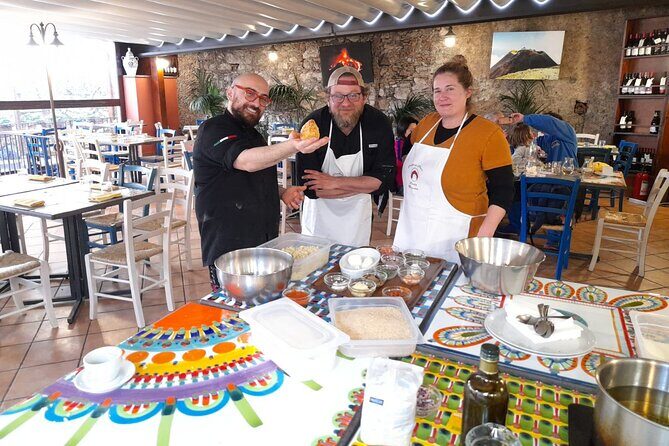
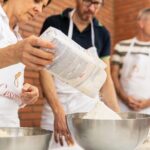
The experience runs about two hours, and it’s designed so you’re active during most of it. The core flow is basically: cooking the rice, making the filling, assembling the arancini, then frying and eating.
Here’s how that translates into a realistic lesson plan you can picture:
Rice first: getting the base right
The chef’s instruction starts at the rice stage. For arancini, the rice is not an afterthought. It needs the right texture so it can be handled and shaped without falling apart.
In a good arancini class, you learn how to treat the rice like a workable ingredient, not like a finished side dish. That’s what the step-by-step approach is for. If your rice is off, everything after it gets harder: stuffing escapes, edges won’t seal, and frying gets messy.






Then the stuffing: flavor and portion control
Next comes the stuffing. This is where people often guess at home. In class, you learn the “right amount” so it stays inside during frying and doesn’t make the arancino collapse.
You’ll also learn how the filling interacts with the rice. It should be flavorful, but not so wet that it breaks the shape. That balance is a big reason homemade arancini can be hit-or-miss without guidance.
Forming the arancini: the part that feels like fine art
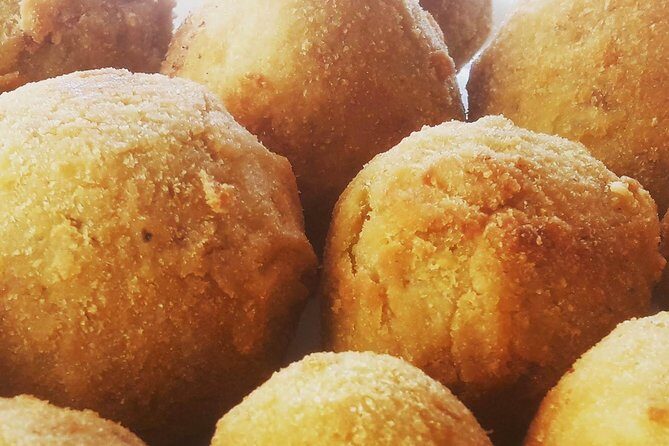
Once you have rice and filling, you form the arancini. This is the hands-on “skill” stage, and it’s where the class earns its money.
The chef teaches how to shape each one so it holds during frying. You’re learning technique: how to portion, how to press, and how to seal. It’s not just rolling food into a ball. Think of it as sculpting something that must survive hot oil.
A really useful payoff here is that you’ll likely make more than one arancino. Based on the way the class is described, the goal is hands-on output rather than a quick assembly of a single piece.
Frying outside at Porta Messina: the moment of truth
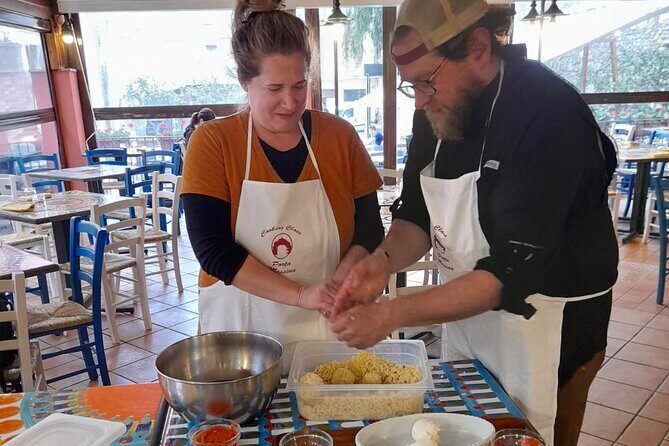
After assembly, the next step is frying. And yes, this is one of those details where real life matters: the frying is done outside.
Summer Sicily can mean wasps in the same airspace as your food. In one highlighted case, the wasps didn’t become a problem for the group while people were working, but they did take a few bites of food as cooking progressed. If you’re sensitive to stings or allergic, you should take insect risk seriously and plan accordingly.
Still, the “outside frying” setup is also part of why this class feels authentic. You’re seeing how Sicilian kitchens handle the heat and mess in a practical way, not behind a glass partition.
What you eat: freshly made arancini, wine, and end treats

The class doesn’t stop at cooking. You get to taste the arancini you made, served from the restaurant setting.
You can expect a relaxed wrap-up:
- You finish the lesson
- The frying step happens so you can sit rather than standing over a deep fryer
- You eat what you made
- Wine flows during the unwind
The end of the experience includes special Sicilian treats. The point isn’t just “dessert.” It’s a proper close to an evening that started with hands-on work and ends as a social meal.
Allergy-friendly arancini: what to ask before you go
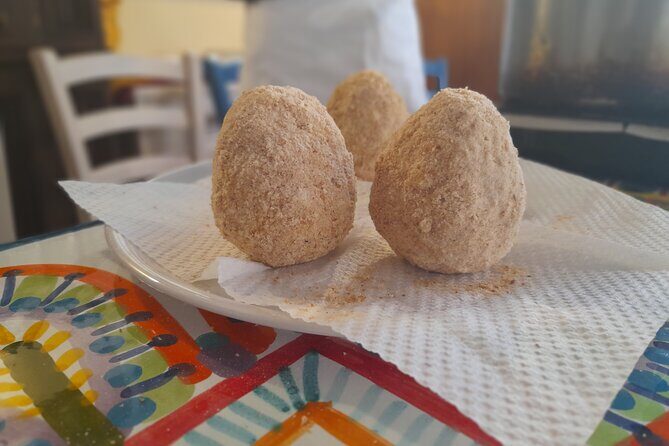
Food allergies can be a deal-breaker for cooking classes. This one is better than average if you communicate clearly.
One example shared in the provided feedback describes a participant with a severe dairy allergy. In that case, the class was fully accommodating with a vegan approach. The key detail: Parmesan was not used in the rice, and instead pistachio flour was used. During filling, the guide brought additional items like mushrooms and tomatoes from the kitchen so the guest could still get something special.
If you have dairy needs, don’t assume it’s automatically handled. The practical move is to message ahead and ask:
- Whether Parmesan can be replaced in the rice
- Whether the arancini can be adapted to a vegan option
- What ingredient swaps are available for stuffing
Also, if you have allergies that go beyond dairy, ask about cross-contact too. The class is small-group, but kitchens can still have shared tools and space.
Small-group pace: personal attention without dragging on
The class is capped at 40 travelers, which helps keep it from turning into a mass production. And the way the class is described, the chef doesn’t just give one general talk. It’s step-by-step, with enough attention to guide you while you form and assemble.
The length matters here. Two hours is long enough to learn real technique. It’s also short enough that you can still enjoy Taormina afterward without losing your whole evening.
You’ll likely come away feeling you can repeat the method, not just remember a recipe card.
English teaching in a real Sicilian food setting
Because the class is offered in English, the chef’s step-by-step guidance stays understandable while you’re doing it with your hands. That’s a major quality-of-life detail.
In cooking classes, it’s not just about language. It’s about timing. When the chef says to press the edges here, or handle the rice a certain way, you need to understand immediately. English instruction keeps you from missing those tiny moments that decide whether the arancino holds together.
Price and value: is $96.11 fair for 2 hours in Taormina?
At $96.11 per person, you’re paying for more than a snack. You’re paying for:
- Chef-led technique over a focused timeframe
- Ingredients and tools used during instruction
- The work itself, so you’re actively making food
- Frying and tasting as part of the experience
- Wine during the sit-down part
- Ending with Sicilian treats
Whether it feels like a deal depends on your goal. If you want a hands-on lesson with eating included, it’s easier to see the value. If you only want a quick bite and you’d rather roam independently, you might find cheaper options.
But if you care about the “how” behind Sicilian arancino, the structure is what you’re paying for. You’re not just buying food. You’re buying guided technique, and that’s the part that lasts.
Who should book this (and who might skip it)
This class is a strong match if you:
- Want a practical cooking skill you can reuse
- Prefer a chef-guided format over a DIY cooking demo
- Enjoy food-focused evenings in Taormina
- Are traveling with someone who’d love a memorable activity with dinner vibes
You might think twice if:
- You’re extremely sensitive to insects and wasps, since frying happens outside
- You dislike hands-on cooking and would rather just taste from menus
- You’re looking for a long, sightseeing-heavy evening rather than a concentrated lesson
Should you book Arancino Making in Sicily?
I’d book it if you want something more meaningful than a typical dinner. You get real instruction and a finish that feels like a meal, not a performance.
The best decision-maker for me is this: the class is built around technique, shaping, and frying, and you’re not just watching. If you’re curious about how Sicilians make arancini properly, this is the kind of two-hour experience that teaches you the part most people skip.
FAQ
Is the arancino-making class offered in English?
Yes. The experience is offered in English.
How long does the class last?
It runs for about 2 hours.
Where does the class meet in Taormina?
The start point is Largo giove serapide, 4, 98039 Taormina (ME), Italy, and it ends back at the meeting point.
What time does the experience start?
The start time shown is 6:30 pm.
Is it a small group?
It has a maximum of 40 travelers.
Do you get to eat what you make?
Yes. You make arancini during the lesson and taste the freshly made arancini as the class wraps up.
Can the class accommodate dairy allergies?
There is at least one documented example of dairy allergy accommodation using an alternative to Parmesan, but you should confirm your needs when booking to make sure your specific requirements can be handled.