REVIEW · SICILY
Palermo in 2 hours Main monuments and historic markets
Book on Viator →Operated by Palermo a Piedi - Walking Tour · Bookable on Viator
Palermo can feel like a movie you know. This 2-hour walking tour strings together big-ticket sights like Teatro Massimo and the Cathedral with real-life market time, so you get history and street food culture in one go. I like that it’s guided by a licensed pro (and the guides here seem to run with passion), and I also like the mix of monuments plus street-level flavors through the market area. One watch-out: it moves fast, and extra entrances beyond what’s included can add costs.
You’ll start in central Palermo and quickly build a mental map: what’s where, why the buildings look the way they do, and which neighborhood stories matter. The best part is how the guide connects places to Sicilian myths—Beati Paoli, Santa Rosalia, and even hints about dessert recipes—so the city feels like more than postcard scenery.
The main drawback is time. With only about 2 hours on the clock, you won’t get long museum-style hangs. And while some entrances are included, other churches and palace-type sights are not, so you’ll need to decide what you want to revisit after the tour.
In This Review
- Key highlights you’ll actually feel on the walk
- Palermo in 2 hours: the right plan for first-time orientation
- Via Cavour meeting point and where the tour ends at the Cathedral
- Teatro Massimo: why the opera house is more than a pretty facade
- Opera dei Pupi by Mimmo Cuticchio: Palermo tradition with UNESCO ties
- Piazza Pretoria and Piazza Olivella: squares that explain the city
- Walking the ancient Cassaro: the city’s oldest spine
- Cape Market and street food tasting: where Palermo becomes real
- Inside Palermo Cathedral: Arab-Norman style and UNESCO context
- The guide makes the difference: passion, stories, and practical tips
- Timing, ticket value, and who this tour is for
- Should you book Palermo in 2 hours?
- FAQ
- How long is the Palermo monuments and markets walking tour?
- How much does the tour cost?
- What’s included in the tour?
- What’s not included?
- Where does the tour start and end?
- What time does the tour begin?
- How big is the group?
- Do I need tickets for the Cathedral?
- Is the tour affected by weather?
- What is the cancellation policy?
Key highlights you’ll actually feel on the walk
- Teatro Massimo shortcut: See Italy’s largest opera house area without turning it into a long detour
- Opera dei Pupi storytelling: A classic Palermo puppet tradition tied to UNESCO recognition
- Piazza Pretoria photo moment: A Renaissance fountain scene that anchors the walk
- Santa Rosalia origins: Stop for the plague-saint story linked to the city’s popular belief
- Cape Market + street food tasting: A practical intro to local flavors, not a lecture-only tour
- Arab-Norman Cathedral entry: Step inside the UNESCO-listed centerpiece and know what to look for
Palermo in 2 hours: the right plan for first-time orientation
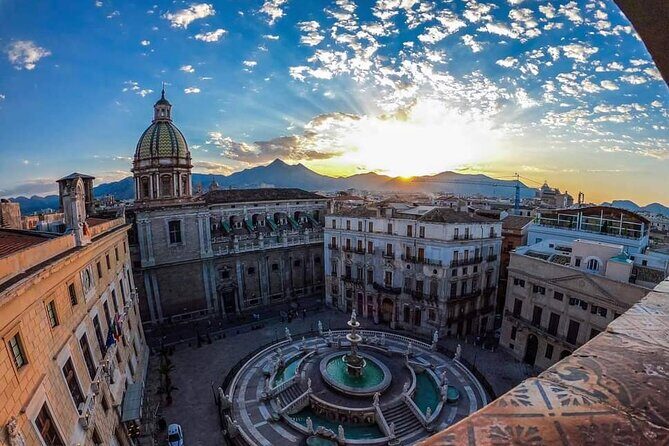
This isn’t the kind of tour that tries to cover every square inch of Palermo. It’s built for orientation: a quick sweep past major landmarks, then a market section where you start reading the city the way locals do—by the smells, the snack stops, and the street life.
The price is modest for what you get. You’re paying for a licensed guide, market time, and entrances for key points like the Cathedral (and at least one other paid stop). When you add in the free street-food tasting, the tour feels less like a sightseeing-only shuffle and more like a smart way to spend your first morning.
If you hate crowds and you want slow, lingering museum time, you might find the pace a bit intense. But if your goal is to understand Palermo fast—and then return on your own—this format makes a lot of sense.
You can also read our reviews of more historical tours in Sicily
Via Cavour meeting point and where the tour ends at the Cathedral
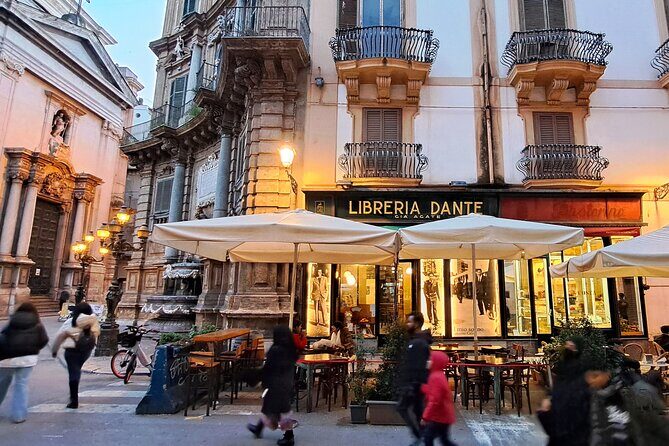
You meet at Via Cavour, 131 (90133 Palermo). The start time is 10:30 am, and the walk ends at the Palermo Cathedral area on Via Vittorio Emanuele.
That ending matters. The Cathedral sits right at the heart of your next choices: you can keep exploring nearby streets, or shift your day toward more historic neighborhoods. Also, finishing at the Cathedral avoids the common problem of walking for hours and then realizing you’re stuck far from the places you actually want to revisit.
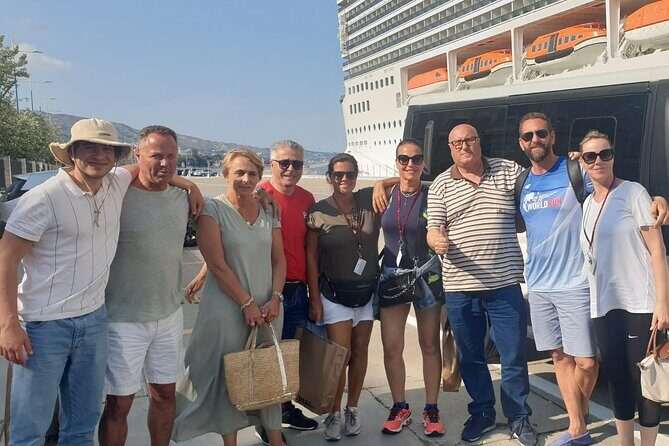
The tour is capped at 20 people, which usually keeps it from turning into a group herding contest. Still, it’s a walking tour, so wear comfortable shoes and plan for uneven pavement.
Teatro Massimo: why the opera house is more than a pretty facade
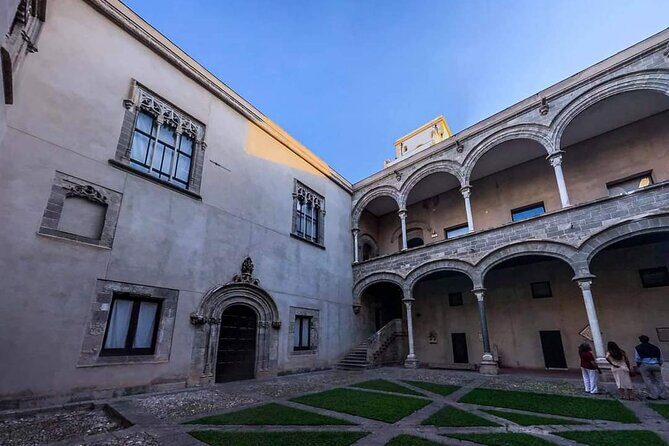
The first major landmark is Teatro Massimo, described as the largest opera house in Italy. Even if you’re not an opera superfan, this stop is useful because it signals Palermo’s ambition and cultural self-image. You’re seeing a building meant to project power, taste, and civic pride.
You’ll get about 10 minutes here, and that’s the point: you’re not paying for a long interior visit, you’re using the stop to anchor your understanding of the city. After you’ve seen the Cathedral later, Teatro Massimo helps you compare eras—how Palermo’s style and priorities shift over time.
Drawback: because admission isn’t included, you won’t get a full inside experience at this specific stop. If you want the grand interior details, plan a return visit later with separate tickets.
Opera dei Pupi by Mimmo Cuticchio: Palermo tradition with UNESCO ties
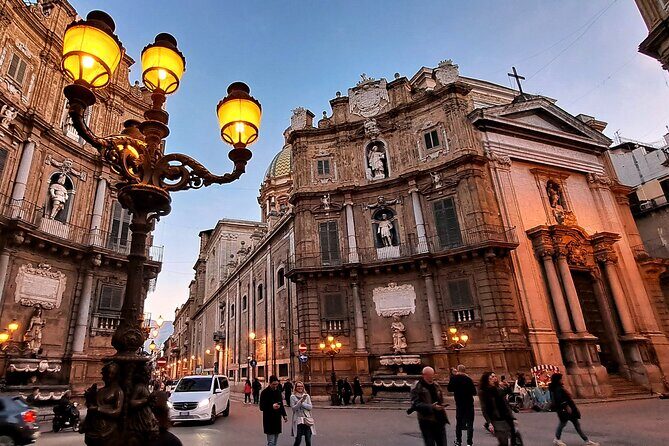
Next comes Teatro dell’Opera dei Pupi by Mimmo Cuticchio. Puppet theatre like this is part of Palermo’s cultural backbone, and the stop is tied to UNESCO heritage recognition in the tour description. You’ll also get the historic context: this tradition dates back to the 1800s, and it’s the kind of local art form you won’t get from a quick stop in a guidebook.
Why it’s worth including: it shows Palermo isn’t only about baroque churches and ornate fountains. It has a living folk culture with deep roots. And it gives you something lively to look for later when you walk through neighborhoods where craft traditions still matter.
Like Teatro Massimo, expect a brief stop—about 10 minutes—so it’s best seen as a marker. If you want the performance itself, you’ll have to book or attend separately.
Piazza Pretoria and Piazza Olivella: squares that explain the city
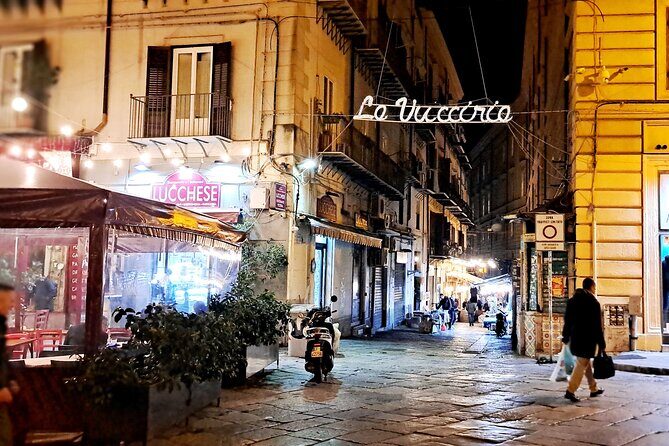
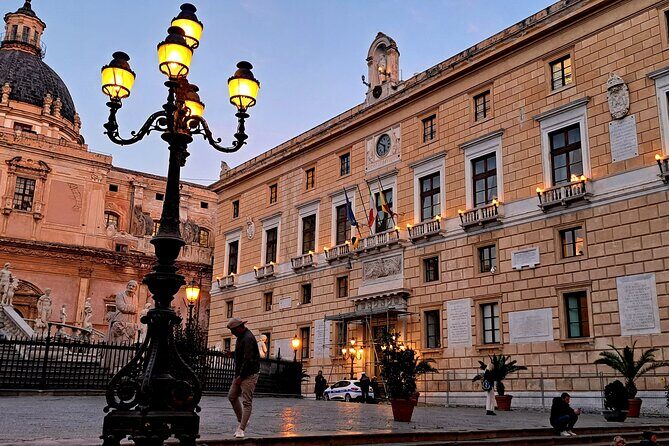
Then you hit Piazza Pretoria, with its monumental Renaissance fountain in front of the Palazzo delle Aquile, the historic civic administration seat. This plaza stop is included with admission ticket coverage for the designated part of the visit, so you get more than a simple drive-by.
What you should do with this moment: slow down just enough to notice how plazas function in Palermo. They’re meeting points and political stages. Standing here helps you understand why the city’s history isn’t just written in buildings—it’s performed in public space.
After that, you shift to Piazza Olivella, where you’ll find the Regional Archaeological Museum and the church of Sant’Ignazio. The tour notes a birthplace story tied to Santa Rosalia, Palermo’s patron saint, proclaimed through popular acclaim for freeing the city from the plague.
A useful takeaway from this stop: Santa Rosalia’s story gives you a key to Palermo’s identity. In a city full of overlapping cultures, patron-saint traditions are one of the clearest ways to see what people remembered, feared, and celebrated.
This stop is described as free for tickets, and it includes time for you to look around before moving back into the street atmosphere.
You can also read our reviews of more tours and experiences in Sicily


Walking the ancient Cassaro: the city’s oldest spine
The walk continues along the Cassaro, described as Palermo’s oldest street lined with palaces, churches, and convents. Even if you don’t memorize every building name, the Cassaro gives you a feel for the city’s long continuity: the street layout helps you connect past and present.
Here’s the value for your future self. When you later plan routes on your own, you’ll recognize the Cassaro as a spine. That makes the rest of Palermo easier to navigate and more interesting because you understand the street logic, not just the landmark.
Because time is limited, this isn’t a slow architectural tour. It’s more like a guided “pattern recognition” walk: the guide points out what to notice now, so you’re not staring at random facades later.
Cape Market and street food tasting: where Palermo becomes real
One of the strongest parts of this experience is how you move through the Cape Market area. The tour includes crossing the market and a short stop for free street food tasting, which is exactly what you want if you’re trying to learn how Palermo eats without getting ripped off or stuck ordering the wrong thing.
This is also where myths and daily life start sharing the same sidewalk. The guide’s storytelling about Sicily’s legends and local traditions helps you understand why certain foods and sweets matter to people. And when you taste something small, you get a sensory memory you can anchor to later.
A practical suggestion: come hungry enough for a tasting stop but don’t assume this replaces a full meal. The tour mentions tastings and street food, but it doesn’t promise big portions or a full sit-down lunch.
Drawback to plan for: markets can be busy, and walking there during peak hours can be noisy. If you’re sensitive to crowds, keep that in mind.
Inside Palermo Cathedral: Arab-Norman style and UNESCO context
The headline finale is the Palermo Cathedral, entered during the tour and described as UNESCO heritage with Arab-Norman style. This is where the city’s layered identity becomes visible in stone.
What I find most helpful for this kind of entry is not just seeing the building, but understanding what makes it “Arab-Norman” in the first place. The tour is designed to give you the basics so you can look at details with purpose—arches, textures, and the blend of influences that shaped Sicily over centuries.
This stop is a true value piece because the Cathedral entrance is included. Many city tours talk about churches from outside; this one gets you inside as part of the core experience.
Possible drawback: if you’re the type who wants to photograph quietly and explore slowly, the time pressure can feel tight. But if your goal is to learn what the Cathedral represents and then return later for deeper wandering, it works.
The guide makes the difference: passion, stories, and practical tips
The tour’s overall strength comes from the guide style. In the feedback data tied to this experience, guides named Maurizio and Fabrizio are repeatedly praised for being engaging and for mixing history with real opinions about the city.
I especially like the practical flavor that shows up in comments: one guide is noted for explaining details without drowning you in facts you could read later. Another is praised for staying engaging and for offering useful advice for the rest of your stay.
There are also notes about how some guides share helpful local know-how—like how to handle small bargaining situations with merchants properly. And one mention includes getting additional suggestions via WhatsApp, which can be useful when you’re trying to turn a tour into a full day plan.
Just keep expectations realistic: this is a walking tour with a tight route. The guide’s job is to give you a framework fast. You still do the deep reading later.
Timing, ticket value, and who this tour is for
Duration is listed as about 2 hours, though real-world pacing can run longer in some cases depending on questions and how long you linger at each stop. With a group limit of up to 20 people, you should still be able to move comfortably, but this isn’t a “linger everywhere” itinerary.
Price is $23.26 per person, and what makes it feel fair is the mix of included components:
- A licensed professional guide
- Market crossing plus a short free street-food tasting
- Piazza Pretoria admission ticket included
- Palermo Cathedral entrance included
Tickets for other palaces, churches, and museums are not included beyond what’s stated, so if you plan to do lots of extra interior visits the same day, budget for that.
Who should book:
- First-timers who want a fast orientation to Palermo’s main sights
- Food-minded travelers who want a market taste, not a lecture
- People who like stories, myths, and a guide who connects Sicily’s legends to what you’re seeing
Who should think twice:
- Anyone who wants long museum time or quiet, slow photography sessions
- People who dislike walking or uneven sidewalks
If you’re on your first day and you feel a bit disoriented, this tour is a great way to start turning the city into something you can navigate.
Should you book Palermo in 2 hours?
Yes, if your goal is to get oriented fast and fall in love with Palermo’s mix of monuments, myths, and market life. The Cathedral entry plus the market tasting are strong value anchors, and the short stops keep you moving in a sensible loop through the center.
Skip it if you’re the kind of traveler who needs hours in one place. This tour gives you smart highlights, not full immersion. For most people, though, it’s exactly the kind of start that makes the rest of Palermo easier—and more interesting—because you’ll know what you’re looking at when you go back on your own.
FAQ
How long is the Palermo monuments and markets walking tour?
It lasts about 2 hours.
How much does the tour cost?
The price is $23.26 per person.
What’s included in the tour?
It includes a licensed professional guide, crossing the Cape Market, a short stop for free street food tasting, and Cathedral entrance (plus the Piazza Pretoria admission ticket is included).
What’s not included?
Food and beverages are not included, and any additional tickets for palaces, churches, and museums are not included beyond what the tour states as included.
Where does the tour start and end?
It starts at Via Cavour, 131, 90133 Palermo and ends at Palermo Cathedral on Via Vittorio Emanuele.
What time does the tour begin?
The start time is 10:30 am.
How big is the group?
The tour has a maximum of 20 travelers.
Do I need tickets for the Cathedral?
The tour includes Cathedral entrance, so you don’t need to buy that ticket separately for this experience.
Is the tour affected by weather?
Yes. It requires good weather, and if it’s canceled due to poor weather, you’ll be offered a different date or a full refund.
What is the cancellation policy?
Free cancellation is available up to 24 hours in advance for a full refund. If you cancel less than 24 hours before the start time, the amount paid is not refunded.