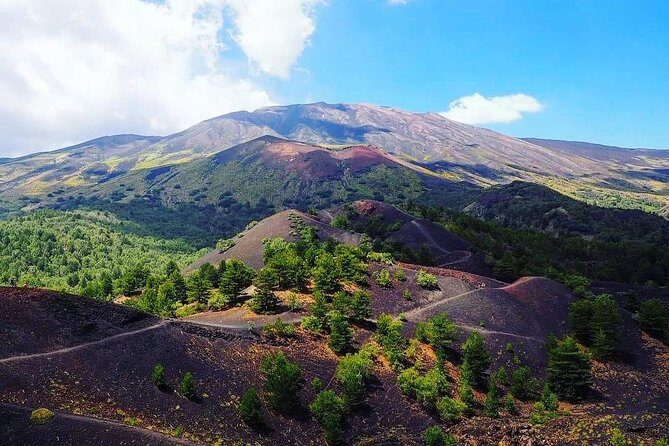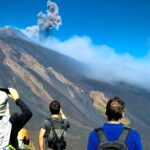
Etna on foot beats postcards. This high-altitude trek on Sicily’s south side of Mount Etna mixes short guided walking with a cable-car jump to altitude, so you spend more time looking at real volcanic terrain and less time grinding uphill. I especially like the small-group setup (max 15) and the volcanological guidance, which helps you make sense of what you’re seeing at crater level.
You’ll also get plenty of stand-and-look moments—crater viewpoints, then an explanation-focused visit to a lava flow tunnel and a high vantage over Valle del Bove. One consideration: the tour asks for moderate fitness at altitude, and you’ll need to plan on extra cost for the Funivia cable car segments (those parts aren’t included).
In This Review
- Quick highlights
- First, Know What Kind of Etna Day This Is
- Meeting at La Terrazza Dell’Etna: Easy Starting Point, Clear Flow
- The Cable Car Jump to 2,500m: Funivia Dell’Etna Logistics That Matter
- Stop One: Craters Silvestri of Mount Etna and the First Real Volcanic Texture
- Stop Two: The 2,500m Viewpoint Phase (Funivia) and What to Look For
- Stop Three: Crateri Barbagallo Panoramic Craters and Recent Lava Clues
- Stop Four: Mount Etna and the Lava Flow Tunnel Lesson
- Stop Five: Valle del Bove Viewpoint and the Volcano’s Evolution Story
- The Return by Cable Car: Wrap It Up Without Rushing
- Pace, Physical Fitness, and Altitude Reality Check
- Value and Price: What $59.15 Actually Buys You
- Guides and the Human Side of the Hike
- Who Should Book This Etna Trek
- Should You Book This South-Side Etna Trek?
- FAQ
- How long is the Etna trekking experience?
- What’s included in the tour price?
- Is the Funivia cable car included?
- Where does the tour start?
- Is public transportation included?
- What fitness level do I need?
- What if the weather is bad?
Quick highlights
- Funivia to 2,500 meters cuts the hard work and keeps the day moving
- Craters Silvestri to Crateri Barbagallo gives you changing volcanic views, not one static stop
- Lava tunnel lesson explains how tunnels form from volcanic processes
- Valle del Bove viewpoint connects the scenery to the volcano’s evolutionary story
- Helmets + insurance + volcanological guide keep the experience focused and safer
- English-speaking, small-group pace means questions aren’t an afterthought
First, Know What Kind of Etna Day This Is
This is not a long-distance, all-day scramble. It’s a structured high-altitude trek that uses a mix of walking and cable car to reach the good angles. That matters because Etna isn’t just “a mountain”—it’s a constantly shifting volcanic system, and the best understanding comes from seeing multiple zones in one outing.
With a max group size of 15, you get that sweet spot: you’re not stuck behind a parade of people, but you’re also not hiking alone. You can ask questions without shouting over 50 boots crunching rock. And with helmets provided, you’re not showing up with nothing but optimism.
You can also read our reviews of more hiking tours in Sicily
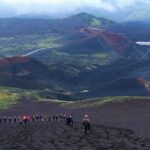
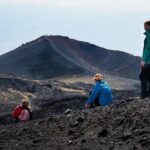
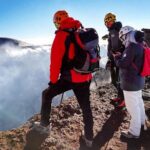
Meeting at La Terrazza Dell’Etna: Easy Starting Point, Clear Flow
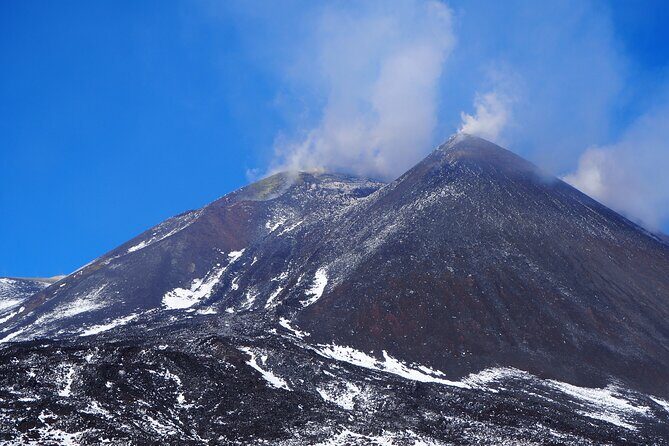
The tour starts at La Terrazza Dell’Etna Etna Sud, Piazza Vittorio Emanuele, 95030 Nicolosi CT. It ends back at the same meeting spot, so you don’t have to plan a complicated “get home” puzzle after your legs are tired.
Operationally, the activity runs in the main summer-to-fall season: 04/06/2026 – 10/10/2026, daily, with opening hours 10:00 AM – 3:30 PM. That timing is useful if you’re building a Sicily itinerary around daylight and weather windows.
What I like about the flow is how it moves from viewpoint to viewpoint without wasting time. There’s a short walk to connect from the start area toward the cable car, then altitude handling happens fast and efficiently.
The Cable Car Jump to 2,500m: Funivia Dell’Etna Logistics That Matter
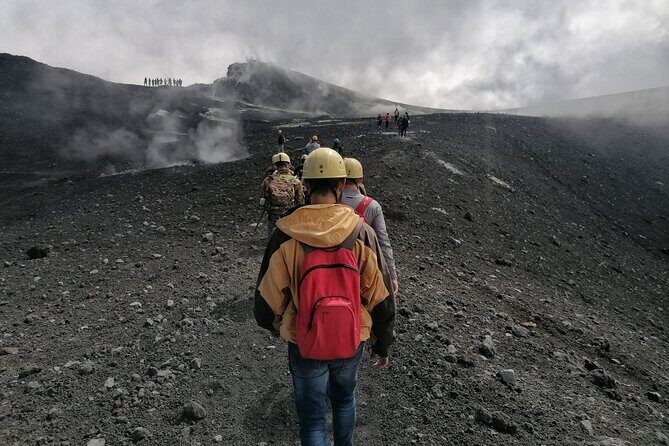
One big factor in this experience is how you get to height. You take the Funivia dell’Etna S.P.A. cable car up to about 2,500 meters. From that height, you can admire the Gulf of Catania and the entire southern side of Etna—so the scenic payoff begins early, before you’ve even done the longer crater-walking portion.
Important money note: the cable car ride is not included for the outbound and return segments. The tour price covers the volcanological guide, helmets, and insurance, but the Funivia admission is extra. Plan for that so you’re not surprised at the last step.
Also, altitude can feel quicker than you expect. Even if the walking time isn’t huge, the thin air means you’ll want a steady pace and a calm head. A water bottle and layers aren’t optional—wind can be a factor at these elevations even when the coast is sunny.
Stop One: Craters Silvestri of Mount Etna and the First Real Volcanic Texture
Your first crater encounter begins near the meeting point, then you move on foot as a group toward the cable car departure. The stop is brief—around 15 minutes—but it’s an important warm-up. You’re not starting by staring into the distance; you’re starting by getting your eyes used to volcanic forms close-up.
The Craters Silvestri area sets the “tone” of the day: sharp terrain, crater edges, and that slightly alien feeling you get when a landscape looks like it belongs on another planet. In a good guide-led trek, that initial stage is where explanations help you stop thinking in textbook terms and start noticing real features.
Admission at this stage is listed as free, so you’re not stuck paying extra for an early segment. You’ll mostly pay in effort—watch your footing and let the altitude settle in.
Stop Two: The 2,500m Viewpoint Phase (Funivia) and What to Look For
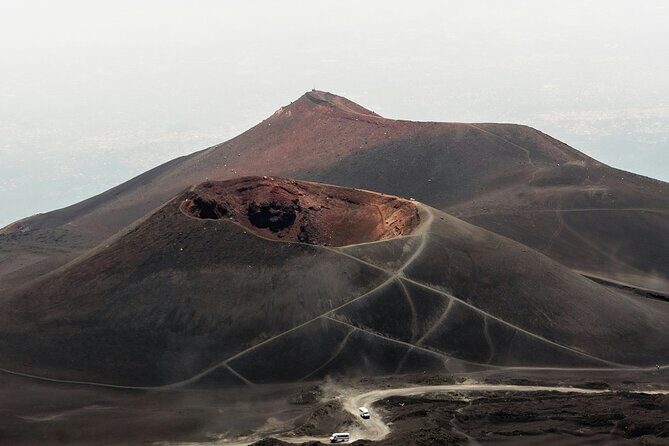
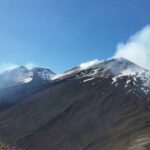
At the 2,500-meter elevation, you’re set up for broad perspective. The guide’s explanations here matter because you’re likely seeing multiple slopes and lava-affected areas at once. The Gulf of Catania and the entire southern side of Etna give you a map-like context.
This is also where you can adjust your expectations for the rest of the day. From the cable-car perspective, later craters and valleys make more sense. You’re not just walking from one dramatic spot to another—you’re gradually building a mental model of how the volcano changes.
Since this cable-car admission isn’t included, check in your planning whether you want to handle that in advance or on-site. Either way, give yourself time for the handoff between walking segments and the cable car.


Stop Three: Crateri Barbagallo Panoramic Craters and Recent Lava Clues
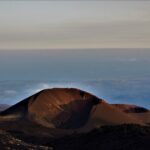
After the cable car, the day centers on the crater world—especially Crateri Barbagallo. This stop is long enough to matter: about 2 hours at a panoramic point.
Here’s where the guide’s volcanology training does more than sound impressive. You’ll be looking at the summit craters and learning about their volcanic activity and recent lava flows. That combination—geology plus timing—turns the scenery into a story you can actually follow.
What to keep in mind: in crater areas, things can look similar from far away. Your guide’s job is to help you distinguish features that are easy to mix up when you’re just a visitor. If you’ve ever felt you were “just taking photos,” this stop is the one that helps you start seeing patterns instead.
Stop Four: Mount Etna and the Lava Flow Tunnel Lesson
Then you shift from open views to a more “hands-on” explanation: a visit to a lava flow tunnel and an explanation of the processes that give life to tunnels.
This is one of the most valuable segments of the day, because tunnels are not just cool-looking. They’re proof of how moving lava behaves when conditions change. Even without technical details, a good guide can help you understand what to notice: flow paths, structure, and how volcanic materials can form spaces that feel surprisingly human-made.
Admission at this stop is included, and the timing is about 1 hour. That’s a nice length—long enough to learn, short enough that you don’t lose the day to one spot.
Stop Five: Valle del Bove Viewpoint and the Volcano’s Evolution Story
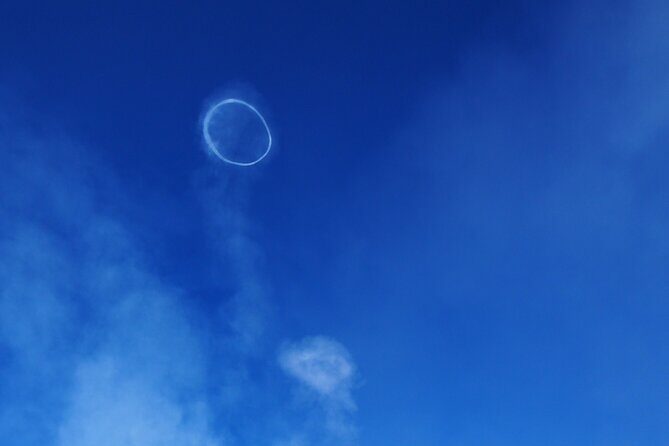
Next comes Valle del Bove, with about 1 hour at a viewpoint. This stop is all about connecting scenery to the volcano’s bigger narrative, through its evolutionary history.
The value here isn’t just the view. It’s that you’re learning to read a whole system from above: how valleys, slopes, and volcanic features relate to each other across time. Once you’ve seen craters up close and walked near lava-affected terrain, the Valle del Bove viewpoint becomes a “put it all together” moment.
In other words, it helps you stop treating Etna like one impressive highlight. Instead, you start seeing it as a changing machine with different parts doing different jobs.
The Return by Cable Car: Wrap It Up Without Rushing
You finish with a return trip on the Funivia dell’Etna cable car, about 30 minutes, back to the square and the end of the tour.
Because you’re riding down, the last stretch usually feels easier than the earlier ascent. That’s a practical design choice: you get the high-altitude experience without having to hike your way back down the whole time.
One more reason this matters: it makes the overall day feel manageable for a broader range of visitors with moderate fitness. The tour still involves altitude and uneven terrain, but it’s not an all-below-rail hike.
Pace, Physical Fitness, and Altitude Reality Check
The tour requires moderate physical fitness, and the minimum age is 10. With those guardrails, you can expect a walk that’s active but not designed for people who want a leisurely stroll.
Altitude affects how hard everything feels, even when the distances aren’t huge. Plan for slower breathing, quick stops if you need them, and extra patience with the group pace. This is where small groups help—your guide can adjust attention if someone’s struggling.
If you’re someone who worries about high places, the cable car helps a lot, because it takes the steepest effort out of the equation. Still, you should be ready for cool air and potentially windy conditions at altitude.
Value and Price: What $59.15 Actually Buys You
At $59.15 per person, the headline price looks low for Etna’s south-side access and volcanological guidance. The key is what’s included:
- volcanological guide
- helmets
- insurance
- admission at key stops (the crater panorama segment and the lava tunnel + Valle del Bove viewpoints are included)
What’s not included:
- the Funivia cable car admission for the outbound climb to about 2,500m and the return ride
- public transportation in your own plan, listed separately as €52.00 per person
So the value calculation depends on how you handle those extra admissions. If you already planned to use the Funivia anyway, you’re mostly buying the expertise and the curated route. If you don’t want to pay for cable car segments, your effective total cost rises and the price advantage shrinks.
Either way, I think the best “value” here is the guide-led science. You’re not paying just for scenic stops—you’re paying for interpretation that helps you understand why each place matters.
Guides and the Human Side of the Hike
The experience is led by volcanological guides, and names you might hear include Claudio and Arturo. The vibe from their style is consistent: friendly, attentive, and focused on making the day enjoyable and understandable.
That’s not a small thing on Etna. Without guidance, the day can turn into a series of dramatic locations where you take photos and hope you’ll later remember what you saw. With a good guide, you start attaching meaning to what’s around you—especially at the crater viewpoints and the lava tunnel explanation.
If you love nature, geology, and asking questions, this is the kind of tour that respects your curiosity.
Who Should Book This Etna Trek
Book this if you want:
- a structured high-altitude Etna day without a full-on marathon hike
- small-group attention and an English-speaking guide
- crater and lava features explained clearly
- a route that balances viewpoints with learning (craters, tunnel, then Valle del Bove)
Consider a different option if:
- you’re uncomfortable with altitude effects, even with a cable car
- you prefer trips where every component is priced all-in (because Funivia admission isn’t included)
- your schedule is extremely tight, since the full outing runs about 5 to 6 hours
This tour fits well with families that include teens (minimum age 10), active day-trippers from Catania-area stays, and travelers who want real volcanic context, not just photos.
Should You Book This South-Side Etna Trek?
Yes, if your goal is to see Etna in a way that actually makes sense. The combination of small-group pacing, volcanological guiding, helmet/insurance coverage, and the mix of crater viewpoints plus a lava tunnel lesson is a strong formula for a memorable day.
Before you book, just do two quick checks: confirm you’re okay with moderate fitness at altitude, and budget for the Funivia cable car parts that aren’t included. If you can handle those, this is a smart way to spend a half-day on Sicily’s most dramatic mountain.
FAQ
How long is the Etna trekking experience?
It runs about 5 to 6 hours (approx.).
What’s included in the tour price?
The tour includes a volcanological guide, helmets, and insurance.
Is the Funivia cable car included?
No. The cable car admission for the climb to around 2,500 meters and the return ride is not included.
Where does the tour start?
It starts at La Terrazza Dell’Etna Etna Sud, Piazza Vittorio Emanuele, 95030 Nicolosi CT, Italy.
Is public transportation included?
No. Public transportation is listed as €52.00 per person and is not included.
What fitness level do I need?
The tour requires a moderate physical fitness level.
What if the weather is bad?
This experience requires good weather. If it’s canceled due to poor weather, you’ll be offered a different date or a full refund.
If you want, tell me your travel dates and where you’re staying in Sicily, and I’ll help you map a practical half-day plan around this Etna trek.