REVIEW · SICILY
Syracuse: tour of the Neapolis Archaeological Park (max 6 guests)
Book on Viator →Operated by Viaggio a Sud-Est · Bookable on Viator
Neapolis feels like a time machine you can walk through. This max 6-person tour pairs a tight schedule with a PhD archaeologist guide, so the stones in Syracuse actually make sense fast. Two things I really like: you get a focused walk through top Neapolis sights, and you’re encouraged to ask questions as you go.
One thing to consider: the required park entrance fee (€14 per person) is not included in the tour price, so budget for that before you arrive.
In This Review
- Quick highlights to clock fast
- Syracuse’s Neapolis: Why This Walk Feels Personal
- Price and What You’ll Need to Budget for (€14 entrance fee)
- The Start at Neapolis: Where You’ll Gather and How to Prepare
- Stop 1: Ear of Dionysius (The Famous Cave and Its Clever Sound)
- Stop 2: Teatro Greco (Greek Theater Big Enough to Impress Anyone)
- Stop 3: Ara di Ierone (A Tiny Stop With Big Meaning)
- Stop 4: Anfiteatro Romano di Siracusa (Roman Power in a Greek City)
- The Value of a PhD Guide (Not Just Facts, but Connections)
- How Much Do You See in 1.5 Hours?
- Who This Tour Suits Best (And Who Might Want Something Else)
- Booking Tips That Make the Day Easier
- Should You Book This Neapolis Archaeological Park Tour?
- FAQ
- How long is the Neapolis Archaeological Park tour?
- What’s the group size for this experience?
- Is the entrance fee included?
- Where does the tour start?
- What language is the tour offered in?
- Can I cancel for a full refund?
Quick highlights to clock fast
- PhD archaeologist Dr. Enrica De Melio leads the walk with clear, academic-level context
- Small group (up to 6) keeps it personal and question-friendly
- Mobile ticket in English makes the start smooth
- Ear of Dionysius cave stop (and it’s famed as a one-of-a-kind site)
- Greek theater and Roman amphitheater stops help you compare eras side by side
Syracuse’s Neapolis: Why This Walk Feels Personal
Neapolis Archaeological Park is one of those places where guidebooks can sound like a list of names. A good guide changes that. Here, you’re not just moving from one ruin to the next—you’re getting the why behind each one.
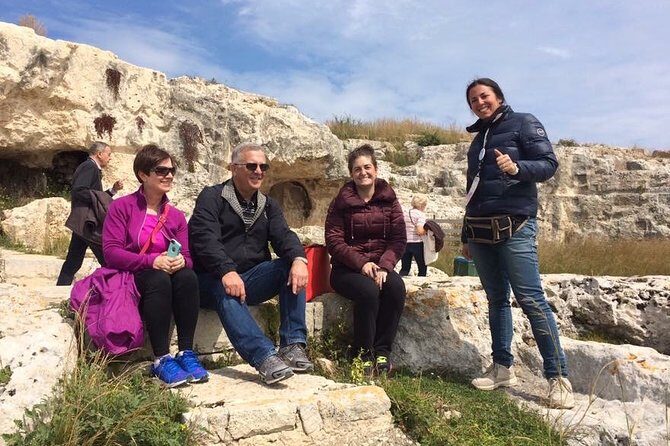
The star is Dr. Enrica De Melio, PhD, an archaeologist guide. That matters because Neapolis is loaded with layered history: Greek foundations, later Roman use, and plenty of stories that come with the monuments. The tone from Enrica is academic without being hard to follow. You get explanations you can actually picture, and you can ask follow-ups while you’re standing right where the events happened.
I also like the group size. With a maximum of 6, you’re less likely to get lost in the back row. You’ll have room to hear details and ask questions without feeling rushed along like a school group.
The tour is about 1 hour 30 minutes (approx.). That’s a smart length for people who want the big hits without turning it into a half-day slog.
You can also read our reviews of more tours and experiences in Sicily.



Price and What You’ll Need to Budget for (€14 entrance fee)
At $249.68 per person, this tour isn’t a bargain-basement add-on. But you’re paying for something harder to replicate: a small-group walk plus a specialty guide with PhD training, in English.
Here’s the cost reality check: the entrance ticket to the Area Monumentale della Neapolis di Siracusa (€14.00 per person) is not included. So the effective total is going to be your tour price plus the site ticket.
Why that’s still fair: Neapolis isn’t always easy to decode on your own. There are fewer obvious “read this sign, see this view” moments than you’d expect for such a famous place. A skilled guide helps you connect what you see—cave, theaters, altar, amphitheater—to the bigger story of Syracuse and Magna Graecia.
The Start at Neapolis: Where You’ll Gather and How to Prepare
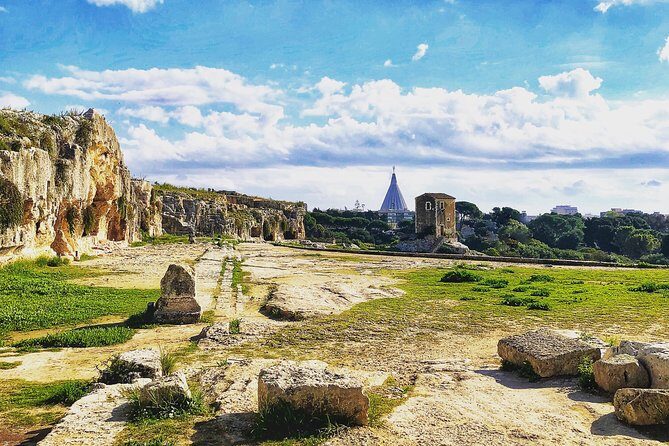
You meet at Neapolis Archaeological Park, Via Luigi Bernabò Brea, 14, 96100 Siracusa SR, Italy. The tour ends back at the meeting point, so you won’t need to figure out logistics at the finish.
A couple practical notes from the tour info:
- You’ll be walking on a site that can require moderate physical fitness.
- Service animals are allowed.
- It’s listed as near public transportation, which helps if you’re not staying right in the center.
Because the tour includes multiple outdoor stops, plan for sun and uneven ground. If you’re the kind of traveler who likes to wander slowly with photos, bring patience—you’ll have a guided pace that prioritizes key sights.
Stop 1: Ear of Dionysius (The Famous Cave and Its Clever Sound)
The tour begins with the Ear of Dionysius, where you’ll spend about 30 minutes. This cave is unique in the way it’s understood and remembered. The “ear” idea isn’t just a spooky nickname—it’s part of how the site’s legend connects to power, listening, and control.
Why this stop works first: it sets the tone for the whole park. You start with a site where history feels almost theatrical. Even if you don’t remember every technical detail, the experience of seeing the space helps you grasp why stories stuck to it over the centuries.
What I’d watch for while you’re in this cave space:
- Ask how legends tie to the physical site, not just the myth.
- If Enrica offers visual explanations (she’s known for using pictures and diagrams), pay attention to those right here, because the cave shapes how you understand everything else.
Possible drawback: because it’s a cave-like stop, it may not be ideal if you’re sensitive to tight, enclosed areas. If that’s you, it’s worth considering how comfortable you are before booking.
Stop 2: Teatro Greco (Greek Theater Big Enough to Impress Anyone)
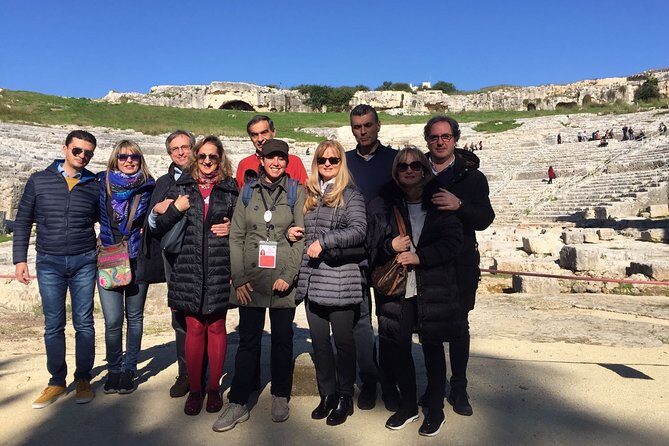
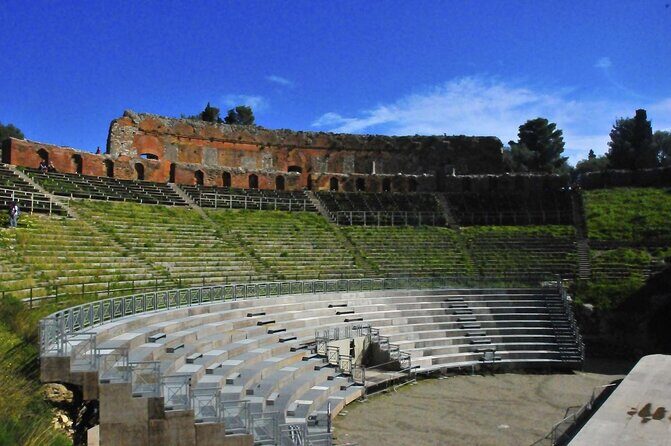
Next you head to the Teatro Greco, with about 15 minutes here. This is described as the third largest Greek theater in the world, and it’s a heavy hitter for anyone even casually interested in theater architecture.
One reason this stop is so satisfying is the contrast it creates. After the Ear of Dionysius, you move from a cave associated with listening and control to a massive public space built for performance and civic life.
If you care about scale, this theater gets talked about in the context of a 16,000-seat capacity (the kind of number that makes you stop and look around). You can stand where people once looked across the stage and imagine how sound and spectacle would carry in a semicircle like this.
Quick tip: bring your questions. A good guide will explain more than structure. You’ll want to understand how Greek theater in Syracuse fits into local culture, and what later Roman use did to the site’s identity.




Stop 3: Ara di Ierone (A Tiny Stop With Big Meaning)
The Ara di Ierone is quick—about 5 minutes—but it’s not a throwaway. This is the Greek altar of the 3rd century BC, dedicated to Zeus.
This stop is easy to underestimate because of the short time. Still, it’s an important piece of the puzzle. If you’ve only learned the park as “the places people watched things,” the altar reminds you that the ancient world also made public meaning through worship and ritual.
For the best experience here:
- Look closely for what the guide points out (edges, layout, inscriptions if they’re visible).
- Ask how an altar functions in Greek city life—who uses it, and why Zeus matters here.
If you’re someone who hates feeling rushed, this is the stop where you might wish you had a few more minutes. On a 1.5-hour tour, not everything gets equal time, and Ara di Ierone is the most likely to feel brief.
Stop 4: Anfiteatro Romano di Siracusa (Roman Power in a Greek City)
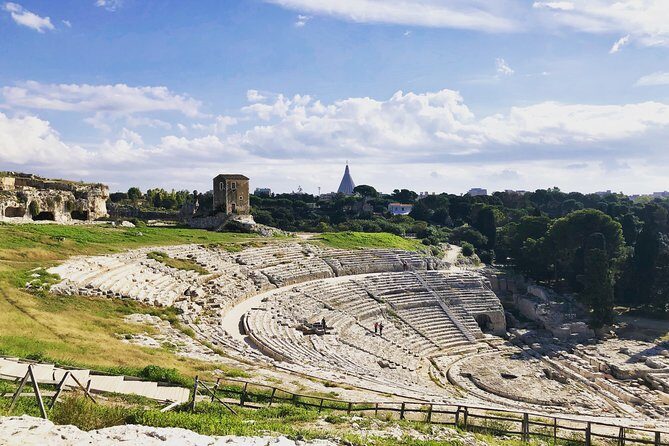
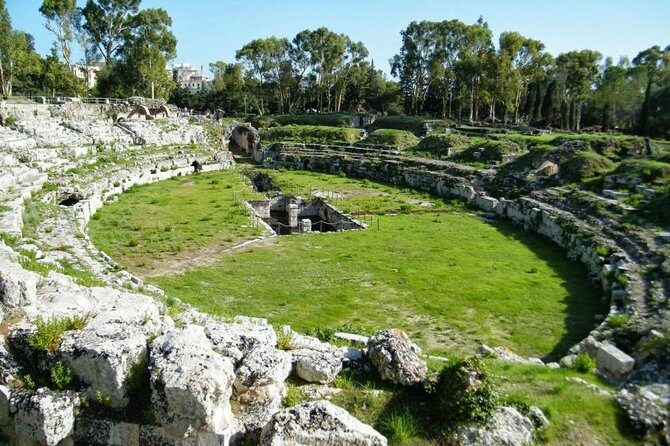
The final major stop is the Anfiteatro Romano di Siracusa, about 10 minutes. It’s described as the fourth largest amphitheater in the world, and that reputation isn’t just marketing. You’re seeing how Roman Syracuse used architecture to project authority and entertain at scale.
This stop is where you get the biggest “compare and contrast” payoff. The Roman amphitheater sits in the same overall park space as Greek monuments, and the differences in design and purpose show you how control shifts from one era to the next.
A Roman amphitheater also invites your imagination in a different way than a Greek theater. Even if you don’t have a specific event in mind, you’ll likely walk away thinking about spectacles, crowds, and the kind of city Syracuse had become.
The Value of a PhD Guide (Not Just Facts, but Connections)
The most highly praised aspect of this experience is how Enrica turns static ruins into a conversation. The reviews you can learn from emphasize a few practical strengths that matter on-site:
- She uses pictures and diagrams to help you visualize what the site once looked like. That’s huge, because Neapolis ruins can be hard to read when parts have deteriorated.
- She answers questions readily. This matters more than people think. A single good question—about timing, myth, or function—can make you see the whole park differently.
- Her explanations connect Greek and Roman periods, instead of treating them like separate trivia sets.
If you enjoy history that feels human (what people did, how they organized public life, why monuments mattered), this guide style will match you well.
And if you’re traveling with teenagers or adults who want more than “pretty rocks,” this approach can make even complicated layers feel manageable.
How Much Do You See in 1.5 Hours?
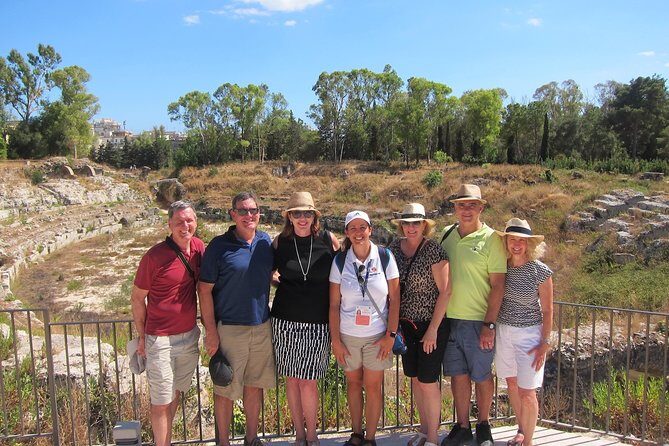
This tour is built as a concentrated hit list. That’s good news if you’re tight on time, but it also explains why it feels focused rather than sprawling.
With 30 minutes at the Ear of Dionysius, 15 at Teatro Greco, then shorter stops at the Ara di Ierone and Roman amphitheater, you’re getting the anchors. You’re not attempting to cover every nook of Neapolis.
That said, the park has other features that some people like to add on their own time—especially if you extend your visit beyond the tour. For example, one commonly mentioned highlight in the broader area is a set of Mitoraj sculptures within the site. Another is the Paradise quarry, a white limestone area with tunnels and caves where voices can echo. Those extras aren’t guaranteed as part of this timed walk, so treat them as options if you’re staying flexible.
If you’re deciding how to plan your day, I’d treat this tour as a “make the site click” session. Then, if you want more, add time afterward to wander and spot what you now understand.
Who This Tour Suits Best (And Who Might Want Something Else)
This is a strong fit if you:
- Want a structured walk through the most important Neapolis monuments
- Prefer small-group interaction, not a crowded, fast-moving tour
- Like asking questions and getting real answers, not just general descriptions
- Enjoy seeing Greek and Roman Syracuse as one story
It may be less ideal if you:
- Want a long, unhurried park exploration with lots of free roaming
- Have limited mobility for uneven outdoor terrain
- Prefer a more independent approach with lots of self-guided signage (you’ll likely still need the guide here)
Booking Tips That Make the Day Easier
A few small decisions can make this experience smoother:
- Plan to pay the €14 entrance fee so you’re not scrambling at the entrance.
- Wear comfortable shoes and expect a mix of walking surfaces.
- Bring a short list of questions before you start. You’ll get more value from your guide if you know what you want to understand.
- If you’re sensitive to caves, check how comfortable you are with enclosed spaces before committing to the Ear of Dionysius.
Also, since this is in English, confirm you’re good with that language level—most people are, but it’s worth stating clearly for your expectations.
Should You Book This Neapolis Archaeological Park Tour?
I think you should book it if you want Neapolis to make sense quickly and you value a PhD archaeologist guide who clearly knows how to explain what you’re seeing. The small group size and the question-friendly approach are exactly what turn famous ruins into a real experience.
Skip it (or pair it with more time) if you want a long, free-form park day. This tour is short by design, and one stop—Ara di Ierone—is intentionally brief.
If your priority is the big monuments plus a guided understanding you can carry with you later, this one is a very good bet.
FAQ
How long is the Neapolis Archaeological Park tour?
It lasts about 1 hour 30 minutes.
What’s the group size for this experience?
The tour has a maximum of 6 travelers.
Is the entrance fee included?
No. The entrance fee to Area Monumentale della Neapolis di Siracusa is €14.00 per person and is not included.
Where does the tour start?
The meeting point is Neapolis Archaeological Park, Via Luigi Bernabò Brea, 14, 96100 Siracusa SR, Italy.
What language is the tour offered in?
The tour is offered in English.
Can I cancel for a full refund?
Yes. You can cancel for a full refund if you cancel at least 24 hours before the start time. Free cancellation is available, and the experience also depends on good weather.