REVIEW · CATANIA
Syracuse, Ortigia and Noto walking tour from Catania
Book on Viator →Operated by EtnaTribe · Bookable on Viator
Three Sicilian eras in one walking day. I really like how this small group tour keeps the pace friendly while still hitting the big sights, and I love the Neapolis ruins stop where Greek and Roman layers are easy to read in a single day. You’ll move from the archaeological park to Ortigia’s island core, then to Noto’s famous honey-colored baroque streets.
One key thing to consider: it’s an 8-hour day with real walking, including uneven stone in the archeological park. This tour is not recommended if walking problems or lots of stairs are an issue.
In This Review
- Key points before you go
- How the day flows from Catania at 8:45 am
- Neapolis Park: Grotta del Cordari to the Ear of Dionysius
- Fonte Aretusa: a quick stop with a sea-breathing view
- Syracuse Cathedral on Ortigia, plus the castle moment
- Mercato di Ortigia and the market streets you can actually feel
- Piazza Duomo: where the layout of Ortigia makes sense
- Temple of Apollo: a fast stop, but a powerful one
- Noto’s baroque time: Cattedrale di San Nicolò and the look of the city
- Price and what you’re really paying for: $129.45
- The guide makes the difference: Salvatore, Enzo, Nando, and Lori
- Pacing, walking, and what to pack for this exact route
- Who should book this Syracuse, Ortigia and Noto day trip?
- Should you book it?
- FAQ
- How long is the Syracuse, Ortigia and Noto tour from Catania?
- What is the price per person?
- Where do we meet, and is hotel pickup included?
- Is entrance to any sites included?
- How big is the group?
- Is the tour offered in English?
- What is the cancellation policy?
Key points before you go

- Max 8 travelers: small-group feel, not a crowd scene
- Hotel pickup in Catania plus return shuttle included
- Neapolis park entry included, so you start exploring fast
- Ortigia highlights in smart chunks: Fonte Aretusa, cathedral area, markets, and squares
- Noto with guided time around the Cattedrale di San Nicolò area
- Guides with strong communication: names you may hear include Salvatore, Enzo, Nando, and Lori, and the timing often gets praised
How the day flows from Catania at 8:45 am
This tour starts at 8:45 am with pickup from your hotel in Catania. You’re not stuck figuring out transfers or juggling schedules. Once you’re in the shuttle, the day becomes a smooth sequence of guided stops with a return trip back included.
The official format is simple: a mobile ticket, an English option, and a multilingual guide depending on the group. The group size is capped at 8 travelers, which matters more than you’d think. In a place like Syracuse, where you can easily lose your way—or waste time waiting—small groups keep the day moving without turning it into a sprint.
Expect an approximately 8-hour outing. That’s long enough to feel like you got your money’s worth, but short enough that you’ll probably finish the day with that good-but-tired feeling. Bring shoes you trust.
You can also read our reviews of more walking tours in Catania



Neapolis Park: Grotta del Cordari to the Ear of Dionysius
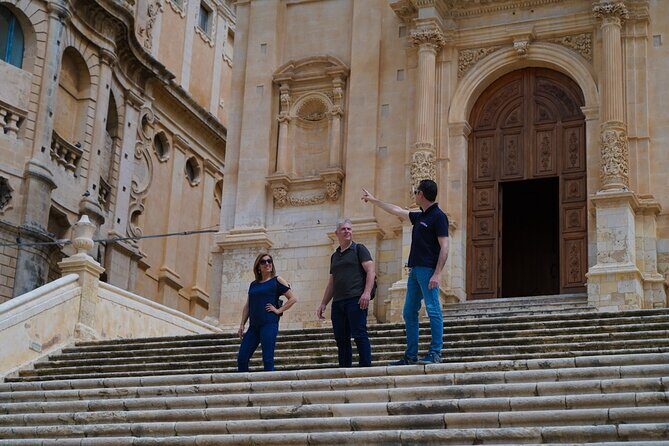
Your day opens at the Parco Archeologico della Neapolis in Syracuse, where the entry ticket is included. This is the big “wow” zone, because you’re not just seeing one monument—you’re walking through an entire historic landscape packed with Greek and Roman engineering.
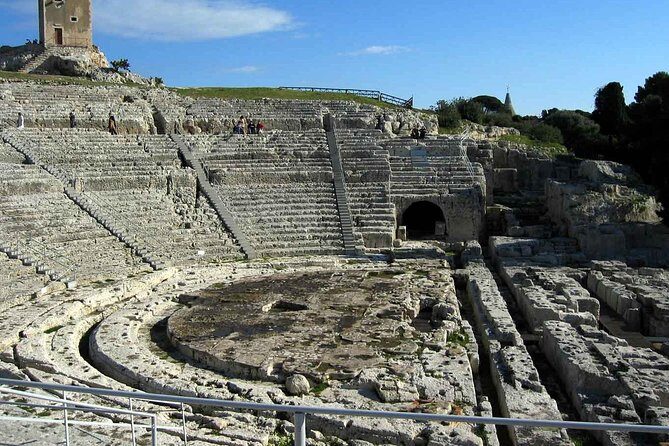
Within the park, you’ll have stops at several signature points, including the Grotta del Cordari, the Ara Ierone, the Latomie, the Necropoli, the Anfiteatro, and the Orecchio di Dionisio (the Ear of Dionysius). The route also includes the theater area and a cave stop.
Why this sequence is so satisfying: the guide can point out how one area connects to another—where people gathered, where they were buried, where rock was quarried, and why the famous ear feature became a symbol of theatrical acoustics. Even if you’re not a total archaeology nerd, you can still follow the story because the stop list is packed with recognizable anchors.
Practical reality check: the park is outdoors and hilly, with paths that can feel uneven. It’s doable for most people, but it’s not a “stroller-friendly” kind of place. If you’re sensitive to long walks, you’ll want to plan for it here, not later.
Also note: the cost includes entry to the park, but it does not include an additional official park guide (on request). In plain terms, you’re relying on the tour guide you’re assigned, and that’s plenty for a well-paced visit.
Fonte Aretusa: a quick stop with a sea-breathing view
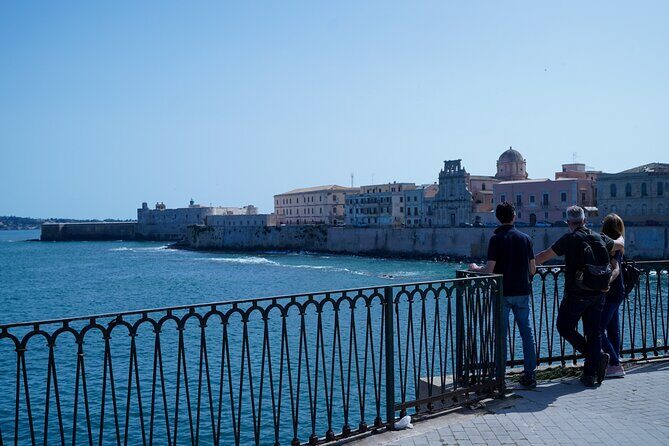
After Neapolis, the tour shifts from ancient stone to the water’s edge with a visit to Fonte Aretusa. The stop is short—about 10 minutes—and admission is free.
Even with limited time, this spot works because it acts like a reset. It’s where the island’s geography becomes real in your mind. You stop, you look around, and you get oriented for the Ortigia portion that follows. It’s also a good moment for photos, since the background is all about that waterfront setting rather than ruins and ticket lines.
Syracuse Cathedral on Ortigia, plus the castle moment
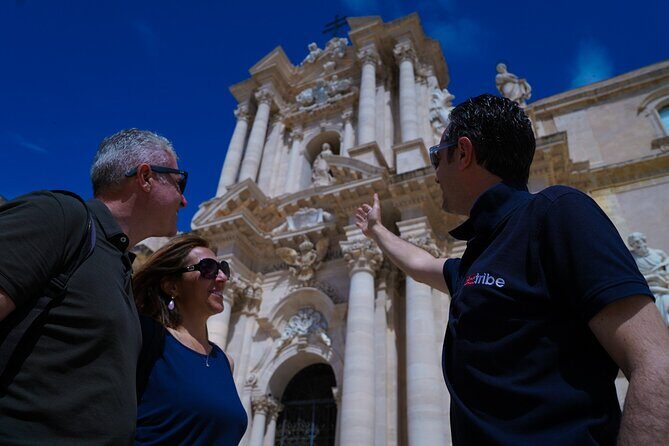
Next comes Syracuse Cathedral on Ortigia, with admission included and a visit time of about 15 minutes. You’ll also get a chance to admire the castle viewpoint as part of this stop.
Ortigia is the old heart of Syracuse—the island core where small streets lead to big impressions. The cathedral visit is short by design, so the guide’s job is to help you see what matters quickly: where you are, what you’re looking at, and how this religious center fits into the broader Syracuse story.
A tip that makes these short cathedral-and-castle stops much better: step back for one photo from a distance, then walk in closer once you know where the best angles are. When you’re short on time, knowing your spot beats taking 30 blurry shots.
Mercato di Ortigia and the market streets you can actually feel
Then the tour heads to the Mercato di Ortigia, again about 15 minutes, with admission free.
This is the part I always like on guided city days because it’s not just monuments—it’s how people live now. Even if you’re not buying anything, a market stop gives you texture: smells, chatter, and the sense that the island isn’t a museum. Your guide also helps you navigate what you’re seeing so you don’t just walk through and hope something clicks.
This is also where small-group energy can help. If your guide is good at reading the room, they’ll give you enough direction to find good snack options or the best corners to watch the scene.






Piazza Duomo: where the layout of Ortigia makes sense
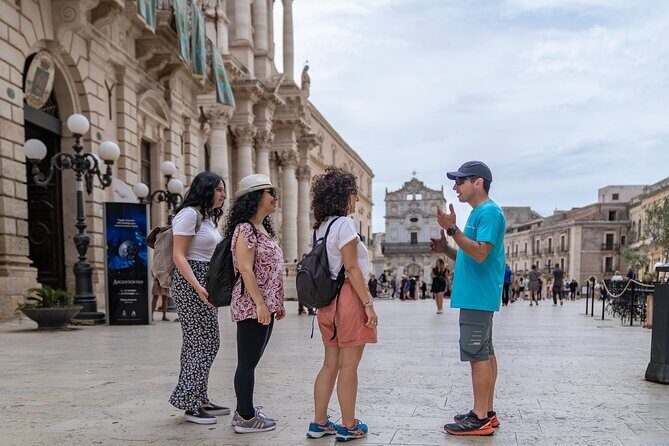
After the market, you’ll stop at Piazza Duomo for about 10 minutes with free admission. This kind of short square visit sounds minor, but it’s often where you mentally map a city.
Squares in Ortigia aren’t just open space. They’re navigation tools. When you see the piazza and then later catch a glimpse toward nearby landmarks, you start understanding the island’s “logic”: why streets bend where they do, and how your next stop connects.
If you like architecture, don’t rush this. The best tactic is to stand still for 60 seconds, look around, and let the shapes settle.
Temple of Apollo: a fast stop, but a powerful one
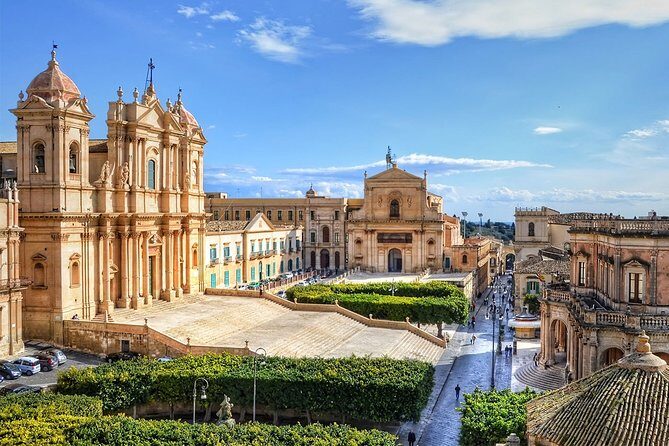
Next is Temple of Apollo (Tempio di Apollo) for about 15 minutes, free admission.
This is one of those sites where even a short visit can leave a strong impression. Your guide can point out details you might miss on your own—like how the ruins still communicate scale, craftsmanship, and purpose.
Because the stop is timed, you won’t spend an hour tracing every column. Instead, you’ll get a guided orientation so that when you walk away, the place still makes sense in your head.
Noto’s baroque time: Cattedrale di San Nicolò and the look of the city
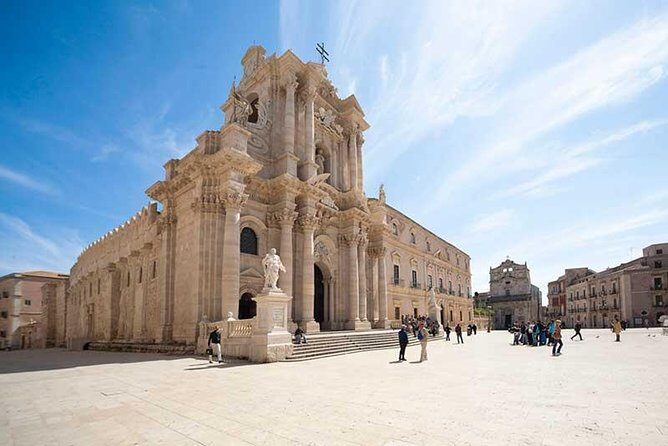
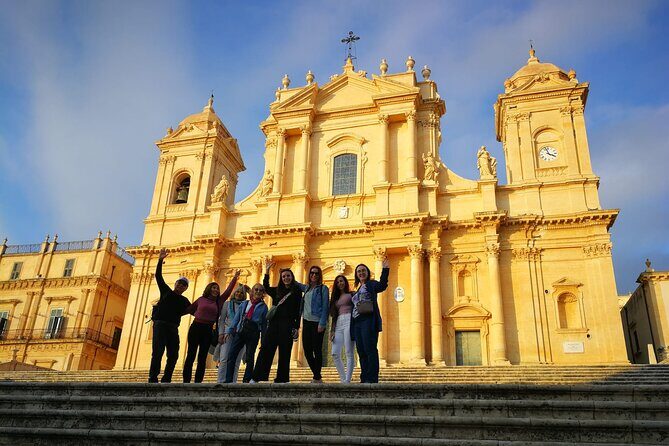
After Ortigia, the day moves to Noto, known for baroque architecture that turns gorgeous in the right light. Your planned stop includes time at Cattedrale di San Nicolò, about 15 minutes, with free admission.
The itinerary also includes additional time blocks labeled around Noto, which in practice means you’re not just stopping at a church door and leaving. You’ll be walking through key parts of town with enough structure to see what Noto is about—its shape, its church façades, and the way the streets pull you from one landmark to the next.
Here’s the best way to enjoy Noto with a group like this: treat the guided time as your “first read.” Use what the guide shows you to spot baroque cues on your own—broken lines in façades, statue placement, and the way churches dominate the streetscape. When you catch those patterns, the city becomes fun instead of just pretty.
If you want to plan your photos, aim to find one broad street view early, then switch to close-up details like doorways and façade edges as the light shifts. Noto changes with the sun, so the order matters.
Price and what you’re really paying for: $129.45
At $129.45 per person for about 8 hours, the price is not “cheap,” but it also doesn’t feel inflated for what you get.
Here’s why it works for many people:
- Hotel pickup and return shuttle are included, which saves time and mental energy.
- A multilingual guide is included, and the guide’s job is real here: coordinating several timed stops across three distinct areas.
- Entrance tickets are included for Neapolis park and Syracuse Cathedral. That’s part of the cost you’d otherwise pay separately.
Where you should stay honest with your expectations: this isn’t a long, slow tour with extended museum time. It’s a structured “see the essentials” day with guided orientation and photo windows. If you’re the type who wants to linger for an hour in one church or do deep study in one ruin, you may end the day feeling a bit compressed.
Still, for most first-time visitors, the value comes from leaving with clear mental connections: Neapolis explains the ancient world. Ortigia gives you the lived-in island vibe. Noto brings the baroque payoff.
The guide makes the difference: Salvatore, Enzo, Nando, and Lori
The highest praise in the group feedback is about how smoothly the day runs. When you read between the lines, the guides aren’t just reciting facts. They’re managing timing, pacing, and navigation so you don’t lose the thread.
Names that show up again and again include Salvatore, Enzo, Nando, and Lori. What seems consistent across them:
- Clear explanations without turning lectures into roadblocks
- Communication that helps you find the right meeting points and get back on schedule
- A small-group feel where questions actually get answered
- Enough free time for photos and self-exploration rather than nonstop talking
One practical note from experience-style comments: some guests felt the day benefitted from a bit more engagement at certain stops, especially in Syracuse park time. That doesn’t mean the tour is lacking—it means you should be ready to actively ask questions and point out what you want to focus on. In a structured day, your curiosity is part of the experience.
Pacing, walking, and what to pack for this exact route
This is a “comfortable-but-active” day. The tour isn’t described as a hard hike, but the sites include uneven ground and lots of walking, especially at Neapolis.
I’d pack like this:
- Good walking shoes with grip (park paths can be unpredictable)
- Sunscreen and sunglasses (you’ll be outdoors much of the day)
- A water bottle, because you’ll have stops but not long café breaks everywhere
- A plan for photos: keep your camera accessible so you don’t miss the best angles
Also, because the group is small and the day moves between different areas, keep an eye on your guide and the pickup rhythm. One stress-free trick: don’t drift too far during the short stops. Even a 5-minute separation can feel big on a tight schedule.
Who should book this Syracuse, Ortigia and Noto day trip?
This tour is a strong match if:
- You want three standout places (Syracuse/Ortigia/Noto) without coordinating transport yourself
- You like guided context that helps you understand what you’re seeing fast
- You prefer a small group with more breathing room than large bus tours
- You’re okay with a day that’s structured, with short windows at each main site
It’s not the best match if:
- You have mobility issues or walking limits. The tour specifically says it’s not recommended for travelers with walking problems.
- You want lots of unstructured time in just one city. This day is designed for breadth.
Should you book it?
If your goal is a well-organized day that links Neapolis, Ortigia, and Noto with an experienced guide, then yes—this one is worth your attention. The included park entry and the hotel pickup/return shuttle do real work for your time, and the small group size keeps the day from feeling chaotic.
My only “maybe” is for visitors who want slower pacing or deep time in a single site. This tour gives you the essentials and the story, but it doesn’t pretend you’ll do everything at once.
If you like history plus strong visual rewards, and you’re happy to walk, book it. If you’d rather slow down, consider adding an extra night in one place and touring it at a calmer pace.
FAQ
How long is the Syracuse, Ortigia and Noto tour from Catania?
It lasts about 8 hours (approx.).
What is the price per person?
The price is $129.45 per person.
Where do we meet, and is hotel pickup included?
Pickup is at your hotel in Catania, and you’ll also get return shuttle bus service included.
Is entrance to any sites included?
Yes. The tour includes entrance ticket to the Archeological Park of Neapolis and includes the Syracuse Cathedral admission listed as included.
How big is the group?
The maximum group size is 8 travelers.
Is the tour offered in English?
Yes. It’s offered in English (and may be operated by a multilingual guide).
What is the cancellation policy?
You can cancel for a full refund if you cancel at least 24 hours before the experience’s start time. If you cancel less than 24 hours before, the amount paid is not refunded.