REVIEW · CATANIA
From Naxos: Syracuse, Noto, and Catania Baroque Tour
Book on GetYourGuide →Operated by Discover sicily with mario · Bookable on GetYourGuide
Baroque streets and ancient ruins in one day. This full-day private tour strings together Syracuse’s Neapolis with key archaeological stops and Noto’s baroque center—guided by a live English/Spanish expert. I like how it’s organized as a route, so you spend your limited time seeing highlights instead of getting lost in planning.
I also like the mix of big-ticket sites and street-level walking: you get the Greek Theatre and Ear of Dionysius moments, then you’re out on Ortigia for the Temple of Apollo, Duomo square, and the Aretusa fountain. One possible drawback: the day moves fast, and you’ll have time to explore on your own in each town, not a constant, step-by-step guided walk everywhere.
In This Review
- Key points to know before you go
- Why Syracuse, Noto, and Catania in One Day Works
- Pickup, timing, and the real pace (8 hours is not “slow travel”)
- Neapolis in Syracuse: Greek Theatre, Ear of Dionysius, and Latomie
- Ortigia on foot: Temple of Apollo, Duomo square, and Aretusa
- Noto’s Porta Reale entrance and the baroque walking loop
- Catania by Via Etnea: baroque city center and Santa Agata cathedral
- What the live guide actually adds (English and Spanish)
- Private group value: $677.54 for up to 6, and why that can be fair
- Who this baroque-and-ancient day tour suits best
- Quick decision: should you book this tour?
- FAQ
- How long is the tour?
- Where does the tour pick up from?
- Is hotel pickup and drop-off included?
- What sites are included in the day?
- Is there a live guide?
- Is this tour private?
- Will I have time to explore on my own?
- Is the tour wheelchair accessible?
- How much does it cost?
- Can I cancel and get a refund?
Key points to know before you go
- Private group up to 6 means a more flexible, personal pace than big-coach touring.
- Neapolis in Syracuse includes the Greek Theatre, Ear of Dionysius, and Latomie.
- Ortigia walking time hits Temple of Apollo, Duomo square, and Aretusa fountain.
- Noto’s baroque highlights start at Porta Reale and include St. Francesco and its staircase plus Palazzo Ducenzio.
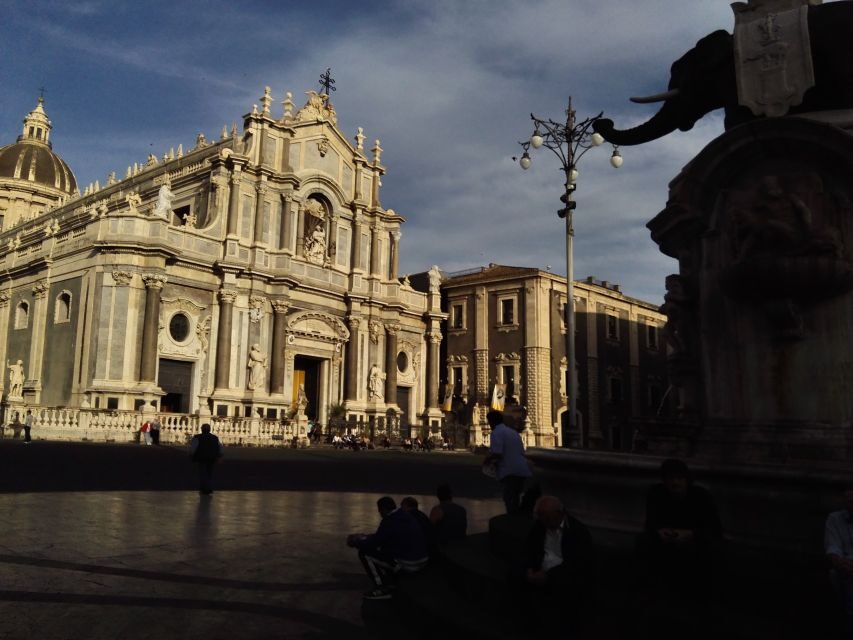
- Catania by Via Etnea finishes with a stop at Santa Agata cathedral.
Why Syracuse, Noto, and Catania in One Day Works
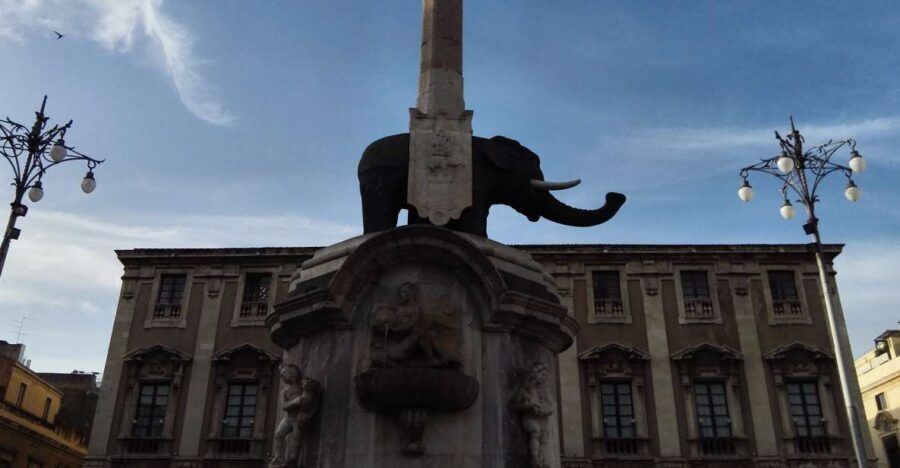
This is the kind of day trip that makes sense on the east coast of Sicily. You’re not jumping randomly between towns. Instead, you get one clean arc: ancient stone in Syracuse, a walking island in Ortigia, baroque architecture in Noto, then city-scale sights in Catania.
I like this structure because it answers a common Sicily problem: how do you see a lot without turning every stop into a sprint? The guide’s job is to set you up with what matters most at each site, so when you’re on your own time, you know where to look and what’s worth slowing down for.
Also, the tour is a private group (up to 6) with round-trip transfers from Catania, Taormina, and Giardini Naxos. That matters if you’re trying to make the most of daylight hours.
You can also read our reviews of more tours and experiences in Catania.



Pickup, timing, and the real pace (8 hours is not “slow travel”)
The tour runs about 8 hours, and starting times vary by availability. You’re picked up and dropped off from an agreed meeting place, and the driver will be holding a sign with your last name on it. Plan to wait in the hotel lobby about 10 minutes before pickup so you don’t miss the window.
Here’s the pacing reality: the day includes guided time with the live guide, but you’ll also get 1–2 hours to explore once you’re in each city. In practice, that means you’ll likely do a guided orientation, then you’re off to soak up the sights at your own speed.
This can be a positive. It gives you room for photos, breaks, and detours for viewpoints. Just don’t expect the guide to be whispering facts into your ear at every single step for the entire day. If you want more constant narration, you’ll need to ask questions right when you get your bearings.
Neapolis in Syracuse: Greek Theatre, Ear of Dionysius, and Latomie
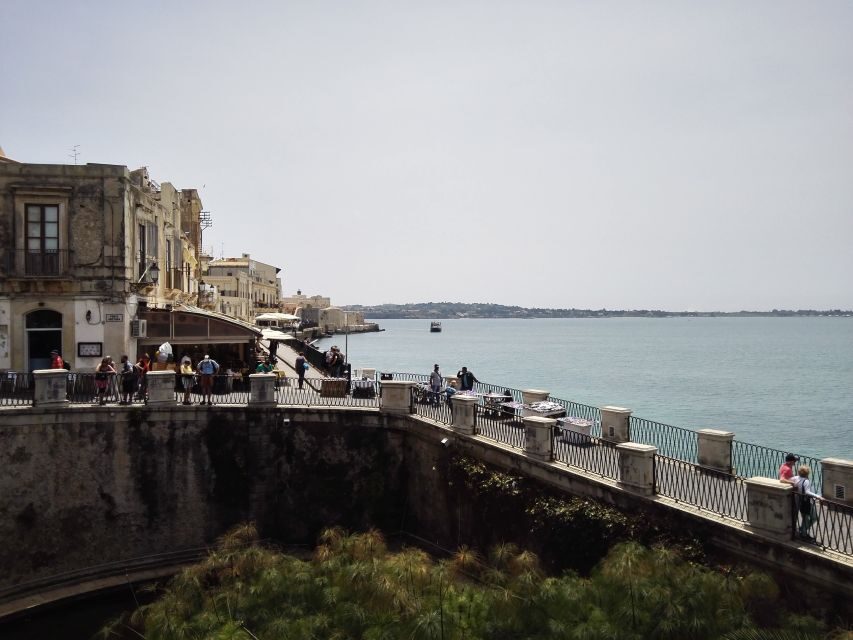
Syracuse starts you off with the heavy-hitter archaeological area of Neapolis. The tour begins at the Roman ruins there, which sets the tone: this isn’t just pretty streets. It’s built environments, carved history, and large-scale ruins that make you look up.
The highlight list here is strong and specific:
- the Greek Theatre
- the Ear of Dionysius
- the Latomie
I love stops like this because they reward curiosity without needing a PhD. Even if you’ve only seen pictures before, once you’re standing there you start noticing how the spaces are shaped—how sound and sightlines work in a theatre, or how the rock-cut areas create a completely different feel than modern streets.
Practical tip: wear comfortable shoes. You’ll be moving across archaeological ground, and you don’t want to be thinking about your feet instead of what you’re seeing. If you’re the type who likes to take in details, bring a moment of patience—this is the part of the day where you’ll want a little extra time just to absorb scale.
Ortigia on foot: Temple of Apollo, Duomo square, and Aretusa
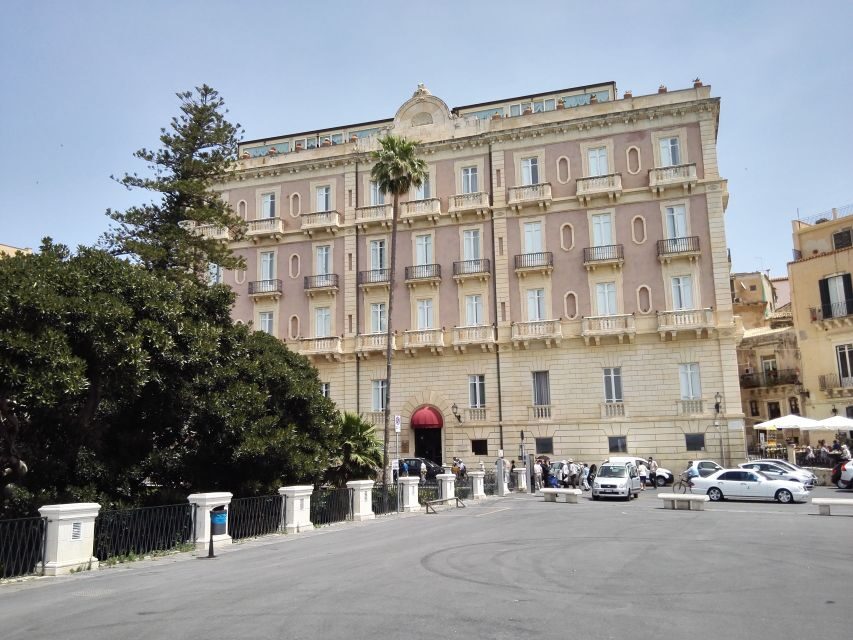
After Syracuse, the day turns toward Ortigia, the island area that’s known for its ancient temples and scenic strolling. This is the “walk and look” section of the tour, where the history feels more visible in everyday surroundings.
The key sights listed for Ortigia are:
- Temple of Apollo
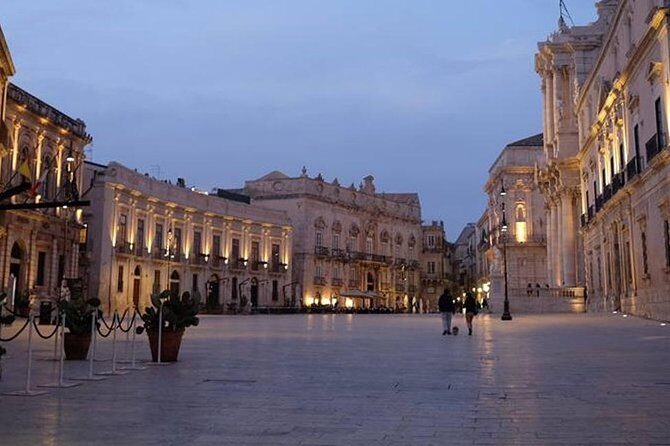
- Duomo square with the Cathedral of Saint Mary of the Immaculate Conception
- the Aretusa fountain
I like Ortigia because it’s easier to enjoy in real-world time. In many ancient areas, you spend your energy decoding ruins. Here, you’re also enjoying the atmosphere—walking between major landmarks, stopping at squares, and getting a feel for the layout.
One more tip: if your goal is photos, plan your route before you fan out. Ortigia can be a maze of side streets, so a quick check with the guide about what direction to head makes self-exploration more productive. Once you know where the main points are, you can spend your time wandering for mood instead of wandering to find basics.
Noto’s Porta Reale entrance and the baroque walking loop
Then comes Noto, the baroque town that people visit for its architecture in a very specific way: you’re not just looking at one building, you’re seeing an entire town design rhythm.
The tour’s Noto highlights begin right at Porta Reale, described as the entrance of the baroque city. That’s a smart way to structure the visit: you transition from the approach into the center with a sense of arrival.
From there you’ll focus on:
- the Church of St. Francesco and its perfect staircase
- Palazzo Ducenzio
- the Cathedral
I like this part of the itinerary because Noto’s baroque style works best when you’re walking. Details show up as you change angles, and the facades feel different at different times of day. If you’re prone to rushing, keep one slow stop in your pocket. That staircase and the surrounding church area tend to make people want to pause and look longer than expected.
Potential drawback to keep in mind: Noto is baroque, which means it can tempt you to look everywhere at once. If you’re not careful, you end up doing a lot of staring without really taking in what makes each spot important. Use the guide’s setup time to pick your top two stops inside Noto, then let the rest be bonus.






Catania by Via Etnea: baroque city center and Santa Agata cathedral
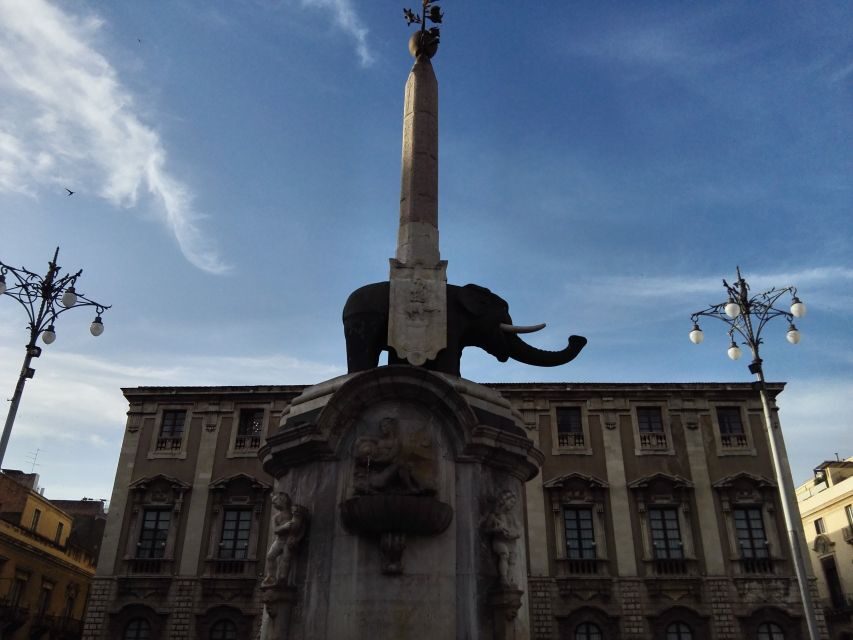
Catania is where the tour shifts from “town beauty” into “big-city streets.” You’ll stroll Via Etnea, see baroque buildings across the city center, and finish with Santa Agata cathedral.
The itinerary describes this as a panoramic tour of Catania, which is useful. A panorama-style wrap-up helps you connect what you saw earlier to the city scale—how the baroque look adapts from town centers into a larger urban setting.
I like Via Etnea as a final act because it’s a visual spine. You get movement, windows, street views, and enough change in scenery to keep the day from feeling repetitive.
If you’re into architecture, keep your eyes open at the edges of the street too. Even when the main sights are the church stops, the baroque feel often shows up in the smaller facade details between them. It’s less about one perfect photo and more about building a “mental map” of the city’s style.
What the live guide actually adds (English and Spanish)
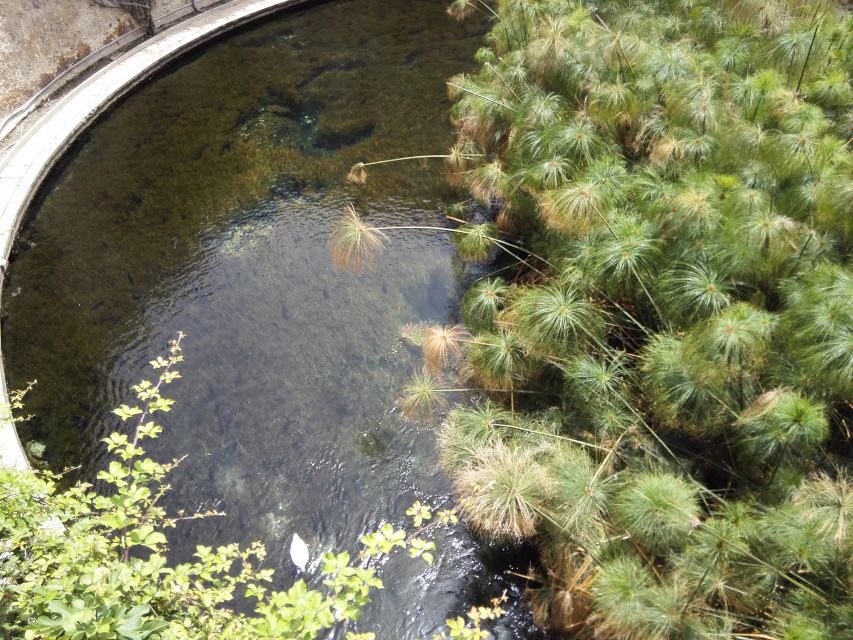
You’ll have a live tour guide speaking English and Spanish. One of the biggest strengths of this tour is how the guide frames what you’re seeing. Instead of giving you a long lecture you might forget, the guide helps you notice the right things, then you go look.
Guides like Fabio and Ignazio come up in the experience notes for being accommodating and helpful. That’s a big deal on a day with multiple towns, because your success depends on how well you can turn limited time into meaningful looking.
A simple strategy: before each main stop, ask the guide what not to miss and where to stand for the best views. Then when you’re on your own time, you’ll feel guided even while you’re walking free.
Private group value: $677.54 for up to 6, and why that can be fair
The price is listed as $677.54 per group (up to 6). That’s often where private tours can look expensive—until you do the math and compare your alternatives.
If you fill the group (6 people), the cost works out to about $113 per person. If you’re fewer than 6, the per-person number rises, but you still get the real perks: private pickup/drop-off, a live guide, and a tighter experience than joining a large group.
For me, the value comes from the combination:
- you cover four major areas (Syracuse/Neapolis, Ortigia, Noto, Catania)
- you get transfers from multiple starting points on the east coast
- you avoid spending half your day figuring out timing and connections
This tour is best if you’re traveling in a group of friends, a family, or a small circle that wants one shared plan instead of four separate day plans.
Who this baroque-and-ancient day tour suits best
This tour fits you if you want:
- a single-day route that hits ancient archaeology plus baroque towns
- a guided setup so your self-exploration time is more productive
- a private group pace rather than a rushed group-shepherding experience
It’s especially appealing if you’re staying around Catania, Taormina, or Giardini Naxos and want to see the east-coast highlights without packing your schedule with multiple transport plans.
If you want an ultra-long, fully guided walking tour of every street in each city, this may feel too “on your own” at certain moments. But if you’re comfortable exploring independently with a good starting map, it’s a very efficient way to spend a day in Sicily.
Quick decision: should you book this tour?
Book it if you want a structured day that links together Neapolis in Syracuse, Ortigia, Noto, and Catania with a live guide and transfers included. The private-group setup helps you move with less stress, and the specific site list is strong: Greek Theatre, Ear of Dionysius, Latomie, Temple of Apollo, Duomo square, Aretusa fountain, plus Noto and Santa Agata.
Skip it if your ideal Sicily day is slow, deeply guided, and mostly walking with constant narration. With self-exploration time built in, you’ll enjoy it most if you’re the type who asks good questions and then uses your time well.
FAQ
How long is the tour?
The tour duration is listed as 8 hours. Starting times vary, so check availability for the specific departure you want.
Where does the tour pick up from?
Pickup is included from agreed locations, including Catania, Taormina, and Giardini Naxos.
Is hotel pickup and drop-off included?
Yes. The provider includes pickup and drop-off for all customers at the agreed place.
What sites are included in the day?
The tour includes Neapolis in Syracuse, Ortigia, Noto, and Catania (including Via Etnea and Santa Agata cathedral).
Is there a live guide?
Yes, there is a live tour guide. Languages listed are English and Spanish.
Is this tour private?
Yes. It’s a private group experience with up to 6 people.
Will I have time to explore on my own?
Yes. The structure includes guided time and then time to visit the cities on your own (listed as about 1–2 hours).
Is the tour wheelchair accessible?
Wheelchair accessibility is listed as available.
How much does it cost?
The price is listed as $677.54 per group up to 6.
Can I cancel and get a refund?
Free cancellation is listed: cancel up to 24 hours in advance for a full refund.