Etna hikes don’t feel ordinary. This one climbs toward Europe’s highest active volcano craters, with a morning start and a guide who keeps an active, working volcano from turning into a risky day.
I love how the route is built around crater viewpoints like Bocca Nuova and the North East Crater, so you’re not just walking through ash for hours. I also like that the tour supplies real hiking gear (including boots and a helmet), which matters a lot when the wind starts biting. One possible drawback: the hike can be physically tough at altitude, and access rules can limit how high you’re allowed to go on any given day.
In This Review
- Key things that make Etna Summit Craters worth your time
- Etna Summit Craters: the payoff of climbing Europe’s most active volcano
- Getting to 2900m: why the ride matters as much as the hike
- The ascent to Bocca Nuova: where the “Europe’s highest active crater” feeling hits
- Voragine and the North East Crater climb: steep, short, and worth the effort
- Valle del Bove descent: ash, scoria, and the legs-on-fire phase
- Equipment and guide style: how AITNE keeps an active volcano doable
- Price and value: what you’re really paying for (and what’s extra)
- Who should book this Etna summit craters hike (and who should not)
- Weather, gas, and packing tips that can save your day
- Should you book the Etna Summit Craters hike with AITNE?
- FAQ
- What’s the duration of the Etna Summit Craters tour?
- What time does the tour start and where does it meet?
- Is the tour offered in English?
- What’s included in the price?
- What costs extra during the day?
- How fit do I need to be?
- How big are the groups?
- Is the hike guaranteed to reach the very top?
- What should I bring for conditions on Etna?
- What’s the cancellation policy if the weather is bad?
Key things that make Etna Summit Craters worth your time
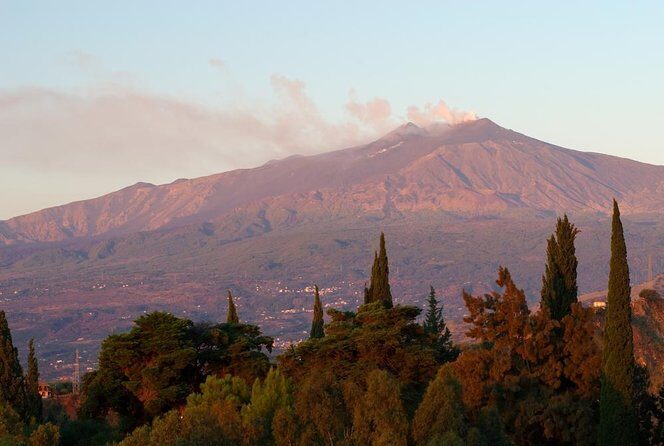
- Bocca Nuova first, then the Voragine for big “active volcano” moments (Central Crater views)
- A real ascent by cable car and 4×4 up to 2900m before the walk begins
- Guide-led safety on unstable terrain where paths are not like a normal trail
- Provided equipment like boots, jacket/layers, and a helmet
- 360° crater wandering on clear days with a possible view toward the Aeolian Islands
Etna Summit Craters: the payoff of climbing Europe’s most active volcano
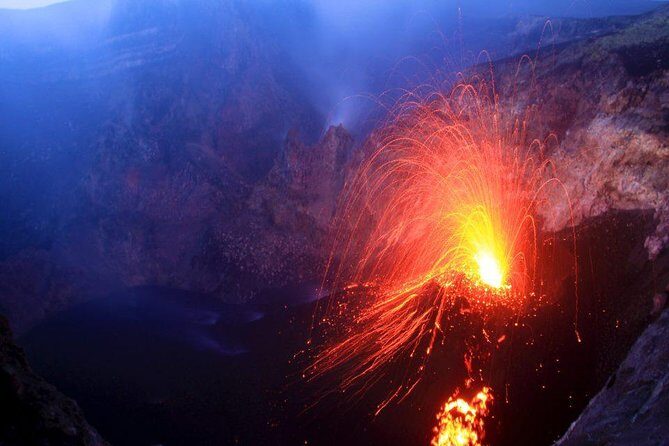
If you’re aiming for a trip that feels like you’re standing on the edge of a living planet, Mount Etna delivers. This is an active volcano hike where the “scenery” comes with a dose of real-world unpredictability: wind, volcanic gases, and changing access rules.
The timing helps too. You start at 9:00 am, so you get a full morning of crater walking and still keep your evening free in Sicily. And because the group size tops out at 15 travelers, you’re less likely to get lost in a crowd while the guide manages the pace.
Most importantly, this tour isn’t a vague “Etna experience.” It’s structured around specific crater areas—Bocca Nuova in the Central Crater, the Voragine, and then a climb toward the North East Crater when permitted.
You can also read our reviews of more tours and experiences in Sicily.
Getting to 2900m: why the ride matters as much as the hike
Your day starts with transport up to about 2900m in the Torre del Filosofo area—first by cable car, then by 4×4/minibus. That does two useful things for you:
First, it saves your legs for the real work. You’re not trying to hike from sea level to crater rim. Second, it puts you into the right altitude zone early, so the later climb feels like progression rather than a sudden shock.
One thing to plan for: the cable car and the 4×4 are not included in the tour price. Expect to pay extra for the round-trip transport up to 2900m. Several people reported paying in the neighborhood of €60–€78 per person for that portion, and at least one person found payment required in cash. If you go with a credit-only mindset, you could end up hunting for an ATM at the worst possible moment. Bring cash just in case.
The ascent to Bocca Nuova: where the “Europe’s highest active crater” feeling hits
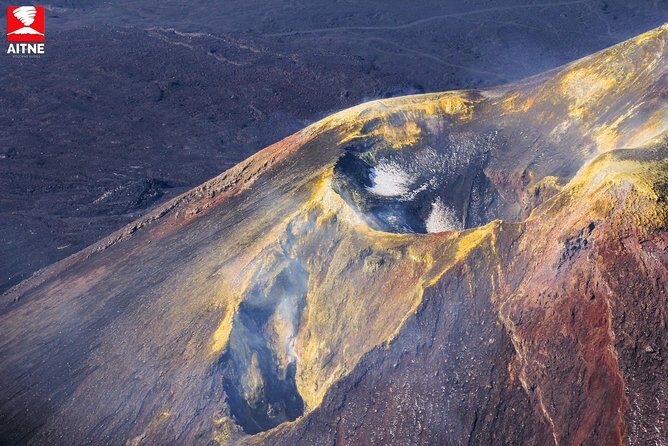
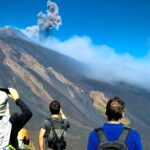
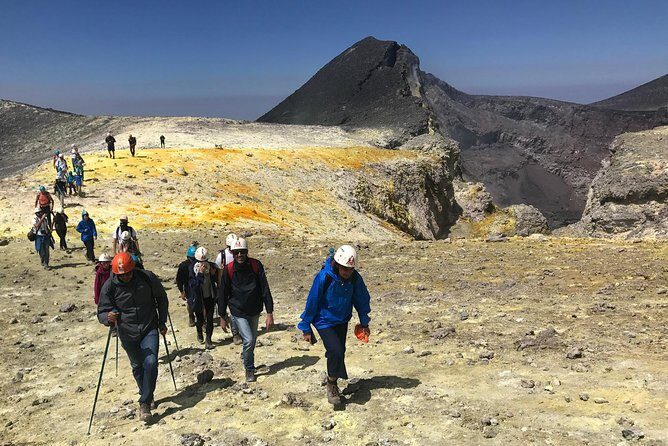
After the cable car/4×4 drop-off at around 2900m, you start walking uphill for about 1.5 hours to the edge of the Central Crater. This is the part where the day tells you quickly what kind of hike it really is: steady uphill, uneven ground underfoot, and altitude that changes your breathing even if you’re fit.
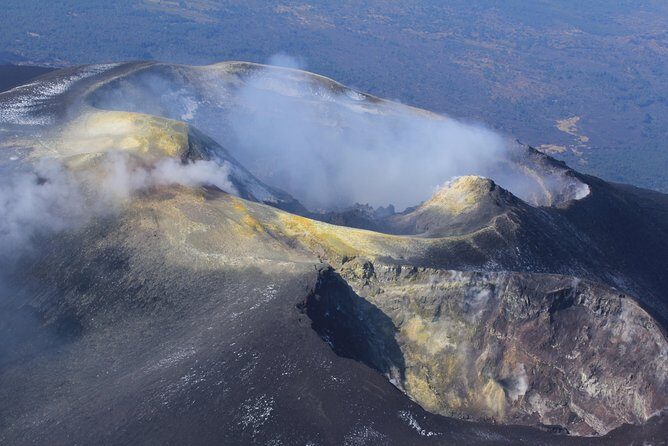
When you reach the crater edge, Bocca Nuova becomes your first major target. Bocca Nuova sits at about 3250m, and it’s often described as the most impressive crater area on Etna. The reason it’s so striking is simple: you’re looking into a system that’s visibly part of the volcano’s current story, not just a museum display.
A practical note: wind is common at altitude. A few people ended up skipping the full hike because it was very windy, and one guide screened for whether the trek was suitable at the start. If wind tends to mess with you (or if you have asthma), take that screening seriously.
Voragine and the North East Crater climb: steep, short, and worth the effort
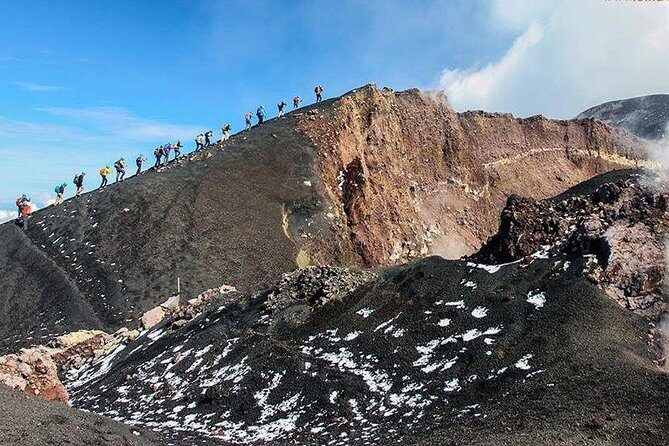
Once you’ve seen Bocca Nuova, you move along to the edge of the Voragine, the heart of the Central Crater. From there, you do a steep but short climb up toward the North East Crater (around 3329m when access allows).
This is the section where good guidance really shows. Guides manage spacing, pace, and footing so the group stays together without turning the hike into a sprint. People also praised guides for helping with descents and adjusting speed for different ability levels.
If the day is clear, there’s also the famous part: a 360° view from up top. On good visibility days, you might even be able to see the Aeolian Islands to the north. That’s not guaranteed, but it’s exactly the kind of payoff you’re paying for—crater views that feel bigger than the photos.
One key reality check: access rules can change. Even if the tour is marketed as a summit experience, volcanic activity and local regulations can force a stop around 3000m (or thereabouts). That doesn’t make the hike less impressive, but it can change what you expect if you’re planning around reaching the very highest point.
Valle del Bove descent: ash, scoria, and the legs-on-fire phase
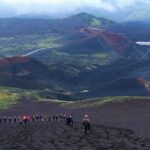
After crater time, you begin the long descent. It’s described as steep but “easy” in the sense that you’re not rock-climbing—still, it can be tough because the ground is made of volcanic ashes and scoria.
This descent passes through the volcanic amphitheater known as the Valle del Bove, a caldera roughly 8km long and 4km wide. Even when you’re focused on your footing, it’s one of those places where the scale becomes obvious fast. It’s not a gentle walk through pretty terrain. It’s volcanic terrain that’s moving under your shoes in a slow, gritty way.
Plan for this: your calves and knees will feel the difference. It helps to use the supplied boots well (and to wear them before the day if you can). A good guide makes a huge difference here, too—people praised guides for keeping everyone safe and sheltered when winds pick up.
The route loops back to the upper station area of the cable car at about 2500m.

Equipment and guide style: how AITNE keeps an active volcano doable
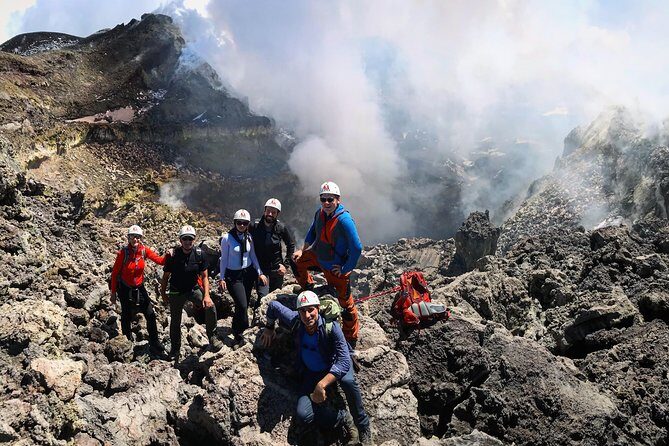
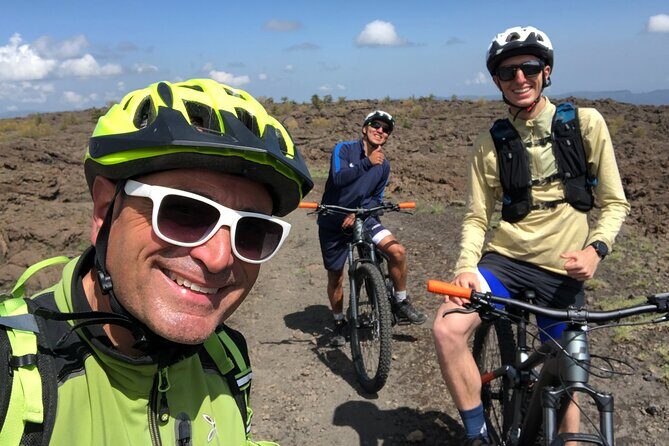
The tour includes hiking equipment, including trekking boots, a jacket/layers (felapt), and a helmet. That’s a big value point. When you’re on an active volcano, the right footwear and protection aren’t optional details—they change your comfort and safety.
What really stood out in the experience is how much the guide matters. Names that showed up repeatedly include Marco, Vincenzo, Simone, Fabio, Giuseppe, Davide, Mario, Nino, and Massimo. Guides were repeatedly praised for being careful with group pacing and for making sure people feel safe during steep or windy moments.
Expect active guidance, not just a lecture. Guides explained what you’re seeing, guided the route where paths aren’t normal trail walking, and handled changing conditions. Because Etna isn’t static, the guide’s job is also to adapt.
Price and value: what you’re really paying for (and what’s extra)
The advertised price is $84.69 per person and the tour runs about 5 hours. For many people, that price covers the guide and the included equipment, plus the logistics of getting you into the right crater areas with others.
But the money math you should do is this: the cable car and 4×4 up to around 2900m are excluded. Multiple reports put that extra transport cost roughly in the €60–€78 per person range. So your true all-in cost is closer to the “guides + gear + transport” total, not just the base tour price.
Is it still good value? For most hikers, yes—because you’re not self-navigating an active volcanic zone. You’re paying for a guide who can manage steep sections, windy conditions, and changing access rules, plus you’re using supplied safety gear.
If you travel on a tight budget, you’ll need to plan for that extra transport upfront. If you ignore it, you might feel like the trip cost more than it did on the first page. If you plan for it, the value story gets clearer.
Who should book this Etna summit craters hike (and who should not)
This hike is for people with at least moderate physical fitness. It’s listed as not recommended for those with asthma problems, and a few people reported altitude and wind as major factors.
You’ll also want to be honest with yourself about hiking experience. Etna’s ground isn’t a manicured trail. It’s uphill, windy, and can involve steep terrain with volcanic surfaces. People praised guides for helping, but the hike still requires stamina and comfort with altitude.
Kids are a tricky category. One review experience noted that under 12 wasn’t suitable, with a guide advising against continuing for a younger child. If you’re bringing children, plan to be flexible and accept that you may be turned around at the start.
If you’re the type who loves big views and can handle challenging conditions, you’ll probably feel rewarded fast. If you hate heights, shaky terrain, or bad breathing days, you may want to choose a lower-intensity Etna option instead.
Weather, gas, and packing tips that can save your day
This is a volcano. So you pack for wind and surprise.
Several people noted that conditions could include very windy weather, and at the top the air can include volcanic gases. One practical takeaway from the experience: consider bringing a FFP2 mask (or a buff/mask setup you can use quickly). If the gas is strong, it can feel unpleasant in your throat.
Also pack for cold. One person specifically suggested bringing a hoodie and jacket for June conditions. That tracks with the reality of altitude: even if Sicily is warm down in Nicolosi, the crater rim can feel sharp.
For food and water, don’t run light. People mentioned the hike can stretch beyond 5 hours, and that snacks alone might not cover you. If you’re the kind who burns fuel quickly when climbing, bring enough to avoid a mid-hike scramble.
Finally, don’t underestimate descent fatigue. A steep descent over ash and scoria can wipe you out faster than the climb feels. Water, pacing, and good shoes matter more than you might think.
Should you book the Etna Summit Craters hike with AITNE?
Book it if you want a guided, crater-focused Etna day with provided hiking gear, a small-ish group, and a route that takes you to Bocca Nuova and toward the North East Crater when access allows. It’s the kind of experience that feels like more than a tour stop.
I would hold back (or choose a different Etna format) if you have asthma issues, strong breathing sensitivity at altitude, or you know wind and steep terrain stress you out. Also think twice if you’re expecting a guaranteed full summit to the highest point; regulations can force stops around 3000m.
If you do book: bring cash as a backup for the cable car/4×4, pack a mask/buff for gas, dress for wind and cold, and be ready for a real hike. Do that, and you’ll have the kind of Etna day you remember long after you’ve left Sicily behind.
FAQ
What’s the duration of the Etna Summit Craters tour?
The tour lasts about 5 hours.
What time does the tour start and where does it meet?
It starts at 9:00 am at La Terrazza Dell’EtnaEtna Sud, Piazza Vittorio Emanuele, 95030 Nicolosi CT, Italy. The tour ends back at the meeting point.
Is the tour offered in English?
Yes, English is listed as one of the available languages.
What’s included in the price?
The price includes the guide and hiking equipment, including trekking boots, a jacket/layer (felapt), and a helmet.
What costs extra during the day?
The round-trip cable car and jeep up to 2900m are excluded, and private transportation is not included.
How fit do I need to be?
The tour is listed for people with moderate physical fitness. It’s also noted as not recommended for those with asthma problems.
How big are the groups?
The maximum group size is 15 travelers.
Is the hike guaranteed to reach the very top?
Access can change based on weather and regulations. The program may need to stop below the highest point depending on what’s allowed that day.
What should I bring for conditions on Etna?
Bring clothing suitable for wind and cold at altitude. Also consider bringing protection for volcanic gas such as a mask or buff, since conditions at the top can be uncomfortable.
What’s the cancellation policy if the weather is bad?
You can cancel up to 24 hours in advance for a full refund. The experience requires good weather, and if it’s canceled due to poor weather, you’ll be offered a different date or a full refund.