REVIEW · SICILY
the Florio family, wine and salt, Marsala-Trapani (all inclusive)
Book on Viator →Operated by Trapani Emotions · Bookable on Viator
Sicily tastes different when salt is part of the story. I love how the tour ties together Florio wine production and Trapani salt culture, and you get guided context instead of a rushed stop-and-snap itinerary. The other win is the tasting itself, with alcoholic drinks included in the cellar for adults. One thing to think about: this is a weather-dependent outing, and good conditions matter because the salt pan portion happens outdoors.
This is a smart value-style experience if you want a compact day plan without juggling tickets and transfers. You’re in a small group (max 16) with a local guide present throughout, and private air-conditioned transport handles the movement between Marsala and Trapani-area sights. Expect around 4 hours total, and plan to return to the same Trapani meeting point when you’re done.
In This Review
- Quick highlights you’ll remember
- Wine and salt in one tight 4-hour loop
- Cantine Florio: stepping into Marsala wine production
- The tasting rules you should know
- Marsala’s Centro Storico: the easy, human hour
- Trapani salt pans: 2600 years of salt-making in 40 minutes
- Sunset note (if your departure times match)
- Museo del Sale: a 1400s mill and how salt was made
- What’s included, what isn’t, and how to get value from it
- Practical planning tips (based on the real structure)
- Who this tour is best for
- Should you book this Florio family wine and salt tour?
- FAQ
- How long is the Florio family wine and salt tour?
- Where does the tour start?
- Is the tour offered in English?
- What’s the group size limit?
- Is transportation included?
- Are tastings included, and is alcohol included?
- Does the itinerary include the salt pans and the salt museum?
- Is there time to explore Marsala on your own?
- What happens if the weather is bad?
- Can I cancel for a full refund?
Quick highlights you’ll remember
- Cantine Florio cellar time that explains the whole production process and ends with tastings
- A Florio guided tour with a real production-plant walkthrough, not just a quick showroom look
- Marsala’s Centro Storico for an easy hour to admire monuments and do some shopping
- A route through 3 salt pans that connects 2600 years of salt history to how salt is used today
- Museo del Sale, guided inside a historic mill dating back to the 1400s
Wine and salt in one tight 4-hour loop
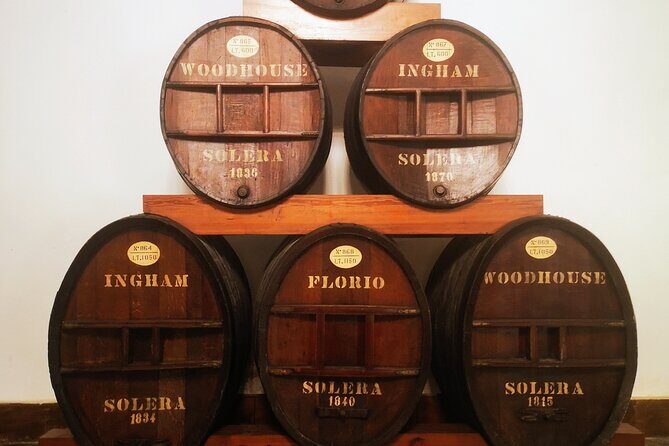
For $165.61 per person, what you’re really paying for is the time-saver and the guided pieces. A day that combines a winery tour, a Marsala city visit, and salt pans plus a salt museum would be harder (and likely pricier) if you stitched it together yourself. Here, the experience is packaged with private transportation, all fees and taxes, and paid entrances already handled.
The schedule also keeps things realistic: 1 hour 30 minutes at Cantine Florio, 1 hour for the Marsala center, 40 minutes across the salt pans, and 30 minutes at the salt museum. That adds up to a tour that feels full but not exhausting, especially with the air-conditioned vehicle between stops.
There’s also a small-group feel. With a maximum of 16 people, you’re more likely to get questions answered and keep the pacing comfortable. And since the tour runs in English, you won’t have that awkward moment of guessing what you’re looking at.
You can also read our reviews of more wine tours in Sicily


Cantine Florio: stepping into Marsala wine production
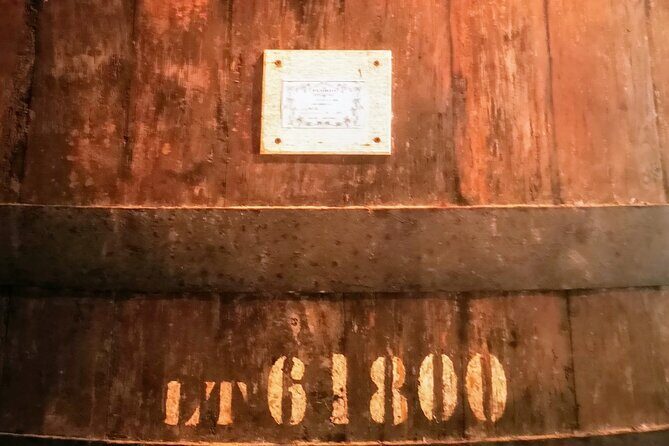
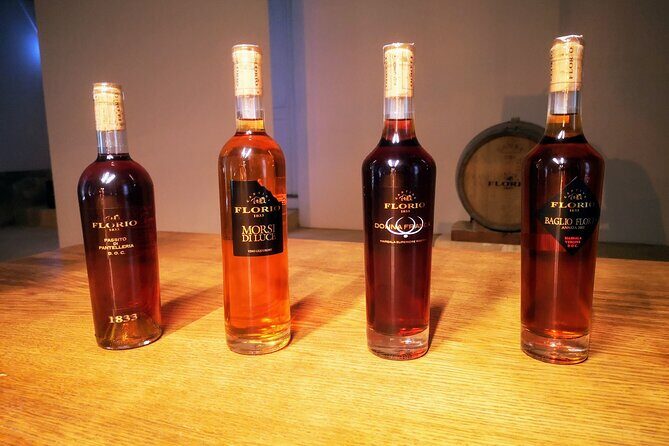
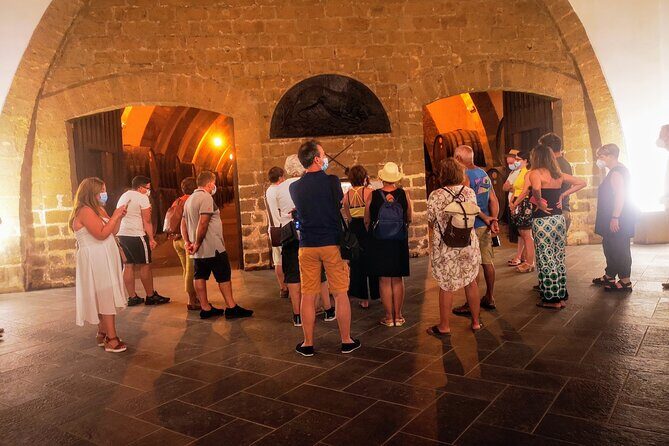
The day starts at Cantine Florio, where your local guide stays with the group and helps you get the most out of what you’re seeing. In the cellar, you’ll meet the guide in charge of the production area, who shows you around the production plant so you can understand how the wine comes together end-to-end.
This is the part I’d prioritize if you’re only curious about one thing: how Marsala-style wine is made and aged. The tour format matters. It’s not only about walking past barrels and tasting at the end. It’s about learning what different storage setups mean and how the process shapes what ends up in your glass.
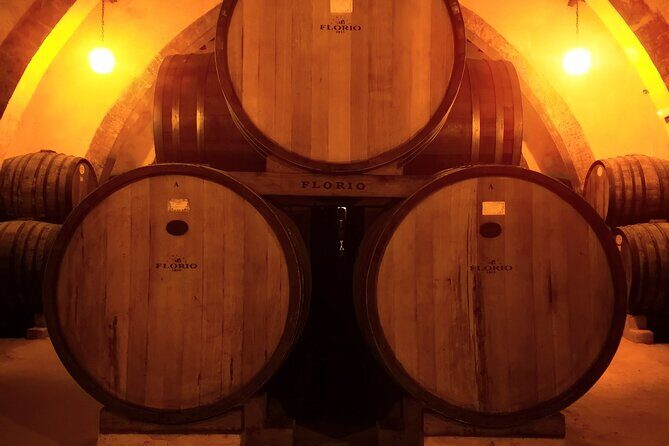
From the experience format and what people highlight, you can expect views of how the winery organizes aging: barrels in different sizes and vintages are part of the story here. Then you get the tasting, led in the cellar so the wine context stays fresh.
The tasting rules you should know
Alcoholic drinks are included in the tasting in the cellar, but only for adults. If you’re traveling with teens aged 12 to 17, they’ll have water during the tasting portion. That’s a simple setup that avoids awkwardness and keeps everyone on the same timeline.
If you like to taste with background, this stop delivers. If you only want the salt pans, you’ll still leave here with a clearer sense of why Marsala and Sicilian food culture are so tightly connected.
Marsala’s Centro Storico: the easy, human hour
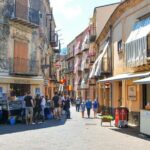
After the winery time, you get a free visit in the Centro Storico di Marsala. This isn’t structured museum time. You get an hour to wander, admire buildings and monuments, and fit in some shopping if that’s your thing.
That “blank space” is useful. Winery tours can be sensory and a bit heavy on information, and then this hour lets you reset your eyes and legs. You can look at the architecture at your own speed, pop into shops, and just enjoy the rhythm of the town.
It also helps to break up the day before the outdoors portion. You’ll likely want to keep your energy for salt pans, which involve walking on paths and being in the open air.
Trapani salt pans: 2600 years of salt-making in 40 minutes
The salt pan stop is built like a short guided route across three salt pans. That’s a good length: enough time to understand the layout and the key ideas, not so long that it turns into a slog. You learn about the long timeline of salt—up to 2600 years—and you also hear how salt is used today.
The best part of this kind of stop is that it changes how you think about something basic. Salt isn’t just a seasoning. It’s a product with a production system, tools, and environmental timing. Even in a short visit, the idea lands: humans have engineered and managed these conditions for centuries.
You’re also guided on the characteristics and benefits of salt, which makes the visit feel more grounded than a scenic walk. And the entrance into the salt pan is included, so you’re not figuring out tickets while you’re standing at the gate.






Sunset note (if your departure times match)
One review specifically calls out salt pans at sunset. The tour itself doesn’t promise that detail in every description, but the mention is a clue: timing may align with late-day light. If you prefer softer skies for photos and a calmer atmosphere, it’s worth checking what time your particular departure runs.
Museo del Sale: a 1400s mill and how salt was made
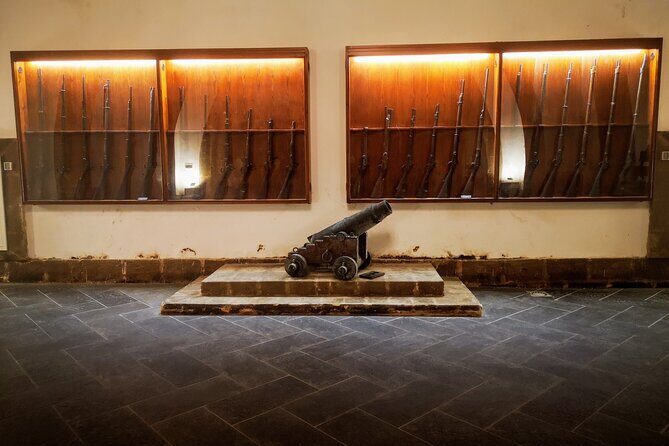
Right after the salt pans, you shift indoors to Museo del Sale. This is a guided visit of a historic mill from the 1400s that now functions as a salt museum. The museum format helps you “put the pieces together” from what you just saw outside.
Instead of only hearing history in words, you get to connect that history to a real structure built for milling and processing. A good salt museum tour doesn’t just tell you what salt is. It explains how it was cultivated and how production works today, which makes the differences feel practical rather than abstract.
This 30-minute stop is perfectly sized. Long enough to learn something real, short enough that it doesn’t turn the day into museum overload. And because the museum is guided, you don’t have to guess what to look for.
What’s included, what isn’t, and how to get value from it

Here’s what you can count on being covered:
- Private transportation in an air-conditioned vehicle
- All fees and taxes
- Florio tastings (adult alcohol included; teens get water)
- Entrance into salt pan
- Museum of Salt
- The guided visits and admission tickets for the key sites
What isn’t included is also simple: tips and purchases. Since you’ll pass through a winery shop at the end of the Florio experience, buying wine (or other products) is a realistic possibility if you fall in love with a bottle during tasting. But you’re never pressured into it during the tour itself—if you’re only there for learning and tasting, you’ll still get a complete experience.
Practical planning tips (based on the real structure)
- Wear comfortable shoes. Salt pan routes can be uneven, and you’ll be on your feet across multiple areas.
- Bring a light layer if you tend to get cold in open-air areas or inside museums.
- Bring a phone or small camera storage plan if you care about photos, since you’ll likely see interesting textures and old industrial spaces.
One more practical point: the tour requires good weather. If conditions aren’t right, the operator may offer a different date or a full refund. That matters here because salt pans are part of the core itinerary.
Who this tour is best for
This is the kind of tour that works especially well if you’re curious about food culture in Sicily, not just sightseeing. If you like learning how everyday products are made, you’ll appreciate the pairing of wine and salt. If you’re the type who likes tasting with context—what you’re tasting and why it tastes the way it does—you’ll enjoy the cellar time.
It’s also a solid choice for small groups or couples who want a guided experience without being herded through everything. The max of 16 people helps with that.
If you’re traveling with kids, note that alcohol is for adults only. Teens 12 to 17 get water during the cellar tasting, which keeps the experience smooth for families.
On the flip side, if you strongly prefer quiet, unstructured time outdoors, the salt pan portion is relatively short (40 minutes). And if you don’t care about wine at all, the Florio stop may feel like the heavier portion of the day. But even then, you’ll still come away with a better understanding of how Marsala culture links to salt trade and local production.
Should you book this Florio family wine and salt tour?
I’d book it if you want a compact, guided Sicilian experience that connects two big local stories: Marsala wine and Trapani salt. The value is in the setup—private transport, included admissions, and tastings—so you can focus on learning and enjoying instead of organizing.
I’d skip it only if you’re a strict museum-lover who hates walking outside, since part of the tour is a salt pan route and the experience depends on weather. Or if you dislike wine tastings altogether, you may find the Florio portion doesn’t match your interests.
If your goal is to leave with real context—how salt was cultivated and milled, how a major Sicilian wine producer works, and how a historic town fits between those two worlds—this one is a strong match.
FAQ
How long is the Florio family wine and salt tour?
The tour lasts about 4 hours.
Where does the tour start?
It starts at Via Ammiraglio Staiti, 111, 91100 Trapani TP, Italy.
Is the tour offered in English?
Yes, the tour is offered in English.
What’s the group size limit?
The tour has a maximum of 16 travelers.
Is transportation included?
Yes. You get private transportation in an air-conditioned vehicle.
Are tastings included, and is alcohol included?
Yes. Tastings are included in the cellar, and alcoholic drinks are included for adults. Minors aged 12 to 17 will have water during the tasting in the cellar.
Does the itinerary include the salt pans and the salt museum?
Yes. You’ll have an included salt pan entrance and a guided visit to the Museo del Sale.
Is there time to explore Marsala on your own?
Yes. You get a free visit with time to admire buildings and monuments and to go shopping.
What happens if the weather is bad?
The experience requires good weather. If it’s canceled due to poor weather, you’ll be offered a different date or a full refund.
Can I cancel for a full refund?
Yes. You can cancel up to 24 hours in advance for a full refund.