REVIEW · SICILY
2002 Crater Excursion – Northern Etna
Book on Viator →Operated by Guide Vulcanologiche Etna Nord · Bookable on Viator
Etna from the north feels wilder and quieter. I like how this excursion sends you into the 2002 eruption terrain with an authorized volcanology guide, and it keeps the pace friendly enough for a real hike without turning into a marathon. I also love the setting at Piano Provenzana—pine forest, dramatic lava, and an atmosphere that feels less tour-bus than other sides of the mountain.
One thing to weigh: you’ll walk across volcanic edges and uneven ash, so if you get vertigo easily or you don’t usually do much walking, you may want to think twice.
You’ll start at Piano Provenzana on the north side, then hike through lava flows and crater areas tied to the big 2002 eruption. This is a guided experience with a group limit of 20, and the route is built around seeing what changed—and what didn’t—after the October 2002 eruption. Your hike is short enough to stay doable (about 5 km round-trip), but it still has a real climb and some rocky footing.
In This Review
- Key highlights I’d plan around
- Where the adventure actually starts: Piano Provenzana
- The hike: walking across the 2002 lava and the older craters
- Stop focus: the 2002 eruption trail
- Craters and the climb: 1911 shafts to a 2002 fracture crest
- The return: soft ash channels, beech forest, and ski slopes
- Gear, safety, and the part you shouldn’t skip reading
- Shoes aren’t a small detail (insurance depends on it)
- Cold and weather reality
- Vertigo heads-up
- What you get included (and what you pay for)
- What’s included
- What’s not included (common add-ons)
- Is $43.55 good value?
- Who this fits best on Etna’s north side
- The guide experience: what makes the hike land
- Where to eat and how to plan your day around 9:15
- Should you book the 2002 Crater Excursion – Northern Etna?
- FAQ
- How long is the excursion?
- Where does the tour start and end?
- What time does it begin?
- Is admission included?
- Do I need trekking shoes?
- Are trekking poles provided?
- How much is parking?
- Can the itinerary change due to weather or conditions?
- What if the tour is canceled due to bad weather?
- What is the cancellation window?
Key highlights I’d plan around
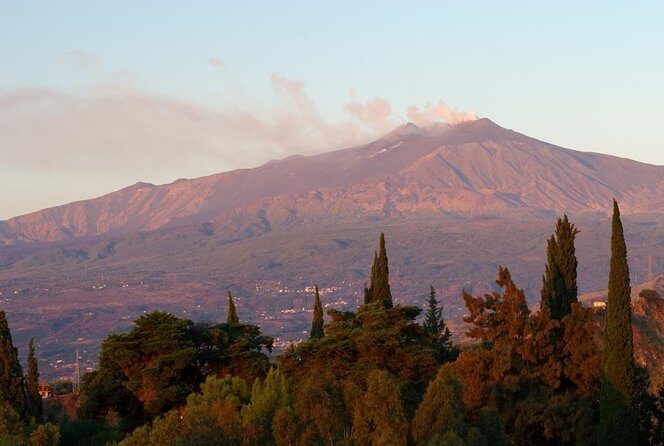
- North slope, fewer crowds: Piano Provenzana is typically less busy than other Etna stops, so your photos don’t look like a parking lot.
- Authorized volcanological guide: You get an expert guide (legal authorization) plus accident insurance.
- Real 2002 eruption clues: You cross a wide stretch tied to the 27 Oct 2002 lava flow, including places now buried by it.
- Crater edges and deep shafts: The route includes crater areas connected to the 1911 activity, with shafts reported as 7–40 m deep.
- Short hike, long payoff: About 5 km round-trip with roughly 300 m of ascent/descent over ~2.5–3 hours.
Where the adventure actually starts: Piano Provenzana
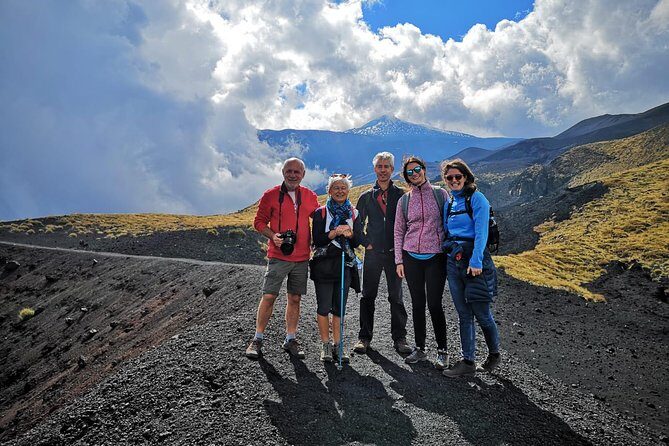
Your morning begins at Ufficio Guide Vulcanologiche Etna Nord, Via Provenzana 35, 95015 Linguaglossa CT. The start time is 9:15 am, and the day ends back at the same meeting point.
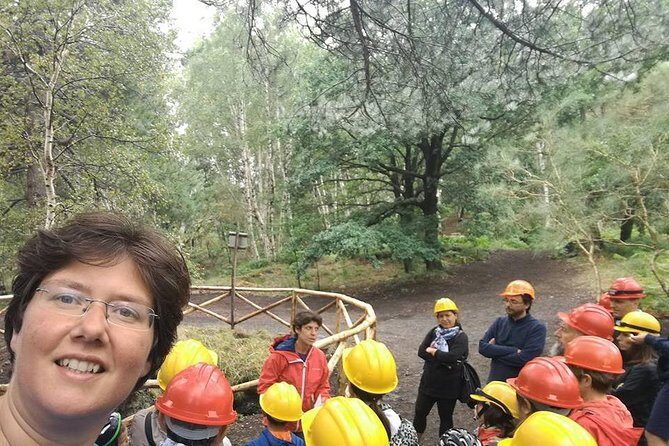
Piano Provenzana is one of those Etna areas that makes sense fast. It’s easy to reach by car along fully paved roads on the mountain’s north side, and you’ll find the practical stuff right where people gather: cafés and bars for coffee or breakfast, plus souvenir spots. There are also places to refill water bottles, which matters because bottled water isn’t included.
What I like here is the “in-between” feel. It’s a working base that shifts with the seasons: in winter it functions as a ski resort, and when the weather turns, it becomes a launch point for hikes and excursions. After the October 2002 eruption, the original facilities around this area were destroyed, and what you see now is shaped by that event—pine forest, dark lava fields, and a setting that makes the volcano feel less like a postcard.
Practical note: you’ll meet your guide on-site at the meeting point location. If you’re driving, there are blue-lined parking areas meant for cars and camper vans. Parking is paid separately (more on that later).
You can also read our reviews of more tours and experiences in Sicily.


The hike: walking across the 2002 lava and the older craters
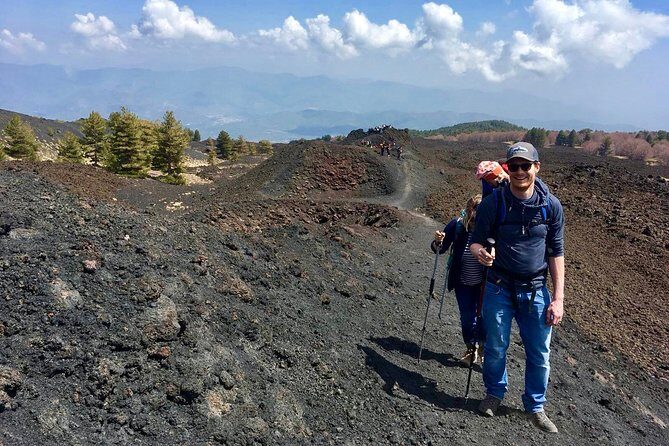
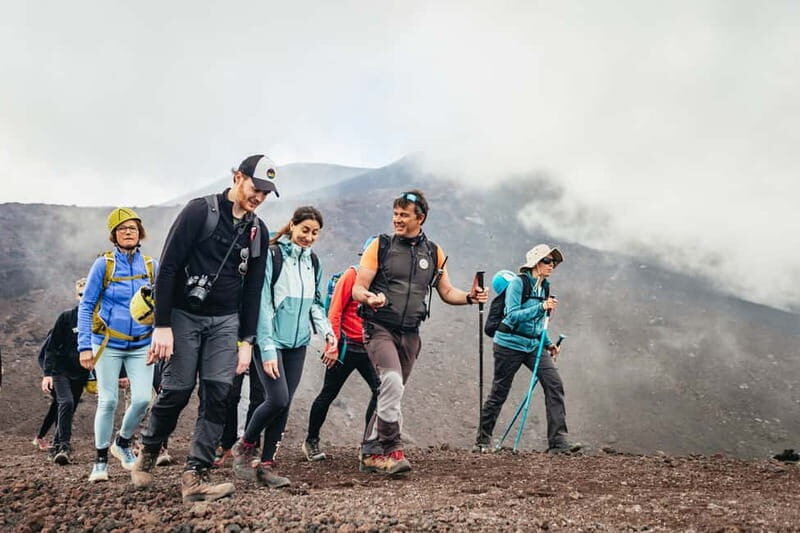
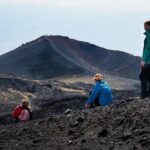
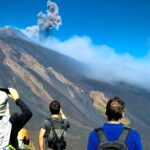
The hike is where the tour earns its keep. You’ll be guided across the north side on a route that mixes old flows, crater areas, and a climb to a major fracture connected to the 2002 eruption.
Stop focus: the 2002 eruption trail
You’ll walk across a vast 7.2 km lava flow tied to the 27 Oct 2002 eruption. This isn’t just “look at lava.” It’s seeing how volcanic activity can bury normal life. The route passes by areas where hotels, shops, restaurants, and a large car park now lie under the lava, with only the roof of one hotel still visible.
From there, the path continues through forest and toward older volcanic layers, so you’re not just watching one moment in time. You’ll move across 1911 and 1923 lava flows, which helps you read Etna as a repeating system rather than a one-off event.
Craters and the climb: 1911 shafts to a 2002 fracture crest
One of the most striking parts is the chain of 1911 craters. The shafts there are reported as 7–40 m deep. It’s also why the tour includes a caution note for sensitive subjects: the route foresees passing along crater edges, and that can trigger vertigo for some people.
Then you climb toward the crest of the 2002 eruptive fracture, described like a canyon strewn with volcanic bombs. This is the high point where you reach the vent that produced the destructive flow, along with other large explosive mouths up to 2,100 m.
If you’re the type who likes structure, the route has it: move from buried-and-shifted ground, to older flow layers, to fracture/vent terrain, and then back down through softer volcanic channels.
The return: soft ash channels, beech forest, and ski slopes
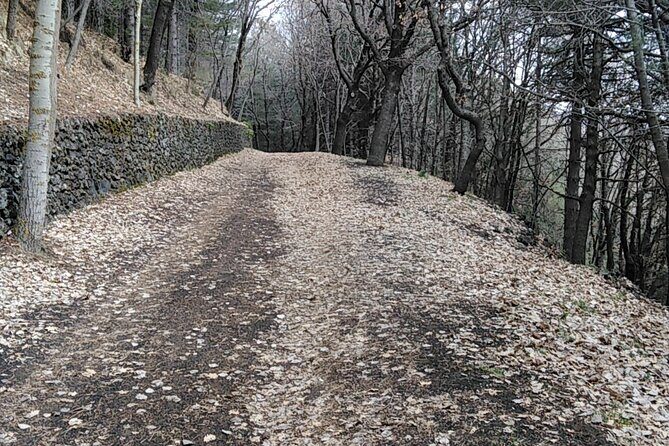
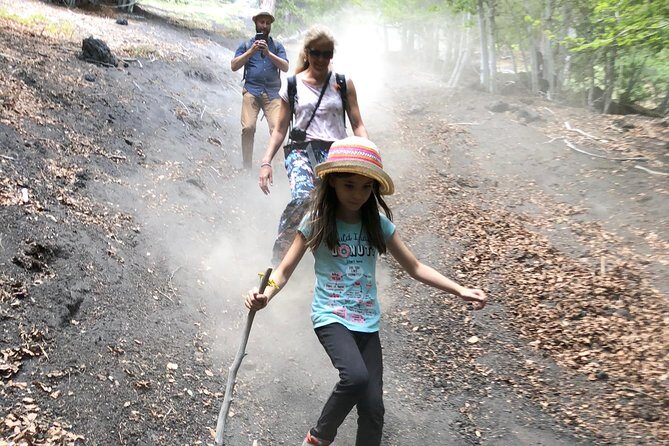
Your descent follows soft ash channels through beech forest and back past ski-slope terrain back to where you started. The hike is listed as about 5 km round trip with around 300 m ascent and descent, taking roughly 2.5–3 hours depending on your gait.
So even though the total tour time is about 3 hours, the hike is the main event. The rest is time to get oriented at the meeting point and transition between areas.



Gear, safety, and the part you shouldn’t skip reading
This tour is often described as doable, but “doable” doesn’t mean “no risk.” Volcanic soil can be incoherent and unstable, and your footing can change quickly. That’s why the guide setup matters, but also why your personal gear matters.
Shoes aren’t a small detail (insurance depends on it)
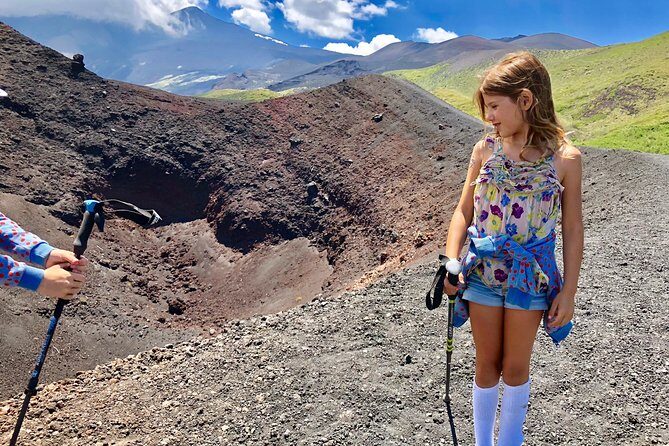
Trekking shoes are not included, but you can rent them on-site from authorized rentals for €5 per pair. The key safety detail: without adequate shoes, you’re not covered by accident insurance. That one line is worth more than any hiking tip.
If you’ve got proper hiking footwear, great. If not, plan to rent. Also consider bringing socks you trust on rough ground—your shoes will matter more on the downhill and on ash.
Cold and weather reality
Hat and gloves are not included, and they’re especially recommended in winter, spring, and autumn. You might not need heavy layers every time, but Etna weather can shift, and you’ll be outside for a few hours.
You might also want trekking poles. They’re not included, but a review mentioned how helpful poles or taller boots can be on downhill lava-rock crossings. Even if you don’t use poles now, bringing them can make a difference on uneven descent.
Vertigo heads-up
Because the route involves ascent plus passage along crater edges, you should take the vertigo warning seriously if that’s a known issue for you. The itinerary doesn’t say you’ll be forced into tight exposure, but it does say this could be a problem for sensitive subjects. If you’re unsure, I’d treat that caution as your decision point.
What you get included (and what you pay for)
This is one of those tours where the price feels fair once you separate inclusions from extras.
What’s included
- Accident insurance
- A volcanological guide authorized in accordance with the law
- The hike portion includes the relevant admission ticket (listed as included on the Etna segment)
English is offered, and you’ll get a mobile ticket. The group size tops out at 20 travelers, which helps keep the experience personal enough for questions.
What’s not included (common add-ons)
- Bottled water
- Trekking shoes rental (about €5 per pair if you need them)
- Hat and gloves
- Trekking poles
- Pickup from accommodation (you start at the meeting point)
- Parking fees: €5 on weekdays, €8 on Sundays and public holidays
- Snowshoe rental in winter: €15 per person to pay on the spot
Is $43.55 good value?
At $43.55 per person, you’re paying for a short guided hike with official-style expert coverage (authorized volcanology guide) and insurance. In practical terms, it’s good value if you already have decent footwear and can use your own hiking basics. If you need shoe rental and you also need to park, your real cost rises, but you’re still getting a structured route that focuses on major Etna features rather than a quick viewpoint stop.
Who this fits best on Etna’s north side
This excursion is a solid match when you want a “hands-on volcano” day without making it a full-day endurance project.
You’ll get the most out of it if you:
- Have good physical health
- Are okay with uneven ground and volcanic soil
- Enjoy learning from the guide as you walk
The tour specifically notes that trekking isn’t recommended for people who usually do little motor activity, and it also flags possible unsuitability if you have particular cardio vascular, respiratory, or hypertension conditions.
One more nice detail: service animals are allowed, so if that applies to you, this is easier to plan than some other outdoor tours.
The guide experience: what makes the hike land
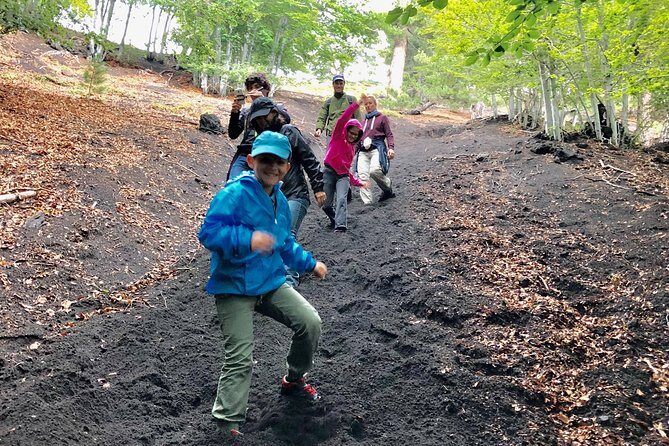
A big reason this tour earns high marks is the guide role. People describe the guides as friendly, patient, and strong on explanations, often mixing clear facts with humor and smart pacing breaks.
Names that come up include Giuseppe and Luca. The consistent theme is simple: the guide doesn’t just point out rocks. They explain what you’re seeing, including how Etna behaves and how the 2002 eruption reshaped the terrain around you. I also like the feedback about breaks happening at the right moments so the hike feels doable rather than rushed.
That pacing matters because the route includes both climb and descent. If you keep your energy steady, the climb feels less intimidating and the return down ash channels feels safer.
Where to eat and how to plan your day around 9:15
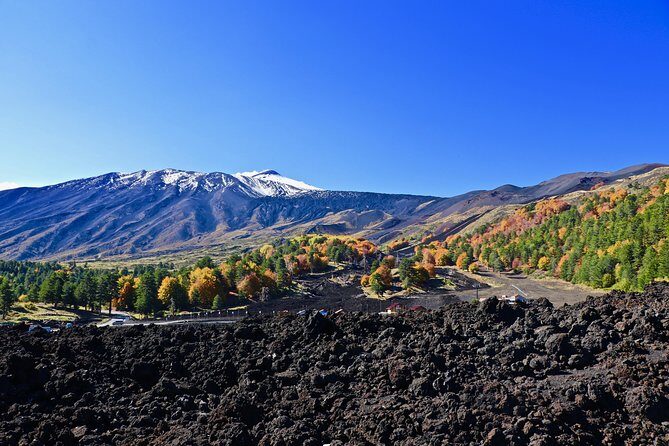
Because the start is 9:15 am, plan to arrive early enough to find the meeting point and get any last-minute gear sorted. Piano Provenzana has cafés and bars nearby, so you can handle coffee or a light breakfast before you meet the guide.
Also, refill water where you can. Bottled water isn’t included, and the hike lasts a few hours.
If you’re driving, double-check parking timing and payment so you’re not scrambling at the end. The cost is straightforward, but it’s still an extra line item.
Should you book the 2002 Crater Excursion – Northern Etna?
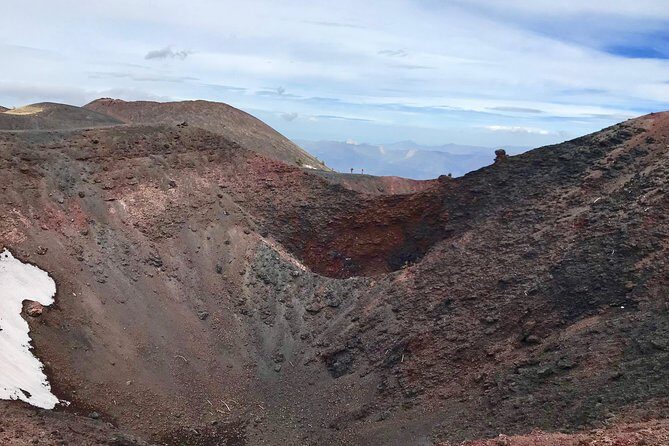
Book it if you want an Etna hike that’s:
- North-side focused, with a calmer vibe than other Etna areas
- Short-to-moderate in distance (about 5 km round trip), but still real enough to feel like you did something
- Guided by an authorized volcanology professional with insurance included
- Interested in the specific story of the 27 Oct 2002 eruption and how it buried places you can still imagine on the way through
Skip it (or ask for guidance before committing) if:
- You have vertigo sensitivity and the idea of walking near crater edges makes you uneasy
- You don’t usually do walking and know you’ll struggle with uneven, volcanic ground
- You’re arriving without suitable footwear, since the insurance coverage depends on adequate shoes
If you’re on the fence, I’d decide based on shoes and comfort with uneven terrain. Do that homework, and this is one of the most direct ways to understand Etna’s power without turning your day into a long slog.
FAQ
How long is the excursion?
It runs for about 3 hours total. The guided hike portion is about 2.5–3 hours.
Where does the tour start and end?
It starts at Ufficio Guide Vulcanologiche Etna Nord, Via Provenzana 35, 95015 Linguaglossa CT, Italy. It ends back at the same meeting point.
What time does it begin?
The listed start time is 9:15 am.
Is admission included?
The admission ticket is included for the Mount Etna hiking segment. The other listed parts note admission as not included or included by segment, but the hike portion you care about is included.
Do I need trekking shoes?
Yes, you should have adequate trekking shoes. Trekking shoes aren’t included, but you can rent them on-site for €5 per pair. Also, without adequate shoes you’re not covered by accident insurance.
Are trekking poles provided?
No. Trekking poles are not included.
How much is parking?
Parking requires a separate ticket: €5 for the entire day on weekdays, and €8 on Sundays and public holidays.
Can the itinerary change due to weather or conditions?
Yes. The guides may change the route or interrupt the excursion if environmental, atmospheric, or volcanic conditions affect safety.
What if the tour is canceled due to bad weather?
This experience requires good weather. If it’s canceled due to poor weather, you’ll be offered a different date or a full refund.
What is the cancellation window?
You can cancel up to 24 hours in advance for a full refund. If you cancel less than 24 hours before the start time, the amount you paid isn’t refunded.