REVIEW · TAORMINA
Taormina: Dining Experience at a Local’s Home
Book on GetYourGuide →Operated by Cesarine · Bookable on GetYourGuide
Cooking dinner with real Sicilian families hits different.
In Taormina, this private meal with a Cesarina-style host aims to connect you with family recipes and the warmth of Italian hospitality, not just food on a plate. What I like most: you get a 4-course sit-down experience with wine and coffee included, and you’re invited into a real home setting where stories and practical cooking details matter. One thing to consider: based on past experiences, the level of hands-on cooking and how private the evening feels can vary night to night, so it pays to go in with clear expectations.
What you’re buying is a Sicilian family-table dinner—part show cooking, part meal, part conversation. You’ll typically start around 12:00PM or 7:00PM, and you’ll be served a starter, pasta, a main with a side, and dessert, with water, regional red/white wine, and coffee. The dinner is designed to be flexible for dietary needs, but you should confirm specifics directly with the organizer after booking.
In This Review
- Key takeaways before you book
- A Cesarina Dinner in a Real Taormina Home
- The 4-course menu: what you’re really paying for
- Starter: where the household shows its baseline
- Pasta course: the Sicilian identity check
- Main plus side: the part that should feel like dinner
- Dessert: the finish that keeps people smiling
- The cooking demo: hands-on, staged, or somewhere in between
- Wine, coffee, and the meal’s social rhythm
- Hospitality you can feel, not just read about
- Price and value: when it feels fair vs. when it doesn’t
- Good value tends to mean
- Where value can feel shaky
- Timing in Taormina: 12:00 or 7:00 affects the vibe
- Dietary needs: ask early so the kitchen can plan
- Who this Sicilian home dinner suits best
- Should you book this Taormina home dining experience?
- FAQ
- Where is the meeting point?
- How long is the Taormina dining experience?
- What’s included in the 4-course meal?
- Is this a private experience?
- Can the host accommodate dietary requirements?
- What souvenir do I get at the end?
Key takeaways before you book
- A Cesarina home dinner: you’ll eat where the recipes come from, not a formal restaurant dining room
- 4 courses plus drinks: water, regional red/white wine, and coffee are included
- Cooking demo expectations: the “show” can range from short explanation to a more active demo, depending on the night
- True family feel, but check privacy: some evenings can include extra people at the table beyond your party
- Souvenir apron: you leave with an official apron from the experience
- Good fit for food-first travelers: best if you want practical tastes and local explanations, not a performance
A Cesarina Dinner in a Real Taormina Home

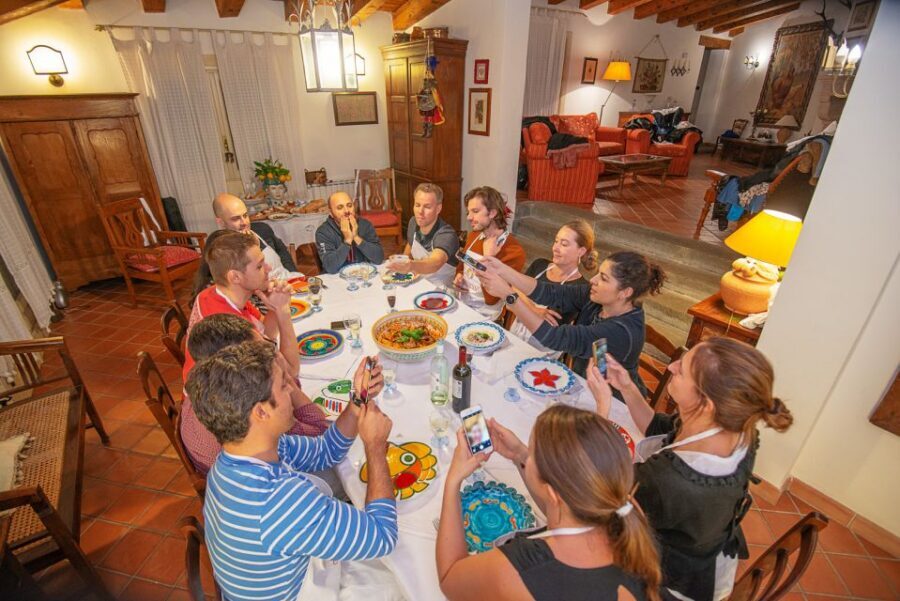
Taormina is full of restaurants that look great in photos. This experience nudges you toward something more personal: dinner at a local family’s home, hosted by a Cesarina (an Italian home-cooking ambassador). You get the chance to learn what a Sicilian meal means in that household—how they talk about ingredients, how they plate, and what they consider worth doing right.
I like that the experience is structured like an actual evening, not a quick grab-and-go tasting. You’re there for about 3 hours, sitting down for four courses, and you’re offered drinks alongside the food: water, a selection of regional red and white wines, and coffee at the end. It’s the kind of format that helps you pay attention to flavors instead of rushing from bite to bite.
That said, home dinners depend on real life. One reason some people are thrilled is also why quality can be uneven: a busy household rhythm can affect how much cooking you actually see and how long the host stays focused on your group. So if your dream is a dramatic, every-minute cooking class, you should ask questions before you commit.
You can also read our reviews of more tours and experiences in Taormina

The 4-course menu: what you’re really paying for
The outline is clear: a starter, pasta, a main course with a side dish, and dessert. In other words, you’re not paying for a few small tastes. You’re paying for a full meal experience, plus the explanation component.
Here’s how I’d think about each course:
Starter: where the household shows its baseline
The starter is usually where you notice what makes a family recipe feel local—how they season, what they pair, and how they balance richness with acidity. If you’re the kind of eater who likes understanding why something tastes like it belongs in Sicily, this first course sets the tone. It’s often easier for a host to explain the “why” here than it is mid-meal.
Pasta course: the Sicilian identity check
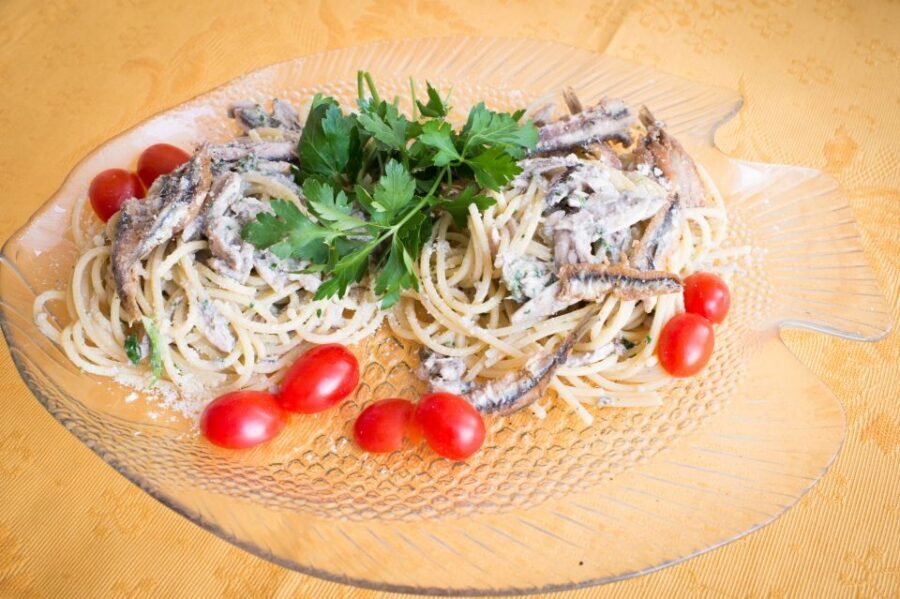
Pasta is where Sicilian cooking can show off its comfort-food logic: simple ingredients treated carefully, and flavors that feel familiar but not generic. If the cooking is happening at home, you’ll likely get at least some explanation on technique or the ingredient choices that matter most.
One practical note: some accounts describe portions of the meal being prepared before guests arrive. If that’s your main concern, the pasta course is the one you’ll feel first—prepared ahead can still taste great, but it usually changes the amount of “live learning” you’ll get.
Main plus side: the part that should feel like dinner
This is where the menu becomes fully satisfying. The included side dish matters because it rounds out the meal the way locals expect, rather than leaving you with only starch and protein. If the evening feels good value, it’s usually because this course lands well—enough food, good flavor, and a sense that it’s built for a full sit-down.






Dessert: the finish that keeps people smiling
Dessert at a home dinner is a moment of trust. You’re letting a host show you a sweet that likely exists in family memory—something they’d make when they want guests to feel cared for. Even when demos are short, desserts are often where the warmth shows through.
The cooking demo: hands-on, staged, or somewhere in between
The experience promises an exclusive show cooking element, and for many people that’s the core of the value. But the real-world version can fall on a spectrum.
On the more positive end, you get a genuine cooking moment where the host explains ingredients and steps while you taste. On the less positive end (and this matters for your expectations), you might see prep already done: chopped or assembled components sitting there, and the cooking demo reduced to a small sequence—like a quick handling of a few items or a brief explanation—before you’re seated to eat.
So how do you handle this as a smart buyer?
- Ask what you’ll actually cook together before you show up. Even a short list helps.
- Ask how long the demo lasts and whether ingredients are prepared in advance.
- If language matters to you, confirm that English support is included with your session (the experience lists English/Italian).
A small detail that comes up in past experiences: communication can depend on who is available in the kitchen at the moment. Even if the host is comfortable in Italian, you might want a plan for clarity—especially if you want explanations, not just tasting.
Wine, coffee, and the meal’s social rhythm
This dinner isn’t BYO vibes. Drinks are included, and that changes how you experience the table. You’ll have water and a selection of red and white wines from regional cellars, plus coffee. That’s a nice “whole package” touch for an evening that lasts around three hours.
It also affects pace. When wine and coffee are part of the flow, the meal can feel like a real dinner party rather than a timed class. You’ll have time to talk, ask questions, and learn what a host thinks matters in Sicilian cooking—things like balance, seasoning, and which dishes feel truly “family.”
One more practical point: even in a private setup, home dynamics can bring in other people. Some accounts mention extra folks at the table, including people connected to the household’s routine. The experience is advertised as private, so if you want a quiet, full one-on-one vibe, you’ll want to clarify what “private group” means for your exact session.
Hospitality you can feel, not just read about
Italian home hosting is a craft. When it goes well, the meal feels personal: warm welcomes, relaxed conversation, and a sense that you’re being fed as a friend of the family—not treated like a customer moving through a script.
Past evenings have highlighted hosts like Donatella Rapisardi and her mother as standout personalities. That matters because the Cesarina role is not only about food. It’s about connecting the cooking to daily life and family tradition—how the recipes travel through generations, and what changes (or doesn’t) when they cook at home.
If you’re worried about the experience feeling staged, focus on the atmosphere: are you asking questions and receiving clear answers? Does the host stay present, or does the night fragment? Those are the real telltales.
Price and value: when it feels fair vs. when it doesn’t
You’ll see this dinner positioned as a premium experience: private home meal, show cooking component, full 4-course dinner, and drinks. One account cites a cost around $180 for a 3-hour activity.
Here’s how to judge value without getting stuck on the number:
Good value tends to mean
- The meal is served as a full dinner, not snack-sized
- You actually get cooking explanation or active demonstration
- The host or support stays engaged through the main parts of the meal
- Included items like wine and coffee show up as described
- The small souvenir—an official apron—is delivered at the end
Where value can feel shaky
- Cooking is mostly finished before you arrive, with only a short demo
- Less time is spent explaining Sicilian differences (what makes it local)
- The host steps away and the experience turns into a more standard dining moment
- Some advertised elements don’t appear as expected (for example, no wine/coffee or no apron in that session)
If you’re paying premium, you’re not just buying food. You’re buying the “host-led story” that makes the tasting worth it.
My advice: before booking, send a short message asking what the demo covers and how much of the cooking you’ll see live. You don’t need a legal contract, just clarity.
Timing in Taormina: 12:00 or 7:00 affects the vibe
The dinner typically begins around 12:00PM or 7:00PM, with flexibility if you request it in advance. Timing changes the house rhythm. A midday dinner can feel calmer and more structured. An evening dinner might be influenced by the rest of the household schedule.
If you’re the type who wants the most attention during cooking, you might prefer a time when you expect the kitchen to be less rushed. That’s not a guarantee—just a reasonable thought.
Also, plan for the meeting style: you won’t get a walk-up meeting spot in the center of town. After booking, you receive the host’s full address and mobile number, shared for privacy and coordination. For me, that “address after booking” approach is fine, but only if you confirm details promptly and set aside time to get there calmly.
Dietary needs: ask early so the kitchen can plan
The experience says it can cater to different dietary requirements, but you need to confirm with the organizer directly after booking. That’s the right approach for a home dinner: the host needs time to adjust ingredients properly.
When you message, be specific. For example: tell them the nature of your restriction (allergy vs. preference) and what you need substituted or avoided. Home kitchens can handle modifications, but they need clear details to do it safely and without ruining the flow of the evening.
Who this Sicilian home dinner suits best
This is a great fit if you:
- Want a full meal with explanations, not just a tasting session
- Enjoy hearing how recipes are passed down in families
- Like wine and a relaxed pace
- Prefer authentic, local hospitality over polished restaurant formality
It’s a less ideal fit if you:
- Expect a long, hands-on cooking class where you do most of the work
- Need a perfectly consistent, lesson-style format every night
- Care most about privacy and quiet one-party-only dining (home dinners can involve other household elements)
If your ideal outcome is a full cooking workshop with lots of live technique, make sure you ask what the demo includes and how much time it takes.
Should you book this Taormina home dining experience?
Yes, you should consider booking if your top priority is a warm, local Cesarina-led Sicilian meal with wine and a true sit-down dinner feel. It’s especially worth it when you enjoy food as culture—learning why a dish tastes like home to the people serving it.
But book with eyes open. This can be a wonderful evening, yet the amount of show cooking and the level of “private” control can vary. If you want the best odds:
- Ask exactly what the cooking demo will cover
- Confirm how private your seating will be
- Clarify that included drinks and the official apron are part of your session
If you like meals where you talk, taste, and leave feeling like you met real Sicilians (not just ate near them), this is a strong choice in Taormina.
FAQ
Where is the meeting point?
The experience is held in a local family’s home. For privacy, you receive the full address of your host after booking, and you’ll be contacted with the exact meeting point information.
How long is the Taormina dining experience?
It runs for about 3 hours, with available start times. It typically begins at 12:00PM or 7:00PM.
What’s included in the 4-course meal?
You’ll be served a 4-course menu: a starter, pasta, a main course with a side dish, and dessert. Drinks included are water, a selection of regional red and white wines, and coffee.
Is this a private experience?
Yes. It’s listed as a private group experience. The dinner is in a home setting, so the exact household flow can affect the feel of privacy.
Can the host accommodate dietary requirements?
It can cater to different dietary requirements, but you need to confirm specifics directly with the service organizer after booking.
What souvenir do I get at the end?
At the conclusion of the experience, you can take your souvenir apron back home.