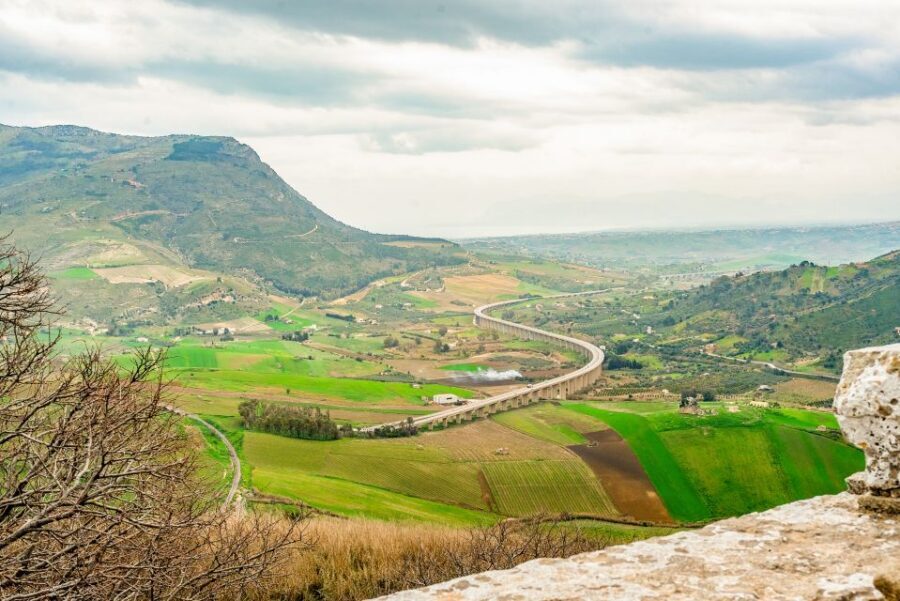
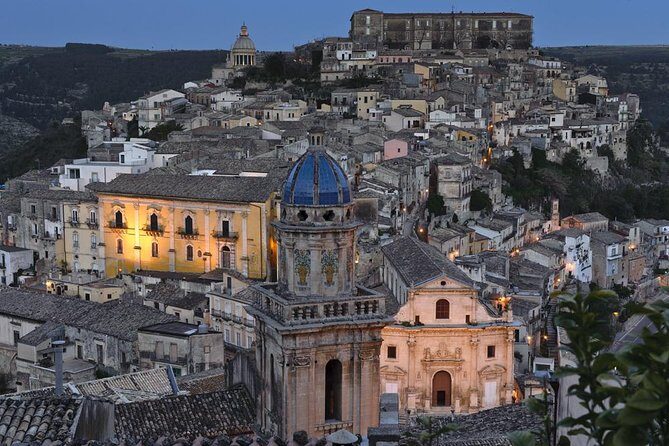
Church façades and gardens set the pace. This is a solid introduction to Ragusa Ibla’s key sights, with stops designed for quick orientation and good photo angles. I like that you get major landmarks without feeling rushed into museum mode.
You’ll also enjoy the small group format (max 10). When the group is tiny, the guide can answer questions and keep the pacing comfortable. One practical consideration: the tour asks for moderate physical fitness, so expect a fair amount of walking over the full loop.
In This Review
- Key things to know before you go
- Starting at Giardino Ibleo and easing into Giardini Iblei
- Portale di San Giorgio: the lateral entrance with a 1400s backstory
- Chiesa di San Giuseppe: short stop, good payoff inside
- Duomo di San Giorgio interior time: your longest church moment
- How the pace and small-group size shape your experience
- Price and value: what $150.37 buys you
- What you should expect on the ground (and how to prepare)
- Who this Ragusa walking tour is best for
- Should you book it?
- FAQ
- How long is the Ragusa walking tour?
- Where does the tour start?
- Is the tour offered in English?
- What group size should I expect?
- Are there admission tickets to pay at the stops?
- Do I need a physical ticket?
- What fitness level is required?
- What is the cancellation policy?
Key things to know before you go
- Max 10 people keeps the focus on questions and practical explanations
- Free admission at each stop, so you’re paying for the guide and your time
- English-speaking guide with a clear landmark-by-landmark route
- San Giorgio stops include both an exterior portal (built in 1440) and Duomo interior time
- About 2 hours in length, with some flexibility depending on how long you linger
Starting at Giardino Ibleo and easing into Giardini Iblei
The tour meets at Giardino Ibleo, 97100 Ragusa and then you head out on foot from there. The first stop is Giardini Iblei, where you get about 30 minutes to stretch your legs and settle into the neighborhood vibe. It’s a welcome opener: gardens give you breathing room before you start reading the city’s stonework.
Why this first leg matters: Ragusa Ibla can look like a postcard cluster if you don’t have a “map in your head.” A garden stop right away helps you slow down and notice how the town is layered. It’s also free-entry, so you’re not spending your money before the landmarks even start.
The only heads-up is timing. A 30-minute garden stop is nice, but if you’re hoping for a long wander, you’ll want to do a separate stroll after the tour.
You can also read our reviews of more tours and experiences in Sicily.


Portale di San Giorgio: the lateral entrance with a 1400s backstory
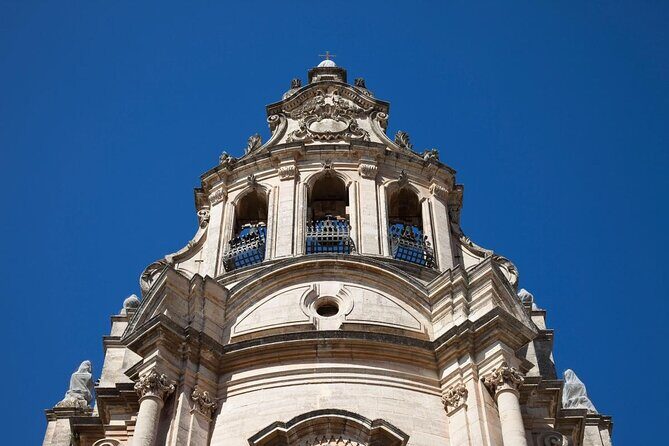
Next comes Portale di San Giorgio, around 10 minutes. This is the lateral entrance of the former ex church of St. George, built in the 1440s. Even in a short stop, the structure is the kind of detail that becomes meaningful once someone points out what to look for.
Here’s what I think makes this stop work for you: it’s not just a pretty doorway. It’s a time marker. Ragusa’s buildings can feel like they all blur together at street level, so a clearly dated moment like the 1440s helps you anchor the city’s story quickly.
Drawback to keep in mind: this is brief by design. You’ll get enough time to see the entrance and take photos, but you won’t have the kind of slow, lingering look you might want if you’re a hardcore architecture person.
Chiesa di San Giuseppe: short stop, good payoff inside
After the portal, you’ll head to Chiesa di San Giuseppe for about 15 minutes. The main reason it’s on the route is simple: the interior is interesting. That word shows up again and again for this tour, and it matches the logic of walking Ragusa Ibla. The exteriors can be striking, but the interior views often give you the deeper “why it matters” moment.
What to expect here is a focused look—enough time to appreciate key features without turning the tour into a long sit-down. If you’re the kind of visitor who likes to keep moving and collect “small wins,” this stop fits your style.
The only consideration: if a church interior is your main priority, the tour’s overall pace may feel a little quick. You’ll have just enough time to understand what you’re seeing, then you’ll be asked to move on.
Duomo di San Giorgio interior time: your longest church moment
The tour’s big church focus is Duomo di San Giorgio, with about 30 minutes. This is where the group typically spends the most time indoors, and it’s a smart choice. A longer interior segment lets you go beyond a quick glance and actually notice details that you’d otherwise miss.
Why this is a highlight: the Duomo interior is the kind of place where a guide’s explanation changes your experience. You can still enjoy it just by looking, but you get more out of it when you know what you’re seeing and why it’s arranged that way.
If you like interiors—decor, stonework, and atmosphere—this is likely the part you’ll remember. It’s also free-entry, so you’re not paying to get the best portion of the walk.
How the pace and small-group size shape your experience
This tour runs at a human pace with a maximum of 10 people. That small size is one of the best value features here, because it turns a “sightseeing walk” into something more conversational. You can ask about what you’re noticing on facades and within churches, and the guide can adjust timing when a question pops up.
One standout theme from the experience is personalization. In at least one group setup, it was just two people, and the guide provided extra help before the walk. Parking in Ragusa Ibla can be tricky, and that kind of practical heads-up matters more than people expect—because it keeps your arrival stress low and your first stop more enjoyable.
You’ll also get a clear English-language narration (the tour is offered in English). If your goal is to understand Ragusa Ibla fast—without downloading a guidebook—you’re set up well.




Price and value: what $150.37 buys you
At $150.37 per person, this isn’t a bargain-basement walk. But it’s also not priced like a private tour. The value equation here comes from a mix of things you get at once:
- A 2-hour guided loop through multiple major landmarks
- Free admission at every listed stop, so your money goes toward the guide, not ticket fees
- A small group capped at 10 people, which usually means better attention and better questions
- Time spent where it counts: interiors at Chiesa di San Giuseppe and especially Duomo di San Giorgio
If you’re coming to Ragusa Ibla for the first time, the guided format can save you time and guesswork. You don’t have to figure out which corners matter most. You also get someone to translate the city’s “stone language” while you’re still standing there looking at it.
When it might not be the best fit: if you’re the type who only wants to photograph exteriors and doesn’t care about explanations, a self-guided stroll could cost less. But if you want meaning and context in a short window, this is the right style of tour.
What you should expect on the ground (and how to prepare)
This is a walk that totals about 2 hours. You should show up ready to move at a comfortable pace for the duration. The tour requests moderate physical fitness, so don’t plan on doing it if you’re dealing with mobility limitations that make stairs or longer walks hard.
A practical note: because the route includes church interiors, it’s a good idea to dress with that in mind—something you can sit or stand in comfortably for short indoor breaks. You’ll likely spend time looking closely inside two churches, and those interior moments are where you’ll benefit most from being comfortable.
The tour uses a mobile ticket, which is convenient. And you’ll want your confirmation in advance—confirmation is typically received within 48 hours of booking, depending on availability.
Who this Ragusa walking tour is best for
I’d point you to this tour if you want:
- A first-time-friendly way to see Ragusa Ibla’s big sights without mapping the whole town
- Church-focused experiences with time to look inside
- A guide who can explain what you’re seeing in a way that makes photos and sightseeing feel more informed
- A small-group atmosphere where you won’t be lost in a crowd
It also works well for couples and solo visitors. When group size stays low, you get more attention, and the route feels more like a local’s walk than a checklist.
If you’re looking for a full-day deep dive, or if you want to spend a long time in just one church, you may find the pacing too efficient.
Should you book it?
Yes, you should book this Ragusa walking tour if you want a tight, guided intro to Ragusa Ibla that prioritizes the landmarks people usually miss when they self-tour. The biggest reasons to say yes are the small group (max 10) and the way the itinerary concentrates time on church interiors—especially Duomo di San Giorgio—while keeping admission costs off your plate.
I’d skip it only if you dislike guided walks, don’t care about interior context, or you need a tour that’s longer and slower. For most visitors doing Ragusa as a highlight stop, this is a practical, high-meaning way to spend about two hours.
FAQ
How long is the Ragusa walking tour?
It’s listed as about 2 hours.
Where does the tour start?
The meeting point is Giardino Ibleo, 97100 Ragusa, Free municipal consortium of Ragusa, Italy.
Is the tour offered in English?
Yes, it is offered in English.
What group size should I expect?
The tour has a maximum of 10 travelers.
Are there admission tickets to pay at the stops?
No. The listed stops show admission ticket free.
Do I need a physical ticket?
No. The tour includes a mobile ticket.
What fitness level is required?
You should have a moderate physical fitness level.
What is the cancellation policy?
You can cancel for free up to 24 hours before the experience’s start time for a full refund. If you cancel less than 24 hours before, the amount paid is not refunded.