REVIEW · SICILY
Syracuse’s Archaeological Park Private Walking Tour
Book on Viator →Operated by Prestelli Sicily Tours · Bookable on Viator
Syracuse’s ruins talk back. This private walking tour of Neapolis makes the UNESCO site feel readable and human, not just stone. I love how the route hits the Greek Theatre and the Ear of Dionysius in one smooth sweep, and I also love the relaxed private pace that gives you real time for questions. One trade-off: the visit is only about two hours, and the park entrance fee (€16.50 per person) isn’t part of what you pay for the tour itself.
In this part of Sicily, layers of Greek and Roman life sit side by side. With a local guide leading the way in English, you’ll see the big set pieces plus the smaller details that explain how people used these spaces. They’ll also point out local flora and the panoramic viewpoints from up on the hill, so the park feels like a living place, not a museum hallway.
You’ll start at the Neapolis Archaeological Park entrance on Via Luigi Bernabò Brea, 14 in Siracusa. Bring comfortable walking shoes, since this is active walking on uneven ground, and plan around the fact that it’s a private tour with a minimum of 2 adults per booking.
In This Review
- Key things to know before you go
- Why Neapolis in Syracuse rewards a guided walk
- Price and what $180.62 buys you (plus the entrance fee)
- Timing, meeting point, and how the 2-hour pace really feels
- Stop-by-stop: the route from Greek Theatre to Roman Amphitheater
- Parco Archeologico della Neapolis: where the story starts
- The Greek Theatre: Sicily’s biggest stage
- Nympheum fountain: water, art, and everyday meaning
- Latomie stone quarries: the strange beauty of stone cut for real life
- The Ear of Dionysius cave: acoustics made physical
- Roman Amphitheater: when the Romans reuse the idea
- Flora and the top-of-hill views: the park isn’t only stone
- What makes a private tour work so well here
- Who should book this Neapolis private walking tour
- Should you book the Syracuse Archaeological Park Private Walking Tour?
- FAQ
- What does the tour cover in Neapolis?
- How long is the Syracuse Neapolis private walking tour?
- Is the park entrance fee included in the tour price?
- Where do we meet the guide?
- What should we bring or wear?
- Is this tour available in English?
- Are there age or group-size limits?
Key things to know before you go
- A UNESCO site, focused tightly in 2 hours: you’ll cover the headline ruins without rushing every corner
- The Greek Theatre plus the Roman Amphitheater: two eras of performance space in one circuit
- Latomie stone quarries and the Ear of Dionysius cave: you get the story behind the shapes and acoustics
- Small-group feel even when you book private: you get personal attention and a calmer rhythm
- Syracuse’s views and plants are part of the tour: the guide brings meaning to what you’re looking at
- Private means masks/gloves/hand sanitizer are provided at the start: a thoughtful health touch for your group
Why Neapolis in Syracuse rewards a guided walk
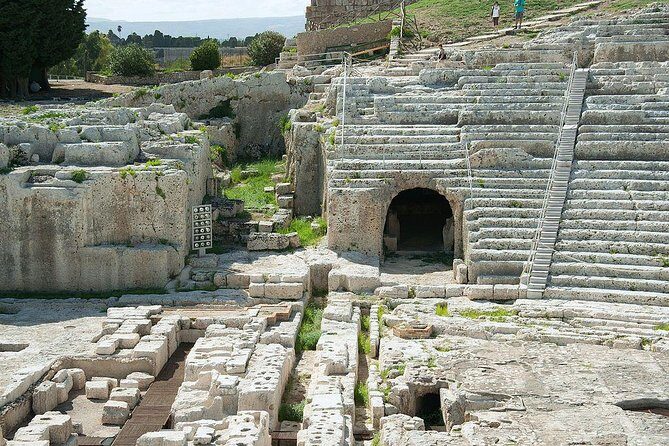
Neapolis is one of those archaeological parks that can feel overwhelming if you show up with only a guidebook. There’s so much to see that you end up sprinting between monuments, or you miss the connections between them. With a guide, the ruins start to make sense in the right order: where public life happened, where water and worship showed up, and how later Roman builders reused the terrain and the design ideas.
I especially like the way this tour is built around major anchor stops. You’re not just drifting through a site; you’re moving from one key structure to the next, with explanations that help you recognize what you’re looking at. That matters most for places like the Latomie and the Ear of Dionysius, where the “wow” is obvious, but the “why” becomes the real memory-maker.
The fact that it’s a private tour also changes the experience. You don’t have to compete for the guide’s attention, and if you want one extra minute on a detail (a theater feature, a quarry wall cut, or a view line), you’re less likely to feel pushed along.
You can also read our reviews of more walking tours in Sicily


Price and what $180.62 buys you (plus the entrance fee)

The listed price is $180.62 per person for a private walking tour lasting about 2 hours. That price is for your local professional guide and the private format—meaning it’s just your party, not a shared big group.
What you should plan for separately is the park entrance fee: €16.50 per person for Parco Archeologico della Neapolis. It’s worth treating the total cost as your “guided access plus a focused route” rather than paying once and forgetting the rest. If you’re comparing options, keep an eye on the difference between commentary and admissions.
Is it good value? For me, yes—if you’ll actually use the time well. Neapolis is packed with structures that people tend to skim. Paying for a guide makes sense when you want to understand the Greek theater’s layout, the significance of the Nympheum fountain, and what makes the Ear of Dionysius so special. If you’re the type who prefers reading quietly on your own and walking slowly, you might feel this is more structured than you want. But if you want the site translated in real time, the format fits.
One practical note: this tour is commonly booked about 59 days in advance. If you’re traveling in high season or you have a tight day plan in Syracuse, booking early helps you lock in a start time that works.
Timing, meeting point, and how the 2-hour pace really feels
You’ll meet at the entrance of the archaeological park at Via Luigi Bernabò Brea, 14, 96100 Siracusa SR, Italy. The tour ends back at the meeting point.
This is listed at about 2 hours, so the goal is “see the top sights” with enough context to connect them. You’ll move between several major stops, which means you should plan for some steady walking. Comfortable shoes matter here, especially because archaeological paths often include uneven surfaces and stone steps.
At the beginning of the excursion, the operator provides a mask, protective gloves, and hand sanitizer to each guest. That’s not a big deal for most people, but it’s a sign they’re thinking about the start-of-tour experience and cleanliness.
And because it’s private, the minimum matters: the booking requires at least 2 adults. If you’re traveling as a single adult, you’ll need to check whether you can pair with another booking in your party lineup—or adjust the plan.
Stop-by-stop: the route from Greek Theatre to Roman Amphitheater
This tour is built like a guided circuit through Neapolis’ headline spaces. Here’s what you can expect at each stop, and what makes each one worth your attention.
Parco Archeologico della Neapolis: where the story starts
Your guide begins at the entrance and sets the frame for the day. That matters because Neapolis can look like a collection of big ruins from afar. The guide helps you learn how to read the park: performance space, water features, sacred areas, and then the Roman modifications that reshape the setting.
You’ll quickly get oriented to why this UNESCO area matters. The park is one of the most important ancient monuments in the world, and your guide’s job is to make that scale personal—turning big labels into visible details.
You can also read our reviews of more private tours in Sicily




The Greek Theatre: Sicily’s biggest stage
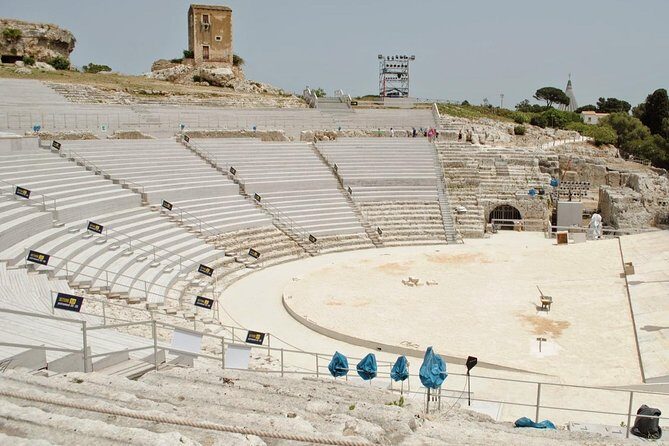
The Greek theater is the first major “anchor.” Even if you’ve seen other Greek theaters before, you’ll likely notice the scale here. The guide explains how these spaces worked for audiences and performers, and you’ll understand the theater as more than just seats and stone.
Practical tip: when you’re standing in the right spots, you’ll get a better sense of the room. Don’t be afraid to ask your guide where to stand for perspective. In a private tour, it’s easy to find the best angles without feeling rushed.
Nympheum fountain: water, art, and everyday meaning
Next up is the Nympheum fountain. This is one of those features that can get skipped if you’re only chasing the “biggest” structures. With a guide, it becomes an example of how art and daily life met in public spaces.
You’ll look at the fountain in context of the surrounding ruins, which makes it easier to grasp what it may have represented for visitors in its time—again, not just as decoration, but as part of how the site functioned.
Latomie stone quarries: the strange beauty of stone cut for real life
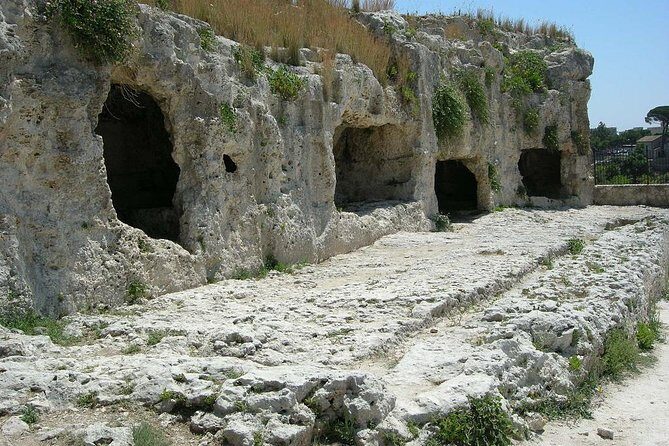
Then you’ll head toward the ancient stone quarries called Latomie. This is where Neapolis stops being only about grand temples and turns into a story about labor, material, and landscape change.
What makes the quarries special is that you can feel the human tool marks in the rock. You’re surrounded by walls shaped by work, and your guide helps connect that to the site’s later uses. It’s one of the most atmospheric parts of the park because the rock itself becomes part of the narrative.
The Ear of Dionysius cave: acoustics made physical
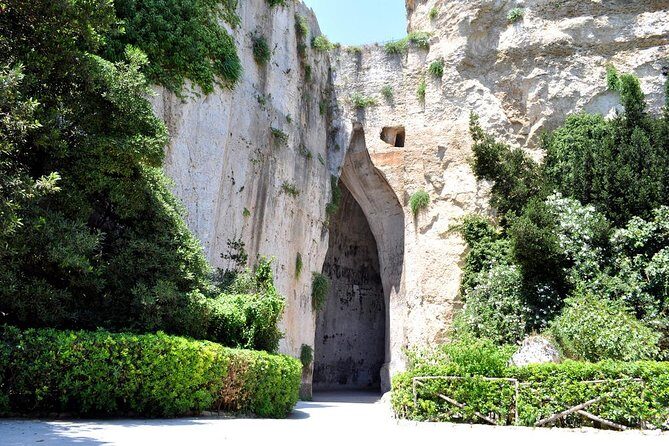
The highlight for many people is the Ear of Dionysius cave. The name alone gets your attention, but the guide makes it understandable: the cave’s shape and structure affect how sound behaves.
Even if you don’t do any dramatic sound tests, you’ll see why it became famous. Your guide points out the cave’s contours and explains the connection between form and acoustics. This is one of those places where the guide turns a legend-like label into something you can visually track.
If you’re curious about practical sound or you like architecture that has a “function,” this is a great stop. It’s also a good moment for photos, but keep your eyes on the guide when they point out shape and placement—those details are the point.
Roman Amphitheater: when the Romans reuse the idea
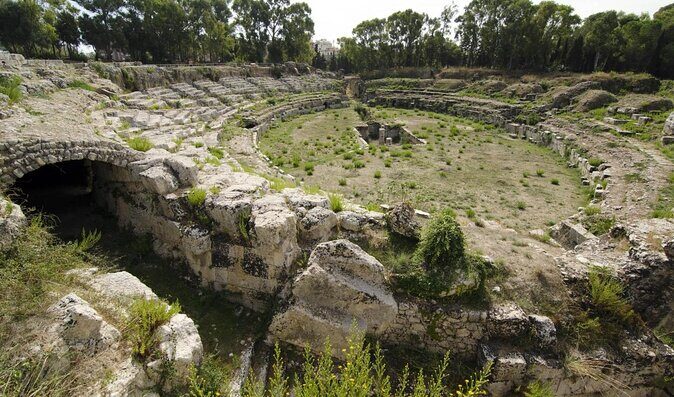
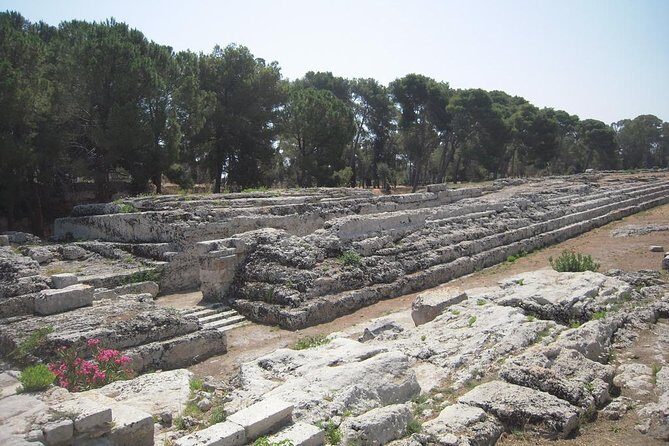
After the cave and quarries, you’ll move to the Roman Amphitheater. The shift from Greek to Roman is exactly why guided context helps. It’s not just a new building; it’s later culture shaping earlier ground and earlier concepts.
The guide helps you recognize what’s distinct about the Roman design compared to the Greek theater. You’ll walk away thinking less like a visitor who saw two landmarks, and more like a person who saw how each culture used public performance space.
Flora and the top-of-hill views: the park isn’t only stone
Between ruins, your guide also points out local flora and gives you time to appreciate the panoramic views from the hilltop area. This is a nice change of pace. In a place like Neapolis, you don’t want the tour to feel like only reading captions on stone.
The views also help you understand the park’s strategic placement. Looking outward makes the site feel grounded in real geography instead of isolated monuments.
What makes a private tour work so well here
Private tours can be hit-or-miss in other places, but here the format fits the site. Neapolis has enough highlights that you’ll benefit from pacing and order. You’ll also benefit from the ability to ask questions as you stand in front of each structure.
I also like that the guide keeps the tour friendly and relaxed. That doesn’t mean it’s slow; it means you’re not trapped in a rigid group script. If something catches your attention—Latomie, an unusual theater feature, or the cave shape—you’re more likely to get a clear explanation instead of a quick stop-and-go.
Another detail I appreciate: the tour includes admission ticket handling at the park level in the overall experience, but the park entrance fee is still listed separately. That means you can budget accurately without guessing.
Who should book this Neapolis private walking tour
This tour is a strong match if:
- You want a guided overview of the top sights in Neapolis without losing half your day
- You like history told with real-world explanations, especially for places like the Ear of Dionysius cave
- You prefer a calm pace and personal attention over large group logistics
- You’re in Syracuse with limited time but still want the UNESCO core experience
It’s less ideal if:
- You want to wander slowly and read everything on your own
- You’re traveling with limited mobility and need a very gentle route (the tour involves comfortable walking shoes, and archaeological sites can be uneven)
If you’re traveling with kids, the tour notes that children must be accompanied by an adult and that the guide keeps things engaging. One guide mentioned in past experiences, Marco, is described as charming and particularly good at turning the site into stories that hold attention. You might not get Marco, but it gives you a sense of the kind of guiding style you can hope for: legend, battles, and practical points tied to what you see.
Should you book the Syracuse Archaeological Park Private Walking Tour?
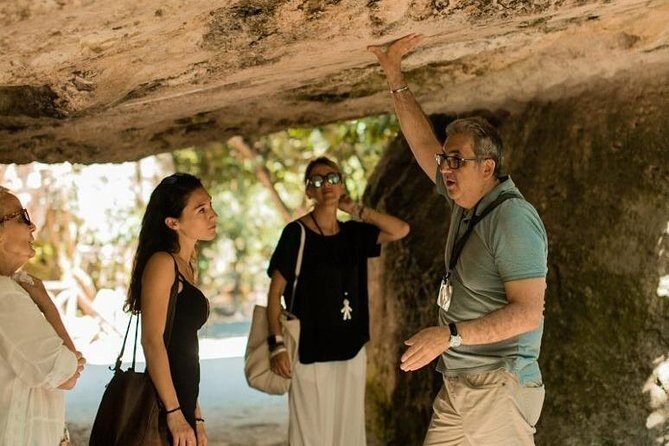
If you want to understand Neapolis quickly and clearly, I’d book it. The route is tight, the highlights are packed, and the guide helps you connect Greek theater, fountains, quarries, the Ear of Dionysius, and the Roman Amphitheater into one coherent walk. The private format keeps it comfortable, and the time limit is long enough to make the main stops feel meaningful.
I would only skip it if you’re already comfortable with the site from other resources and you prefer self-paced wandering. For most visitors, though, paying for real-time explanations pays off fast—especially at the stops where shape, design, and sound matter more than you’d guess at first glance.
FAQ

What does the tour cover in Neapolis?
You’ll have a guided private walking tour through key sights in the Parco Archeologico della Neapolis, including the Greek theater, Nympheum fountain, Latomie stone quarries, the Ear of Dionysius cave, and the Roman Amphitheater, plus time for views and local flora.
How long is the Syracuse Neapolis private walking tour?
It’s approximately 2 hours.
Is the park entrance fee included in the tour price?
No. The entrance fee for Parco Archeologico della Neapolis is listed separately at €16.50 per person.
Where do we meet the guide?
The meeting point is at the Neapolis Archaeological Park entrance, Via Luigi Bernabò Brea, 14, 96100 Siracusa SR, Italy. The tour ends back at the meeting point.
What should we bring or wear?
Comfortable walking shoes are recommended. The operator also provides a mask, protective gloves, and hand sanitizer at the start.
Is this tour available in English?
Yes, the tour is offered in English.
Are there age or group-size limits?
It’s a private tour with a minimum of 2 adults required per booking. Children must be accompanied by an adult, and service animals are allowed.
If you tell me your travel month and whether you’re pairing this with other Syracuse stops (like Ortigia), I can suggest a smart day order so the timing clicks.