REVIEW · CATANIA
Private Day Tour to Syracuse and Noto
Book on Viator →Operated by Etna Sicily Tours · Bookable on Viator
Syracuse and Noto in one day is a real twist. You’ll move from dramatic Greek and Roman monuments to the slow, pretty pace of Ortigia, then end with Noto’s Late Baroque streets. I like the way this tour gives you just enough time at each place without feeling rushed.
Two things I especially like are the private, air-conditioned transport and the mix of ticketed time (Ortigia and Noto) plus guided highlights. One drawback to consider: the car size can vary, and comfort depends on whether you’re a smaller group that fits the vehicle well—one past guest had an unpleasant squeeze in a sedan for four passengers.
In This Review
- Quick hits you’ll care about
- Syracuse’s Neapolis: the Greek theater, Latomie, and the Ear of Dionysus
- Ortigia Old Town: Duomo views, the Apollo Temple area, and Fontana di Aretusa
- Val di Noto and Noto town: Late Baroque that you can actually read
- What the private format really changes (and where it can disappoint)
- Price and value: what $231.91 per person buys you
- Timing, tickets, and your day plan (how to avoid stress)
- Guides and personalities: why it can feel different day to day
- Who should book this day trip (and who should think twice)
- Should you book this Private Day Tour to Syracuse and Noto?
- FAQ
- How long is the Private Day Tour to Syracuse and Noto?
- Where does pickup happen and when?
- Is the tour private?
- What’s included in the price?
- Is lunch included?
- Do I need to buy tickets for Parco Archeologico della Neapolis?
- Is the tour offered in English?
- What can I expect for the driving portion?
- Is this tour suitable for most travelers?
- What is the cancellation policy?
Quick hits you’ll care about
- Neapolis first: You start with the big-hitter ruins (Greek theater, Latomie, Ear of Dionysus) before crowds build.
- Ortigia by walking: Temples and fountains here are best seen on foot, not from a bus window.
- Noto’s Baroque focus: You get dedicated time in a World Heritage-style baroque town, not just a quick stop.
- Admission mix: Neapolis needs a separate ticket (listed price), while Ortigia and Noto admissions are included.
- Pickup window: Expect pickup from your accommodation between 8:30 and 9:00.
- Guide quality matters: Some guides clearly go full storyteller mode (for example, Roberto often gets praised), while others are more about driving plus basic context.
Syracuse’s Neapolis: the Greek theater, Latomie, and the Ear of Dionysus
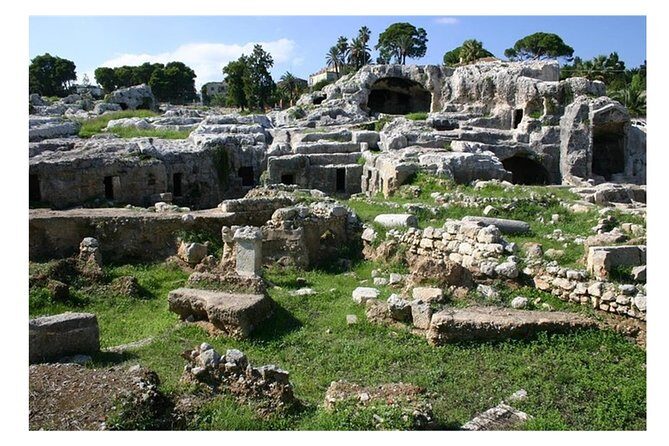
This day starts at Parco Archeologico della Neapolis, the zone where Syracuse shows off its ancient muscle. You’ll have about 2 hours here, and it’s a very smart order: you hit the heavy archaeology before the afternoon fatigue sets in.
The highlights are the kind that make you stop walking and stare. The Greek theater is the obvious star, with its layered design built for viewing and acoustics. Nearby you’ll see the Latomie del Paradiso—quarry caves tied to how the Romans and Greeks reshaped the area over time. And then there’s the Ear of Dionysus, one of those spots where the name already sounds theatrical. Even without getting too technical, it’s an easy place to understand why people traveled here for performances and power.
A practical note: the admission for this park is not included, so you should budget €13.50 per person. If you don’t bring exact cash, don’t panic, but having a plan saves time at the entrance. Also, this is a site where you’ll likely do a fair amount of walking over uneven ground, so wear shoes you’re happy to get dusty.
If you enjoy ancient history but hate feeling like you’re reading a textbook on your feet, this stop is ideal because it mixes big structures (the theater) with smaller, specific wonders (the Ear of Dionysus). You get the scale, then you get the story detail.
You can also read our reviews of more private tours in Catania


Ortigia Old Town: Duomo views, the Apollo Temple area, and Fontana di Aretusa
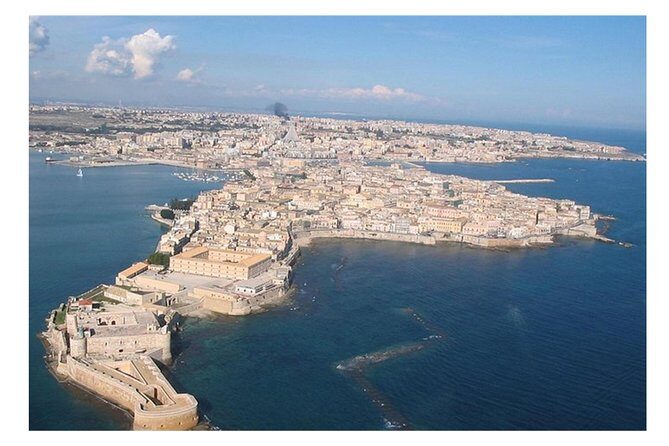
After Neapolis, the vibe shifts fast. Ortigia is the old heart of Syracuse, an island connected to the mainland by small bridges. You’ll get around 3 hours here, and that longer chunk of time matters because Ortigia rewards wandering.
You’ll see the ruins connected to the first Greek buildings, including the area associated with the Apollo Temple. In practice, you shouldn’t expect everything to be a perfectly restored building you can tour like a museum. Instead, Ortigia is about recognizing traces—stone, layout, and how later eras built over earlier ones.
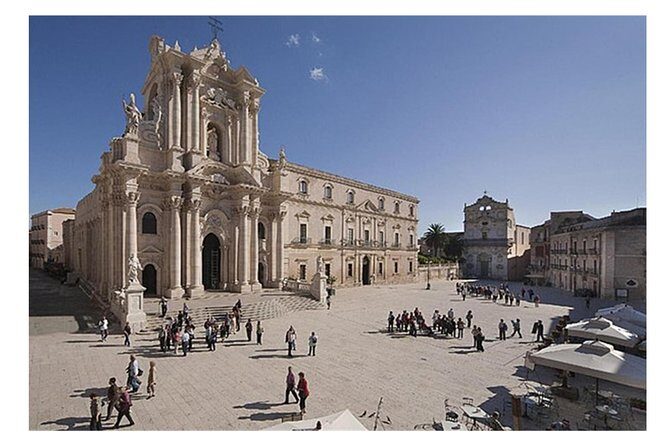
The largest monument in town is the Duomo, and it’s a good anchor point for your visit. If you time it right and catch the right light, the area around the cathedral feels like the “stage center” of Ortigia—busy, photogenic, and easy to orient around.
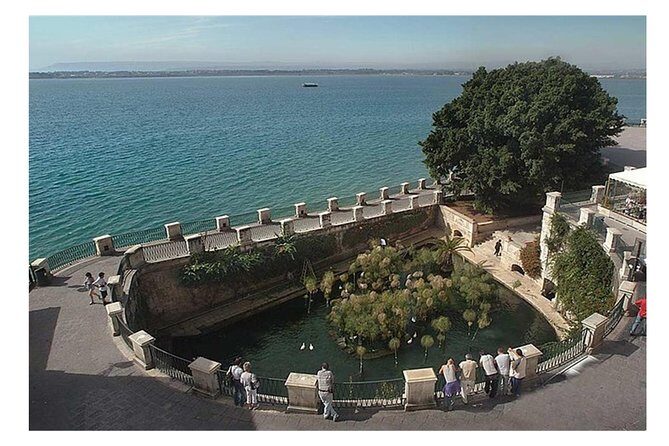
Then there’s Fontana di Aretusa, the freshwater spring that forms a basin with papyrus plants. It’s one of those locations that feels both calm and strangely alive. The setting makes it easy to understand why this spot became important, long before modern maps existed. Plan to slow down here rather than rushing for the next photo.
Ortigia admission is included on this tour, so you don’t need extra budgeting for your time in town. The one thing to watch: your walking pace. Ortigia is best enjoyed at human speed, and your guide can help you decide what to prioritize if there are specific sights you care about more.
Val di Noto and Noto town: Late Baroque that you can actually read
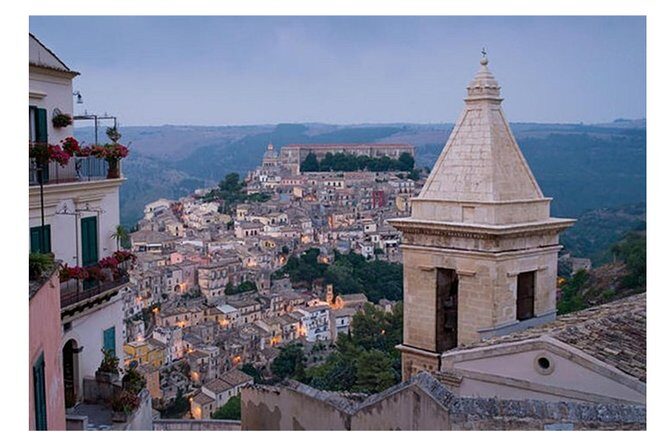
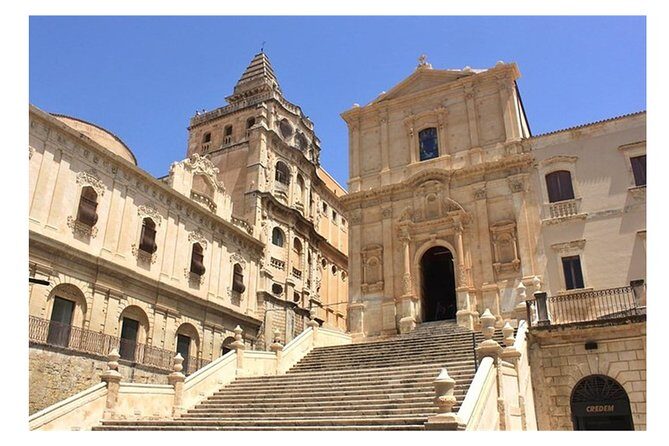
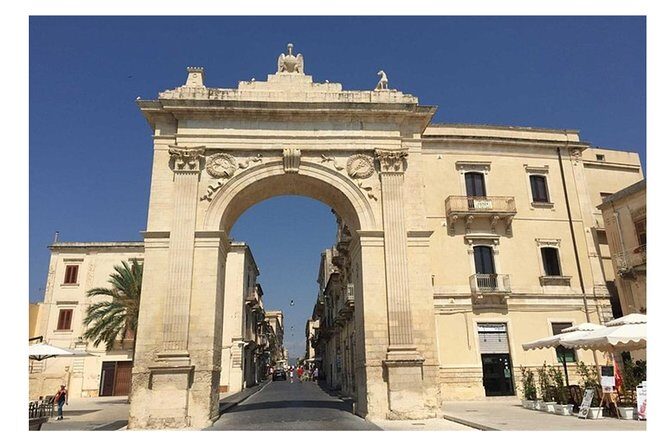
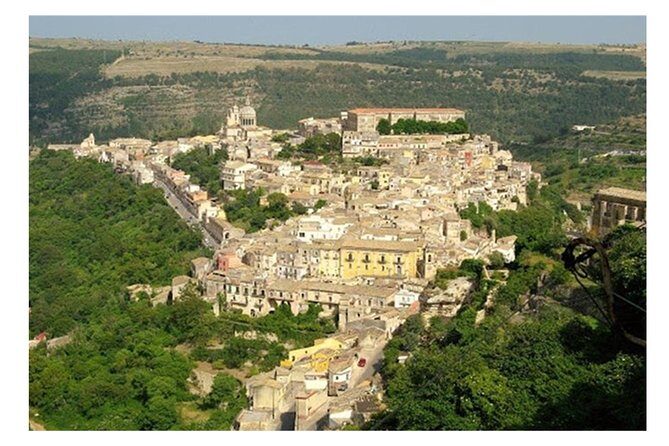
From Syracuse, the tour heads to the Late Baroque towns of the Val di Noto, with Noto as the key stop. You’ll have about 2 hours here, which is just enough to notice patterns in the architecture without getting stuck in museum mode.
What you’re looking at is not random ornamentation. In Noto, baroque architecture tends to show up as dramatic facades, elaborate church fronts, and palaces that feel like they were designed to be viewed from the street at walking height. The effect is dramatic, but the streets are what carry it. You’ll see why Noto (and surrounding sites in the valley) earned recognition for its collection of baroque towns.
This is also where I think the tour format shines. If you just arrive on your own, you might see pretty buildings and miss what makes the baroque style work. A good guide helps you spot the repeating themes—how the facades frame windows, how the churches rise above the streets, and why these towns look like they were built as a unified visual experience.
Noto admission is included, so your focus stays on sightseeing rather than ticket arithmetic.
Two considerations for Noto:
- Time is limited. Two hours can pass quickly if you stop every few steps for photos. Keep a mental list of what you want most.
- Daylight matters. If the sun is high, details can look flatter. If you have some flexibility in your photo spots, you’ll get better texture on the carvings.
What the private format really changes (and where it can disappoint)
This is a private tour, so only your group participates. That’s more than a marketing line. It affects how your day feels.
With private transport, you’re not stuck waiting on other people to catch up. Your guide can adjust pacing if someone is moving slower or if you want extra time near the fountain in Ortigia. You also avoid the constant “hurry up” pressure that can take the joy out of ancient sites and old towns.
But here’s the honest bit: a private tour doesn’t automatically mean maximum comfort. One guest had a bad experience because the vehicle provided felt too small for four passengers, with a person having a cramped seat position due to the car’s raised floor area. That’s the kind of problem you can feel after an hour, even if the driver is pleasant.
So how do you protect yourself?
- If you’re traveling as a group of four (or with anyone who needs more legroom), you should ask what vehicle type you’re likely to get.
- In general, request a vehicle that fits your group comfortably, especially for a full day in traffic.
The good news is that the tour includes an air-conditioned vehicle, and the description allows for different vehicle types (including minivans and 4×4/off-road vehicles). Translation: there’s a decent chance you’ll get something right for your group size. Just don’t assume.
Price and value: what $231.91 per person buys you
At $231.91 per person for about 8 hours, this isn’t a budget day trip. You’re paying for three things: distance, private logistics, and guided time at multiple major sights.
Here’s how I’d judge the value:
- You’re covering Syracuse (Neapolis + Ortigia) plus Noto in the Val di Noto in one day. Doing that efficiently on your own takes coordination, and coordinating transport on a tight schedule can cost time and money.
- Transport is included, and it’s private. That typically saves you from transfers and waiting.
- Admissions are partly covered: you’re set for Ortigia and Noto, but you still need to pay the €13.50 Neapolis park ticket separately and you’ll handle lunch.
Then the reality check: if the vehicle ends up being too tight for your party, the experience can feel overpriced. Also, one past guest noted that the driver wasn’t acting like a full tour guide and mainly drove plus gave some information while guiding through Syracuse. That doesn’t have to be your outcome, but it’s a reminder that guide style can vary.
If you’re the type who likes your day to be structured—arrive at the right place, see the key features, and understand what you’re looking at—this price can feel fair. If you just want to travel between towns and don’t care much about interpretation, you might question the cost versus doing it more independently.






Timing, tickets, and your day plan (how to avoid stress)
Pickup runs between 8:30 and 9:00 from your accommodation, hotel, airport, or port. You’re looking at a full-day schedule, so plan around a mid-day rhythm: early start, steady sightseeing, and a lunch you’ll need to buy on your own (lunch is not included).
A simple way to make the day feel easier:
- Bring a light snack and water for the gaps. This helps on days where your group needs a short pause.
- Wear comfortable walking shoes for both Neapolis and Ortigia. Old stones and uneven surfaces are part of the deal.
- If you’re sensitive to heat, this is where the air-conditioned vehicle will feel like a lifesaver between stops.
Ticket-wise:
- Neapolis admission is not included and costs €13.50.
- Ortigia and Noto admissions are included.
Also, there’s confirmation at booking time, and the tour uses a mobile ticket. That’s helpful for smooth check-ins, especially when you’re juggling multiple stops.
Guides and personalities: why it can feel different day to day
This tour lives or dies on the human factor: who’s driving, and who’s telling the story.
One guide name you may hear is Roberto, who has a strong reputation for being safe and for sharing lots of useful context, even going beyond the formal plan by showing things around the area. Another guide name that comes up is Janet, praised for giving a clear, educational take on Sicily’s history and culture.
You don’t need a celebrity-level guide to enjoy this day, but you do benefit if your guide explains what you’re seeing and helps you connect the dots between Greek structures, Roman layers, and Baroque rebuilding.
So ask yourself one question before you book: do you want interpretation, or do you just want transportation? If you want interpretation, this tour is a good fit—just keep an eye on the vehicle comfort question for your group size.
Who should book this day trip (and who should think twice)
I think this tour is best for you if:
- You want a structured day that hits the big Syracuse monuments and the baroque highlights of Noto.
- You care about understanding what you’re seeing (not just collecting photos).
- Your group prefers private pacing over bus schedules.
You might want to think twice if:
- You’re extremely budget-sensitive and already feel comfortable planning logistics on your own.
- Your group of four needs extra space and you’d be unhappy in a smaller vehicle. Comfort matters when the day includes hours of driving and walking.
- You’re indifferent to guided context. If you mainly want driver-only movement, the premium price might not feel worth it.
Should you book this Private Day Tour to Syracuse and Noto?
If you want an efficient, high-impact day that links Neapolis, Ortigia, and Noto without turning your trip into a transportation puzzle, I say it’s a strong option. The included admissions for Ortigia and Noto, plus the private ride, help justify the price. And when you land with a great guide (Roberto and Janet are names that stand out in the provided information), the day turns from sightseeing into real understanding.
Just do one thing before you commit: be sure you’re comfortable with the vehicle size for your party. On a private day, you shouldn’t have to “make do” physically to pay a premium. If that part looks right, this is the kind of Sicily day that leaves you with images and context that stick.
FAQ
How long is the Private Day Tour to Syracuse and Noto?
It’s listed as about 8 hours.
Where does pickup happen and when?
Pickup is offered from your accommodation, hotel, airport, or port of arrival between 8:30 and 9:00.
Is the tour private?
Yes. It’s a private tour, and only your group will participate.
What’s included in the price?
The tour includes an air-conditioned vehicle and private transportation. Admission tickets are included for Ortigia and for Noto.
Is lunch included?
No, lunch is not included.
Do I need to buy tickets for Parco Archeologico della Neapolis?
Yes. The Archaeological Park of Neapolis in Syracuse admission ticket is not included, and the listed cost is 13.50 euros.
Is the tour offered in English?
Yes, English is an offered language.
What can I expect for the driving portion?
You’ll use a private vehicle, and the tour information indicates vehicles may include minivans and/or 4×4 off-road vehicles.
Is this tour suitable for most travelers?
The information says most travelers can participate.
What is the cancellation policy?
You can cancel for a full refund up to 24 hours in advance of the experience start time. If you cancel less than 24 hours before, the amount paid is not refunded.