REVIEW · TAORMINA
From Taormina: Full-Day Guided Tour of Syracuse
Book on GetYourGuide →Operated by SAT Group · Bookable on GetYourGuide
Syracuse feels like two cities in one. This full-day guided bus trip strings together the big moments of Magna Graecia at the Greek Theater and then lets you roam Ortygia Island, where Greek, Roman, Norman, and Baroque buildings sit side by side. I especially love how the day pairs stand-out monuments like the theater and the Ear of Dionysius with time to wander on your own. One caution: the schedule can put you walking in strong sun, and the mult-language narration can feel a bit slow if you’re trying to hear every detail.
The price is $67.97 per person for coach transport plus a tour leader and a local guide, with VAT and taxes handled. Entry fees and meals are not included, though you do get help to skip the ticket line.
If you want an easy car-free day with built-in guidance—and you’re good with some walking—this is a practical way to see more of Syracuse than you’d manage solo. Bring comfortable shoes and a sun hat, because the stone streets and open-air sites don’t forgive poor footwear.
In This Review
- Key moments to plan for
- How the Taormina-to-Syracuse day trip really plays out
- Syracuse archaeology: Greek Theater and the Ear of Dionysius
- Quarries and lemon orchards: the view behind the ruins
- Ortygia Island: Greek, Norman, and Baroque in one walkable day
- Timing, heat, and walking: how to have an easier day
- Price and value: is $67.97 a good deal?
- Guides and on-bus experience: what makes the day feel smooth
- Who this tour is best for (and who should think twice)
- Should you book this Taormina-to-Syracuse tour?
- FAQ
- How long is the Taormina to Syracuse guided tour?
- Where do I meet the tour?
- Is transportation included?
- Do I get skip-the-ticket-line entry?
- Are meals and drinks included?
- Is there a live guide?
- What languages are available?
- Is the tour suitable for people with mobility impairments?
- What should I bring?
- Are pets allowed on the tour?
- Should you book it or choose something else?
Key moments to plan for
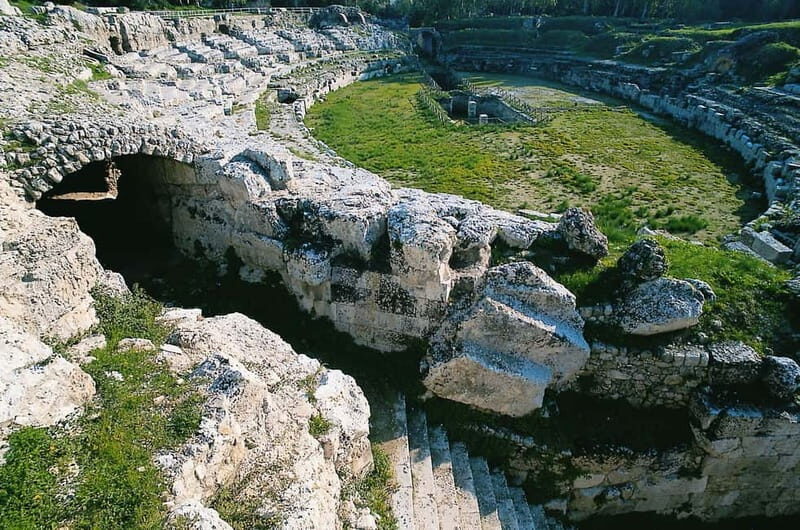
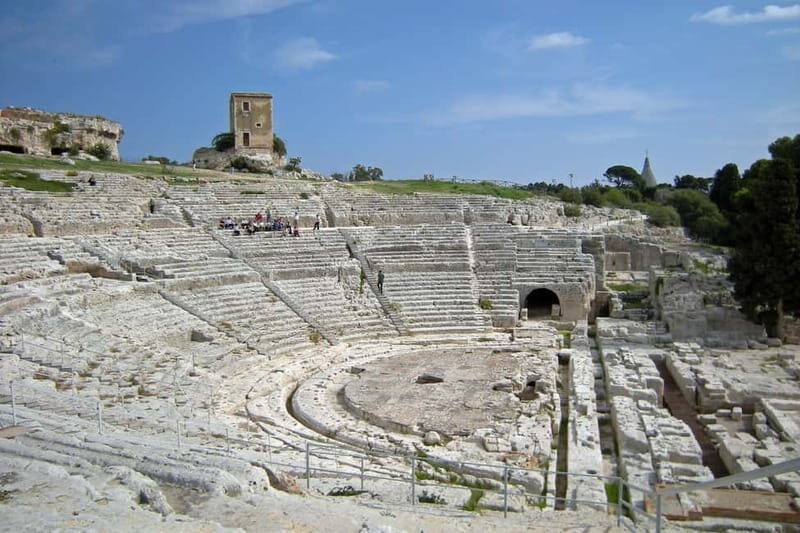
- Greek Theater scale in plain sight: Plan for a huge amphitheater with 59 rows and capacity up to 15,000 spectators (and in summer, the theater may have a set on site).
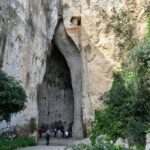
- Ear of Dionysius, literally carved rock: A 20m-high slender arch cut about 65m deep, tied to Dionysius the Tyrant’s prison stories.
- Quarries turned lemon country: Old stone quarries sit just over the ridge, and today a fragrant lemon orchard grows there.
- Ortygia’s mix of eras on foot: Greek and Roman remnants, Medieval Norman buildings, and Baroque details you’ll spot around the main cathedral.
- Fountain of Arethusa photo + pause: A must-see landmark that’s woven into the Ortygia experience.
How the Taormina-to-Syracuse day trip really plays out
This is a full-day, guided bus tour built for momentum: you leave Taormina by coach, arrive in Syracuse, hit the archaeological area first, and then spend the afternoon on Ortygia Island. The ride time is about 105 minutes, so you’ll start feeling the change in scenery early—less “drive day,” more “see day.”
Your day is guided by a tour leader service plus a local guide service, and the tour offers live interpretation in English, German, and Italian. If you’re sensitive to group timing, keep in mind that one review flagged that three-language commentary can get chaotic at times—so don’t expect the pace to match a private guide.
You’ll meet at the main Bus Terminal at Via Luigi Pirandello in Taormina and return to the same meeting point. One practical tip from the field: show up early—one reviewer noted the bus doesn’t wait long.
There’s also at least one break built into the day, and on the road you may stop at a service station along the way. That matters because Syracuse and Ortygia involve lots of walking, and you don’t want to be stuck hungry with no quick snack options.
You can also read our reviews of more guided tours in Taormina


Syracuse archaeology: Greek Theater and the Ear of Dionysius
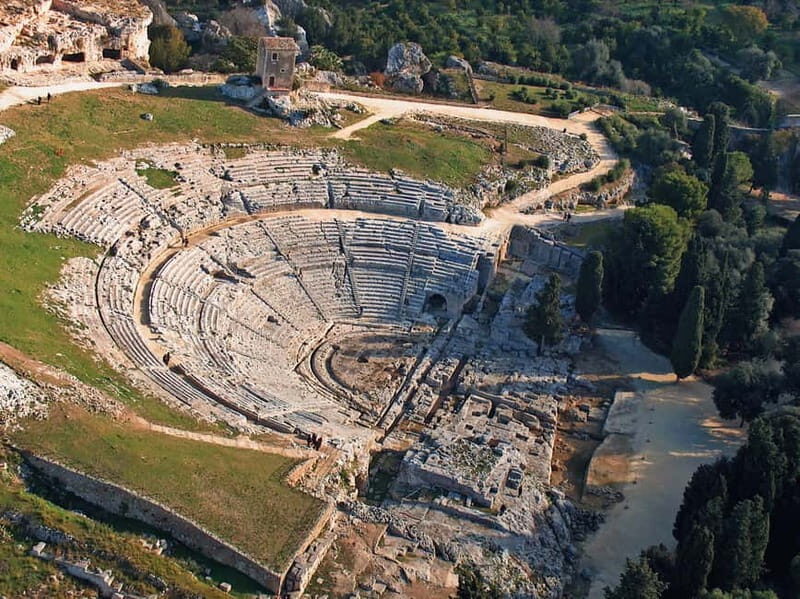
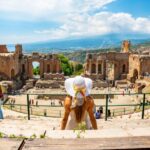
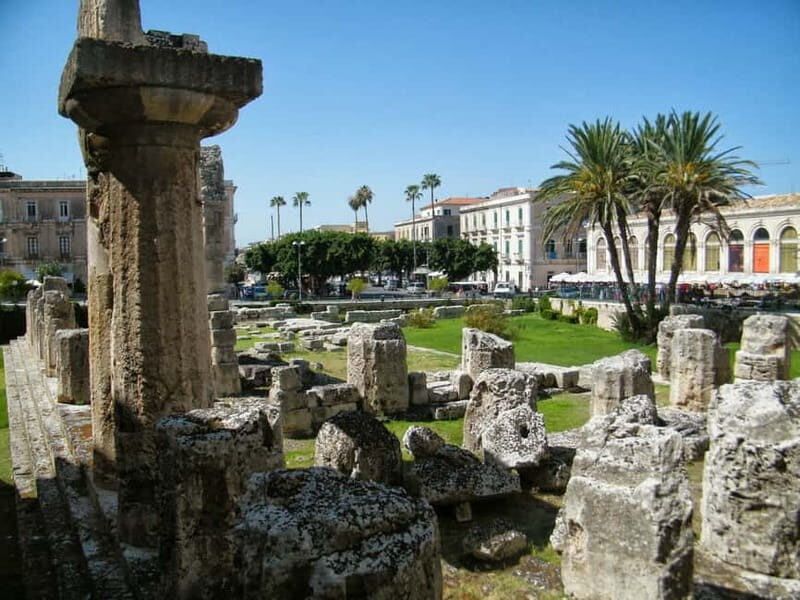
The archaeological stop is the heart of the morning. You’ll head to the northwest side of town, where you can see Greek and Roman remains in surprisingly solid condition. The main draw is the Greek Theater, with a cavea (seating area) known for its size and rows that could hold up to 15,000 people.
What I like about doing the theater with a guide is that it stops being just an old structure. You get the sense of how this kind of stage shaped public life—why the scale mattered, and why the architecture still hits you even after 2,500-plus years. Even if you’re not a theater person, the physical space gives you an immediate feel for the power of the city.
From there, you’ll move toward one of the most dramatic rock-cut sights in the area: the Ear of Dionysius. This is a slender pointed arch cut into the rock face, about 20m high, and roughly 65m deep. The story attached to it is that Dionysius the Tyrant used the space as a prison for his bitterest enemies.
That’s the kind of detail that turns a photo stop into a real mental picture. You’re not just seeing a carve in stone—you’re connecting it to a specific character and a specific form of power in Syracuse’s past.
Quarries and lemon orchards: the view behind the ruins
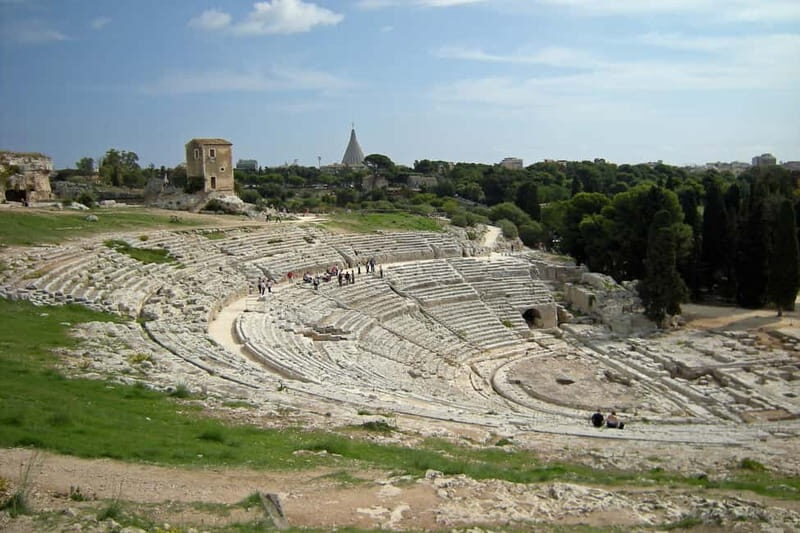
Right after the theater area, you’ll look toward the old stone quarries. Today, there’s an orchard growing there, and the lemons add a strong sensory layer to the landscape—sun, stone, and citrus all at once. It’s a clever reminder that ruins aren’t locked in time; people keep working the ground and reusing the space.
This part of the route also gives you a breather from pure monument-viewing. You’re moving your eyes outward, seeing how the city sits in relation to its ancient workings. If you like taking photos that show more than just a close-up wall, this ridge-and-quarry portion helps you frame what you’re seeing.
One practical note: stone sites are bright and open. In hot weather, plan for strong sun exposure even if you’re only outside for a short span between guided explanations.
Ortygia Island: Greek, Norman, and Baroque in one walkable day
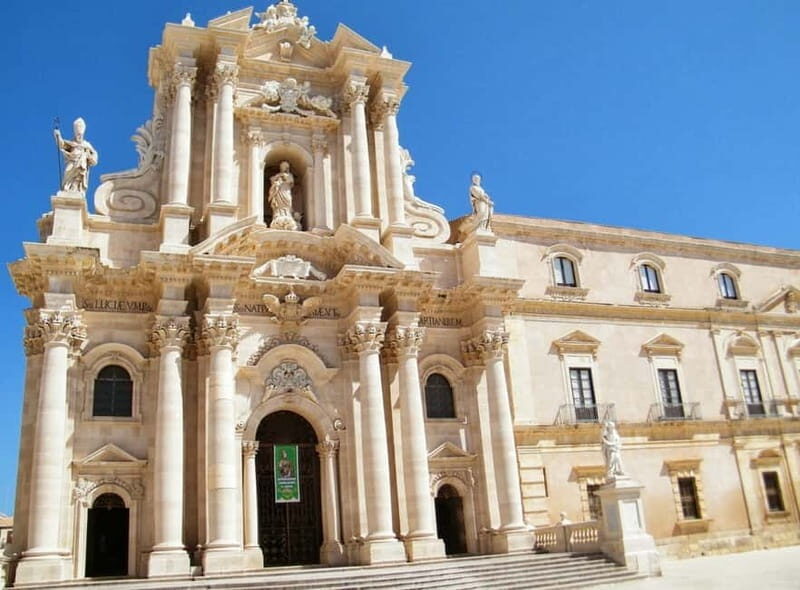
After the archaeology, you shift gears to Ortygia, the island portion of Syracuse. The big win here is contrast. You go from major ancient structures and rock-cut features to a smaller island that still feels full of life.
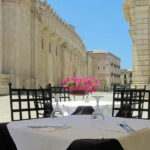
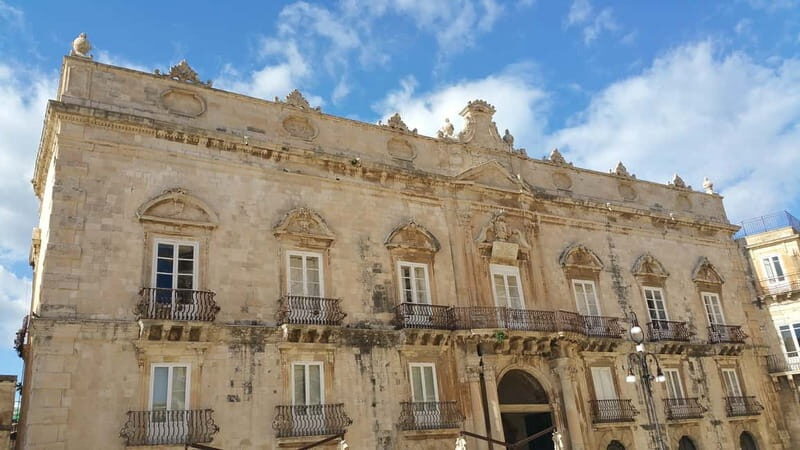
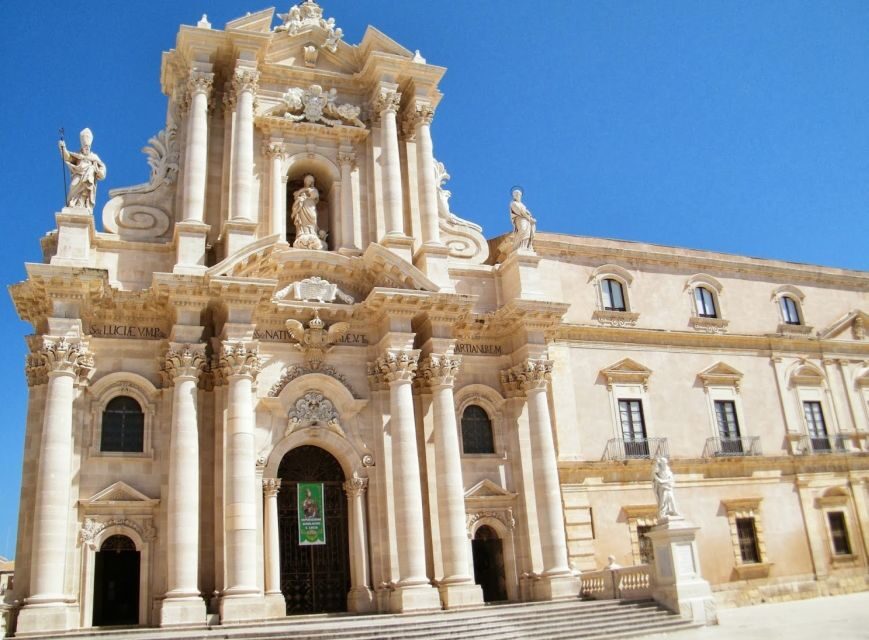
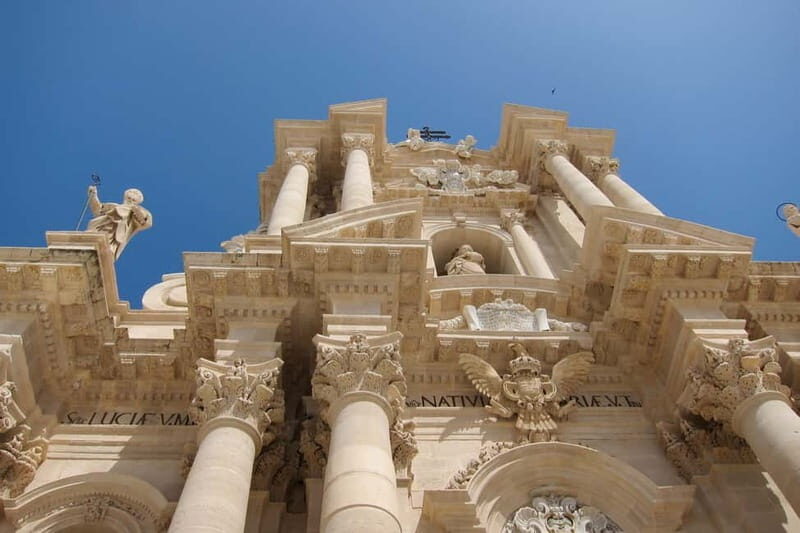
Ortygia can be compact, but it’s packed with layers. You’ll see Greek and Roman remains, Medieval Norman buildings, and understated Baroque you’ll notice around the main cathedral. It’s the kind of architectural mix that makes you look up more than you would on a typical day-trip city.
You also get guided walking time plus the chance to wander. The tour structure includes time to explore the island on your own, and you can use it to do a slow loop, pop into shops, and stop for something cold before the heat rises. One reviewer specifically praised the amount of free time to walk in town and shop, which is key on a place like Ortygia where you’ll find small streets and viewpoint opportunities.
Don’t miss the landmark moment around the Fountain of Arethusa. It’s not just a pretty spot—it’s a named Syracuse feature that anchors the island’s identity. If you can, give yourself a minute longer there. Ortygia rewards a slower stop, even if the tour schedule is moving.
In the afternoon, you’ll have the chance to rest at a restaurant, trattoria, or bar. Meals aren’t included, so you’ll be choosing your own pace and budget, but that also means you can eat where you feel comfortable instead of following one pre-set option.
Timing, heat, and walking: how to have an easier day
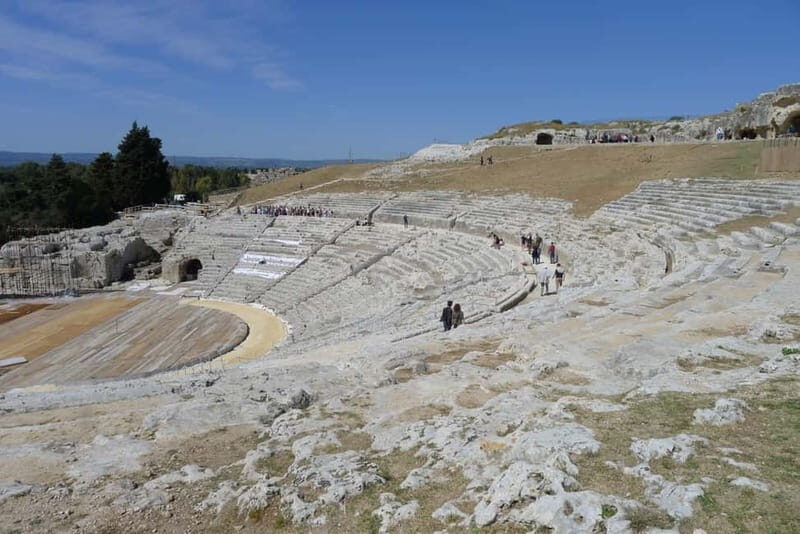
A day trip to Syracuse is not hard, but it’s physical. You’ll be walking through ancient stone spaces, then moving around Ortygia streets that can feel warm and exposed. One review called out that it can be dead hot around late morning, especially for strolling through a stone city. If you’re heat-prone, this is the single biggest factor.
A few strategies help:
- Wear shoes with grip and cushioning. Uneven stone and curbs add up.
- Use a sun hat, especially for the theater and Ortygia parts.
- Build in water breaks even if you’re not thirsty right away.
Also watch the group pacing. The tour offers multi-language live interpretation, and one reviewer found that running three languages could make explanations feel chaotic. If you notice the pace turning into a blur, don’t fight it—use the guided stops to get context, then switch into your own rhythm during free time.
Finally, be early to the first pickup point. At least one review noted the bus does not wait long, and departures can involve multiple pickup stops (like a 7:30 stop mentioned near Giardini Naxos).
You can also read our reviews of more tours and experiences in Taormina

Price and value: is $67.97 a good deal?
For $67.97 per person, you get coach transport, a tour leader, a local guide, and VAT and taxes. You also get the practical help of skipping the ticket line, which can save time at busy sites.
The trade-off is that entry fees and meals aren’t included. That means the total cost depends on which sites require paid admission on the day you go. Still, the structure is solid: transport is handled, guides interpret what you’re seeing, and you get both the big archaeological stop and the Ortygia island wandering time.
Value-wise, this tour shines if:
- you don’t have a rental car,
- you want a guided framework for the archaeology,
- and you want free time to enjoy Ortygia at your own pace.
It’s less of a deal if you already know you won’t appreciate the guided explanations and you’d rather spend a full day completely independently. In that case, the cost of guides could feel wasted.
Guides and on-bus experience: what makes the day feel smooth
A good guide can turn a sightseeing list into a story you remember. This tour has that potential. One reviewer praised Renata for excellent knowledge and courtesy, and specifically mentioned her detailed translations across languages. Another praised Eva for being knowledgable and funny, and there’s also mention of Alfredo contributing a lot of stories—though with the three-language pacing issue.
On top of that, the bus driver matters for comfort and mood. One review called out driver Alessandro as very entertaining, which helps when you’re spending most of the morning on the road and want the trip to feel like part of the experience rather than time lost.
Who this tour is best for (and who should think twice)
This works well if you want:
- a structured day with guided explanation for the big Syracuse highlights,
- a car-free plan from Taormina,
- and a mix of scheduled stops plus real time to wander Ortygia.
It may not be your best match if you have mobility concerns, because it’s not suitable for people with mobility impairments. Also, pets aren’t allowed, so plan for that if you’re traveling with an animal.
If you’re traveling as a duo or a small group and you like hearing background while still enjoying downtime, the free time on Ortygia can be a good compromise between guided and independent travel.
Should you book this Taormina-to-Syracuse tour?
Book it if you want one day that covers Syracuse’s “must see” archaeology and then gives you enough Ortygia time to actually enjoy the island instead of just driving through it. The Greek Theater, Ear of Dionysius, and Fountain of Arethusa are strong anchors, and the inclusion of a tour leader plus local guide makes the experience feel more than a transport service.
Hold off if you’re very heat-sensitive or strongly prefer single-language commentary with a tight pace. If walking is an issue for you, skip this one since it’s not suitable for mobility impairments.
In short: it’s a good value day for people who want guidance at the ruins and freedom on Ortygia—just be ready for sun and stone.
FAQ
How long is the Taormina to Syracuse guided tour?
It’s listed as a 1-day tour. Starting times vary, so you’ll need to check availability for the exact departure.
Where do I meet the tour?
The meeting point is the Bus Terminal at Via Luigi Pirandello in Taormina.
Is transportation included?
Yes. The tour includes transportation by coach.
Do I get skip-the-ticket-line entry?
The tour includes skip the ticket line. Entry fees themselves are not included.
Are meals and drinks included?
No. Drinks and meals are not included.
Is there a live guide?
Yes. It includes a tour leader service and a local guide service, with live tour guide interpretation.
What languages are available?
English, German, and Italian.
Is the tour suitable for people with mobility impairments?
No, it’s not suitable for people with mobility impairments.
What should I bring?
Bring comfortable shoes and a sun hat.
Are pets allowed on the tour?
No. Pets are not allowed.
Should you book it or choose something else?
If you want a full-day plan that covers the big Syracuse sights—Greek Theater, Ear of Dionysius, and time in Ortygia—this is a straightforward, guide-led way to do it from Taormina. If your priority is fully independent pacing, you may prefer to plan Syracuse on your own; but if you’d rather have context and a ready-made route, this tour is the practical choice.