REVIEW · TAORMINA
From Taormina: Syracuse and Noto Guided Day Trip by Bus
Book on GetYourGuide →Operated by Noema Viaggi Srl - Sicilyexcursions · Bookable on GetYourGuide
Sicily’s ancient and Baroque worlds in one day. This trip strings together Noto’s UNESCO Baroque center and Syracuse’s Greek-to-Roman sites, with a guide on board to keep the story clear and moving. I like that you get both the big set pieces and the human details—like the walk in Ortigia and the Arethusa fountain terrace views. One thing to consider: it’s a long day with lots of walking, and you’ll want to manage extra monument ticket costs.
My favorite part is the way the history is organized for you, from Syracuse’s Greek roots to its Baroque flair in Ortigia and the Cathedral area. The other strong win is the tour’s pace: you hit the headline sights without getting stuck in one place too long. The possible drawback is timing—if you’re sensitive to early pickups or short stop times, build your expectations around a tight schedule.
In This Review
- Key things to know before you go
- A Full-Day Loop: Taormina to Noto and Syracuse by Bus
- Pickup times and why the day starts early
- Noto’s Baroque center: Porta Reale to the Municipal Theatre
- Ortigia by foot: Arethusa fountain views and the Temple of Apollo
- Cathedral time in Syracuse: when you’ll see inside (and when you won’t)
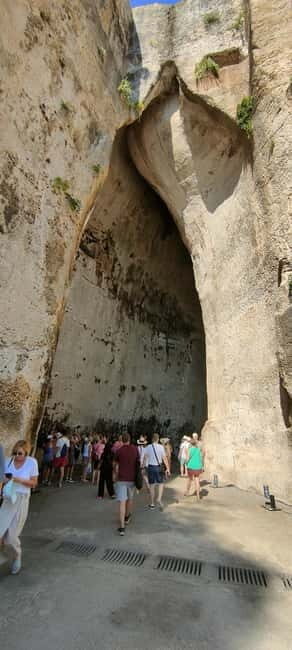
- Neapolis Archaeological Park: the Greek Theatre, Latomìa, and Ear of Dionysius
- Getting your lunch right in Ortigia (without losing the day)
- Budget and value: what the $68 covers, plus the likely add-ons
- Weather and timing: how to stay flexible on a packed route
- Who this day trip suits best (and who should skip it)
- Should you book the Syracuse and Noto day trip from Taormina?
- FAQ
- How long is the Taormina to Syracuse and Noto guided day trip?
- What’s included in the price?
- What is not included?
- Are entry tickets needed for Neapolis Archaeological Park?
- Is the Duomo Ortigia ticket included?
- Do I get any free time during the day?
- Where are the pickup and drop-off points?
- What languages is the guide available in?
- What time does the tour pick up from Taormina area locations?
- Is the tour wheelchair accessible?
Key things to know before you go
- Christy-style storytelling: a multilingual guide (listed in multiple languages) keeps the day coherent instead of chaotic.
- Noto’s Baroque walk: Porta Reale to Corso Vittorio Emanuele, plus churches and the Municipal Theatre.
- Ortigia on foot: Foro Italico stroll to the Fountain of Arethusa and the sea-view terrace.
- Greek Athens-meets-Sicily stops: Neapolis Archaeological Park covers the Greek Theatre, Latomia del Paradiso, Ear of Dionysius, and the Roman Amphitheatre.
- You’ll pay for some entries: Neapolis Park and the Duomo Ortigia are not included.
- Plan for church-appropriate clothing: comfortable shoes are a must, and you should dress for visiting churches.
A Full-Day Loop: Taormina to Noto and Syracuse by Bus
This is a classic Sicily day-trip format: one coach, one route, and two major destinations. You start from the Taormina area (with several pickup options) and spend the day moving between Noto and Syracuse/Ortigia, with guided interpretation built in. It’s a smart choice if you want maximum highlights without renting a car or spending hours figuring out logistics.
The value comes from the combination. Noto gives you that unmistakable Sicilian Baroque look, with refined façades and dramatic church details. Syracuse adds something different: layered history you can actually walk through—Greek foundations, Roman additions, and the later Baroque “coat” that covers parts of the same story.
If you like your tours to be structured—“here’s what you’re seeing and why it matters”—this format works. If you prefer slow wandering with lots of free roaming, you’ll still enjoy it, but you’ll need to accept that the day is packed.
You can also read our reviews of more guided tours in Taormina


Pickup times and why the day starts early
The tour pulls from multiple pickup points, with early departures such as Letojanni at 7:00, the Mazzarò cable car area at 7:10, and Taormina terminal bus at 7:20. There are also pickups listed at S. Giovanni and Recanati.
This matters because it affects how you feel later in the day. Even though the total duration is listed as 10 hours, you’ll experience it as a full itinerary day: the earliest pickups make the schedule feel more “daytime starts at dawn” than “easy holiday outing.” On the return, you’ll be back to your drop-off location in the late afternoon.
One more practical point: the bus is recognizable by an orange sign that reads SIRACUSA NOTO. Arrive about 5–10 minutes early so you’re not standing around.
Noto’s Baroque center: Porta Reale to the Municipal Theatre
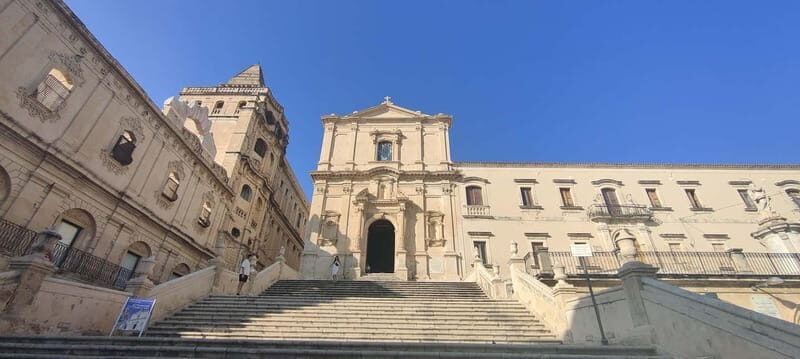
Noto is the “capital of Baroque” and was declared a UNESCO World Heritage Site in 2002. On this tour, you don’t just stop at one pretty church photo—you get a walk through a stitched-together Baroque center.
You’ll enter the historic core through Porta Reale (Royal Gate), then continue along Corso Vittorio Emanuele, a long elegant street that ties the sights together. As you walk, you’ll pass by key landmarks such as:
- Chiesa di S. Chiara
- Palazzo Landolina
- Cathedral of S. Nicolò (Duomo of Noto)
- Church of S. Domenico
- Municipal Theatre
It’s a good mix because it shows Baroque as more than decoration. You’ll notice how churches, civic buildings, and streets work together visually. Even if you’re not a Baroque architecture nerd, it helps you see why Noto feels so theatrical.
Time-wise, expect a photo stop and then about an hour for visit/free time in Noto. That’s enough for a highlight loop, but not enough for museum-level depth. If your dream is to linger in side chapels, plan on doing that on a separate return trip.
Ortigia by foot: Arethusa fountain views and the Temple of Apollo
After Noto, the tour moves toward Ortigia, the historic center of Syracuse. This is where the pacing shifts from “Baroque city walk” to “waterfront and stone story.” Ortigia is compact, and the best way to experience it is on foot.
You’ll do a guided visit with free time, and you’ll get a walk along Foro Italico. The highlight here is the Fountain of Arethusa, a freshwater spring that forms a natural pool with papyrus plants, set on a terrace that looks out over the sea. It’s one of those stops where the scenery does half the explaining.
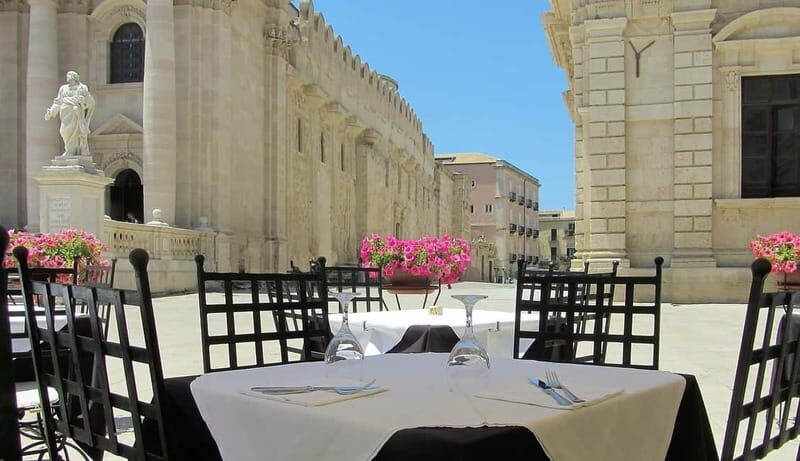
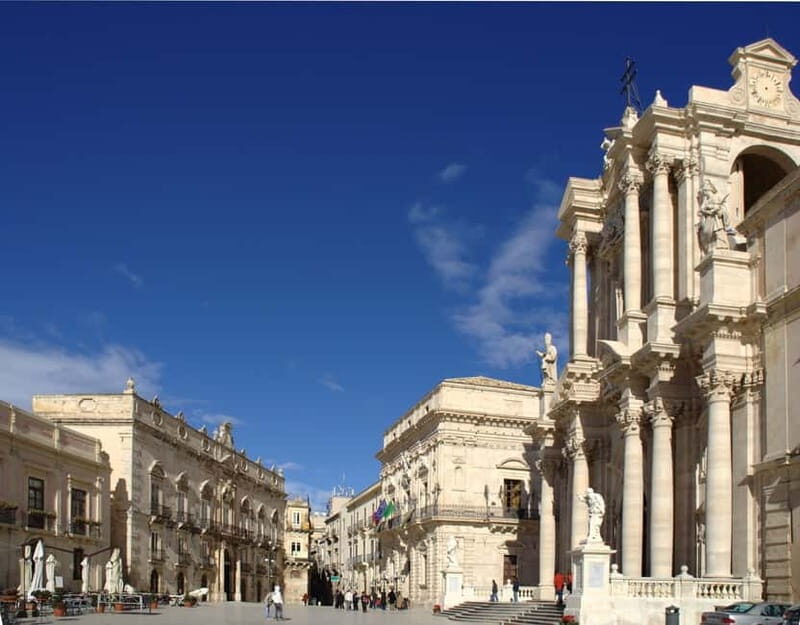
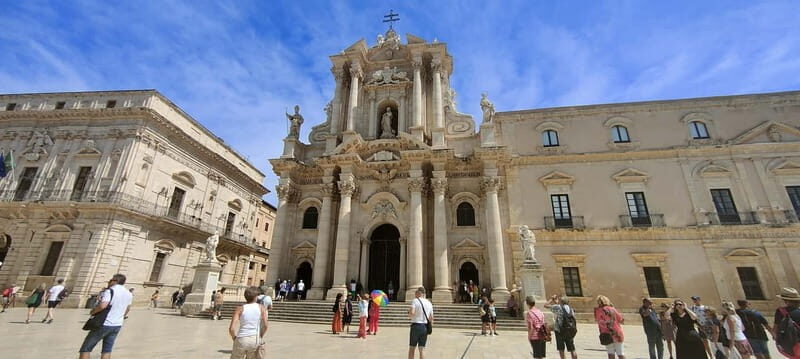
From there, you’ll reach the main ceremonial space around the Cathedral Temple of Apollo. The Cathedral complex and the surrounding Baroque square are the kind of sight you can understand instantly: you see power, faith, and style layered on top of each other. This is the “Syracuse you photograph,” and it’s also the “Syracuse you hear about” when your guide connects Greek origins to later transformations.
You’ll also have free time, which is valuable in Ortigia because you can choose what to prioritize:
- a slow snack
- a quick wander through small streets
- revisiting the sea-view areas before you move on
Cathedral time in Syracuse: when you’ll see inside (and when you won’t)
The itinerary includes time for the Cathedral area, with a visit window listed as about 30 minutes. Also note that the Duomo Ortigia has an additional entry cost (around €2 per person), so you may be able to go inside if you choose.
Why this matters: churches in this area often have beautiful interiors, but you don’t get a long, unhurried “tourist museum” experience here. The cathedral slot is best used for quick orientation—seeing the main highlights and deciding whether you want more time inside during your own follow-up visit.
This is also where clothing rules kick in. The tour specifically recommends appropriate clothing for church visits. Translation: shoulders and legs that look respectful will save you stress if you run into any dress checks at entrances.
You can also read our reviews of more tours and experiences in Taormina



Neapolis Archaeological Park: the Greek Theatre, Latomìa, and Ear of Dionysius
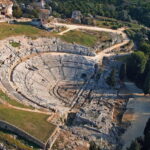
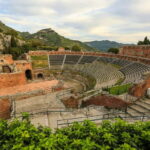
Neapolis Archaeological Park is the big one. You’ll spend about two hours here with a guided visit, and it’s the part of the day that most clearly shows Syracuse’s Greek origins before the later Roman and Baroque layers.
Expect to see several headline sites:
- Greek Theatre
- Latomia del Paradiso
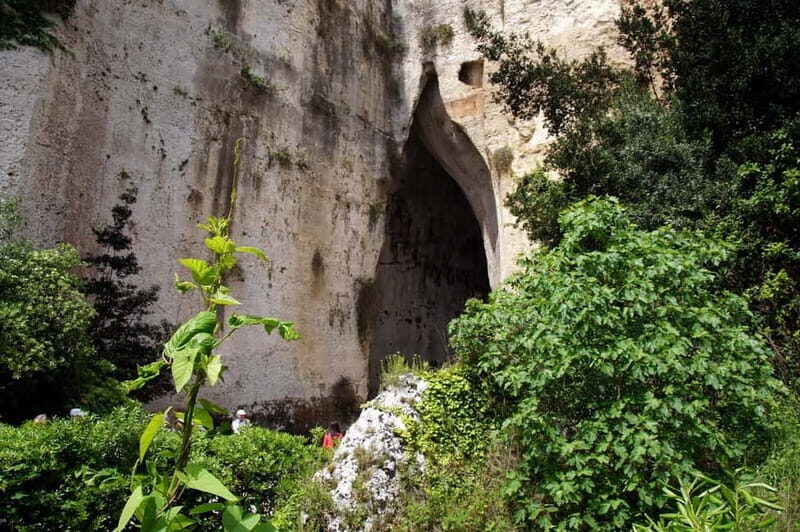
- Ear of Dionysius
- Roman Amphitheatre
Here’s what makes these stops work in a single circuit. The Greek Theatre gives you the broad, public side of ancient life—where people gathered and power was displayed through performance. Then Latomia del Paradiso and the Ear of Dionysius shift the mood toward the underground and the rock-cut spaces, which feel more intimate and atmospheric than “ruins in a field.” Finally, the Roman Amphitheatre reminds you that the story doesn’t end with Greece—Rome left its stamp, and you can still read it in how space was designed.
One practical tip: wear shoes you trust. The park areas involve uneven ground and walking between viewpoints. You’ll get more enjoyment if your feet aren’t battling you.
Also, bring your monument ticket details carefully. The park entry involves checks, so I recommend keeping any paid entry papers in one place and not buried in a bag. That way, you don’t lose time during handoffs between areas.
Getting your lunch right in Ortigia (without losing the day)
Lunch isn’t included, so you’ll need a plan. On a day like this, you can’t afford to wander for ages trying to find a “perfect” sit-down meal. That’s why quick, nearby food works well.
A practical approach in Ortigia is to grab something fast before your next guided segment. One food tip that pops up for this area is Borderi sandwiches in Ortigia—simple, quick, and well suited to a busy itinerary. If sandwiches aren’t your thing, look for a take-away option near the main walk routes, so you don’t drift into time trouble.
If your group is likely to move as a unit, aim to eat close enough that returning to your meeting point is easy. On this kind of tour, saving 20 minutes can feel like saving an hour.
Budget and value: what the $68 covers, plus the likely add-ons
The listed price is $68 per person, which is often a fair deal for a full-day coach tour with a guide. You’re getting:
- Private bus transport
- A tour guide (with guidance on board)
But the cost isn’t truly “all-in.” Two main monument entries are listed as not included:
- Neapolis Archaeological Park around €16.50 per person
- Duomo Ortigia around €2 per person
Lunch and drinks are also not included. So your realistic “trip total” will usually depend on what you pay for food and whether you choose to go inside for optional entry points.
Still, I like the value here because the day is built around major sites. You’re not paying just to get dropped at one attraction. You’re paying to connect Noto’s Baroque center with Syracuse’s layered ancient highlights, while your guide keeps the meaning clear.
Weather and timing: how to stay flexible on a packed route
This route is schedule-driven, so weather can change how much you enjoy the “outdoor ruin” portions. If rain hits early, it can make the Neapolis areas and uncovered walk sections less comfortable, even if the sights are still there.
What helps: bring clothing you can layer (not just for warmth, but also for sudden drizzle). And don’t plan on getting “extra time” at each stop. The day is designed so you see the big things, even if you can’t linger the way you might on a free day.
You’ll also notice that walking pace matters. This itinerary includes guided walks and transitions, so it’s best for travelers who are comfortable keeping up and staying on schedule.
Who this day trip suits best (and who should skip it)
This is a strong match if you:
- want Noto and Syracuse in one day
- enjoy guided history that ties places together
- prefer a coach tour with clear timing rather than self-planning
- are comfortable walking through church areas and archaeological sites
It’s not a great fit if you need wheelchair access or have mobility impairments. The tour is explicitly listed as not suitable for people with mobility impairments or wheelchair users, likely because of uneven ground and walking between stops.
If you’re traveling with older folks or anyone who struggles with long distances, I’d be cautious. The day is packed: even when the stops are well planned, you’re still moving a lot.
Should you book the Syracuse and Noto day trip from Taormina?
If your goal is a high-impact Sicily sampler—Baroque street beauty in Noto plus real ancient heavyweight sites in Syracuse—then yes, I’d book it. The strongest reason is the way the day is structured around major sights, with interpretation built in and time to breathe a bit in Ortigia and Noto.
I’d hesitate only if you know you hate early starts, dislike walking, or want long museum-style time inside buildings. In that case, you might get more satisfaction by splitting Noto and Syracuse into separate days.
But for many first-time visitors, this is a smart use of limited time. You’ll return with a clearer picture of how Greek Syracuse led to Roman influence, and how later Baroque style shaped what you see today.
FAQ
How long is the Taormina to Syracuse and Noto guided day trip?
The total duration is listed as 10 hours.
What’s included in the price?
The tour includes a tour guide and private bus transport.
What is not included?
Lunch and drinks are not included, and monument entry tickets are not included (Neapolis Park and the Duomo Ortigia have listed extra costs).
Are entry tickets needed for Neapolis Archaeological Park?
Yes. The Neapolis Park entry is listed as about €16.50 per person.
Is the Duomo Ortigia ticket included?
No. The Duomo Ortigia entry is listed as about €2 per person.
Do I get any free time during the day?
Yes. There is free time in Noto and free time in Ortigia after the guided portions.
Where are the pickup and drop-off points?
There are multiple pickup and drop-off options, including locations such as Terminal Interbus Taormina, Interbus fermata Hotel Antares, and Recanati Bus Terminal (plus other listed stops in the area).
What languages is the guide available in?
The guide is listed in Italian, English, French, and German.
What time does the tour pick up from Taormina area locations?
Example pickup times listed include Letojanni 7:00, Cable car Mazzarò 7:10, Taormina terminal bus 7:20, S. Giovanni 7:35, and Recanati 7:45.
Is the tour wheelchair accessible?
No. It’s listed as not suitable for wheelchair users and people with mobility impairments.