REVIEW · SICILY
Etna Summit Craters E-bike
Book on Viator →Operated by Into Etna - Bike and Hike experience · Bookable on Viator
If you want Etna without the full on hike, this is for you. You’ll trade aching legs for a top-end e-bike and still reach real summit viewpoints. It’s a focused 3-hour ride with a guide who explains what you’re seeing as the volcano keeps changing.
I love how the route climbs on volcanic sand to around 2500–2600 meters, so the views feel earned. I also like the balance of effort and breaks: you get rest stops for the altitude difference, plus time at the best panorama point. One possible drawback: this isn’t a casual stroll—moderate fitness is needed, and it’s not recommended if you have certain heart or respiratory conditions.
In This Review
- Key Highlights You’ll Feel Right Away
- Why an E-bike Up Etna Works So Well (And Where It Doesn’t)
- Meeting at Nicolosi: Getting Oriented Before You Start Climbing
- The Uphill Ride to 2500–2600 Meters on Volcanic Sand
- Summit Views Over Valle del Bove: The “Living Volcano” Moment
- The Descent: Heading Toward the Crater of 2001 and Back Down
- Bike Gear, Helmet, and What You May Want to Add
- Who This Tour Fits Best (And Who Should Skip It)
- Price and Value: Is $168.20 Worth It?
- A Quick Reality Check on Weather and Timing
- Should You Book This Etna E-bike Tour?
- FAQ
- How long is the Etna Summit Craters e-bike experience?
- Where do we meet for the tour?
- What language is the tour offered in?
- What’s included with the e-bike tour?
- What should I bring or wear since it’s not included?
- What fitness level do I need?
- What happens if weather is bad?
Key Highlights You’ll Feel Right Away
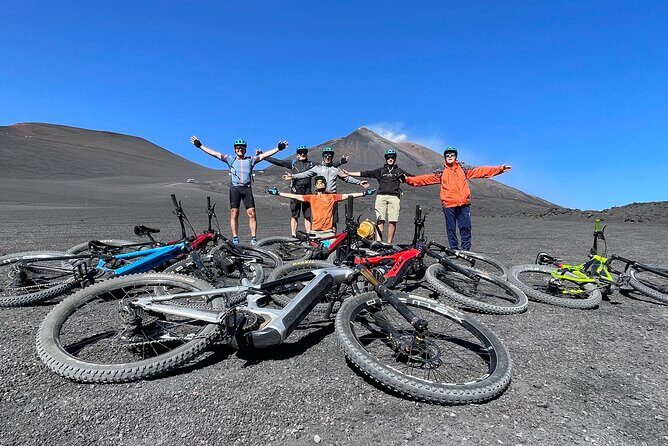
- Highest-range full enduro e-bikes built for serious off-road riding
- Volcanic sand ascent to 2500–2600 m with planned rest breaks
- Summit viewpoint time over Valle del Bove and the summit craters area
- A guided science walk: how Etna evolves (about 30 minutes on the panoramic spot)
- Descent with variety, including a stop toward the crater of 2001
Why an E-bike Up Etna Works So Well (And Where It Doesn’t)
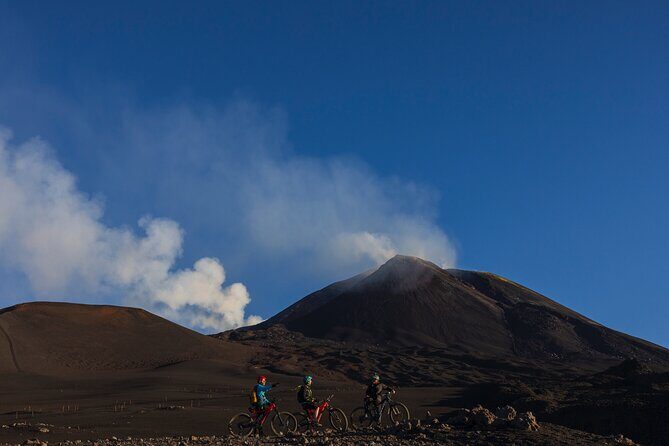
On Etna, getting high is the whole game. The difference between a “nice view” and a real summit moment is usually effort—and that’s exactly where an e-bike changes the math.
What I like about this setup is that you’re not just cruising. You’re riding a bike built for uneven ground, then climbing off-road on volcanic sand. You still do real work, but the e-bike keeps you from turning the whole day into a struggle for survival. You’ll feel the altitude. You’ll feel the texture of the terrain. But you won’t need to be a hardcore cyclist to enjoy the trip.
The one caveat is obvious but worth saying plainly: you still have to ride. If you’re the type who gets winded easily, this may be the wrong day—even with pedal assist. And if you have respiratory or heart problems, diabetes, or epilepsy, this activity isn’t recommended based on the operator’s safety guidance.
You can also read our reviews of more cycling tours in Sicily
Meeting at Nicolosi: Getting Oriented Before You Start Climbing
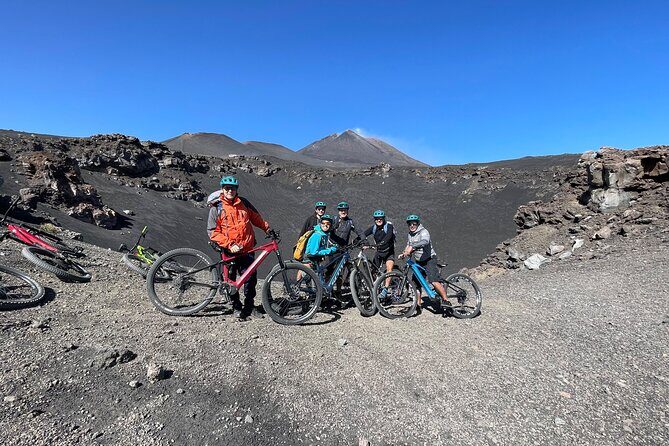
Your day begins at the meeting point near Nicolosi: Etna Tourist Service S.R.L., Contrada Cantoniera, by the Etna South Cable car area. It’s also listed as being near public transportation, which is helpful if you’re staying in Catania or using buses around the Etna area.
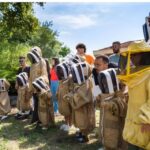
Right away, you’re given the e-bikes—highest range full enduro style—and you get a briefing. That briefing matters more than you might think. Off-road riding on volcanic sand behaves differently than paved streets: traction changes, braking feels different, and your line through the terrain needs a bit of discipline. The guide also covers how to behave with the group so nobody gets left behind or creates a traffic jam on the trail.
Small group size is part of the appeal too. This experience caps at 8 travelers, which usually means you spend more time listening and learning, and less time waiting around.
The Uphill Ride to 2500–2600 Meters on Volcanic Sand
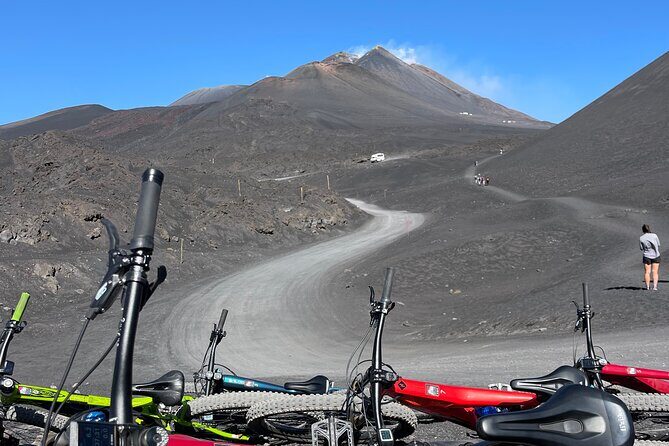
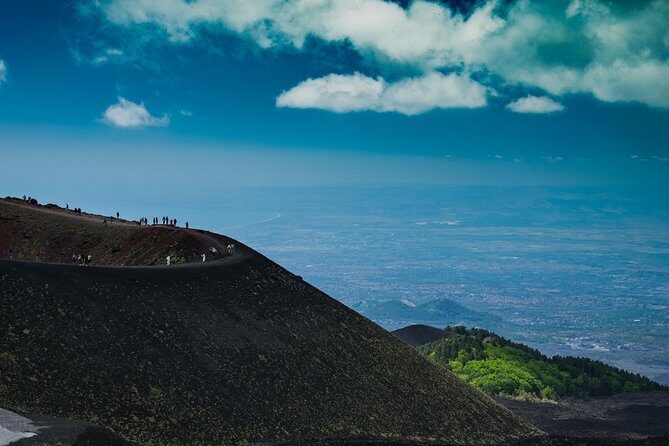
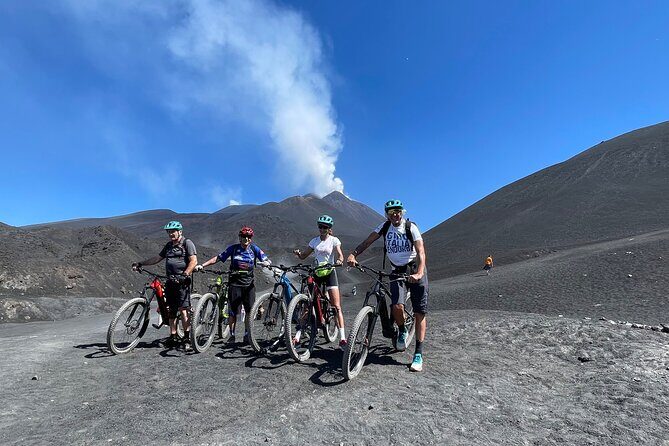
Once the whole group is ready, you start cycling up to an off-road path. This part climbs through volcanic sand with the goal of reaching about 2500–2600 meters.
Here’s what this means for you in real-world terms:
- The terrain isn’t smooth. Expect loose volcanic material rather than compact dirt.
- The bike assists you, but you still need steady pedaling and good balance.
- Breaks are planned. You’re not expected to force through the whole climb without stopping.
About an hour into the experience, you reach the most spectacular panoramic point of Etna. That timing tells you something important: this is designed so you’re not crushed by fatigue before the main view. You get multiple stops along the way to appreciate the changing scenery and let your body adjust to the altitude difference.
Tip: bring a calm, patient attitude for this climb. The slower you ride and the more you follow the guide’s instructions, the smoother it feels. You’ll also enjoy the scenery more if you’re not rushing.
Summit Views Over Valle del Bove: The “Living Volcano” Moment
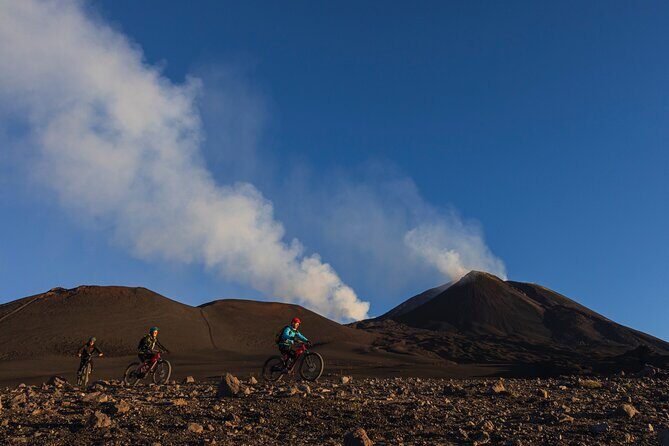
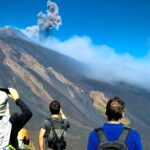
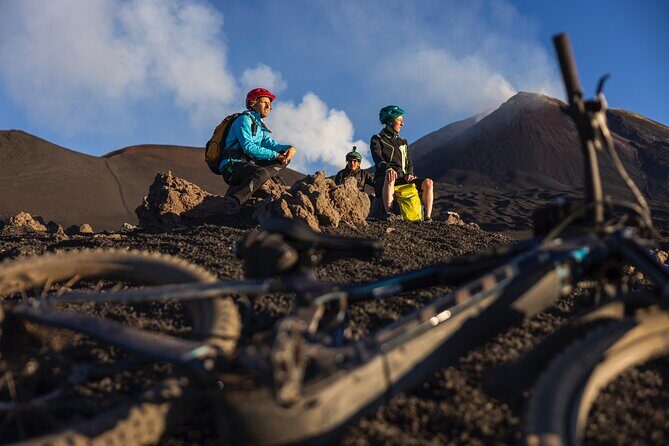
At the panoramic point, you get the payoff Etna is famous for: views over Valle del Bove on one side, with the Summit Craters area in front of you.
This is also where the tour becomes more than a bike ride. You’ll hear explanations about how Etna works and why it keeps evolving—described as a living creature, “Mother Etna.” You’ll get about 30 minutes at this viewpoint, which is long enough to take photos, ask questions, and really look at what’s in front of you.
Why this part is valuable: at sea level, volcanoes can feel like distant scenery. Up here, the shapes and layers make more sense. You can see how the summit area relates to the broader valley system you’re overlooking. A good guide helps you connect the dots rather than just telling you what to point at.
If weather is clear, this is your main photo window. If it’s hazy, you’ll still have a great sense of scale, but your photos may be softer. Etna is weather-dependent, and the operator explicitly says the experience requires good weather.
The Descent: Heading Toward the Crater of 2001 and Back Down
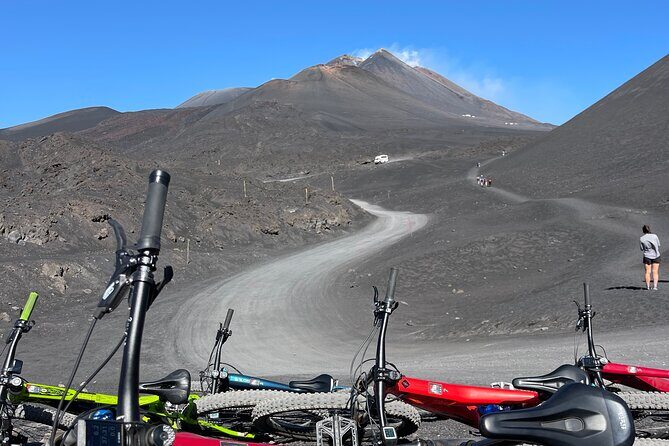
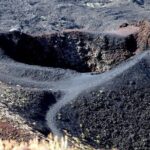
After the summit time, the route turns downhill. First, you descend toward the crater of 2001, then you ride back to the place where it started.
This descent is often where people feel the difference between a good e-bike setup and a “just get me there” bike. Even with pedal assist, downhill control depends on tires gripping volcanic surfaces and on you braking and staying relaxed. The group format matters too, since you’ll be cycling through the area as a unit and the guide will keep everyone moving safely.
A practical way to think about the descent: you’re trading climbing effort for attention. It’s less cardio and more focus—watch your line, keep spacing, and let the bike do the work. If you go too fast because you’re excited, loose sand can remind you that Etna isn’t playing around.
Once you return, the tour ends back at the meeting point. The loop format is simple and convenient: no long transfers after you’re tired.
You can also read our reviews of more tours and experiences in Sicily
Bike Gear, Helmet, and What You May Want to Add
Included gear is straightforward:
- E-bike: full enduro top quality (sized for riders starting at 120 cm)
- Nature/volcano guide and e-bike instructor
- Helmet
What’s not included (but offered on request or for an extra charge) is where you should plan ahead:
- Gloves
- Backpack
- Waterproof jacket
- Padded bike short
Here’s my practical take on that list. On a mountain volcano, temperatures can shift fast, and volcanic routes can get gritty. You don’t want damp fabric clinging to you during breaks. A waterproof jacket is the kind of “small” item that can make the difference between enjoying the pauses and feeling chilled. And gloves help because loose surfaces plus vibration can be annoying on your hands.
If you don’t want to carry gear, ask early about what you can reserve. The operator notes extra equipment is available on request.
Who This Tour Fits Best (And Who Should Skip It)
This excursion is rated for travelers with moderate physical fitness. You don’t need to be “sporty spicy,” but you do need the willingness to ride steadily uphill and handle off-road conditions at speed ranges that aren’t typical for city biking.
It’s also not recommended if you have respiratory or heart problems, diabetes, or epilepsy. That’s not a picky “comfort” guideline. It’s a safety boundary, and you should take it seriously.
Who I think benefits most:
- You want real Etna altitude and crater viewpoints without booking a strenuous hike.
- You enjoy guided learning, not just scenery.
- You like small groups and clear instructions.
If you’re traveling with a limited schedule and want Etna highlights in a single half-day block, this format is efficient without being rushed.
Price and Value: Is $168.20 Worth It?
At $168.20 per person for about 3 hours, you’re paying for more than a bike. You’re paying for:
- A guide who covers both nature/volcano context and bike instruction
- A high-end e-bike suited for off-road volcanic terrain
- Helmet inclusion
- A small group limit of 8 travelers
- Time at a premium summit viewpoint (including about 30 minutes on the panoramic spot)
That makes the price make sense if you compare it to the cost of just getting to the right altitude and then trying to solve the bike-and-safety problem on your own. The hardest part of Etna for most visitors is not “willingness.” It’s logistics: where to ride, what terrain to expect, and how to keep it safe with a group.
Also, note the booking pattern: on average, this tends to get booked about 5 days in advance. That suggests demand, especially when the weather cooperates. If your dates are fixed, you’ll likely want to lock it in earlier rather than gamble.
A Quick Reality Check on Weather and Timing
This tour requires good weather. Since Etna sits high and conditions can change, you should plan around the idea that you may be shifted to a different date if visibility or conditions aren’t right.
Timing is built in: you climb, you stop, you reach the summit viewpoint about an hour later, and you descend after a set amount of time at the top. For most people, that structure is calming. It means you’re not guessing when the best view will happen—you get it.
Should You Book This Etna E-bike Tour?
If you want summit craters and Valle del Bove views without turning your day into a long, sweaty hike, I’d strongly consider booking this. The biggest value is the combination: technical-feeling e-bike riding on volcanic sand plus guided context about Etna itself.
Book it if:
- You’re comfortable with moderate physical effort and following instructions.
- You want a small-group experience with an instructor, not just a rental bike.
- You care about understanding what you’re seeing, not only taking photos.
Skip it if:
- You fall into the listed health categories where the operator says it’s not recommended.
- You don’t do well with altitude and physical exertion, even at “assisted” levels.
- You’re hoping for a fully relaxed, paved-path ride.
If you’re on the fence, here’s the decision trick: ask yourself whether you’d enjoy riding a high-altitude trail for the views and the story from your guide. If yes, this is a great fit for Sicily.
FAQ
How long is the Etna Summit Craters e-bike experience?
It lasts about 3 hours.
Where do we meet for the tour?
The meeting point is the Etna Tourist Service S.R.L. area in Contrada Cantoniera, Nicolosi (near the Etna South Cable car parking area). The tour ends back at the meeting point.
What language is the tour offered in?
The tour is offered in English.
What’s included with the e-bike tour?
You’ll get an E-bike (full enduro top quality), a nature/volcano guide and e-bike instructor, and a helmet.
What should I bring or wear since it’s not included?
Gloves, a backpack, a waterproof jacket, and padded bike shorts are not included, though the operator notes they can be provided on request for an extra charge.
What fitness level do I need?
The tour is described as suitable for travelers with a moderate physical fitness level. It’s not recommended for people with respiratory or heart problems, diabetes, or epilepsy.
What happens if weather is bad?
The experience requires good weather. If it’s canceled due to poor weather, you’ll be offered a different date or a full refund.