REVIEW · SICILY
Etna Hard Tour
Book on Viator →Operated by Etna Quad Excursion · Bookable on Viator
Etna feels different when you drive it.
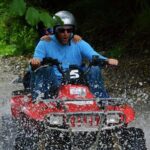
This quad-heavy Etna outing is built for real terrain, with about 80% off-road riding and stops that take you from lava shapes up toward 2000 meters. I like that the day is structured around volcano sights, not just driving time.
What I also like is how much ground you cover in only about four hours: lava flow cave, a lava flow section, the Bove Valley, then silvestri craters, side craters, and the 2001 flow before you drop back down near the start point. One thing to consider up front: this is a physical activity and the ride is governed by safety rules, so it is not the kind of quad tour where you can ignore the guide and do your own thing.
In This Review
- Key Highlights You’ll Notice Fast
- Where You Start on Etna (Pedara Meeting Point and Timing)
- Quad Setup and Safety Focus on a Volcano
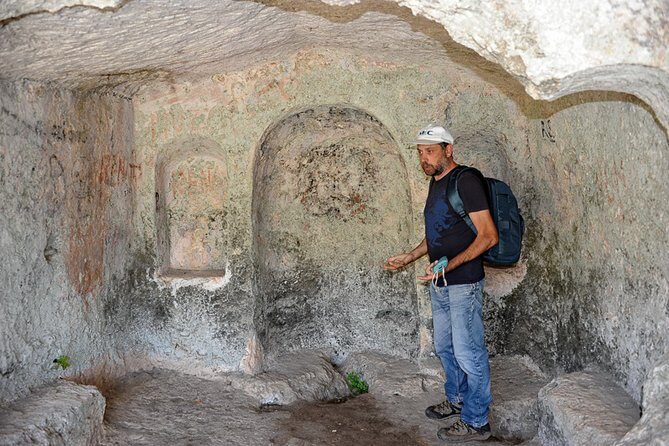
- Lava Flow Cave: The First Taste of Etna Geology
- Lava Flow Stop: Seeing Texture, Not Just Rocks
- Bove Valley: Why the Route Feels Different Off-Road
- Up to 2000 Meters: Silvestri Craters and the 2001 Flow
- The Descent Back Down to Around 850 Meters
- Price and Value: Is $324.06 Per Group Worth It?
- The Big Winner: Guides, Terrain Knowledge, and Real-World Etna
- Who Should Book This Quad Tour (and Who Might Skip It)
- Weather and Comfort: Plan for Changes Near the Summit
- Should You Book the Etna Hard Tour?
- FAQ
- How long is the Etna Hard Tour?
- What language is the tour offered in?
- Where does the tour start and end?
- How many people are on the tour?
- What kind of terrain will I ride on?
- What altitude does the tour reach?
- What will I see during the tour?
- Is the admission ticket included?
- What is the cancellation policy?
Key Highlights You’ll Notice Fast
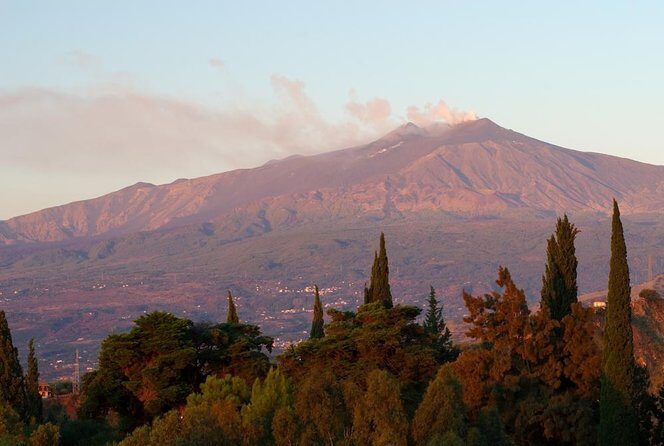
- 80% off-road riding means you’re on rougher ground, not just scenic roads
- Altitude jump from about 850 m up to around 2000 m for crater-area views
- Real volcano features like lava caves, lava flows, and crater fields
- Tight group size with a maximum of 10 people for less waiting and better pacing
- English tour format with a quad driver/nature guide at the helm
Where You Start on Etna (Pedara Meeting Point and Timing)
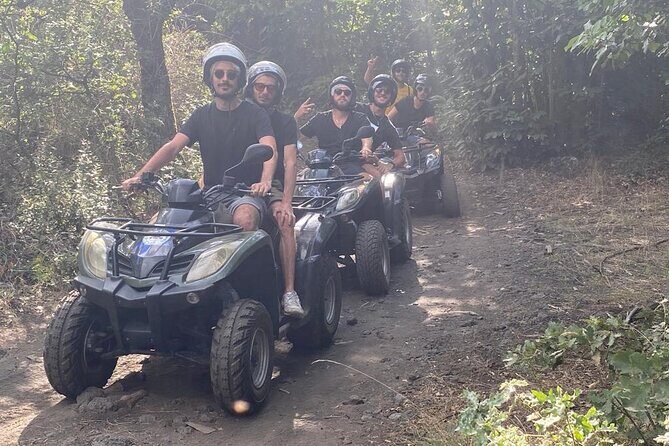
You start in Pedara at Via Martiri di Cefalonia, 95030 Pedara CT, Italy, and the tour ends back at the same meeting point. That round-trip setup is handy: you do not need extra logistics after your quad time, and you can plan the rest of your Sicily day with less guesswork.
The total duration is about four hours, give or take, so it fits well if you want an Etna experience without losing a full day. Because the tour runs in a small group (up to 10), you should expect a steady flow rather than long stop-and-start waiting.
Also worth noting: you’ll get a confirmation at booking time, and you’ll carry a mobile ticket for entry. If you’re arriving from outside the area, the meeting point is described as near public transportation.
You can also read our reviews of more tours and experiences in Sicily.

Quad Setup and Safety Focus on a Volcano
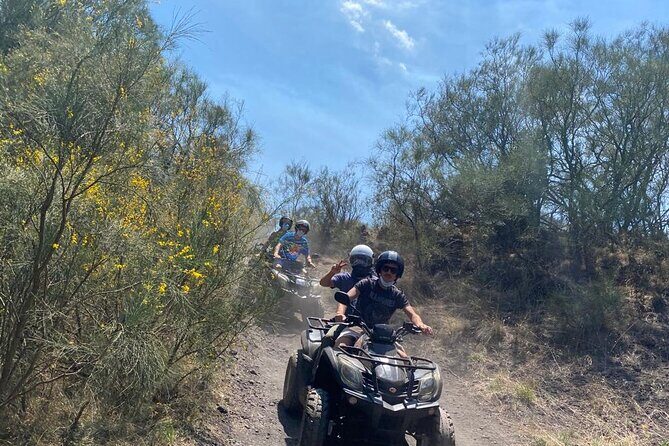
This tour begins with you meeting a quad driver / nature guide who explains how to use the quad correctly. That matters on Etna, because the ground you’re riding over is not uniform, and your control and posture affect how safe and comfortable you feel.
From there, the day follows a clear logic: first get you moving, then lead you through volcano features in a sequence that makes sense as you climb. I appreciate that the experience is guided, because the best part of Etna is not just seeing rocks. It’s understanding how those shapes formed and what you’re looking at when the terrain changes under your wheels.
One practical consideration: the negative feedback I’ve seen is not about the mountain itself, but about how strictly rules were enforced. If you’re expecting a laid-back adventure where you get to improvise, adjust your expectations. On this kind of ride—especially at higher altitude and over rougher tracks—safety instructions are part of the package, not an optional extra.
Lava Flow Cave: The First Taste of Etna Geology
The early stop is a lava flow cave, which is a great way to start because it makes the volcano feel real fast. Instead of only looking at Etna from a distance, you get close to how lava behaves—how it cools, how it moves, and how spaces can form when the flow changes.
You can also think of this moment as your calibration stop. When you see a lava cave structure and then hear how the area developed, the rest of the route clicks into place. Later you’ll be walking through or viewing other features, but the cave gives you a quick mental framework for what’s ahead.
The trade-off is simple: early on, you may still be getting used to the ride. If you’re prone to motion discomfort, this is the moment to stay focused and follow the guide’s instructions right away.
Lava Flow Stop: Seeing Texture, Not Just Rocks
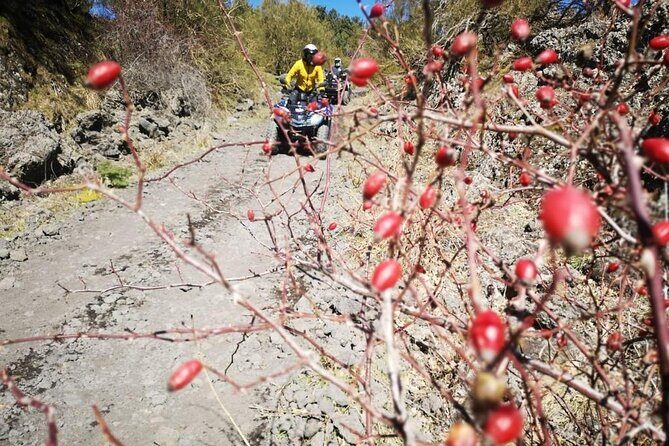
Next comes a lava flow stop. This is where Etna shifts from abstract geology into something you can almost read with your eyes—texture, cracks, and the uneven character of what hardened after moving heat.
In a quad tour, lava stops are usually more about perspective than long walks. You’re not on a museum timeline. You’re looking at something that formed quickly in geological terms, then sat there for a long time. That contrast is part of the appeal.
If you love photography, this is also a strong stretch of the tour. Lava formations tend to throw strong shadows and highlight ridges and channels, especially when the light angle changes as you gain altitude.
Bove Valley: Why the Route Feels Different Off-Road
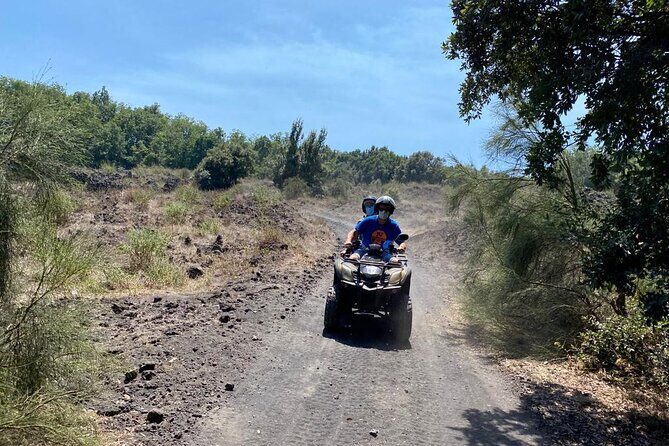
The tour then heads into the Bove Valley area. This is the kind of feature that’s easiest to understand when you can actually move through the surrounding terrain rather than just watch it from a viewpoint.
The reason the off-road time matters here is that valleys like this are not flat lines. When you travel over varied ground, you feel the shape of the terrain. You notice how access changes, how the view opens or narrows, and how the route is chosen to reach specific volcano features efficiently.
Also, this is a place where your guide’s explanation will help more than you’d expect. Even if you’re not a geology nerd, a short breakdown of what you’re seeing makes the valley feel less like scenery and more like evidence.



Up to 2000 Meters: Silvestri Craters and the 2001 Flow
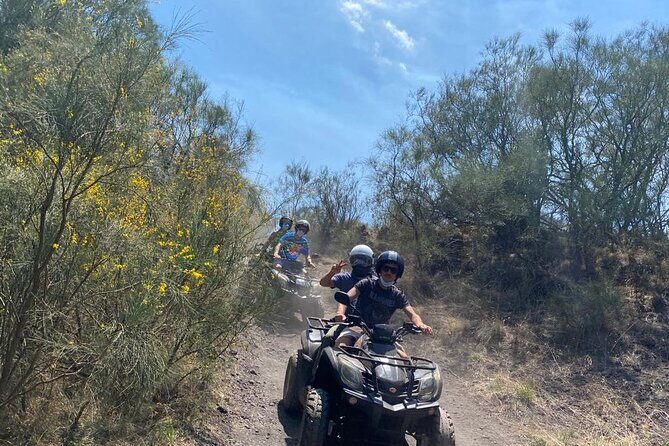
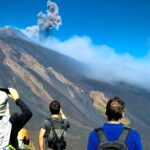
At around 2000 meters, you reach the crater-area section—this is the highlight most people remember. You’ll visit silvestri craters, then side craters, and finally the 2001 flow.
This sequence is valuable because it gives you variety in one climb. Silvestri craters relate to older volcanic activity patterns, while side craters and the 2001 flow connect you to more recent volcanic output. Even with a short visit at each stop, that “older to newer” progression helps you see Etna as a living system rather than a single moment.
Here’s the practical part: altitude can make a difference in how you feel. The guide keeps the day moving, and you want to stay attentive for your quad handling and for short transitions between viewpoints.
If you came expecting Etna to look like a single dramatic eruption scene, you might be surprised in a good way. This route is more about contrasts—crater shapes, flow channels, and the way different activity stages leave different marks.
The Descent Back Down to Around 850 Meters
After the crater and flow stops, the tour descends back toward the starting point area, between road and the last piece of dirt road located at about 850 meters altitude. This downhill run is often where people realize the day was designed with safety and timing in mind.
Descending typically feels different from climbing: gravity pushes the quad, braking matters more, and your line through rougher patches becomes more important. If you’ve only driven on smooth roads, this is where the “hard” part earns its name.
The good news is that the day ends where it started, so you’re not stuck figuring out transport from higher up. You’ll also have a clear endpoint after roughly four hours, which helps keep the whole thing from stretching out into an exhausting day.
Price and Value: Is $324.06 Per Group Worth It?
The price is listed as $324.06 per group (up to 2 people) for a tour lasting about four hours. That sounds steep if you’re used to cheap day trips, but there’s a specific value logic here.
First, you’re paying for a guided off-road quad experience with access to multiple Etna features in one outing: lava cave, lava flow, Bove Valley, and crater/flow stops. Second, the tour includes a fuel surcharge, and the admission ticket is free. Those details matter because they reduce surprise costs that can pop up in other tours.
What to watch: this is not priced like a casual roadside activity. It’s closer to an action-focused guided experience, and the physical fitness requirement is explicit. If you’re comfortable with that and you want to spend your time on the volcano rather than in a van, the value can feel solid.
If you’re traveling solo, the “per group up to 2” setup means you may effectively pay more per person than a shared-group price model. In that case, it’s worth checking whether you can align your timing with others or decide if a different Etna format (less demanding) fits you better.
The Big Winner: Guides, Terrain Knowledge, and Real-World Etna
The best parts of this experience tend to be the combination of terrain and explanation. When you ride off-road for most of the day, the landscape is not just something you look at. It becomes something you navigate, and that makes the guide’s comments feel more practical.
One strong theme from feedback is that driving off-road is genuinely fun, especially when the guide is sharing knowledge about the terrain. That’s the sweet spot: you get the thrill without feeling lost, and you learn enough to understand what’s changing as you move from lava formations to crater areas.
Still, balance matters. The less positive feedback centers on strictness and expectations. If your idea of fun is loose and spontaneous, this probably won’t match it. If your idea of fun is moving through Etna’s rougher ground with a plan, the structure is likely a plus.
Who Should Book This Quad Tour (and Who Might Skip It)
This tour is a good fit if you:
- Want a quad-driven Etna experience where most of the time is off-road
- Are okay with a physical activity level that requires strong fitness
- Prefer a small group setting (max 10) so the day doesn’t feel crowded
- Want an English-speaking guide and a clear route with multiple volcano stops
It may be less ideal if you:
- Are looking for a relaxed sightseeing pace where you can wander freely
- Have concerns about following safety instructions closely
- Want an Etna day that feels mostly smooth-road and easy
If you’re unsure, use this rule of thumb: this is for people who like motion, control, and rugged terrain. If that’s you, you’ll likely enjoy the payoff of reaching crater areas and seeing features connected to the 2001 flow.
Weather and Comfort: Plan for Changes Near the Summit
Etna sits in a region where mountain weather can shift quickly. That matters because you’re reaching higher elevations and spending a lot of time outdoors.
I’d treat this as a “dress for the mountains” day in the common-sense way: bring what you need to handle cool moments and shifting conditions, and keep your schedule flexible. The tour is also described as free of admission-ticket pressure, so you’re not scrambling for internal tickets once you arrive.
Should You Book the Etna Hard Tour?
Book it if you want Etna at speed and on wheels—lava cave, lava flow, Bove Valley, then crater country around 2000 meters, finishing back at Pedara in about four hours. The price starts to make sense when you factor in the guided off-road format, the multiple volcano stops, and what’s included like the fuel surcharge and free admission ticket.
Skip it if you want a mellow walk-and-view kind of day. The “hard” part is real: fitness is required, the ride is off-road-heavy, and safety rules are enforced. In return, you get a route that feels like Etna up close, not Etna from the sidelines.
If that trade works for you, this is one of the more hands-on ways to spend your time on Sicily’s volcano.
FAQ
How long is the Etna Hard Tour?
It lasts about 4 hours.
What language is the tour offered in?
The tour is offered in English.
Where does the tour start and end?
It starts at Via Martiri di Cefalonia, 95030 Pedara CT, Italy, and ends back at the same meeting point.
How many people are on the tour?
The maximum group size is 10 travelers.
What kind of terrain will I ride on?
The route is about 20% on road and 80% off road.
What altitude does the tour reach?
You’ll visit crater areas at about 2000 meters, then descend to around 850 meters for the return.
What will I see during the tour?
You’ll visit a lava flow cave, a lava flow, the Bove Valley, and then silvestri craters, side craters, and the 2001 flow.
Is the admission ticket included?
Yes, the admission ticket is listed as free.
What is the cancellation policy?
You can cancel up to 24 hours in advance for a full refund. If you cancel less than 24 hours before the start time, the amount paid is not refunded.