REVIEW · SICILY
Underwater Archaeology Course
Book on Viator →Operated by Dive Sicily · Bookable on Viator
Underwater archaeology turns vacation time into real research. In Sicily, this hands-on course mixes classroom practice with time in the water and a detailed shore wrap-up, so you’re not just watching—you’re learning how the work gets done.
I really like two parts. First, you can earn a PADI certification card after you complete the program. Second, you finish with fieldnotes and drawings, which is the kind of documentation skill that makes the day feel legitimate, not like a one-off experience.
One consideration: this activity requires good weather, and the PADI license fee (around €65) is not included in the course price.
In This Review
- Key points to know before you go
- Sicily’s Underwater Archaeology Course: What You’re Really Paying For
- The 5-Hour Flow: Classroom Skills, Underwater Practice, Shore Debrief
- Classroom Session: Search and Measuring Techniques You Can Actually Use
- Two Underwater Practice Sessions: Applying Research Methods in Real Conditions
- Shore Debriefing with Fieldnotes and Drawings
- What’s Included (and Why It Changes the Value)
- Equipment rental and special instruments
- Museum entrance fee included
- Photos and video are included
- PADI Card vs. PADI License Fee: Budgeting the Real Total
- Price Check: Is $270.39 Worth It?
- Small Group Size: Why Max 15 Matters
- Weather and Timing: The Practical Reality in Sicily
- Who This Course Fits Best (and Who Should Rethink)
- Tips to Get More Out of Your Day
- Should You Book This Underwater Archaeology Course?
- FAQ
- FAQ
- Where does this experience start in Sicily?
- How long is the underwater archaeology course?
- How much does it cost?
- What’s included with the course?
- Is the PADI certification card included?
- How many people are in the group?
- Do I need good weather for this experience?
- Is free cancellation available?
Key points to know before you go
- Two underwater practice sessions to use the techniques you learn on land
- Fieldnotes + drawings at the end, focused on documenting your fieldwork
- Full equipment rental plus a digital underwater archaeology manual
- Free underwater photos and video so you have proof beyond memory
- Small group size (maximum 15) for more attention and smoother learning
Sicily’s Underwater Archaeology Course: What You’re Really Paying For
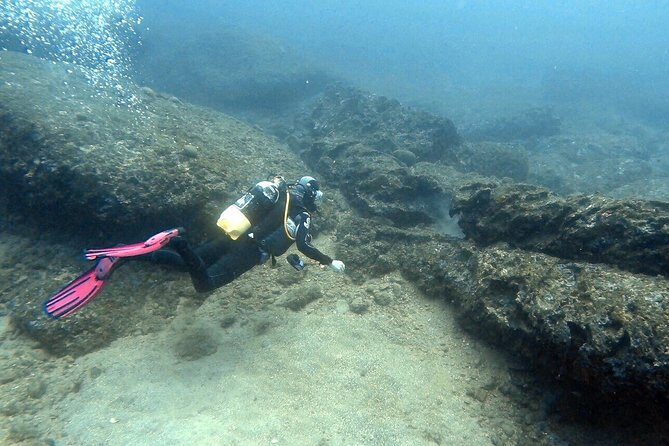
This is an underwater archaeology course set in Sicily, aimed at giving you real research skills in a short, structured format. The value isn’t only the water time. It’s the way the course teaches you a process you can repeat: search, measure, record, and then explain what you found.
The day is built around a learning arc. You start with standard techniques on land. Then you use them during two underwater practice sessions. Finally, you go back for a careful debrief where you turn your observations into field-ready documentation.
Price-wise, the course is $270.39 per person for about 5 hours. When you compare that to what’s included—equipment rental, a digital manual, a museum fee, and pickup/return from your hotel—it can feel like a solid deal. More on that later, because there’s also one cost you’ll need to budget separately.
You can also read our reviews of more tours and experiences in Sicily.



The 5-Hour Flow: Classroom Skills, Underwater Practice, Shore Debrief
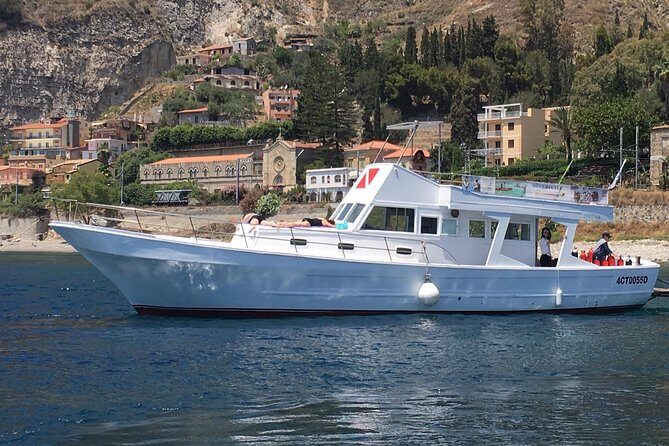
Expect a tightly scheduled day. You’ll meet at the start point in Giardini-Naxos (Porto di, 98035) and you’ll end back at that same meeting point.
The program runs about 5 hours (approx.) and is organized into three main blocks:
1) Classroom session for history and research basics
2) Two water sessions to apply what you practiced on land
3) On-shore debrief where you document what you did and saw
What makes this format work is the back-and-forth. You learn a technique. You practice the technique. Then you slow down and write it out like a real field report.
Classroom Session: Search and Measuring Techniques You Can Actually Use
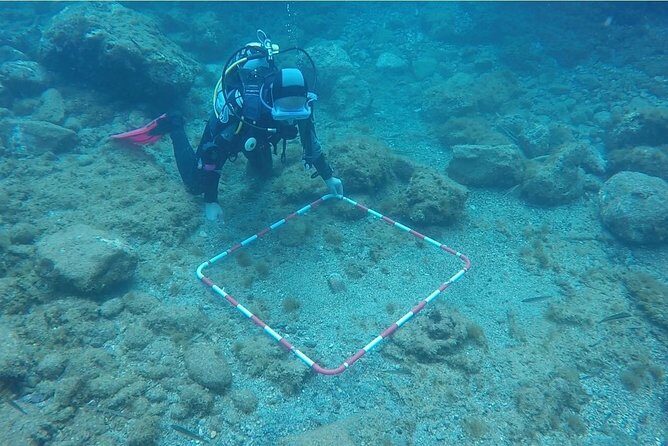
The on-land part focuses on the basics of doing underwater archaeology research. You’ll practice standard search and measuring techniques—the kind of fundamentals that sound simple until you’re in the water and everything is harder.
This is also where you get a short history of underwater archaeology and its origin. Even if you’ve never heard the term before, the goal here is to give you a sense of why these methods matter. Archaeology isn’t just collecting interesting objects. It’s about careful observation and recording with enough clarity that other people can understand what you did.
You’ll also learn how to use the special archaeology instruments and equipment later in the day. That prep matters because it saves you from the frustrating part: showing up in the water still trying to figure out the tools.
Two Underwater Practice Sessions: Applying Research Methods in Real Conditions
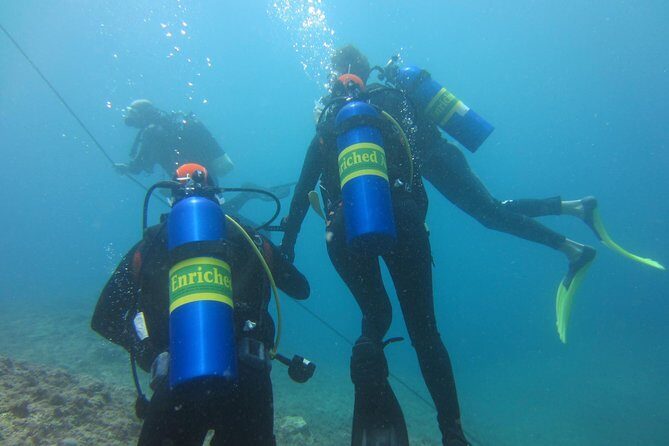
After you get the basics on land, you head underwater for two practice sessions. This is where you put the search and measuring techniques into action.
You should expect the day’s first water practice to feel like a lesson in how those techniques change once you’re in a real environment. In water, your time, movement, buoyancy, and ability to keep track of what you’re doing all affect how “clean” your measurements and documentation can be.
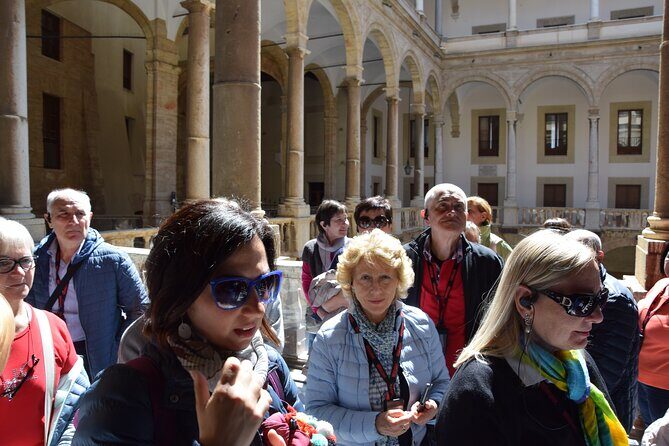
The course also includes time described as a wonderful look at underwater heritage. So yes, there’s practical training, but the experience isn’t sterile. You’re working in a place where the point isn’t just training—it’s understanding something real that’s worth protecting.
Shore Debriefing with Fieldnotes and Drawings
When you’re back on shore, you get a detailed debrief. This part is more important than many people expect.
You’ll prepare fieldnotes and drawings to document your work. That means you’re translating what you saw underwater into a format that makes sense on land—written details, plus a visual sketch. If you’ve ever wondered what archaeologists mean by documentation, this is the moment the course turns into something tangible.
This is also where you get a structured conversation about what went well and what to improve. You’re not just leaving with memories—you’re leaving with a better idea of how to record observations correctly next time.




What’s Included (and Why It Changes the Value)
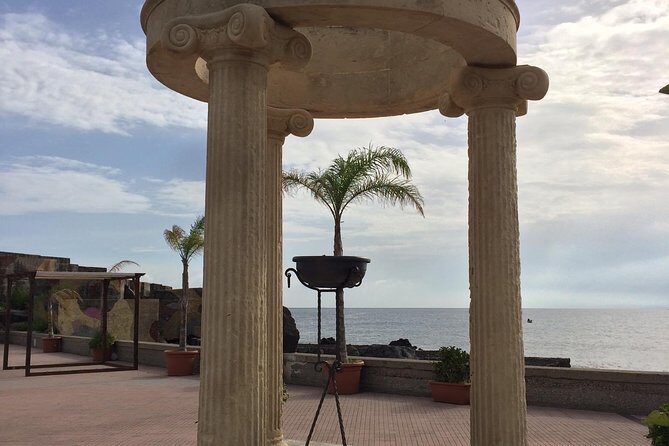
This course includes a lot of the stuff that can quietly inflate the real cost of a field-style activity.
You get:
- Full equipment rental
- A digital underwater archaeology manual
- Use of special underwater archaeology instruments & equipment
- Archaeological museum fee entrance
- Free underwater pictures and video
- Pickup and drive back from your hotel
- Mobile ticket
Let’s talk about why these matter.
Equipment rental and special instruments
If you’re not already set up for this kind of work, the included gear is huge. It means you can focus on learning the techniques without spending time sourcing equipment or worrying whether you’ve got the right tools.
Museum entrance fee included
The museum component adds context. Even though the day is mostly practical training, the museum visit helps connect what you’re learning to the larger story of local underwater heritage.
Photos and video are included
You’ll get free underwater pictures and video. That’s not just a souvenir. It’s also helpful for remembering what you did and comparing what you recorded in fieldnotes afterward.
PADI Card vs. PADI License Fee: Budgeting the Real Total
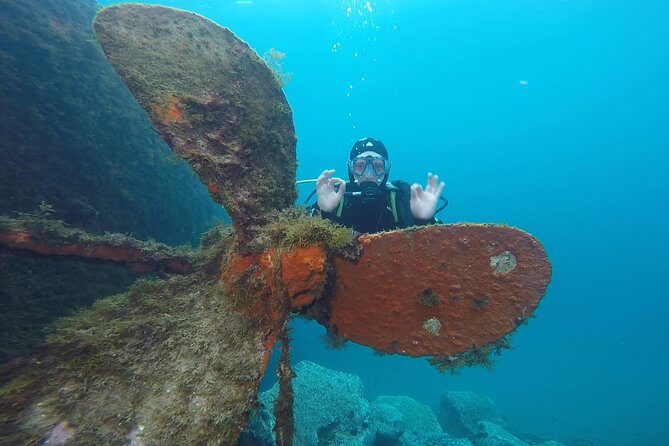
The course states that a PADI certification card is issued upon completion.
At the same time, the PADI license fee is not included, and it’s listed as around €65. So your all-in cost is the $270.39 course price plus that additional license fee you’ll need to cover.
This is worth planning for up front, because it’s one of the only “surprise” costs that could change your budget. The rest of the key items—equipment, manual, and the museum fee—are already handled in the package.
Price Check: Is $270.39 Worth It?
For $270.39, you’re buying a structured training day that includes:
- about 5 hours of guided instruction
- full equipment rental
- a digital manual
- museum entrance
- underwater photos/video
- pickup and return transportation
- a small group cap (maximum 15 people)
To me, the biggest value signals are the documentation element and the tools. Many “activity” days stop at the water experience. This one pushes you into measuring and recording—then it makes you practice that in the format of fieldnotes and drawings.
Add in the PADI certification card at the end, and you’ve got a course that can function like a real credential step, not just a fun afternoon.
If you’re counting every euro, do factor in the €65 PADI license fee. But even with that, the inclusion list helps this feel like more than a standard outing.
Small Group Size: Why Max 15 Matters
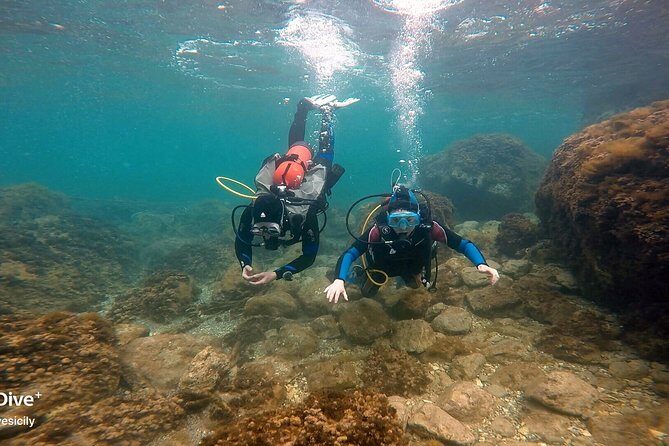
With a maximum of 15 travelers, you’re less likely to feel like you’re part of a crowd. You can get the kind of feedback that helps during technique practice—especially when you’re applying search and measuring skills in a moving, low-visibility environment.
That size also tends to make the whole day run smoother: gear fit and tool use happen faster, and the debrief time doesn’t get rushed.
Weather and Timing: The Practical Reality in Sicily
This experience requires good weather. That’s not a buzzkill; it’s the whole point. The course includes underwater practice sessions, and those depend on conditions being safe enough to run.
Plan for the fact that your day may shift if conditions are poor. The good news: the experience notes that if it’s canceled due to weather, you’ll be offered a different date or a full refund.
Also, you’ll want to be ready for a focused 5-hour schedule. This isn’t a “wander and snack” day. It’s a training day with a clear rhythm.
Who This Course Fits Best (and Who Should Rethink)
This is a good match if you want more than a typical beach day. You’ll enjoy it most if you like learning processes—measuring, documenting, and understanding how archaeological work is done.
It’s also a strong solo option. The reviews highlight it as a great idea for someone traveling alone, because the structure and small group size make it easy to plug in rather than feel awkward.
You might pause before booking if:
- you’re sensitive to weather changes, since the program depends on good conditions
- you don’t want to plan for the additional €65 PADI license fee
- you prefer very casual activities with no fieldwork components (because fieldnotes and drawings are part of the finish)
Tips to Get More Out of Your Day
Because the course is skills-based, a little mindset prep helps.
- Show up ready to learn and to repeat techniques. The whole point of training is practice, not perfection.
- Pay attention during the classroom tools portion. Knowing how the instruments work before you go underwater makes the practice more productive.
- Treat the debrief like part of the main event. The fieldnotes and drawings are what turn the experience into something you can carry forward.
If you’re the type who likes to understand how things work, you’re going to have a better time.
Should You Book This Underwater Archaeology Course?
If your goal is hands-on learning—search, measuring, and documentation—this is a booking I’d seriously consider. The combination of two underwater practice sessions, a structured shore debrief, and the PADI certification card upon completion makes it feel like a real course, not just a one-time outing.
Book it if you want a small-group, guided experience in Sicily that also gives you a tangible record of what you did (fieldnotes, drawings, and included underwater photos/video). The only real hesitation is budget planning for the PADI license fee and being flexible with weather-dependent scheduling.
FAQ
FAQ
Where does this experience start in Sicily?
It starts at Dive Sicily – Naxos & Taormina, Porto di, 98035 Giardini-Naxos ME, Italy.
How long is the underwater archaeology course?
The duration is about 5 hours (approx.).
How much does it cost?
The price is $270.39 per person.
What’s included with the course?
Included are full equipment rental, a digital underwater archaeology manual, archaeological museum fee entrance, free underwater pictures and video, and pickup and drive back from your hotel.
Is the PADI certification card included?
A PADI certification card is issued upon completion, but the PADI license fee is not included (around €65).
How many people are in the group?
The maximum group size is 15 travelers.
Do I need good weather for this experience?
Yes. This activity requires good weather. If it’s canceled due to poor weather, you’ll be offered a different date or a full refund.
Is free cancellation available?
Yes. You can cancel up to 24 hours in advance for a full refund.