REVIEW · SICILY
Syracuse, Ortygia & Noto small group Tour from Catania with lunch
Book on Viator →Operated by Sicily Day By Day · Bookable on Viator
Syracuse, Ortigia, and Noto in one day sounds ambitious, and somehow it works. This small-group tour strings together UNESCO-listed Greek, Roman, and Baroque Sicily with a real walking route on Ortigia and enough time to enjoy Noto’s famous stonework. It’s also built around easy, round-trip transport from Catania and nearby areas.
What I like most is the mix of “big ruins” and “pretty streets.” The Neapolis stop is the kind of place where history feels physical—Greek Theatre views, the Ear of Dionysius area, and the Latomie landscape. Then Ortigia delivers the charm: the route from the Temple of Apollo ruins to Duomo Square and the Fountain of Arethusa, plus a typical street-food snack with water and red wine.
One thing to keep in mind: it’s a full day with walking and tight time slots. You may also find that some places inside churches or major sights require separate paid entry, even if the tour stops are described as ticket-free in parts, so plan on small extras.
In This Review
- Key things I’d plan around
- Why Syracuse, Ortigia, and Noto in One Day Works
- Getting There From Catania: the Small-Group Minivan Setup
- Syracuse Neapolis: Greek Theatre Views and the Latomie Setting
- Ortigia Island Walk: Apollo Ruins, the Duomo Square, and Arethusa
- Noto After Lunch: Baroque Streets and Cathedral-Spotting
- Food and Wine: Tavola Calda Snack and Lunch Breaks
- Guides, Language, and the One Thing That Changes Everything
- Price and Logistics: is $126.98 a Good Deal?
- Walking Comfort and Heat: Practical Tips That Pay Off
- Who This Tour Suits Best
- Should You Book This Syracuse, Ortigia and Noto Day Trip?
- FAQ
- How long is the tour?
- Where does the tour start?
- Is pickup available?
- How many people are in the group?
- What sites are visited?
- Is lunch included?
- Is the tour in English?
- Are admission tickets included?
- What kind of transport is used?
- Is the tour suitable for everyone?
Key things I’d plan around

- Max 8 people in an air-conditioned minivan, which keeps the day from feeling like cattle-herding
- Neapolis in Syracuse gives you the Greek Theatre zone, the Ear of Dionysius area, and the Latomie setting
- Ortigia on foot connects Temple of Apollo ruins, Duomo Square, and Arethusa’s spring in one satisfying loop
- Noto’s Baroque highlights focus on the main streets, St. Francesco’s staircase, Palazzo Ducenzio, and the Cathedral area
- Snack plus lunch time: you get a typical tavola calda-style snack with water and red wine, then time built in for lunch
Why Syracuse, Ortigia, and Noto in One Day Works
This route is one of the best “Sicily starter packs” for people who want a lot without renting a car. Syracuse gives you the ancient backbone: Greek and later Roman power on display. Ortigia is where that ancient setting turns into everyday Italian city life, with churches, piazzas, and the kind of streets where you naturally slow down.
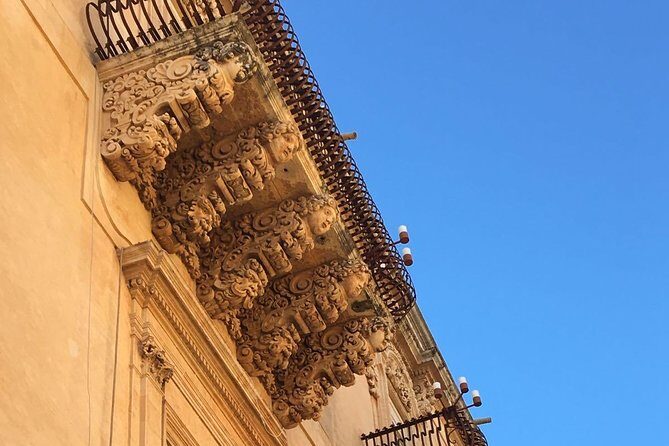
Then Noto hits a different note. It’s Baroque architecture on a scale that feels like someone designed an entire city for a long, slow gaze. Even if you only see the main sights, the day adds up to a strong story: ancient authority, island-city adaptation, and then the later Baroque reinvention.
You can also read our reviews of more tours and experiences in Sicily


Getting There From Catania: the Small-Group Minivan Setup
The day starts from P.za Federico di Svevia, 32, Catania, with pickup offered from Catania and nearby places like Taormina and the surrounding coast. Departure is listed for 8:30am, and the whole trip runs about 9 hours.
What matters here is how the transport shapes the experience. A minivan with a small group means fewer logistics headaches and less time lost “waiting around.” It also means you’re more likely to hear your guide during the drive, especially if you sit closer to the front. (On hot days, you’ll thank any air-conditioning moment you get.)
Syracuse Neapolis: Greek Theatre Views and the Latomie Setting
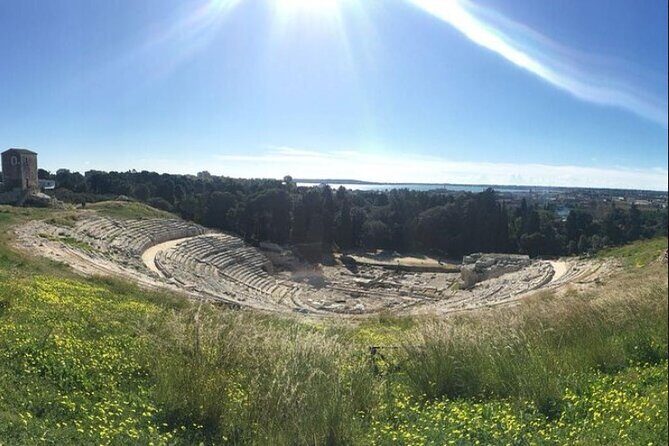
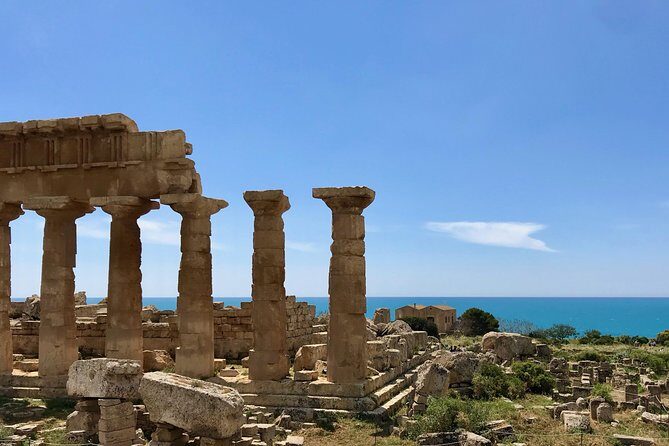
Your Syracuse start is the archaeological area of Neapolis, set in the countryside above the city. This is the zone that puts you near the Greek Theatre, the Ear of Dionysius area, and the Latomie (quarry-caves and stone landscape you can still read like a map of how people shaped the earth).
The stop runs about 1.5 hours, which is a good length for this kind of site. You get time to orient yourself without feeling rushed, but you’re not stuck in one place all day. If you like ruins, you’ll enjoy how much of the layout still makes sense even without a guide walking you by the hand at every step.
Practical consideration: Neapolis sits in an open setting. If you’re traveling in peak summer, plan for heat and sun. Wear shoes that won’t hate you by mid-afternoon, and keep your water handy.
Ortigia Island Walk: Apollo Ruins, the Duomo Square, and Arethusa
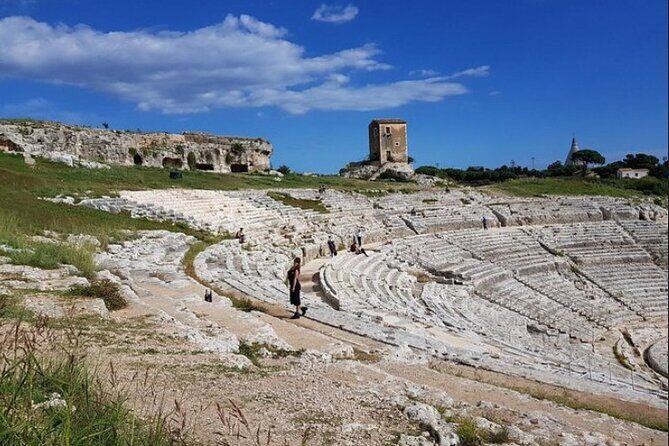
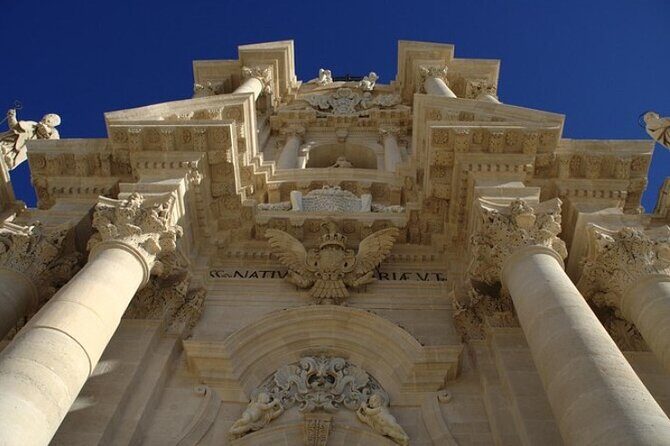
Next you cross to Ortigia, the island portion of Syracuse. The walking route starts at the ruins of the Temple of Apollo, then moves through the area to Duomo Square—where the white cathedral stands on top of an ancient Greek temple dedicated to Athena.
That “layering” is the whole point of Ortigia. You’re looking at Sicily with multiple time periods stacked like plates. If you’ve ever wished your history book had stairs you could walk up, Ortigia is where it happens.
You’ll also stop at Fountain of Arethusa, one of the island’s legendary fresh-water springs. This is the moment where the walk becomes more than just sights. You get a payoff: the spring, the sound of water, and the sense that this place has been important far longer than any modern street sign.
Time-wise, the Ortigia portion is about 2 hours. A lot of that goes to moving through the highlights at a comfortable city pace, not to long bus transfers. There’s also a built-in break: you’ll get a typical Sicilian snack (tavola calda style) with water and red wine, and you have about one hour of spare time to handle lunch in the alleys on your own.
Noto After Lunch: Baroque Streets and Cathedral-Spotting
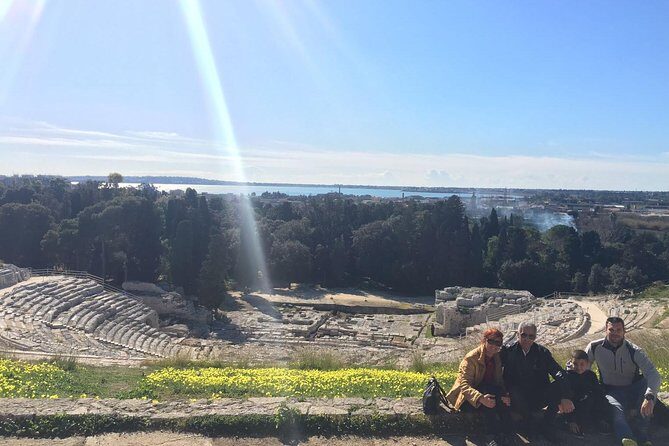
After Ortigia, you drive to Noto, UNESCO-listed and often described as an open-air museum. This is one of those places where the architecture isn’t just “pretty,” it’s a navigational tool: you can use domes, staircases, and facades to find your way.
Your Noto stop is about 2 hours. The plan focuses on walking the main street from the Porta Reale, passing major landmarks like the Church of St. Francesco with its famous staircase, and the area around Palazzo Ducenzio in Piazza Municipio. You also get time at the Cathedral Church area, which is hard to miss with all the stone drama around it.
A realistic heads-up: Noto can feel sunny and exposed. There’s a lot of stone, not a lot of shade. If you’re sensitive to heat, you’ll enjoy pacing yourself—peek, pause, then move again.






Food and Wine: Tavola Calda Snack and Lunch Breaks
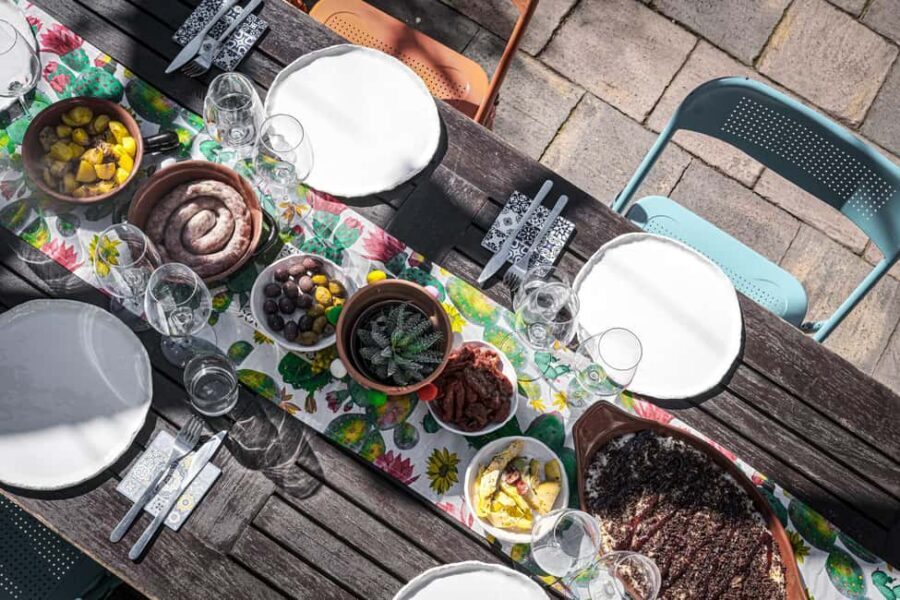
Food is a big part of why this tour feels doable rather than exhausting. In Ortigia, you’re offered a typical street-food-style snack—tavola calda—with water and red wine. It’s a simple Sicilian moment, the kind that makes you feel like you ate where you are, not somewhere staged for tourists.
Lunch is listed as included. The day also gives you time to eat and reset during Ortigia. That structure matters: you’re not expected to “power through” three sites without a real break.
Value angle: for this price tier, the combination of transportation + included meals + a guided narration on the key stops is what makes it feel like a bargain. The moment you add up how much hassle you’d save by skipping a rental car and doing the route by yourself, the math starts to favor booking.
Guides, Language, and the One Thing That Changes Everything
This tour is offered in English, and it can run with multi-lingual guides. In practice, the experience can hinge on two things: how clearly the guide speaks during the drive, and how much you can hear from wherever you sit in the van.
I’ve seen guides named like Andrea, Antonio, Luigi, Danilo, Manuel, and Dario on this route, and the pattern is usually the same: they talk their way through the day so you understand what you’re seeing. That storytelling often turns the ruins and facades into something you can actually place in time.
One potential drawback to watch for is that you may not have a specialized guide inside every church or museum. The tour is set up with a driver/tour leader who shares context, while some formal interior guidance may not be included. On days when the narration is light or language doesn’t match your needs, you’ll want to rely on your own curiosity—maps, signage, and quick questions at each stop.
Price and Logistics: is $126.98 a Good Deal?
At $126.98 per person, the value mostly comes from the bundle. You’re paying for:
- round-trip transport from the Catania area in an air-conditioned minivan
- hotel pickup or a nearby meeting point
- small group size (max 8)
- a full day of planned stops across three major UNESCO-area experiences
- lunch and the included snack with water and red wine
Could you do this cheaper on your own? Sure, especially if you already have a car. But the cost of driving, parking stress, and trying to line up the timing between Syracuse and Noto is real. This tour compresses that problem into one simple schedule.
Where you might spend extra: entrance fees and paid entries can pop up depending on what you choose to go into. Even when certain stops are listed as free in the plan, churches or specific areas often have their own ticket rules. Bring a little cash or card backup so you don’t hit a surprise.
Walking Comfort and Heat: Practical Tips That Pay Off
This is not a “sit on a bench all day” outing. You’ll walk in Ortigia and explore the stone zones around Neapolis and Noto. In summer conditions, plan for sun and limited shade.
Here’s what helps most:
- wear walking shoes with solid grip
- bring a water bottle, even if you’ll get water with the snack
- use sunscreen and hat if you’re sensitive to heat
- pace breaks: after Syracuse, you’ll feel the day stacking up, so take the lunch break seriously
If you’re traveling with teens or first-timers, this itinerary can be a win because it alternates big ruins with city walking. That rhythm keeps the day from feeling like one long archaeology lecture.
Who This Tour Suits Best
This trip fits you if:
- you want Greek + Roman + Baroque highlights in a single day
- you like small-group pacing and don’t want the hassle of driving
- you enjoy walking city centers like Ortigia rather than only viewing from afar
- you want food handled for you: snack with wine and lunch time built into the route
It may be less ideal if:
- you want lots of time in one place (Ortigia could easily be a longer stay)
- you’re hoping for an expert interior guide in every church or museum space
- you’re very sensitive to time constraints and want slow wandering with no schedule pressure
Should You Book This Syracuse, Ortigia and Noto Day Trip?
If your base is Catania and you want a high-impact day, I’d say yes—especially for the small-group feel and the way the day connects different eras in a logical order. The combination of Neapolis ruins, Ortigia’s layered streets, and Noto’s Baroque architecture is a strong use of time without needing a rental car.
Book it if you’re okay with a full day that includes walking, and if you bring a little flexibility for paid entries that might appear depending on what you choose to visit inside. Skip or consider a different option if you strongly prefer deep, slow museum time over quick, well-paced highlights.
FAQ
How long is the tour?
It runs about 9 hours.
Where does the tour start?
The meeting point is P.za Federico di Svevia, 32, 95121 Catania, Italy, starting at 8:30am.
Is pickup available?
Pickup is offered, and you can also ask for a pickup point in Taormina, Acitrezza, Acicastello, and Giardini Naxos.
How many people are in the group?
The group is limited to a maximum of 8 travelers.
What sites are visited?
You’ll visit Syracuse (Neapolis), Ortigia Island, and Noto.
Is lunch included?
Lunch is included in the tour.
Is the tour in English?
The tour is offered in English, with possible multi-lingual guiding depending on the departure.
Are admission tickets included?
Admission tickets are not included, so you may need to pay separately for entrances and specific sites you want to access.
What kind of transport is used?
You travel in an air-conditioned minivan.
Is the tour suitable for everyone?
It’s recommended for travelers with a moderate physical fitness level, since the day includes walking.