REVIEW · SICILY
Syracuse & Noto – Day Tour from Taormina
Book on Viator →Operated by Noema Viaggi Srl · Bookable on Viator
Sicily compresses into one long, smart day. This Syracuse & Noto day tour from Taormina strings together UNESCO Baroque Noto, the island-of-Ortigia feel in Syracuse, and the big-name Greek sights of Neapolis. I like that you get guided structure in both towns, so you’re not just wandering with a map and a hope.
The trade-off is pacing. The tour can run with up to 50 people, and when groups are split across multiple language needs, explanations can repeat. Add a hot Sicilian day and you’ll want to be flexible about how much time you truly get at each stop.
In This Review
- Key takeaways before you go
- A 7:20 am pickup that actually sets you up
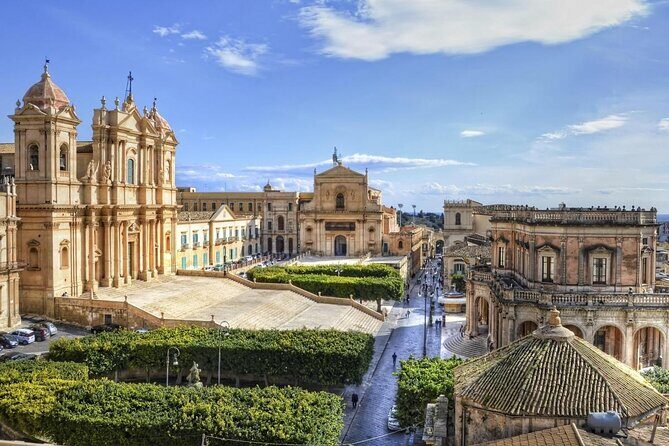
- Noto: UNESCO Baroque in one focused hour
- Ortigia walking: Fonte di Aretusa, Apollo, and baroque squares
- Syracuse Cathedral (Duomo) at Ortigia: short but meaningful
- Neapolis and Teatro Greco: the big-ticket ruins moment
- Price and ticket math: what $72.09 really covers
- Big-group pace, multi-language repetition, and how to not lose the day
- Bus comfort and practical on-the-ground tips for a hot day
- Is this the right tour for you?
- Should you book this Syracuse & Noto day tour from Taormina?
- FAQ
- What time does the tour start?
- How long is the Syracuse & Noto day tour from Taormina?
- Where does the tour end?
- Is pickup and drop-off included?
- Is the tour in English?
- Is the tour ticket mobile?
- Do I need to pay for entrance fees?
- Is food included?
- How big is the group?
- What is the cancellation policy?
Key takeaways before you go
- Early 7:20 am start helps you hit Syracuse sights before the day turns steamy
- Noto UNESCO Baroque in a focused, easy-to-follow hour
- Ortigia walking route includes the Fonte di Aretusa and the Apollo Cathedral area
- Greek ruins at Neapolis with a guided stop at Teatro Greco (separate paid entries)
- Big-group reality: up to 50 people can mean slower movement and repeated messages
- Extra ticket costs are common: the archaeological park and Ortigia’s Duomo are not included
A 7:20 am pickup that actually sets you up
This tour begins early—start time 7:20 am—with pickup and drop-off from designated meeting points. That timing matters. Syracuse and Ortigia are best in daylight, and Neapolis (where the Greek Theatre sits) is exactly the kind of place where you don’t want to arrive late and sweaty.
Also, expect a lot of motion. You’re traveling between Taormina and two Syracuse-area towns plus the archaeological area. The structure is helpful, but it’s still a full day: the tour is listed around 10 hours, and a bus day with lots of stops can feel longer than you expect.
One more practical note: your tour ticket is mobile, and confirmation happens at booking. That’s convenient—just make sure you can access your phone ticket quickly when it’s time to board.
You can also read our reviews of more tours and experiences in Sicily.



Noto: UNESCO Baroque in one focused hour
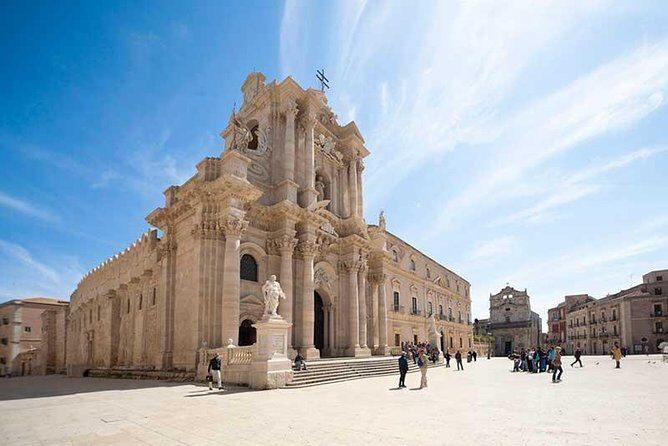
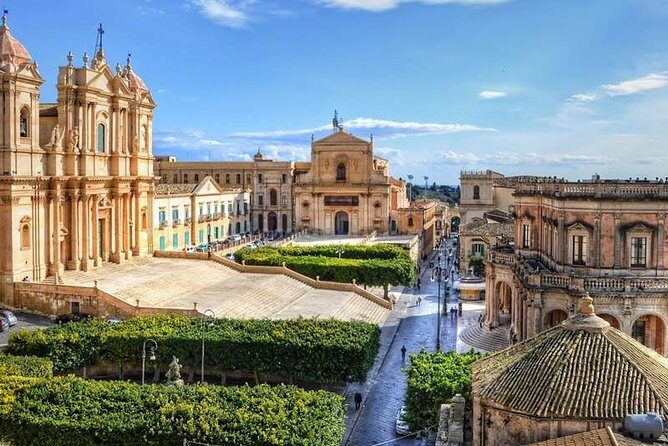
Noto is the kind of place you photograph without trying. Baroque streets, pale stone, and that instantly “rebuilt-in-opulence” look that Sicilian towns do so well.
You’ll get about one hour in Noto city, and entrance for the stop itself is listed as free. In that time, the goal isn’t to see everything—it’s to see the main street rhythm, get your bearings, and appreciate how Noto’s Baroque style feels different from old-school ruins. If you’ve never seen Sicilian Baroque up close, this is a good sampling course.
How to make the most of your hour
- Wear comfortable shoes. Noto’s center is pleasant, but you’ll still be walking and switching directions as the group moves.
- Plan for quick photo stops. If you stop too long, you’ll feel the clock.
- If you care about details, pick one facade or square and study it for a few minutes. With one hour, depth beats wandering.
Ortigia walking: Fonte di Aretusa, Apollo, and baroque squares
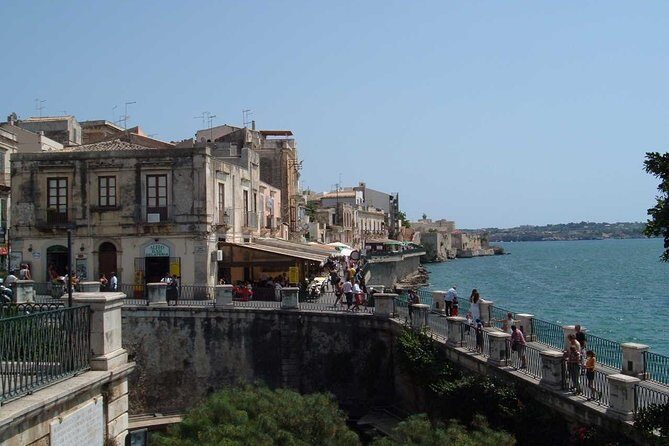
Ortigia is where Syracuse feels human. It’s the older “island” core, built close to the water, with views that make you slow down even if you’re in a hurry.
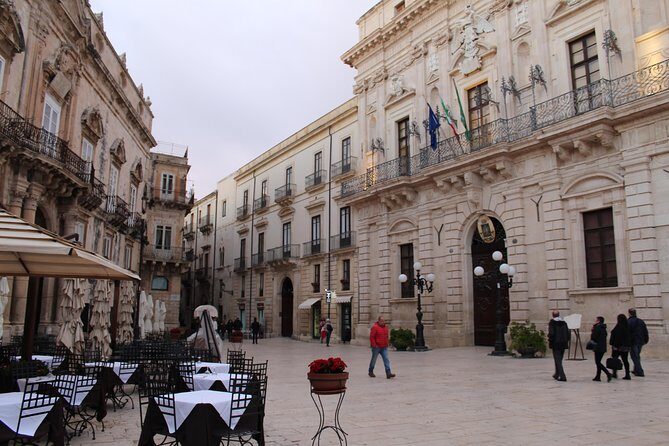
Here’s what you’re doing during the guided part: you walk along the Foro italico, reach the Fonte di Aretusa (a freshwater spring feeding a natural pool with papyrus plants), and then move toward Cattedrale Tempio d’Apollo and a baroque square near it. After that, you get time to explore on your own.
The stop is about 1 hour 30 minutes total, and the included walk plus free time gives you breathing room—important when the group tour format can otherwise feel rushed.
Why this stop is a highlight
Fonte di Aretusa isn’t just a pretty spot. It’s a quick lesson in how Syracuse’s identity is tied to water—both practical and myth-heavy. And Ortigia’s Baroque church areas and plazas make it easy to understand why this part of town became a magnet for visitors.
The small drawback to watch
Walking routes can feel warm and slow in summer. When groups are big or guides need to repeat explanations for multiple language sets, you’ll lose some momentum. If you’re the type who hates waiting, take your own shade break during the free time rather than trying to catch it between announcements.
Syracuse Cathedral (Duomo) at Ortigia: short but meaningful
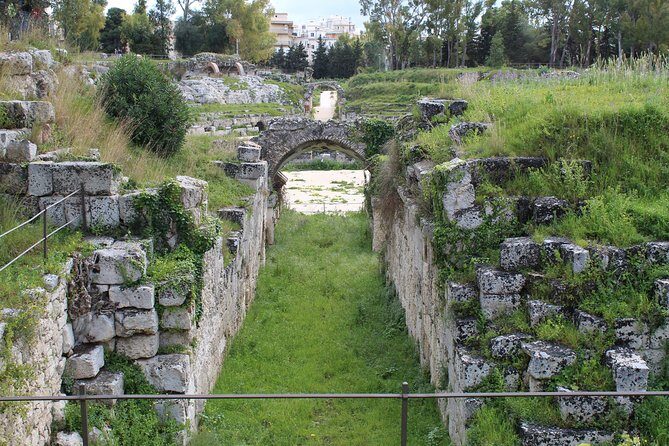
After the Ortigia walk, you’ll go to the Syracuse Cathedral (Duomo) of Ortigia for a brief guided visit of around 20 minutes. Entry to the cathedral is listed as not included (priced separately), so you may need to pay that fee on the ground.
A short cathedral stop can be disappointing—unless you know how to use it. Think of it as orientation: you’ll see the key interior or focal points your guide is emphasizing, and then you can decide if you want to return later during independent time (though this particular tour’s free time is limited).
Tip: if you’re not sure about cathedral dress expectations, keep it simple—cover shoulders and wear something you can adjust quickly. That helps everywhere in Sicily.
Neapolis and Teatro Greco: the big-ticket ruins moment
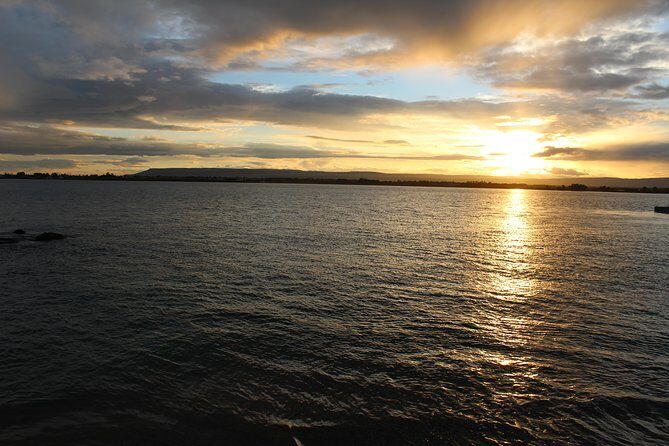
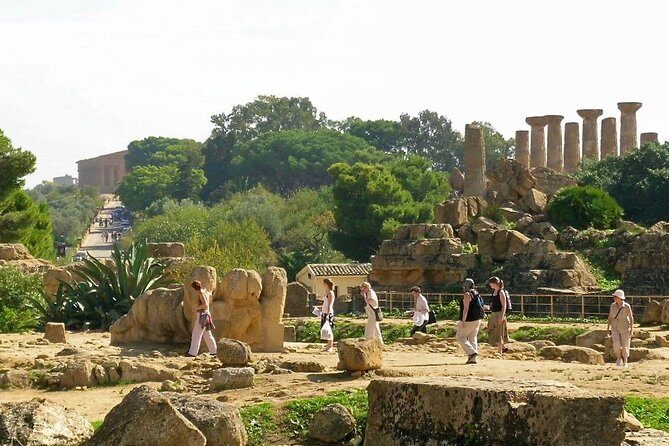
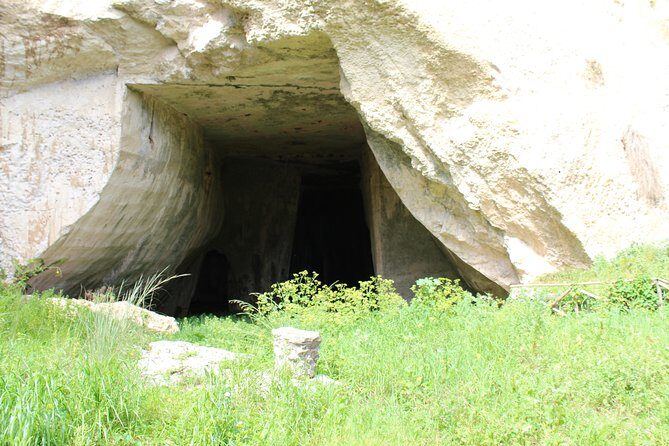
The payoff for many people is the Greek area in Neapolis, with a guided stop at Teatro Greco lasting about one hour. This is where you get the scale of ancient Syracuse—how the city sat, watched, and performed.
Important: entry to the archaeological park is not included and is listed at €17 per person. In some departures, queues and ticket handling can eat into your time, especially if your group is large.
What I’d expect you to feel here
You won’t just see “old stones.” You’ll feel the design logic: the way the theatre interacts with the terrain and how that location makes performances (and crowds) make sense. It’s one of those places that turns history from a word into something physical.
How to plan for comfort
- Bring water and something salty if you can. You won’t be buying food as part of the tour.
- Pace yourself. Ruins often mean walking on uneven ground and stairs.
- If your interest is archaeology, don’t try to do everything in a single hour. Focus on one or two vantage points and let the space do its work.



Price and ticket math: what $72.09 really covers
The tour price is listed at $72.09 per person and includes pickup/drop-off plus guided tours in Syracuse/Ortigia/Noto. That’s the core value: you’re paying for transport, a structured route, and a guide to translate the chaos of street names, church facades, and ruin context.
What’s not included:
- Food and drinks
- Archaeological park entry in Syracuse/Neapolis (€17 per person)
- Ortigia cathedral entry (€3 per person)
So your real “day total” is usually more than the headline price. The value comes down to two things:
1) Do you want a guided day that handles navigation and timing?
2) Are you okay paying separate site fees to access the key places?
A smart way to think about it
If you’re confident navigating on your own and you’re interested in saving on entrance logistics, you might prefer mixing independent tickets with partial guiding. If you’d rather have the day organized, this tour can still be a decent deal—especially if your guide is strong.
One tip that showed up in practical advice: if you qualify for youth or EU reductions, it can be worth buying tickets yourself instead of relying on tour handling at the site. Don’t assume the discount automatically appears.
Big-group pace, multi-language repetition, and how to not lose the day
This tour can have up to 50 travelers. That’s not a small-group walk. You’ll feel it in pickup timing, regrouping, and how the guide moves the group between stops.
Language is another real-world factor. The tour is offered in English, but it also may run with a multi-lingual guide. In practice, when groups are split across language needs, the same story can be repeated several times. That can turn a guided visit into a slow queue with commentary.
Here’s how to protect your day:
- Don’t aim for total precision. Pick your priority: for many people it’s Noto + Ortigia OR Neapolis ruins. Trying to obsess over every detail can backfire.
- If free time matters to you, use it strategically. Ortigia’s free time is the best window for wandering, snacks, and photos without the clock.
- Keep track of the “you’ll be back here soon” moment. In large groups, the guide is managing logistics, not doing one-on-one check-ins.
A positive pattern I saw in guide feedback: when guides are like Christian/Christy, the day can feel lively and story-driven. When Santo joins for deeper site explanations, the archaeological stop can feel more rewarding. The downside is that when translation needs stack up, even good guidance can feel slower than you want.
Bus comfort and practical on-the-ground tips for a hot day
This is a full-day itinerary. Even with a good bus, you’re exposed to Sicilian heat while you’re waiting, walking between regroup points, and standing in sun at sights.
To travel smarter:
- Bring sunscreen, a hat, and water. Food is not included.
- Wear shoes that handle stone steps. Ruins and cathedral areas are not gentle on footwear.
- If you need a restroom, use it earlier rather than later. Big-group timing is sensitive, and missing your moment can be a headache.
Also, arrive at the pickup point with a buffer. The tour uses designated meeting points, and pickup involves collecting the group efficiently. If you’re late, you can end up chasing the day instead of enjoying it.
Is this the right tour for you?
I’d point you to this tour if:
- It’s your first time combining Syracuse + Noto and you want a plan without complex logistics
- You like guided context for Greek ruins and Baroque towns
- You can handle a full day with group pacing and some waiting
I’d think twice if:
- You hate multi-language repetition and want tightly timed free roaming
- You want lots of museum time or deep archaeological detail (this is more “highlights with guidance” than “slow, scholarly immersion”)
- Your tolerance for long bus days is low. A big-group format can make the day feel long, even when everything is working as planned
Should you book this Syracuse & Noto day tour from Taormina?
Book it if your goal is a structured highlights day—Noto’s Baroque charm, Ortigia’s waterfront soul, and Neapolis’s Greek Theatre scale—done in one morning-to-evening push with a guide and transport handled.
Pass or switch to a smaller-group option if pace and language repetition would annoy you more than the extra effort of arranging trains/buses yourself. With up to 50 people and separate entrance fees (€17 + €3), you’re paying for organization, not for short lines or unlimited time.
If you do book, your best move is simple: prioritize your must-sees, plan for heat, and use the free time in Ortigia wisely.
FAQ
What time does the tour start?
The tour starts at 7:20 am.
How long is the Syracuse & Noto day tour from Taormina?
It runs for about 10 hours.
Where does the tour end?
The tour ends back at the meeting point.
Is pickup and drop-off included?
Yes. Pickup and drop-off from designated meeting points are included.
Is the tour in English?
The tour is offered in English. It may also be operated by a multi-lingual guide.
Is the tour ticket mobile?
Yes. You’ll have a mobile ticket.
Do I need to pay for entrance fees?
Some entrances are extra. The archaeological park entry is €17 per person, and the Ortigia cathedral entry is €3 per person. Food and drinks are also not included.
Is food included?
No. Food and drinks are not included.
How big is the group?
The tour has a maximum of 50 travelers.
What is the cancellation policy?
Free cancellation is available up to 24 hours in advance for a full refund.