REVIEW · SICILY
Siracusa Tour: Ortigia by Night in English
Book on GetYourGuide →Operated by Galya Sicily Tour · Bookable on GetYourGuide
Night in Ortigia tells stories in stone. This 2-hour English guided walk gives you a front-row seat to Siracusa’s oldest quarter after dark, when alleys and piazzas glow under dim street lamps and the monuments feel like they’re whispering back. You’ll wander with a local guide through Ortigia’s layered mix of ancient, Gothic, and Baroque architecture.
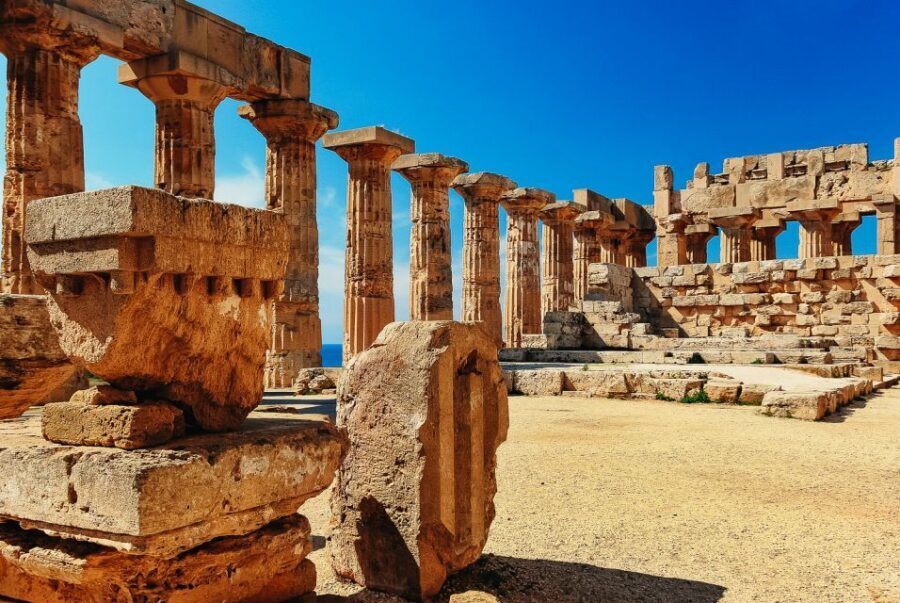
I love two things most. First, you get to see the Greek temple remains of Apollo and Athens in a lighting mood that makes them easier to read as ruins with meaning, not just photo props. Second, the guide weaves myths, legends, and history into the route, so the streets start to connect like chapters rather than a checklist.
One consideration: it’s a walking tour and it is not suitable for wheelchair users. Wear comfortable shoes and expect uneven old-stone surfaces as you move between small viewpoints.
In This Review
- Key highlights I’d prioritize
- Why Ortigia by night hits differently
- Starting at the Tempio di Apollo (Apollonion): set the scene first
- Via Dione and Palazzo Montalto: small streets, quick meaning
- Via della Maestranza and Via della Giudecca: the neighborhood reads like a map
- Church of Saint John Baptist and Via Roma: faith and street texture
- Piazza Duomo: where the evening lifts
- Ending at Fonte Aretusa: the payoff after the walk
- How long it really takes and what pace feels right
- English guide quality: the difference between seeing and understanding
- Price and value for an Ortigia night walk
- Who this tour is best for
- Should you book this Ortigia by Night tour?
- FAQ
- How long is the Siracusa tour of Ortigia at night?
- Where does the tour start?
- Where does the tour end?
- Is the tour guided in English?
- Does the price include hotel pickup or drop-off?
- Are food and drinks included?
- What should I bring?
- Is the tour wheelchair accessible?
- Can I cancel for a full refund?
Key highlights I’d prioritize
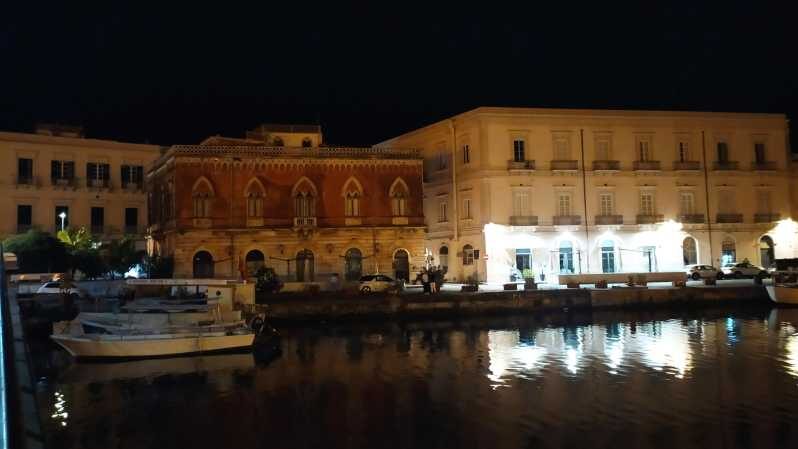
- Apollo and Athens temple remains lit for the evening mood
- Dim street lamps that make monuments feel close and readable
- Myths and legends told by a professional local guide in English
- A route packed with Greek, Gothic, and Baroque architecture in one evening
- Finishes near Fonte Aretusa, a classic anchor point for Ortigia after dark
Why Ortigia by night hits differently
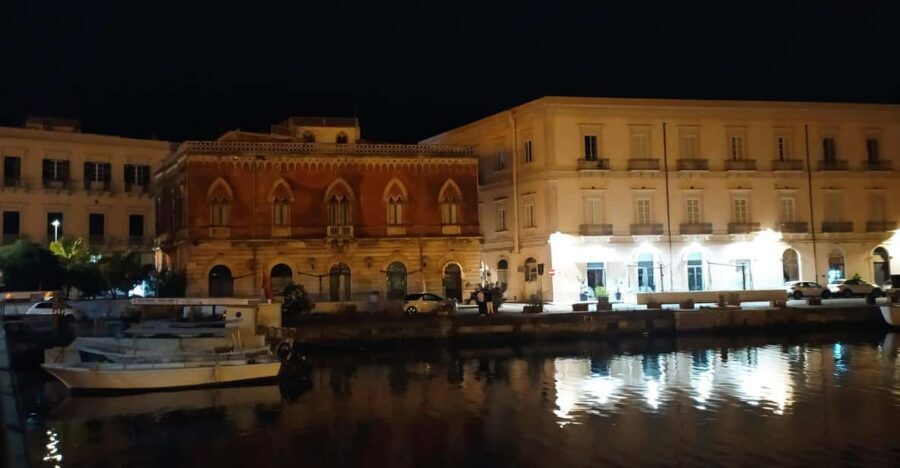
Ortigia at night is not just daytime sights with darker skies. The big difference is pacing and perception. During the day, you’re busy scanning. After dark, you slow down naturally, because the street lamps create softer focus around the buildings and ruins.
That matters here because the tour is built around “seeing with context.” You’re not only looking at stone—you’re listening while you walk. With myths and legends woven in, the Greek temple remains stop feeling like distant textbook facts. They turn into places with a story shaped by time, religion, and local imagination.
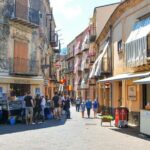
You’ll also like the variety. The route moves from ancient remnants into streets lined with Gothic and Baroque palaces, plus church architecture and the main square at Piazza Duomo. That mix is one reason Ortigia feels special: it’s the same small area showing different eras at once.
You can also read our reviews of more evening experiences in Sicily

Starting at the Tempio di Apollo (Apollonion): set the scene first
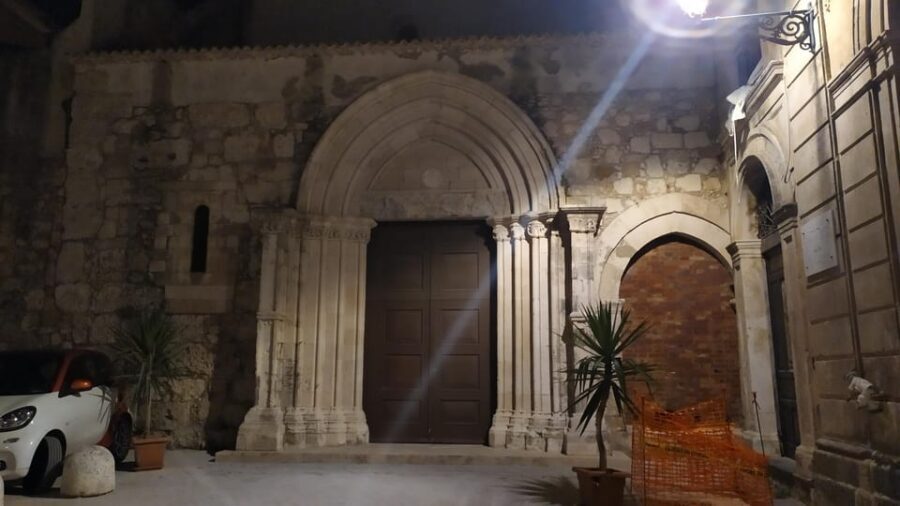
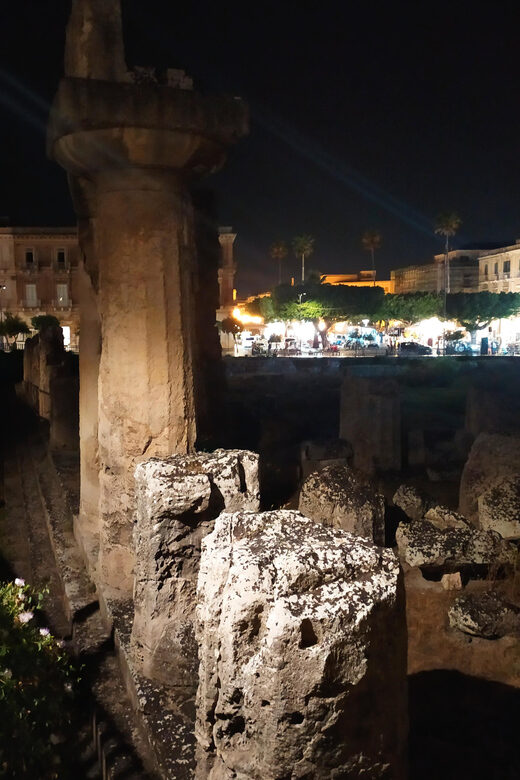
The tour begins at the ruins of the Greek Temple of Apollo, the Tempio di Apollo (Apollonion). Starting here is smart. It immediately tells you what you’re really walking through: Siracusa’s oldest fabric, where the past isn’t behind glass—it’s part of the street picture.
In practical terms, this first stop gives you a baseline. You can look at what’s left, notice proportions, and then understand why guides talk about these sites the way they do. And because this is a night tour, the lighting helps you spot shapes and outlines that can disappear in bright midday light.
Also, Apollo is a strong anchor for the evening’s storytelling. With myths and legends in play from the start, the tour feels like a guided narrative rather than a rapid-fire photo stop. Even if you only catch a few details, you’ll likely leave with clearer mental images for what you’re seeing across the rest of Ortigia.
Via Dione and Palazzo Montalto: small streets, quick meaning
After the start, you head to Via Dione for a guided introduction (about 10 minutes). This kind of street stop is one of the reasons night walking tours work. Streets show scale. They show how people actually move through Ortigia, and you’ll notice how the buildings frame sightlines.
Then comes Palazzo Montalto (about 5 minutes). Short stops like this might sound skimpy, but they usually work because the guide’s job is to point out what matters visually and historically. With Gothic and Baroque palaces along the route, the timing helps: you get just enough attention on one façade before moving on, so your brain doesn’t overload.
A practical tip: keep your camera ready but not glued to it. This part is the transition from “big ruin start” to “architecture walk,” and you’ll get more out of the guide’s directions if you can glance up and then look again.
Via della Maestranza and Via della Giudecca: the neighborhood reads like a map
Next you’ll walk through Via della Maestranza (about 10 minutes) and Via della Giudecca (about 10 minutes). These are the kinds of streets where Ortigia’s layered identity becomes obvious. Even if you’re not chasing facts, you’ll feel it in the way the street plan shapes movement and in the way different styles sit next to each other.
This is also where the guide’s storytelling matters most. Myths, legends, and history aren’t random extras—they’re tools that help you connect what you see in one spot to what you’re about to see next. When the guide explains the ancient monuments and how the area evolved, you’ll start seeing links between architecture, belief, and community life.
One small caution: the walking segments between stops can feel like “in-between time” if you treat them like transit. I’d treat them like part of the show. Look at doorways, street corners, and the way the dim street lamps carve light onto stone.
Church of Saint John Baptist and Via Roma: faith and street texture
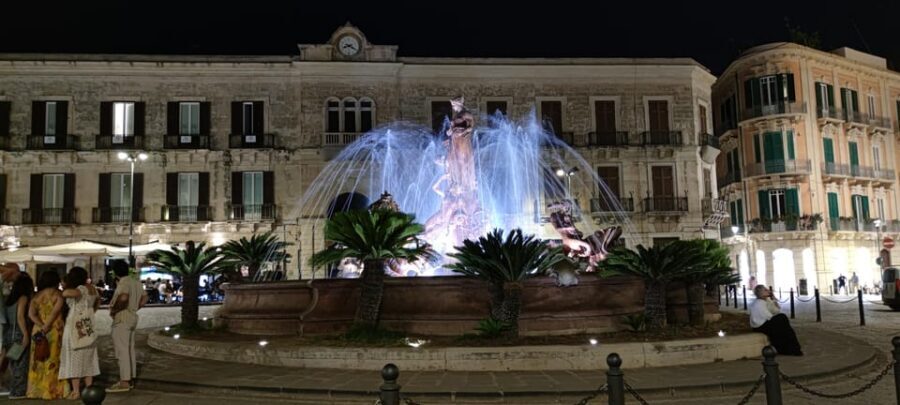
You’ll visit the Church of Saint John Baptist for a short guided segment (about 5 minutes). Churches often work as emotional landmarks during a night walk—light, color, and symbolism tend to stand out more after dark. Even for people who don’t go deep on religious architecture, a good guide can make the why behind the building’s presence feel real.
Then you move to Via Roma (about 5 minutes). This stop is less about one single monument and more about atmosphere. Think of it as an intermission where you reorient: the route keeps you moving, and the guide keeps you oriented with the story behind what’s around you.
If you’re the type who likes taking notes, this is a good section to do it. The tour covers temples, palaces, and churches within a tight time window, so jotting down one or two key points can help you connect the dots later.





Piazza Duomo: where the evening lifts
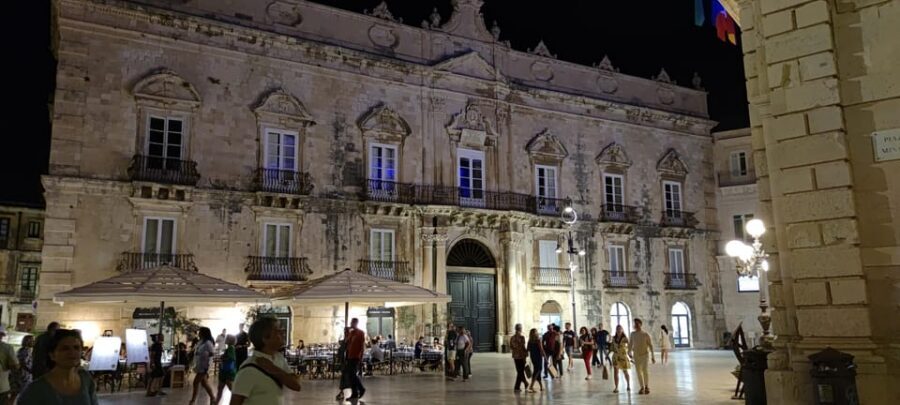
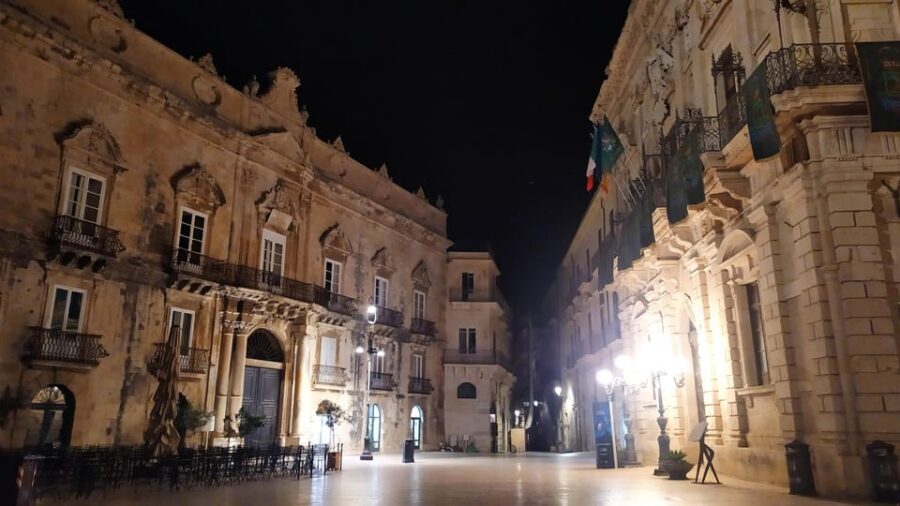
At Piazza Duomo, you get another guided segment (about 10 minutes). This is the kind of square that gives you breathing room. You can step back, absorb the architecture, and let the guide’s last stretch of storytelling land.
Why this stop is valuable: a main piazza is usually where a city’s life concentrates, and Ortigia is no exception. In a night setting, the open space also makes it easier to understand how the surrounding buildings shape the square’s feel. You’ll often notice details you might miss standing tightly in a narrow street.
This is also where you’ll likely understand the tour’s overall rhythm. The earlier streets and palace façades were about revealing layers. Piazza Duomo is about seeing how those layers gather in a shared public space.
Ending at Fonte Aretusa: the payoff after the walk
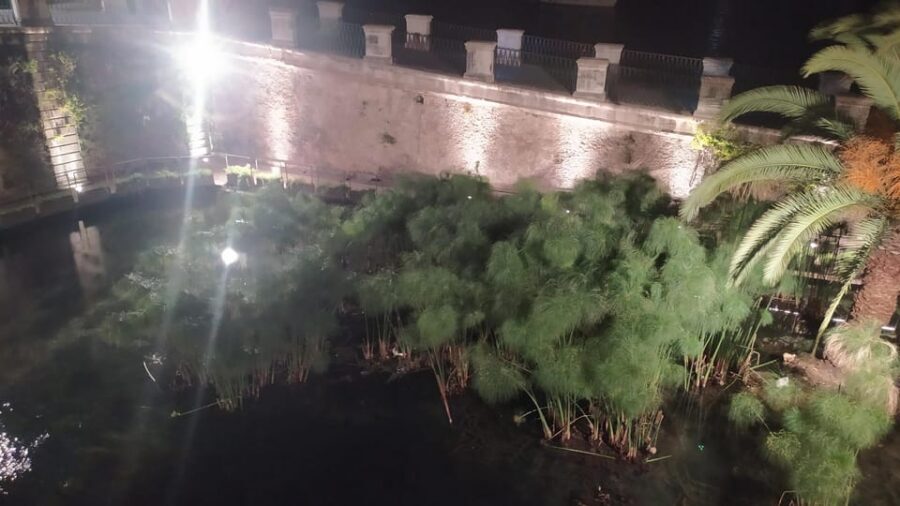
The tour finishes near Fonte Aretusa. This is a great ending point because it’s not just another building you pass. It’s a recognizable Ortigia landmark, and finishing here gives the evening a sense of arrival.
The best part of ending at a fountain-like point in the evening is contrast. You’ve spent time walking through ruins and palaces, guided by explanations and myths. Ending with a calmer, landmark moment helps you reset your senses and wrap your head around what you’ve just experienced.
You should also know the tour’s end is described as returning back to the meeting point. In practice, that usually means you don’t get left stranded far from where you started—you get a route that closes the loop, even if you’re approaching the finish from different streets.
How long it really takes and what pace feels right
It’s listed as a 2-hour tour, and that’s right in the sweet spot for Ortigia by night. Long enough to see a good set of monuments and get proper guide context. Short enough that you won’t feel like you’re touring with your feet begging for mercy.
The pacing is stop-based with guided segments ranging from about 5 to 10 minutes each. That’s important because it prevents the common problem of night tours that turn into a slow shuffle with no guidance. Here, you get frequent “look here, notice this, here’s what it means” moments.
Group size likely stays modest. The guide’s style comes through clearly in the feedback, especially with groups that included kids or multi-generational families. One review even called out that Galina was understanding with a group of seven and tailored the walk for a family group of eight. That’s the kind of flexibility that helps the route feel friendly instead of rigid.
English guide quality: the difference between seeing and understanding
This tour runs in English with a professional local tourist guide. One of the strongest repeated impressions is how well the guide explains what you’re looking at. In feedback, people highlighted that Galina was terrific—very knowledgeable, friendly, and passionate about the island.
There’s a practical reason this matters: Ortigia’s sights can look confusing at first. You might see ruins, then a church, then a palace façade, and wonder how it all connects. A strong guide ties it together with myths, legends, and history, so your photos become less random and more meaningful.
Also, good guides don’t just talk at you. They help you keep moving, point you toward the right angle for the lamps and façades, and offer recommendations for what to explore next once you’re done.
Price and value for an Ortigia night walk
The price is listed at $192.58 per group up to 1. That structure often means you’re paying for the guided experience for a small group setup rather than a low-cost mass departure. If you’re traveling solo, it can still make sense because you’re not splitting costs across strangers—you’re buying a guided evening with someone who can actually guide at your pace.
Is it a bargain? It depends on your travel style. If you’re the type who enjoys guided interpretation and wants to understand why Apollo’s temple remains matter and how Gothic and Baroque palaces fit into the story, you’ll likely feel the value. If you’d rather wander on your own and use a phone app, then the price might feel steep.
Either way, you should factor in that food and drinks aren’t included. So plan your evening so you’re not hungry mid-walk, and then enjoy dinner afterward (or stop for a snack before you meet the guide).
Who this tour is best for
This is a great match if you:
- Like architecture and want to see Greek, Gothic, and Baroque elements in one evening
- Prefer a guided story over a self-guided walk with gaps
- Enjoy nighttime walking when streets feel quieter and lighting makes monuments easier to read
- Want an English guide with strong storytelling energy, especially if your group includes different interests
It may be less ideal if:
- You have mobility limits and can’t handle walking on uneven historic streets
- You want a hands-off, free-roam tour with no interpretation
Should you book this Ortigia by Night tour?
If your ideal evening in Siracusa is part sightseeing, part storytelling, and part simply walking through gorgeous streets under soft light, I’d book this. The route concentrates the big “wow” moments—Apollo and Athens temple remains, plus Gothic/Baroque palaces and the finish near Fonte Aretusa—without turning the night into a long ordeal.
Choose it especially if you want the monuments explained in a way that helps you remember them later. And if you’re traveling with family or mixed interests, the guide’s flexibility (noted by visitors) is a strong reason to feel confident.
Just don’t book it on the assumption that it’s effortless. It’s a walking tour. Bring good shoes, bring a camera, and show up ready to slow down and listen.
FAQ
How long is the Siracusa tour of Ortigia at night?
The tour lasts 2 hours.
Where does the tour start?
It starts at the ruins of the Greek Temple of Apollo (Tempio di Apollo / Apollonion).
Where does the tour end?
It ends at Fonte Aretusa. The activity also notes it ends back at the meeting point.
Is the tour guided in English?
Yes, the live tour guide speaks English.
Does the price include hotel pickup or drop-off?
No. Hotel pickup and drop-off are not included.
Are food and drinks included?
No. Food and drinks are not included.
What should I bring?
Bring comfortable shoes and a camera.
Is the tour wheelchair accessible?
No, it is not suitable for wheelchair users.
Can I cancel for a full refund?
Yes, you can cancel up to 24 hours in advance for a full refund.