REVIEW · SICILY
Private Tour of Syracuse in 6 hours with Enrica De Melio
Book on Viator →Operated by Viaggio a Sud-Est · Bookable on Viator
Syracuse becomes easy when a pro walks with you. This half-day private tour is led by PhD archaeologist Enrica de Melio, and it strings together the city’s big ancient hits with real-world context as you go.
I especially love the Neapolis Archaeological Park route in chronological order, because it helps everything click instead of feeling like random ruins. I also like that the second half is on Ortigia, where you shift from ancient theatre and amphitheatre energy to temple-lined streets and the quiet moment of Arethusa’s Spring.
One thing to plan for: you’ll cover around 5 to 6 hours of walking with a moderate fitness level, plus not all entrance fees are included and lunch is on your own.
In This Review
- Key highlights you’ll feel right away
- Why this Syracuse and Ortigia plan works so well
- Neapolis Archaeological Park: Ear of Dionysius to the Roman Amphitheater
- The one cost here you should plan for
- Ortigia on foot: Temple of Apollo, Duomo Square, and Arethusa’s Spring
- Where the tour ends (and why that’s helpful)
- Price and value: what $361.11 per group really means
- Don’t forget what’s not included
- Mobile ticket and smart casual dress
- What it’s like to be guided by Enrica de Melio
- A few things you should do to match the pace
- Who should book this private Syracuse tour
- Quick checklist for a smooth half-day
- Should you book it?
- FAQ
- How long is the private tour of Syracuse and Ortigia?
- What is the meeting point and where does the tour end?
- Is this a private tour?
- How many people can be in a group?
- What is included in the tour price?
- What entrance fees should I expect to pay?
- Is transportation or lunch included?
- What should I wear?
- Is there any physical fitness requirement?
- What is the cancellation policy and what if the weather is bad?
- What if I miss the tour due to a late cruise ship?
Key highlights you’ll feel right away
- PhD archaeologist guide (Enrica de Melio) guiding the story, not just pointing at stones
- Neapolis in order: Quarry of Paradise with the Ear of Dionysius, Greek Theatre, Altar of Hiero II, Roman Amphitheater
- Ortigia’s “on-foot” highlights: Temple of Apollo (VI century BC), Duomo Square, Cathedral/Temple of Athena, Arethusa’s Spring
- Private group up to 8 for a slower pace and fewer waiting moments than big tours
- Tickets to budget for: Neapolis admission is extra, and the Cathedral entrance fee is extra too
- Mobile ticket keeps things simple on your phone
Why this Syracuse and Ortigia plan works so well
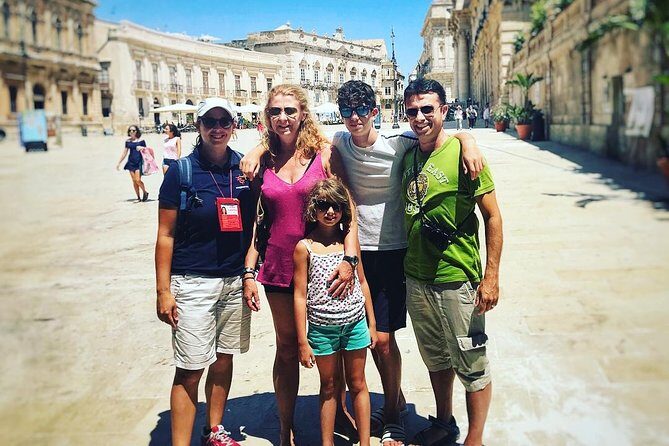
Syracuse is one of those places where the history is layered. The smart move is not trying to tackle it all on your own in a single day with a map app and luck. This tour is designed as a half-day loop that covers both the mainland archaeological zone and the island core of Ortigia.
You start at the Neapolis Archaeological Park, then you move to Ortigia, connected by bridges. That flow matters because it changes the scenery and the mood: you go from the big outdoor ruins and steepened viewpoints to tighter lanes and landmark squares. It’s also an efficient way to see the city’s top stops without burning a whole day.
Because it’s private (just your group), you can keep questions moving. And the guide is a PhD archaeologist, so explanations stay grounded and practical instead of turning into vague wow-stuff.
You can also read our reviews of more private tours in Sicily
Neapolis Archaeological Park: Ear of Dionysius to the Roman Amphitheater
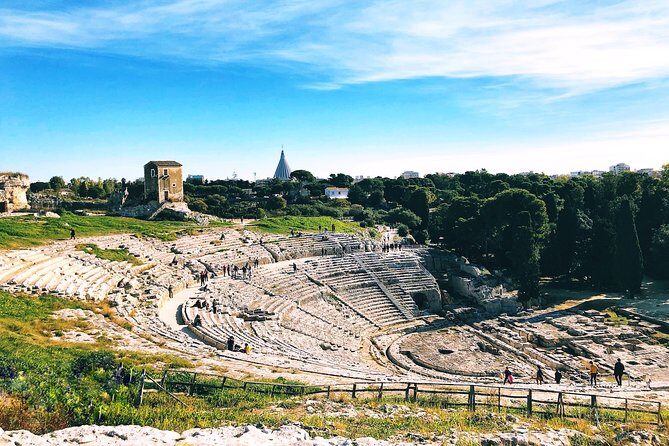
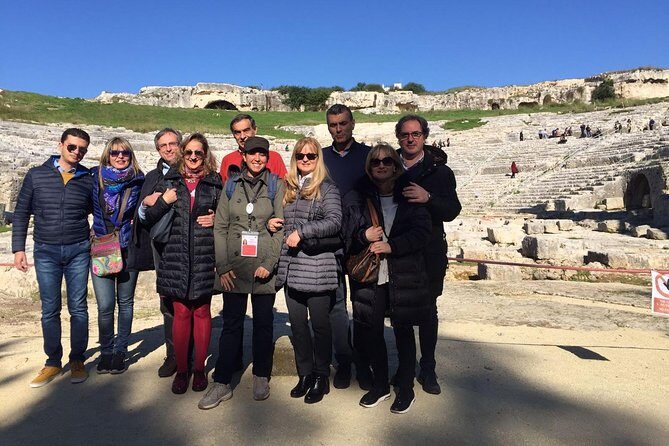
Neapolis Archaeological Park is the centerpiece. You spend about 1 hour 30 minutes here with a guided walking route that moves through key sites in sequence, so the ancient world feels chronological rather than chopped up.
Here’s what you’ll see at this stop:
- Quarry of Paradise, including the Ear of Dionysius and the Cave of the Rope-makers
- Greek Theatre
- Altar of Hiero II (listed as the largest in the world)
- Roman Amphitheater
I like this set-up because it gives you variety. You’re not only looking at one theatre-style structure; you’re seeing how Greek and Roman construction sit side by side in the same overall area. The Ear of Dionysius is a famous name you can spot quickly in photos, but it’s the surrounding sites that help it make sense as part of the place.
Practical timing note: 1.5 hours goes fast in a good way. Wear walking shoes and plan to pause. Even with a strong pace, you’ll want a few moments to look back across the park and absorb the scale.
The one cost here you should plan for
Neapolis Archaeological Area admission is not included. The listing price is 17 euros per person (and it’s free under 18). If you’re booking for a family, that small detail can change your total budget.
Also, this stop does not include transportation to and from attractions, so make sure you’re comfortable getting yourselves from the meeting point to where you’ll end up next.
Ortigia on foot: Temple of Apollo, Duomo Square, and Arethusa’s Spring
After Neapolis, you shift to Ortigia for another 1 hour 30 minutes of guided walking. Ortigia is small enough to feel intimate, but big enough to keep you busy with real landmarks at close range.
Your Ortigia stop typically includes:
- Temple of Apollo (VI century BC)
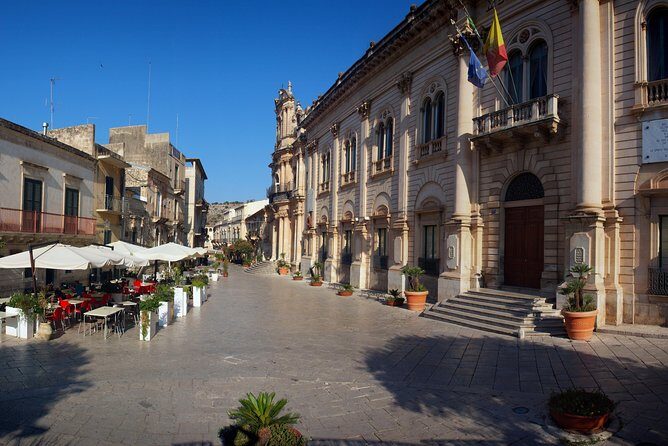
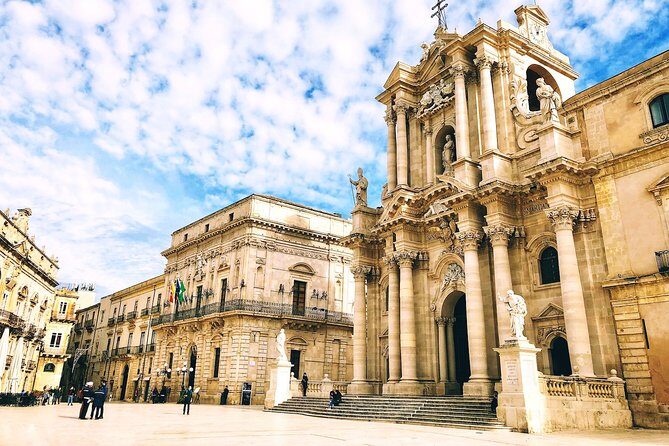
- Duomo Square and the baroque palaces around it
- The Cathedral/Temple of Athena
- Arethusa’s Spring
I like this part because it balances the heavier archaeological mood with street-level life. You get landmark architecture, but you’re also walking through the kind of spaces where people actually linger—especially near the spring. It’s a nice reset after ruins and viewpoints.
One more practical point: the listing says admission to the Cathedral of Syracuse is not included, and the fee listed is 2 euros per person. So even though the tour guide is taking care of the walking and interpretation, you should still budget for that entry if you want to go inside.
Where the tour ends (and why that’s helpful)
You finish at Arethusa Spring (Largo Aretusa). Ending there is great for two reasons. First, it’s a recognizable place to regroup and take photos. Second, it makes it easy to keep exploring on your own afterward without hunting for a taxi at the far end of town.






Price and value: what $361.11 per group really means
The price is $361.11 per group, for up to 8 people. That means the real value is less about how cheap it is per ticket and more about what you get per person once the group size is solid.
You’re paying for:
- A private, 5 to 6 hour format
- A PhD archaeologist guide
- Focused time at major sites where it’s easy to feel lost without context
- A walking route that hits both Neapolis and Ortigia without needing to coordinate your own itinerary between them
If you’re traveling solo or as a couple, it can still be worth it because you’re buying clarity and flow. If you’re traveling with friends or family and can fill a group, the cost per person can feel dramatically more reasonable.
Don’t forget what’s not included
From the listing details, these items are not included:
- Transportation to/from attractions
- Lunch
- Entrance tickets to Neapolis (17 euros per person)
- Entrance tickets to the Cathedral of Syracuse (2 euros per person)
So I suggest you think of the tour price as “guide time plus guided walking.” Then you top up with the few ticket lines you’ll see on-site.
Mobile ticket and smart casual dress
You’ll have a mobile ticket, which is convenient if you don’t want paper. The dress code is smart casual. That doesn’t mean formal; it just means dress neatly enough for churches/major sites and stay comfortable for walking.
What it’s like to be guided by Enrica de Melio
This is the kind of tour where the guide’s personality changes the whole day. Enrica de Melio is a PhD archaeologist, and she brings a warm, upbeat teaching style that keeps the pace lively while staying grounded in facts.
From the way she leads, you should expect:
- Explanations that connect each stop to what came right before it
- Clear structure, especially in the Neapolis portion where the route follows a chronological order
- A personal touch in the way questions and interests can shape small moments of the walk
One helpful detail from prior experiences with her: she pays attention to how easily people can access sites. That doesn’t replace planning your own comfort level, but it’s a good sign if you want a guide who thinks about the day as a whole, not just the checkboxes.
A few things you should do to match the pace
You’ll cover moderate walking. I recommend:
- Comfortable shoes you trust on uneven stone
- Sunscreen and a hat, since you’ll be outside for long stretches
- Water, because lunch is not included
- A moment at the spring to slow down, even if you’re tempted to rush forward
If your group includes anyone with mobility considerations, I’d ask your guide directly how she’s planning the walk for your specific day. The tour format is private, so there’s usually more flexibility than on a group bus.
Who should book this private Syracuse tour
This tour is a strong fit if:
- You want a first-time-friendly way to see Syracuse’s main ancient and island highlights
- You prefer walking with a guide rather than trying to decode everything solo
- You like history when it’s tied to places you can actually stand in front of
- Your group is up to 8 and you want to share the private guide experience
It may be less ideal if:
- You’re looking for lots of free time for long meals
- You want a beach-focused or swimming schedule
- Your group doesn’t like walking for about 5 to 6 hours, even at a moderate pace
Also, this experience is weather-dependent. If the day looks rough, build flexibility into your plans.
Quick checklist for a smooth half-day
- Start: 9:30 am at Neapolis Archaeological Park, Via Luigi Bernabò Brea, 14, Siracusa
- End: Arethusa Spring, Largo Aretusa, Siracusa
- Time plan: about 5 to 6 hours total
- Bring: smart casual clothes, comfortable shoes, water
- Budget extra: Neapolis admission (17 euros/person) and Cathedral entry (2 euros/person)
- Plan lunch: it’s not included
Should you book it?
I think this is a great choice when you want Syracuse to feel understandable fast. You’re not just collecting monuments—you’re walking a route that connects Greek and Roman sites at Neapolis, then shifting to Ortigia’s core landmarks like the Temple of Apollo, Duomo Square, and Arethusa’s Spring.
Book it if your group can handle moderate walking and you’re happy to add the listed entrance fees. Skip it if you want a low-walking, slow-and-lazy day or you don’t want to manage ticket add-ons.
Bottom line: with Enrica de Melio’s guide skills and the tight Neapolis-plus-Ortigia flow, this tour is the kind of half-day that makes a city feel real.
FAQ
How long is the private tour of Syracuse and Ortigia?
It runs about 5 to 6 hours total, with roughly 1 hour 30 minutes at Neapolis Archaeological Park and 1 hour 30 minutes on Ortigia.
What is the meeting point and where does the tour end?
You meet at Neapolis Archaeological Park, Via Luigi Bernabò Brea, 14, 96100 Siracusa SR, Italy, and the tour ends at Arethusa Spring, Largo Aretusa, 96100 Siracusa SR.
Is this a private tour?
Yes. It’s private, and only your group participates.
How many people can be in a group?
The price is per group for up to 8 people.
What is included in the tour price?
The tour includes a PhD archaeologist guide and a mobile ticket.
What entrance fees should I expect to pay?
Neapolis Archaeological Area admission is 17 euros per person (free under 18). Cathedral of Syracuse entrance is 2 euros per person.
Is transportation or lunch included?
No. Transportation to and from attractions and lunch are not included.
What should I wear?
The dress code is smart casual.
Is there any physical fitness requirement?
Yes, travelers should have a moderate physical fitness level.
What is the cancellation policy and what if the weather is bad?
You can cancel up to 24 hours in advance for a full refund. The experience requires good weather, and if it’s canceled due to poor weather, you’ll be offered a different date or a full refund.
What if I miss the tour due to a late cruise ship?
Refunds are not issued if the tour/activity is missed due to late or non-arrival of a cruise ship.