REVIEW · SICILY
Palermo, a tour of unique monuments and colorful markets
Book on Viator →Operated by Palermo Tour · Bookable on Viator
Palermo’s legends walk right beside its monuments. This 3-hour guided stroll links Teatro Massimo and the Capo market. I especially like the spooky ghost legend tied to Teatro Massimo and the chance to visit Palermo Cathedral, a UNESCO site connected to the kingdom of Sicily.
One thing to consider: it’s a lot of walking in real city streets, outdoors for much of the time, so good weather really matters.
In This Review
- Key highlights you’ll feel fast
- A tight 3-hour loop that makes central Palermo make sense
- Piazza Olivella and the baroque-archaeology combo
- Puppet opera at Teatro dell’Opera dei Pupi (UNESCO live in miniature)
- Piazza Massimo and Teatro Massimo: Florios, belle époque, and a ghost
- Ancient walls and Porta Carini: the city gate that feeds the market
- Capo street market: Arab-origin flavors and a free snack stop
- Fontana della Vergogna and the nearby Ballarò–Vucciria energy
- Grotta dei Beati Paoli: when Palermo turns into a story
- Palermo Cathedral (UNESCO): Norman-Arab design and the kingdom story
- Via Vittorio Emanuele: the old street where you feel the city’s spine
- Quattro Canti: the symbolic crossroads of old Palermo
- Piazza Pretoria and Santa Caterina: Renaissance fountain meets dessert origins
- Is this tour worth it? The value check before you book
- Should you book Palermo’s unique monuments and colorful markets?
- FAQ
- FAQ
- How long is the Palermo tour?
- What time does it start, and where do I meet?
- Is the ticket digital?
- What’s included in the price?
- Are there any free entry stops?
- What if the weather is bad or I need to cancel?
Key highlights you’ll feel fast
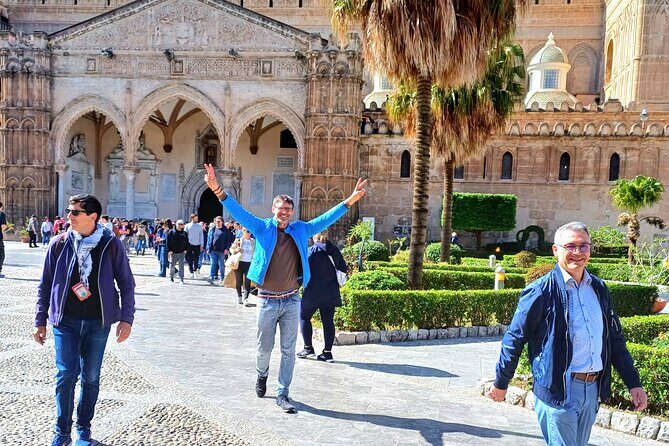
- UNESCO stops without the headache: Palermo Cathedral is on the route, with free entry when there are no religious services
- Teatro Massimo context + a legend: the Florios, the belle époque, and a ghost story for the curious
- Capo market street food break: an Arab-origin market where you get time for Palermo street snacks
- Ancient walls you can actually see: a look at 1500s walls and a city gate that feeds right into the Capo area
- Small-group pace: max 20 people, with a professional, authorized guide to keep things moving
A tight 3-hour loop that makes central Palermo make sense
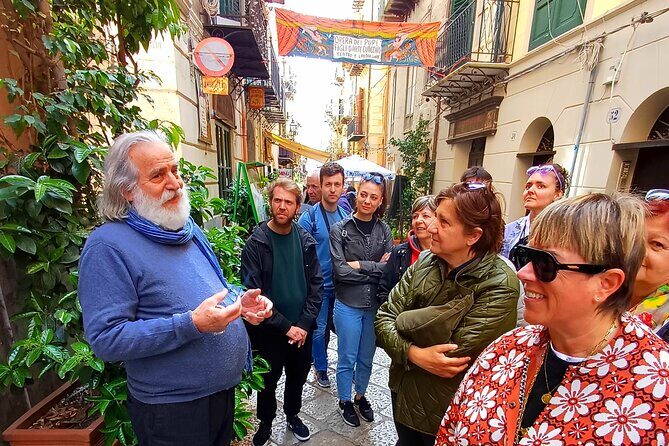
If you only have a half day in central Palermo, this tour is built for exactly that. You start at Piazza Giuseppe Verdi at 10:30am, then finish in the city center around Quattro Canti. The route is compact enough that you’re not bouncing around town, but it still hits major monuments, markets, and a couple of “wait, what?” legends.
The price—$34.83 per person—feels fair for what you get. You’re paying for a professional, authorized guide, plus free entry to the Cathedral when it’s possible (no services). And the real value is in the storytelling: legends, family history, and why these places matter to daily Palermo life, not just postcard facts.
One more practical plus: you get a mobile ticket, and you’ll be near public transport the whole way. That matters in Palermo, where you don’t want to waste time hunting for the next stop.
You can also read our reviews of more tours and experiences in Sicily.


Piazza Olivella and the baroque-archaeology combo
Your tour begins with a stop at Piazza Olivella, a scenic baroque square. This is the kind of place where your brain starts switching from modern city mode into old Palermo mode.
Two anchors here help set the tone:
- The church of Sant’Ignazio
- The National Archaeological Museum nearby (you won’t be paying for access during this stop, since admission is listed as free)
Why this stop is useful: it gives you a baroque visual baseline. After that, the rest of the route—cathedral Norman-Arab style, Renaissance fountains, ancient walls—starts to click into a timeline instead of feeling like random buildings.
If you’re the kind of person who likes “Where am I in history?” this stop does a lot of heavy lifting for little time.
Puppet opera at Teatro dell’Opera dei Pupi (UNESCO live in miniature)
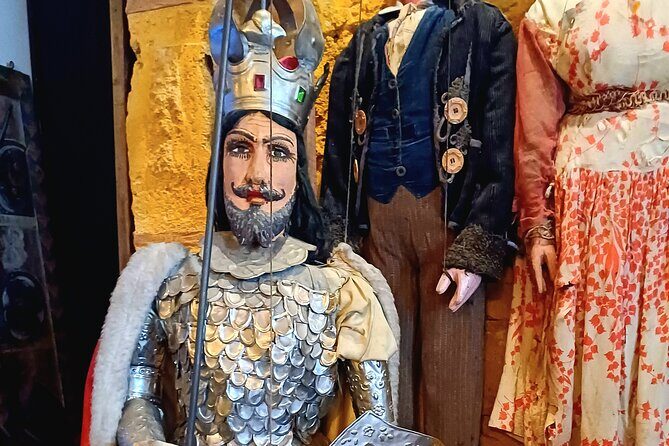
Next comes Teatro dell’Opera dei Pupi, known for puppet opera. It’s a UNESCO heritage site, and it’s one of those cultural oddities Palermo does so well: a tradition that’s theatrical, local, and totally unlike the museum stuff you can see anywhere.
Even if you’re not deep into opera, this kind of stop helps you understand Palermo’s taste for performance and storytelling. The puppets aren’t just entertainment—they’re a way of carrying identity through generations.
Time is short here (about 10 minutes), so don’t expect a long show. Think of it as a “you’re in the right city” cultural marker, placed early enough that you’ll be more receptive to the legends later.
Piazza Massimo and Teatro Massimo: Florios, belle époque, and a ghost
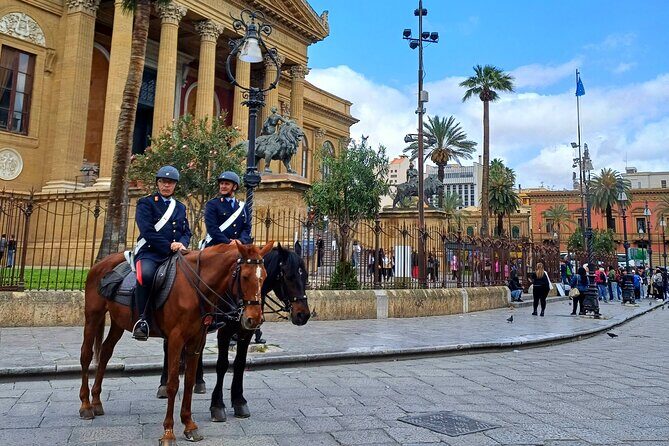
Then you’ll get a big-picture look at Piazza Giuseppe Verdi (also tied to Piazza Massimo), where the massive Teatro Massimo sits. This is billed as the largest opera house in Italy, and the tour uses it as a springboard for Palermo’s Florios and the belle époque era.
What I like about this portion is that it’s not just architecture talk. You also get a mysterious legend connected to the theatre—one of those stories that sounds half myth, half local tradition. Even if you take legends with a grain of salt, the effect is the same: you start seeing the theatre as part of Palermo’s living imagination.
This is also a good spot for orientation. From here, the route heads toward older city layers—walls and gates—so your brain is ready when you shift centuries.
Ancient walls and Porta Carini: the city gate that feeds the market
One of the smartest segments is when you see Mura, Bastione e Porta Carini. You’re looking at a glimpse of ancient Palermo walls built in the 1500s, plus an old city gate that helps you enter toward the Capo market area.
This is more than a photo stop. It explains why the market district is where it is and how Palermo’s city layout guided daily life. Walls and gates aren’t just historical decorations—they’re why certain streets, neighborhoods, and movement patterns formed.
If you’ve ever felt like markets in Europe appear from nowhere, this helps you connect the dots. You’ll leave with the feeling that the streets have logic.


Capo street market: Arab-origin flavors and a free snack stop
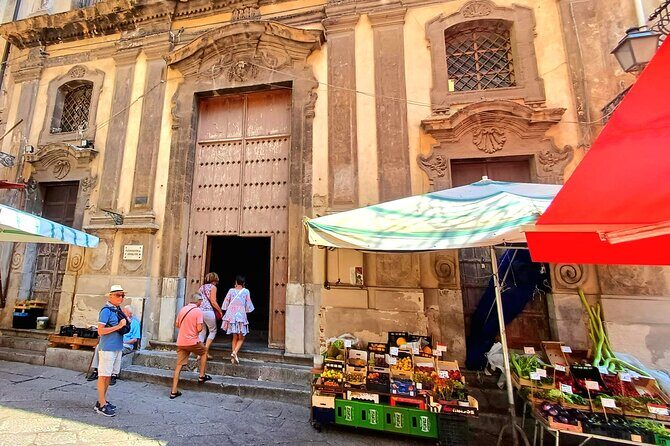
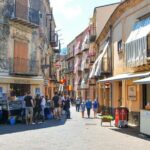
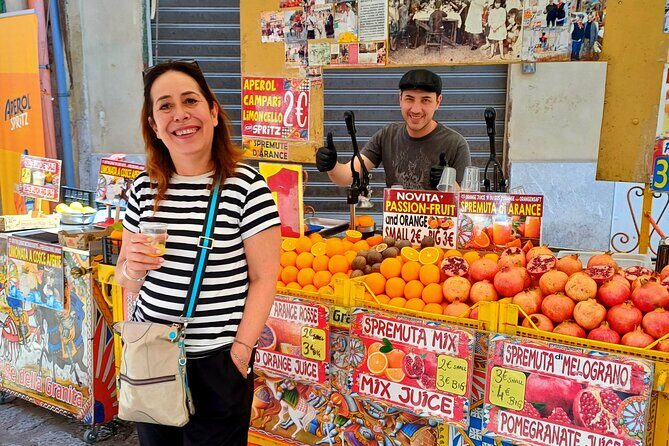
The highlight for many people is the Capo Street Market, described as an ancient market of Arab origin. It’s the kind of place where you can feel the mix of cultures in the street-level everyday life.
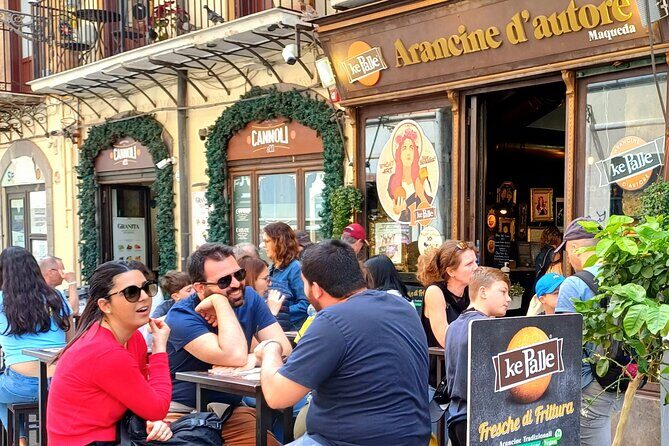
You get about 25 minutes here, plus the tour allows for a free stop to taste Palermo street food. Since the actual food cost isn’t specified in the tour data, treat it as your chance to decide what you want to try on the spot—like arancini-style snacks, savory bites, or sweet street desserts.
Why this is valuable: markets are where your guide’s stories meet real behavior. The tour isn’t just saying Palermo is old. It shows you how people still shop, eat, and chat in places with deep roots.
Two small tips before you wander:
- Expect a mix of people and noise. Bring patience.
- If you’re picky about smells and crowds, stand near the edges first, then step in when you feel ready.
Fontana della Vergogna and the nearby Ballarò–Vucciria energy
As you move through the market zone, there’s a stop in front of the Fontana della Vergogna, located just a few steps from the markets of Ballarò and Vucciria.
Even with limited time, this fountain matters because it’s memorable. It’s the kind of landmark you can’t ignore, and it gives you a break from constant food-and-shop focus.
Also, being near Ballarò and Vucciria means you get a sense of how many market worlds Palermo has at once—Capo is one chapter, but the broader area has its own shopping rhythm.
Grotta dei Beati Paoli: when Palermo turns into a story
Next is Grotta dei Beati Paoli, linked to an ancient secret sect. The tour frames them as people who avenged wrongs suffered by poor people in past centuries.
This stop is short (about 10 minutes), but it does something important: it shows Palermo’s relationship with legend. The city doesn’t only preserve buildings. It preserves narratives—sometimes scary ones, sometimes moral ones.
If you’re traveling with kids or you like playful history, this section can be a mental reset. It’s not another stone you have to measure with your eyes. It’s a place you connect to human drama.
Palermo Cathedral (UNESCO): Norman-Arab design and the kingdom story
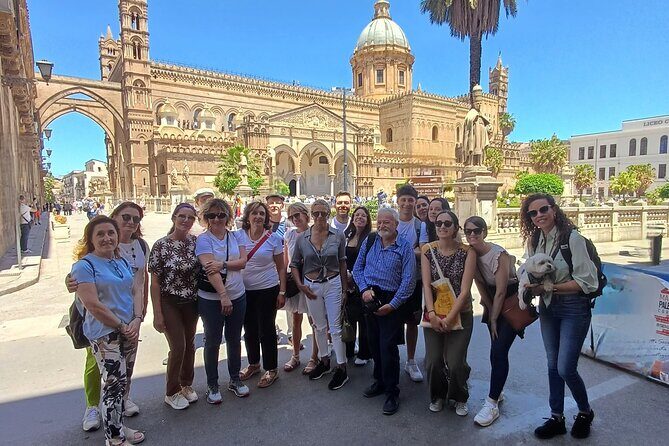
Then comes one of the most serious stops: the Cattedrale di Palermo. It’s UNESCO-listed and built in Norman Arab style, dating back to 1185. The tour explains that this is the place of the kingdom of Sicily’s foundation, and the cathedral houses the tombs of the first kings of Sicily.
This is why the earlier orientation matters. By now you’ve already seen walls, gates, and old squares. So when you stand at the cathedral, you understand it as the result of a whole sequence of powers and cultural layers.
Entry is noted as free, but only if there are no religious services. Practically, that means you should be ready for the possibility that you might not go inside at the exact moment you expect. The tour data says free entry is provided in the no-services case, so don’t assume guaranteed access at all times.
Even if you’re not a history person, the cathedral’s role as a political foundation site is the kind of context that makes the building feel larger than itself.
Via Vittorio Emanuele: the old street where you feel the city’s spine
After the cathedral, the tour heads to Via Vittorio Emanuele, described as the oldest street in Palermo, full of monuments, art, and history.
Time here is around 15 minutes, which is enough to appreciate the “spine” feeling. You’re walking a corridor where the city’s layers show up in the way buildings face the street and how landmarks line up.
This is also a good stretch to slow down a touch. After intense landmarks (cathedral, markets, legends), your eyes need a calmer channel.
Quattro Canti: the symbolic crossroads of old Palermo
Next is Quattro Canti, identified as the center of the ancient city of Palermo. The tour calls it a bright, scenic square full of symbols, and that’s exactly how it reads once you’re standing there: every corner feels designed to communicate something.
This is the kind of stop that rewards you for pausing. Take a moment to look around instead of just walking through. It’s not a long visit, but it’s a “now I get it” final checkpoint.
Since the tour ends around Quattro Canti, this is also where you’ll feel the route close neatly. You’re back at the city’s grid center—easy to regroup, snack on your own, or head to your next stop.
Piazza Pretoria and Santa Caterina: Renaissance fountain meets dessert origins
Before you’re fully done, there’s a stop at Piazza Pretoria. The star here is an extraordinary Renaissance fountain. The square is surrounded by historic buildings, including the convent of Santa Caterina.
Here’s the dessert angle that locals love: Santa Caterina is where many famous Sicilian desserts were born. This turns a decorative square into something you can connect to taste.
Time is about 15 minutes, so this is a visual stop plus a fun food-history moment—good for families, foodies, and anyone who likes cultural stories tied to everyday cravings.
Is this tour worth it? The value check before you book
You should book this if you want:
- A tight center-walk that hits markets + monuments without long transfers
- Context you can’t easily get from standing alone at a cathedral or theatre
- A mix of serious sites (UNESCO cathedral) and storytelling (ghost legend, Beati Paoli)
You might want to choose something else if you:
- Hate walking outdoors for extended stretches
- Need long, slow museum time (this is structured and paced, not a linger-and-read type of tour)
The group size is max 20, which usually helps keep it personal enough that questions land and the guide can steer people through.
Also note the tour requires good weather. If conditions are poor, it can be rescheduled or refunded, so keep an eye on plans.
Should you book Palermo’s unique monuments and colorful markets?
I think this is a strong first-half-day option in Palermo. It connects the big names—Teatro Massimo and the UNESCO cathedral—to the city’s everyday pulse at the Capo market. You get legends that make the city feel human, not just historic.
If you’re the type who likes your sightseeing with a little story, and you want a simple route that doesn’t eat up your whole day, this one is a yes.
FAQ
FAQ
How long is the Palermo tour?
The tour runs for about 3 hours.
What time does it start, and where do I meet?
It starts at 10:30am at Piazza Giuseppe Verdi in Palermo. The tour ends at Quattro Canti in the city center.
Is the ticket digital?
Yes. The experience uses a mobile ticket.
What’s included in the price?
You get a professional, authorized, certified guide. Cathedral entry is included if there are no religious services, and you’ll also get assistance and information for further visits, transport, and gastronomy.
Are there any free entry stops?
Yes. The tour lists free admission at each stop, including Palermo Cathedral when it’s possible to enter because there are no religious services.
What if the weather is bad or I need to cancel?
The tour requires good weather. If it’s canceled due to poor weather, you’ll be offered a different date or a full refund. You can cancel for a full refund up to 24 hours before the experience’s start time.