Ortigia smells like fresh clay and ink. The Ortigia Artisan Tour in Siracusa is a small-group walk through working craft shops, where you watch locals make one-of-a-kind pieces and learn the stories behind them.
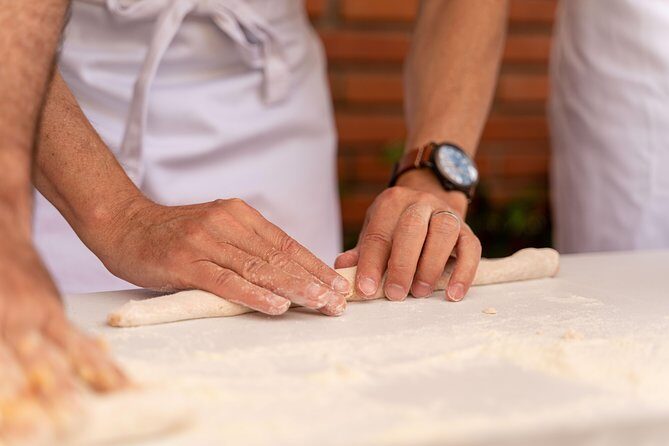
I love two things most: you get to see craftspeople create, not just look at finished souvenirs, and you also have time to browse at each stop with help from your guide. If you want, you can even try some of the craft activities yourself while they explain what you’re seeing.
One consideration: this experience relies on good weather, and it only runs in specific time windows, so you may need flexibility if plans shift.
In This Review
- Key highlights at a glance
- Why the Ortigia Artisan Tour feels more like craft time than shopping
- Getting there in Ortigia: meeting point and timing that actually works
- How a 90-minute group tour stays personal (max 4 travelers)
- Craft workshop stop types: what to pay attention to at each place
- Ceramics: watching form, texture, and hands at work
- Painting: learning the city through color, subject, and choices
- Leather-making: where craftsmanship shows up in durability
- Galleries and artisan retail: how to avoid the cookie-cutter souvenir trap
- What you learn from a guide like Pelin (and how that changes what you see)
- The price of $295.87 per person: when it feels like a deal
- Who this Ortigia Artisan Tour suits best
- Should you book the Ortigia Artisan Tour?
- FAQ
- What language is the Ortigia Artisan Tour offered in?
- How long is the Ortigia Artisan Tour?
- How many people can join the tour?
- Where do I meet for the Ortigia Artisan Tour?
- What are the opening hours for the tour?
- When will I receive confirmation after booking?
- Is there free cancellation?
- What happens if the weather is poor?
Key highlights at a glance
- Small group size (maximum 4 travelers) for real conversation, not a lecture
- Working artisan workshops across materials, including ceramics, painting, and leather
- Time to browse at each stop with guidance to help you shop smart
- Historical and cultural context that goes beyond typical guidebook facts
- Hands-on option if you want to try the craft
- Private feel with customization, shaped around your interests and questions
Why the Ortigia Artisan Tour feels more like craft time than shopping
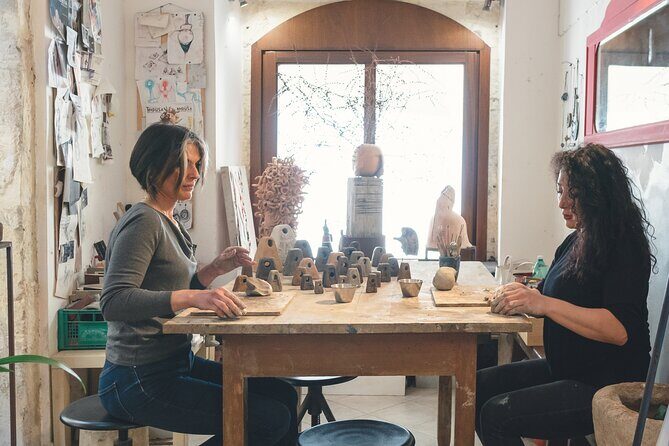
Ortigia is the kind of place where the best memories are the unplanned ones: the moment you stop because something is being made right in front of you. This tour keeps you close to that feeling. You move through different artisan spaces, so your attention stays on process—hands at work, materials at work, and the choices that make something truly personal.
I also like the way the format supports real curiosity. With a guide (one named Pelin is specifically praised for her love of Ortigia and for teaching through her perspective), you’re not stuck translating on your own. You can ask questions, and you can follow up when you spot something you genuinely want to understand.
The other big win is that the tour is private and customizable. That matters because Ortigia can be overwhelming: lots of shops, lots of temptation, and lots of stuff that’s mass-produced. A workshop-focused route with a guide helps you slow down and notice what’s local, what’s handmade, and what you’ll actually want to live with long after the trip photos fade.
You can also read our reviews of more tours and experiences in Sicily.



Getting there in Ortigia: meeting point and timing that actually works
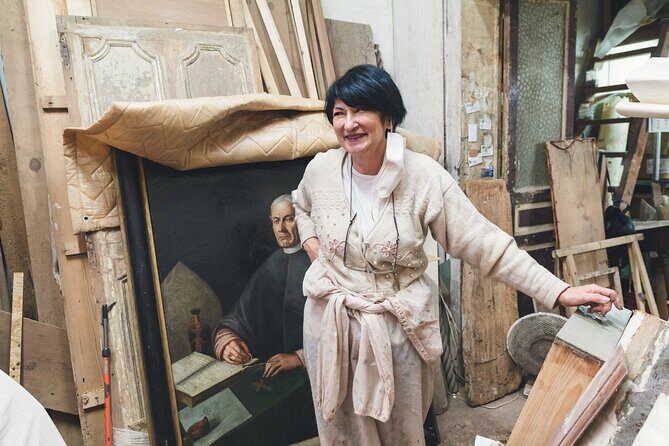
The tour starts at Largo XXV Luglio, 13, 96100 Siracusa SR, Italy, and it ends back at the meeting point. That means you’re not trying to figure out a second pickup location or where you’ll end your evening.
Timing is also straightforward: it runs Monday through Saturday in two daily windows—10:30 AM to 12:30 PM and 4:30 PM to 6:30 PM (operating within the listed season range). The whole experience is about 1 hour 30 minutes, which is long enough to see several places but short enough to keep your legs and attention fresh.
There’s also a practical advantage: the meeting area is listed as near public transportation. If you’re bouncing between Ortigia sights, this tour fits without forcing you into complicated logistics.
How a 90-minute group tour stays personal (max 4 travelers)
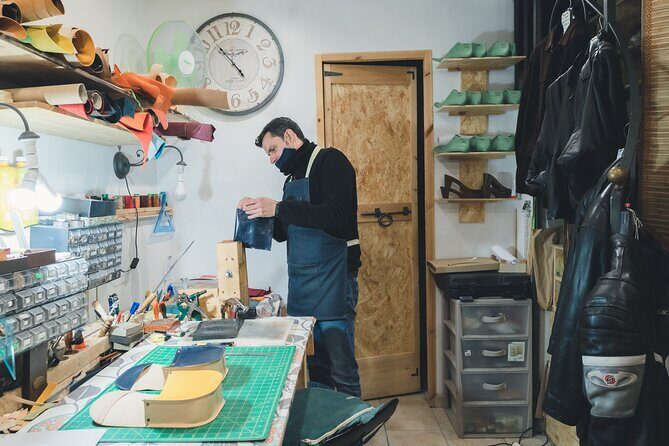
The biggest secret of a great small-group tour is not the size on paper—it’s how that size changes the conversation. Here, the group is capped at 4 travelers, so your guide can actually talk with you instead of around you.
You’ll tour local artisan workshops with an English-speaking guide, and each stop includes time to browse. That browsing time is important. It turns the tour from a passive watch-and-leave experience into an interactive one where you can compare what you see, ask about materials, and decide what you’d buy (or not buy).
Also, this tour comes with a mobile ticket, so you don’t have to hunt down anything complicated before you start. And because it’s offered as a format that “most travelers can participate,” it’s generally built for ordinary visitors, not just art insiders.
Craft workshop stop types: what to pay attention to at each place
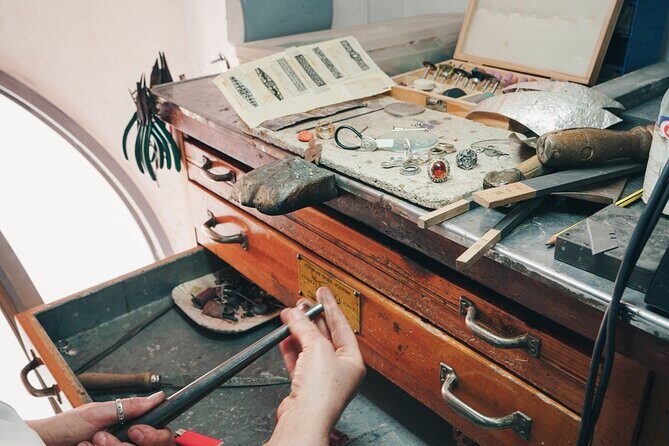
The tour is designed around visiting a variety of local artisan workshops across different materials. The exact sequence can vary, but the craft types are clear from the experience descriptions and feedback: ceramics, painting/art spaces, leather-making workshops, and galleries where you can keep looking.
Rather than trying to collect one more souvenir, you’ll get better value by focusing on three things at every stop:
- What material is being used and why
- What makes the piece one-of-a-kind
- How the maker talks about their choices (that’s often the real story)
Ceramics: watching form, texture, and hands at work
Ceramics is one of the craft types highlighted in the tour experience. When you’re watching a ceramicist work, the key is to look at the small decisions. Clay isn’t just clay—texture, thickness, drying time, and finishing all change how the final piece feels.
In a guided setting like this, you don’t just see a process. You also get historical and cultural context—the kind that helps you understand why certain styles matter in Ortigia. You’ll also likely have a chance to ask questions about what you’re seeing, especially if you’re the type who notices details like glaze color or surface marks.
Possible drawback here: if you’re only interested in buying ready-made items, you might feel a little impatient during hands-on work. The point of the stop is process and learning, not instant checkout.





Painting: learning the city through color, subject, and choices
Painting workshops (and painter-related stops) add a different rhythm to the tour. Ceramics tends to be about material physics; painting is about perception—how an artist shapes what you see into something that carries meaning.
With a guide, this can become more than watching paint go on a surface. You’re also getting city context and cultural notes tied to what the artists make. That’s where the tour earns its keep: it connects craft to place.
If you’re trying to avoid generic tourist art, this is the stop that helps the most. You’ll get a better sense of what feels local and why, which makes your shopping decisions easier.
Leather-making: where craftsmanship shows up in durability
Leather stops are another big highlight. Leather is one of those materials where you can feel the quality quickly—weight, finish, edges, and how the maker handles the pieces.
A good leather maker doesn’t just produce items; they explain the why behind the process. You’ll get that guidance from your host, plus time to browse. That’s useful if you’re trying to decide between something that looks impressive and something that’s built to last.
If you want a hands-on moment, leather workshops can be a great place to ask whether there’s anything you can try. Even if you don’t, you’ll learn what to look for when you’re evaluating craftsmanship after the tour.
Galleries and artisan retail: how to avoid the cookie-cutter souvenir trap
Ortigia has plenty of shopping. The hard part is separating made-here pieces from mass-produced items that only look local from a distance. The tour addresses that by ending up in spaces where the craft culture is front and center—galleries and craft-focused shops.
This is where the tour’s browsing time becomes a shopping tool. You’re not wandering alone through a maze of stores. You’re using your guide’s input while you compare pieces and learn what sets handmade work apart.
One practical thing I like: you’re actively avoiding the high-commercial souvenir vibe. That doesn’t mean you’ll never buy anything. It means you’ll buy with more confidence—and with fewer regrets.
What you learn from a guide like Pelin (and how that changes what you see)
One of the strongest themes in the feedback is the guide’s energy and local attachment. In particular, Pelin is praised for having a passion for art and a passion for Ortigia, and for teaching in a way that makes the city feel understandable, not just pretty.
What’s valuable here is the blend: makers show their work, and the guide adds the background—history, culture, and context you won’t get from a random stroll. That context matters because craft isn’t separate from life. It’s tied to local resources, local tastes, and the way traditions survive (or don’t).
There’s also a “future of craft” angle that comes through strongly in the feedback: the idea that these arts could be lost without attention and education. Even if you only take away a new appreciation for small details—how things are made, who makes them, and why—they’re the kinds of lessons you carry home.
If you want to maximize that value, come with questions. Ask:
- What makes this piece special?
- How long does a piece take?
- How do you decide on materials or finishes?
You’ll get better answers than if you just say you like it.
The price of $295.87 per person: when it feels like a deal
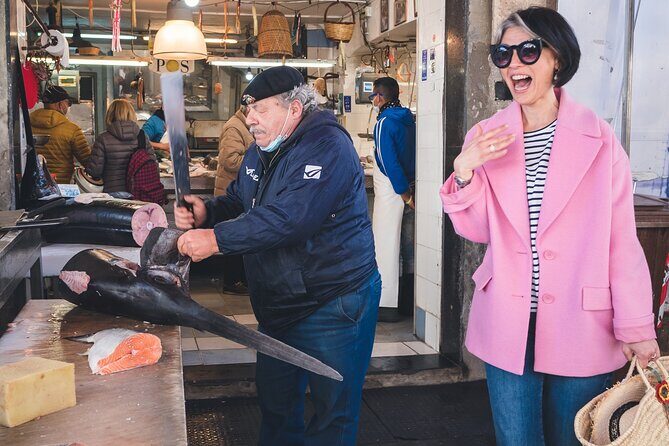
At $295.87 per person, this isn’t a budget add-on. But it also isn’t priced like a quick bus-stops tour. The value comes from several factors you can actually feel during the experience:
- Maximum 4 travelers means less crowding and more personalized guidance
- Private tour customized to your interests means the time is working for you, not for a one-size script
- Multiple workshop stops means you’re seeing different crafts, not repeating the same shop with different shelves
- Time to browse and learn means you’re not rushed through decisions
There’s also mention of group discounts, which can lower the per-person cost if you’re booking with people you trust. If you’re traveling with a small group, that can make the price land more comfortably.
Think of the cost as paying for access and interpretation. You’re not just buying entries; you’re buying the kind of guided attention that helps you shop smarter, understand better, and leave with fewer regrettable purchases.
Who this Ortigia Artisan Tour suits best
This tour fits best if you want craft as an experience, not a checklist. It’s a good match for:
- People who care about handmade quality and want to understand it
- Anyone trying to buy gifts that feel connected to the place
- Couples or small groups who prefer a quiet, focused pace in Ortigia
- Families with teens who can handle 1.5 hours of guided walking and talking (feedback includes a family scenario with a 13-year-old who enjoyed the craft and conversation)
It may be less ideal if you’re short on time and want a fast hit of major landmarks. Also, if you dislike shopping and dislike browsing, you’ll still learn the crafts—but the “time to browse with your guide” part may feel like extra.
Should you book the Ortigia Artisan Tour?
I’d book it if you want Ortigia to feel human. The tour gives you a small-group, workshop-based experience with real conversations, browsing time, and craft knowledge you can carry beyond the souvenir aisle.
Skip it (or consider a different style of tour) if you’re expecting a rapid landmark circuit or you only want galleries without watching making. Also remember the good weather dependency and the limited time windows. If you can plan around that, you’ll get a calmer, more satisfying craft-focused evening or morning in Siracusa.
If your goal is: less commercial noise, more hands-on understanding, and smarter buying—this tour matches that goal well.
FAQ
What language is the Ortigia Artisan Tour offered in?
The tour is offered in English.
How long is the Ortigia Artisan Tour?
The duration is about 1 hour 30 minutes.
How many people can join the tour?
The tour has a maximum of 4 travelers.
Where do I meet for the Ortigia Artisan Tour?
The meeting point is Largo XXV Luglio, 13, 96100 Siracusa SR, Italy, and the tour ends back at the meeting point.
What are the opening hours for the tour?
It runs Monday through Saturday in two windows: 10:30 AM–12:30 PM and 4:30 PM–6:30 PM.
When will I receive confirmation after booking?
Confirmation is sent within 48 hours of booking, depending on availability.
Is there free cancellation?
Yes. You can cancel for a full refund if you cancel at least 24 hours before the start time. If you cancel less than 24 hours before, the amount paid isn’t refunded.
What happens if the weather is poor?
This experience requires good weather. If it’s canceled due to poor weather, you’ll be offered a different date or a full refund.