REVIEW · SICILY
Excursion to the top of Etna |For good walkers (transport services not included)
Book on Viator →Operated by Guide Vulcanologiche Etna Nord · Bookable on Viator
Etna is the kind of place you feel in your lungs. This hike takes you into the highest active area of Mount Etna, with authorized 4×4 rides and a rough, crater-edge trek that changes with the volcano’s mood. I especially like the way the route is guided moment to moment, with safety checks for gas, wind, and ground heat.
Two things I really like: the licensed volcano guide who explains what you’re seeing (not just where you’re going), and the gear package that saves you hassle—helmets, trekking poles, and hiking shoes are included. The small group limit (max 10) also makes it easier to move as a team on unstable terrain.
The main consideration is effort. This is a high-altitude hike with a steep descent, plus volcanic ash and gases in the area, so you’ll want solid fitness and a practical plan for comfort and breathing.
In This Review
- Key Things I’d Remember Before You Go
- Why This Etna Crater Hike Feels Different (and Worth It)
- The Big Day Schedule: What You Actually Do
- The Etna crater-zone route, in plain numbers
- Stop at Mount Etna: 4×4 Up, Then Crater Edges on Foot
- The hike terrain: what it feels like underfoot
- Safety logic: why the guide is constantly assessing conditions
- What You’ll See at the Summit Zone (Views That Come with Effort)
- Sea views from high points
- Crater views when conditions cooperate
- A far-off bonus view
- The Guide: Why This Tour Works (When the Volcano Is Doing Its Thing)
- Gear and What It Means for Your Day
- The Descent: Legs Get Tested (and There Can Be a Plan B)
- Price and Value: Is It Worth $129.40?
- Who Should Book This Etna Hike (and Who Should Think Twice)
- Logistics That Matter: Start Location, Transport, and Extra Costs
- Weather, Volcanic Changes, and Why Your Expectations Should Stay Flexible
- Should You Book This Etna Crater Hike?
- FAQ
- What time does the Etna excursion start?
- How long is the hike?
- Is transport from my accommodation included?
- What’s included for hiking and safety?
- What should I bring for food and comfort?
- Can I wear contact lenses?
Key Things I’d Remember Before You Go
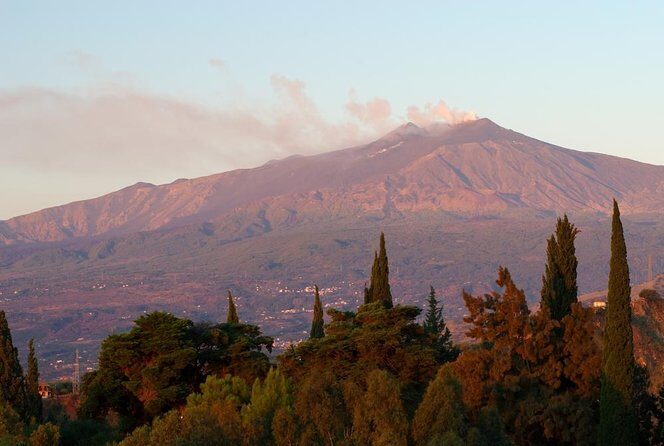
- Crater-edge hiking: you’ll aim for rim views of Etna’s summit craters when conditions allow
- 12–13 km trek with altitude: about 600 m ascent and roughly a 6 km descent, often lasting 5–6 hours
- Small group size (max 10): easier pacing and tighter safety monitoring
- Provided safety and comfort gear: helmets and trekking poles plus warm layers and socks
- Sea views from high points: if weather cooperates, the summit cone can reward you big time
Why This Etna Crater Hike Feels Different (and Worth It)
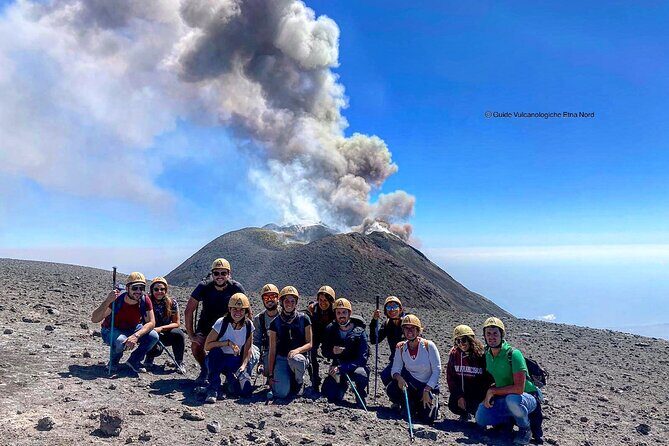
Hiking Mount Etna isn’t about strolling through a park. This is active-volcano terrain: lava fields, volcanic ash, and the kind of ground that can feel like it’s been recently rewritten. The result is a hike that’s part trekking, part geology lesson, and part “stay alert and follow the guide” adventure.
What makes this experience especially compelling is the balance between access and responsibility. You don’t just wander at your own pace. You’re routed and timed by a licensed guide who monitors volcanic and weather conditions as you go—so you spend your energy on the hike instead of guessing where it’s safe to stand and look.
I also like that the day is built for active travelers. You start above 1,900 m, ride in authorized 4×4 vehicles to around 2,750 m, then switch to a real hike across the summit zone. That structure means you get high-altitude crater views without spending the whole day “just getting there.”
You can also read our reviews of more tours and experiences in Sicily.


The Big Day Schedule: What You Actually Do
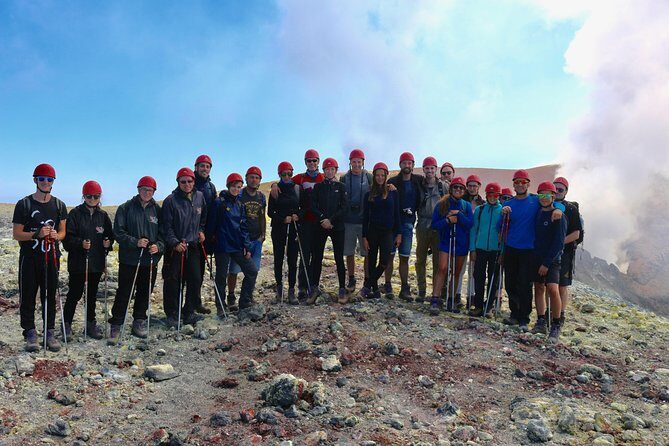
You start at 8:30 am at Esagonal Piazzale Funivia Etna (Sud), in Nicolosi (95030, CT). The tour ends back at the meeting point, typically around 1:30–2:30 pm depending on conditions.
The time you’ll feel most is the trek segment—about 5–6 hours for the hike itself—even though the total experience is listed at about 5 hours 30 minutes. If conditions shift (gas levels, wind, heat on the ground), the route can adjust. That flexibility is part of why the day works as a safety-first crater experience.
The Etna crater-zone route, in plain numbers
- Total hike distance: 12–13 km
- Ascent: about 600 m
- Descent: roughly 6 km
- Trail climbing: around 3,300 m, sometimes up to 3,380 m
- Crater rims: views can include one or more of Etna’s summit craters such as North-East, Voragine, Bocca Nuova, South-East (depending on the day)
Even without getting technical, those numbers matter: you’re walking at elevation on unstable volcanic ground. This is not the place to treat your legs like they’re on vacation.
Stop at Mount Etna: 4×4 Up, Then Crater Edges on Foot
The heart of the day is one big push: into Etna’s highest active area. You’ll ride authorized 4×4 vehicles from above 1,900 m to about 2,750 m. That vehicle segment is practical—it shortens the steep slog—but it also puts you close enough to the summit zone that the hike becomes the real show.
The hike terrain: what it feels like underfoot
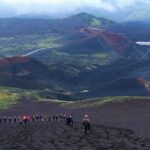
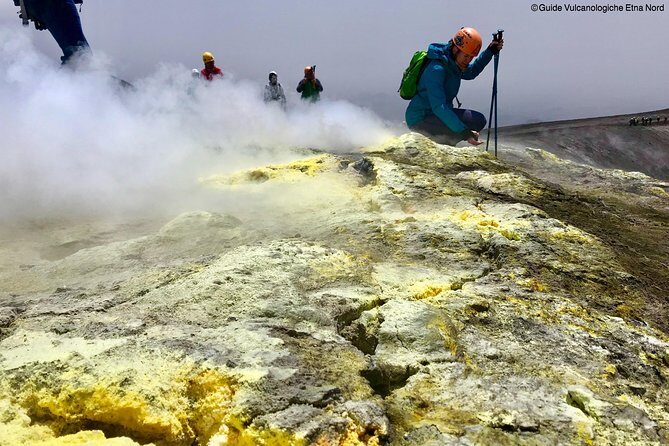
After the ride, you hike across desert-like volcanic surfaces: lava, ash, and volcanic bombs from repeated eruptions. The ground can be uneven and unstable, which is why the tour provides trekking poles and helmets.
You’ll be walking along crater edges as conditions allow. The routes can vary daily due to things you can’t fully predict in advance—gas, wind, and ground heat—so the guide’s “on the ground” decisions shape what you get to see.



Safety logic: why the guide is constantly assessing conditions
This is an actively changing environment. The guide continually monitors the volcano and weather so the group can safely reach viewing spots for things like fumaroles, mineral color changes, and active crater rims.
That constant monitoring is also why the experience can vary or even be interrupted if safety needs change. On days with heavier activity, you might not reach the highest possible crater rim. The good news is that you’ll still be close to the action—just with route adjustments.
What You’ll See at the Summit Zone (Views That Come with Effort)
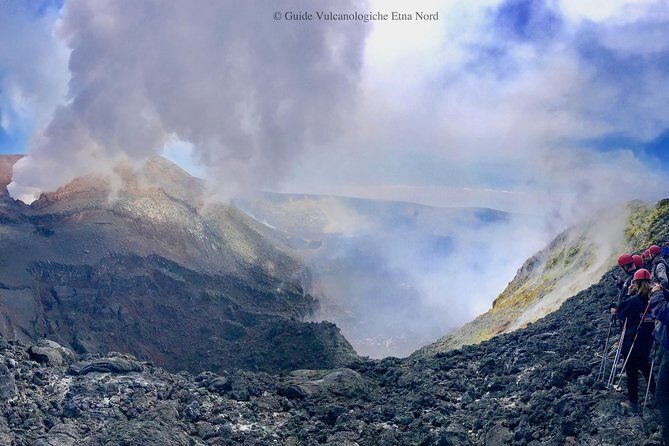
Your reward is not just a view—it’s the feeling of being near an active system that’s constantly remaking itself.
Sea views from high points
One of the standout perks is that the summit cone can offer sea views from the highest points. When weather clears, that distance view gives you a strong sense of where you are in Sicily, not only in the mountain.
Crater views when conditions cooperate
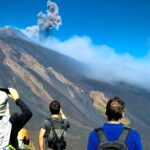
On some days, the hike reaches rims of one or more craters, including options like Voragine and Bocca Nuova, in addition to the North-East and South-East areas. You might also see the volcano exhale and shift—smoke and gas can make the scene feel alive even if you’re standing still.
A far-off bonus view
In one set of experiences, hikers reported seeing Stromboli in the distance from high elevation. You shouldn’t count on it every day, but it’s a nice example of the kinds of scale-expanding moments you can get from Etna’s height.
The Guide: Why This Tour Works (When the Volcano Is Doing Its Thing)
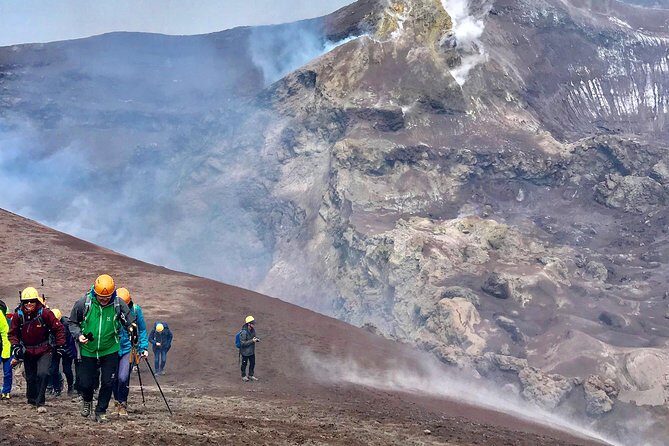
The quality of this experience depends heavily on leadership. And the strong theme here is that the guides bring strong communication and safety awareness.
Names that came up in real experiences include Domenico and Vincenzo—both described as engaging and able to explain what you’re seeing. Domenico, in particular, was noted for giving explanations in multiple languages and making sure the group stayed oriented and informed.
Even if your focus is photography or just the physical challenge, the guide’s role matters. You’ll get context for the crater zone—why the terrain looks the way it does and what the visual cues mean—so the hike doesn’t feel like walking through a random pile of rock.
Gear and What It Means for Your Day
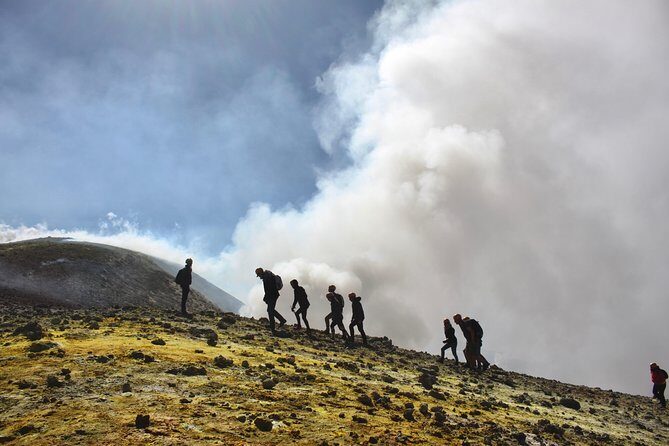
This tour includes a useful set of equipment, which is a big part of the value at this price point.
Included items are:
- Trekking poles
- Trekking shoes
- Helmets
- A warm jacket
- Extra socks
- An extra backpack
- Insurance in case of accidents
- Entry/admission to Mount Etna
Why this matters: Etna’s summit zone is cold enough at altitude that layering helps, and the ash and rough terrain demand footwear and support. If you already own gear, great—you can still appreciate not having to rent or hunt down the right items last minute.
Two small practical notes from the tour guidance:
- Contact lenses are not recommended due to volcanic gases and ash.
- Your footwear matters for coverage: without adequate shoes, you’re not covered by insurance.
The Descent: Legs Get Tested (and There Can Be a Plan B)
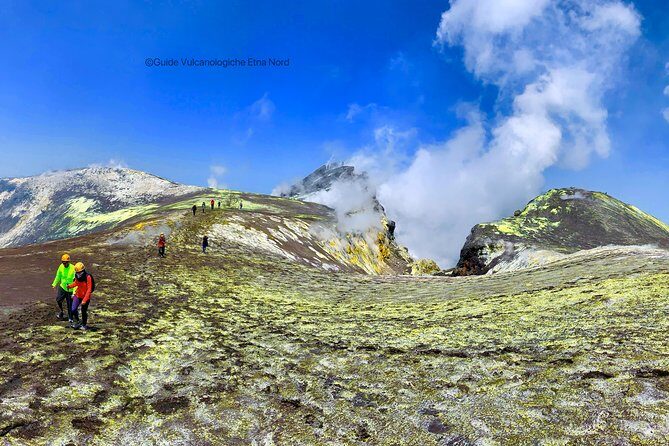
The hike includes a significant descent component—roughly 6 km downhill. That can feel harder than the ascent, because volcanic ground can be steep, loose, and uneven.
One useful detail: on some days, if needed, a bus may be available to drive you down from the observatory. You shouldn’t assume it will happen, but it’s good to know there may be a recovery option depending on conditions and how the day is running.
Either way, pack a realistic mindset. This is a hike where your knees will feel like they worked. Trekking poles are not optional comfort here—they’re a smart tool.
Price and Value: Is It Worth $129.40?
At $129.40 per person, the price can look like a lot—until you add up what’s included. What you’re getting isn’t just a guide and a walking route.
You also get:
- A licensed volcano guide
- Insurance coverage for accidents
- Entry/admission
- A package of safety and comfort gear (helmets, poles, shoes, warm jacket, extra socks, extra backpack)
So the value comes from reducing your pre-trip costs and decision stress. You’re not trying to coordinate rentals, layering, and the right footing in a place where conditions can change quickly.
The main tradeoff is that you have to show up ready to hike. You’re paying for access to a crater-zone experience, not for convenience.
Who Should Book This Etna Hike (and Who Should Think Twice)
This excursion is for people in good physical health who can handle altitude and rough terrain. The tour guidance is clear about who should be cautious:
- It’s suited to people with strong physical fitness
- Not for those with certain breathing issues or hypertension
- Route dizziness can occur for susceptible individuals, since you’ll be walking around crater edges
- Pregnant women who have passed the third month of pregnancy are not allowed
If you’re an active hiker, comfortable with steep terrain, and you can follow safety instructions closely, this day has the right energy. If you’re looking for a gentle Etna view, you’ll likely find this too demanding.
Logistics That Matter: Start Location, Transport, and Extra Costs
You meet at Esagonal Piazzale Funivia Etna (Sud) in Nicolosi at 8:30 am, and you return to the same meeting point.
Important: transport from your accommodation isn’t included. You’ll need to plan how you get to Nicolosi and to the meeting area.
Also, there’s an extra optional cost that might affect your planning: a cablecar round trip from 1900 m to 2500 m costs €52 per person, and it’s not included in the tour price. The details of how it fits into your day can depend on the route and how the guide plans the terrain, but it’s good to know the option exists if you’re trying to reduce certain walking sections.
Parking is also not baked into the price: it’s listed as €5 on weekdays and €8 on Sundays and public holidays.
Finally, bring or plan for food. A lunch bag isn’t included.
Weather, Volcanic Changes, and Why Your Expectations Should Stay Flexible
This is a working volcano. The tour can be varied at the guide’s discretion and may be interrupted if environmental, climatic, or volcanic conditions change enough to undermine group safety.
You should also expect cancellation or rescheduling if conditions aren’t right. The tour is weather-dependent, and you’ll either be offered a different date or a full refund if it’s canceled due to poor weather.
What I like about this approach is that it treats safety as the default. If you’re the type of traveler who hates last-minute adjustments, this isn’t your kind of day. If you can roll with plan changes, it’s usually the right attitude for Etna.
Should You Book This Etna Crater Hike?
Book it if:
- You want a real crater-zone trek, not just a viewpoint stop
- You’re comfortable walking 12–13 km at altitude over volcanic ground
- You value a small-group, guided experience where safety decisions come from the people managing the environment
- You appreciate having helmets and trekking poles handled for you
Skip it (or pick something gentler) if:
- You’re sensitive to altitude, have breathing concerns, or need a low-impact route
- Steep, uneven terrain makes you nervous
- You’re counting on a guaranteed reach of the highest crater rim on every day—conditions can change
If you want an active, high-altitude Etna experience that feels grounded in real volcanic terrain—and you’re fit enough to earn the views—this is a strong choice.
FAQ
What time does the Etna excursion start?
The tour starts at 8:30 am.
How long is the hike?
The hike portion is typically 5–6 hours, and the overall experience is listed at about 5 hours 30 minutes.
Is transport from my accommodation included?
No. Transport service from your accommodation is not included.
What’s included for hiking and safety?
Included items include a licensed volcano guide, insurance in case of accidents, trekking poles, trekking shoes, helmets, a warm jacket, extra socks, and an extra backpack, plus Mount Etna entry/admission.
What should I bring for food and comfort?
A lunch bag isn’t included, so you’ll need to plan for your own food. Hat and gloves may be needed during autumn, winter, and spring.
Can I wear contact lenses?
The tour guidance recommends not to use contact lenses because of volcanic gases and ash.